Languages of antiquity
Ancient Persia
Iran · from Cyrus the Great to Ferdowsi
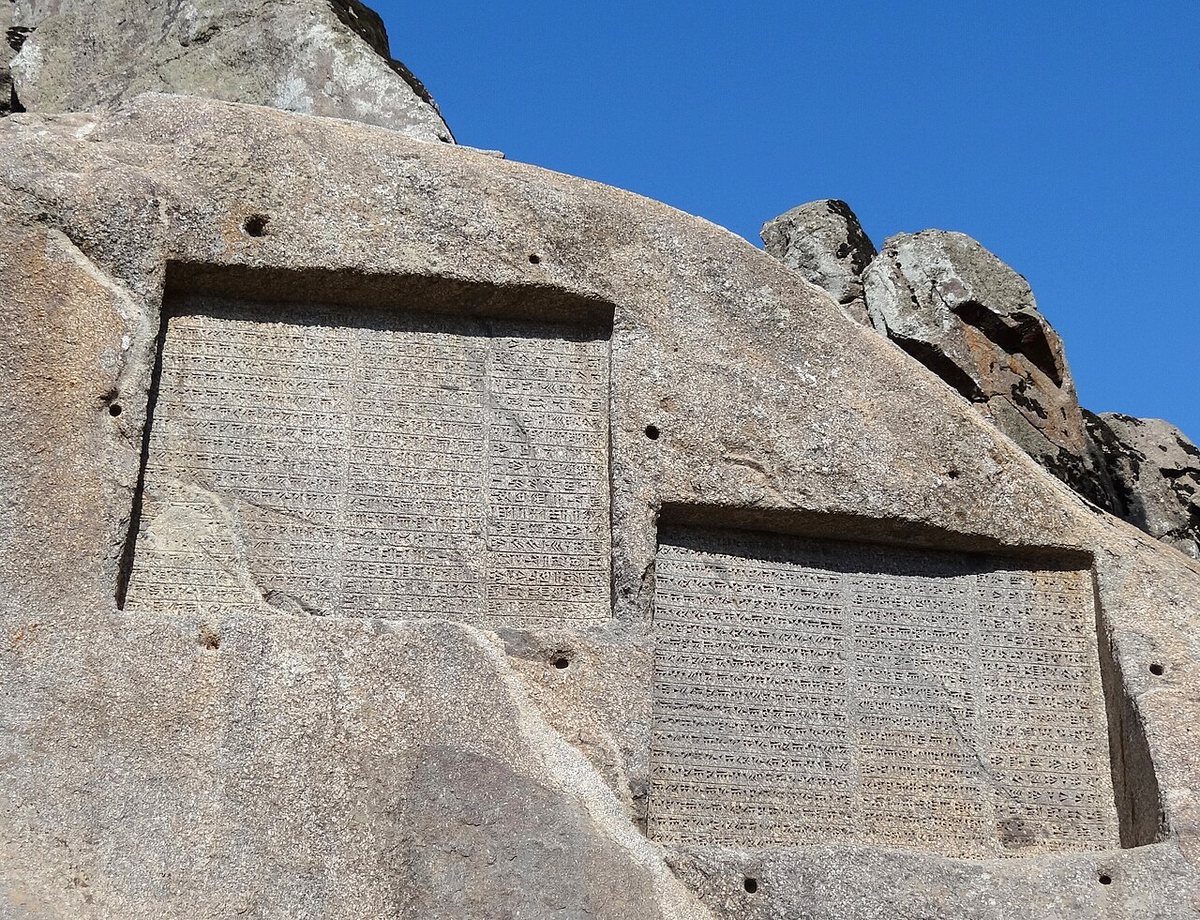
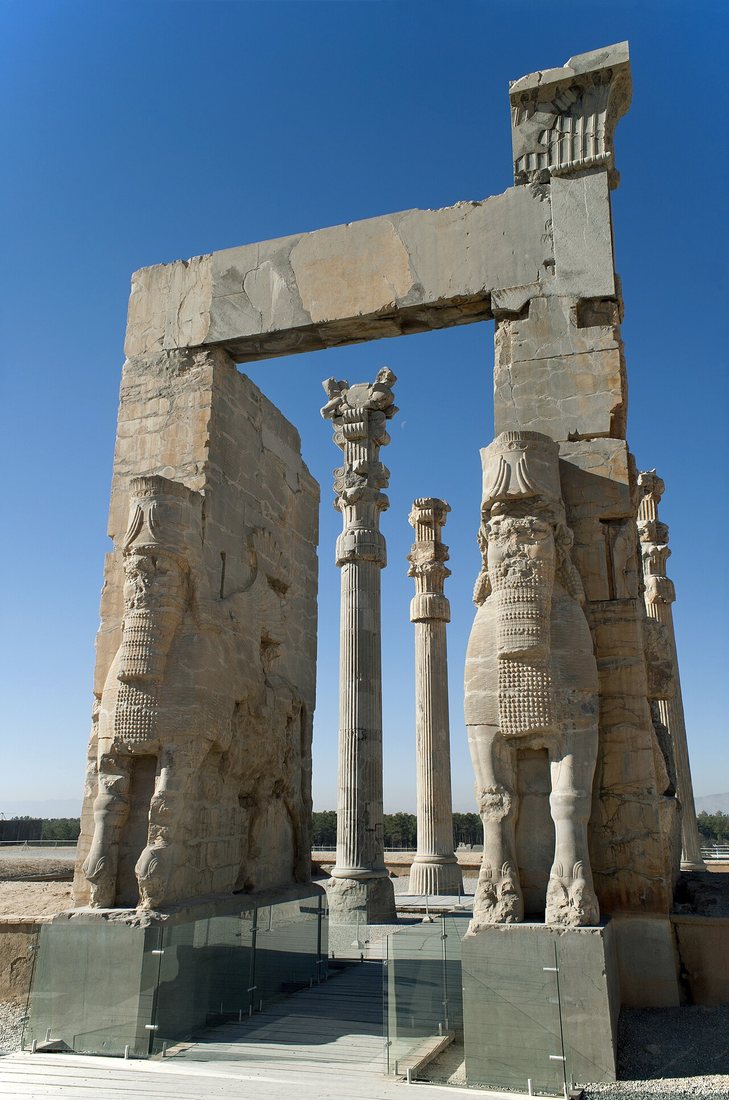
Persian can be followed in writing for two and a half thousand years: from the cuneiform inscriptions of the Persian kings, through the Middle Persian of Sasanian rock reliefs, to the Persian of today. Yet the Achaemenid empire spoke many languages. Its officials wrote in Elamite and Aramaic, and its kings had their inscriptions carved three times over, in Old Persian, Elamite and Babylonian. These trilingual inscriptions became the key to the decipherment of cuneiform.
An empire of many languages
The Persian empire of the Achaemenids arose around 550 BCE, when Cyrus II the Great, ruler of Persis (today’s Fars province in south-western Iran), defeated the Medes. Cyrus went on to conquer Lydia in Asia Minor and, in 539 BCE, Babylon; his son Cambyses II added Egypt. Under Darius I (reigned 522–486 BCE) the empire stretched from Egypt and the Aegean to the Indus valley and was the largest empire of its time.
It had no single state language. Royal inscriptions were usually carved three times, in Old Persian, Elamite and Babylonian, and in Egypt in hieroglyphs as well. Offices in the Persian heartland kept their records mainly in Elamite, and Aramaic was the language of written communication between the provinces. Persian itself, the language of the ruling house, was rarely written, and almost only on royal monuments.
Old Persian
Old Persian belongs to the Iranian branch of the Indo-European languages. It is one of the two Old Iranian languages that left continuous texts (the other being Avestan), and it is closely related to Sanskrit. Its speakers called it ariya, ‘Aryan, Iranian’; the name of Iran comes from the same word. Old Persian, Middle Persian and modern Persian are three stages of one and the same language.
Old Persian texts are few. They are mainly royal inscriptions from Darius I to Artaxerxes III (6th–4th centuries BCE), found in Iran, Iraq, Turkey, Armenia and Egypt. The inscriptions of the last Achaemenids differ so much from the language of Darius that they are described as ‘pre-Middle Persian’. Old Persian borrowed many words from the related Median language, of which no texts survive: ‘horse’ is asa in Old Persian, but the Median aspa also appears in the inscriptions.
Behistun: three languages on one rock
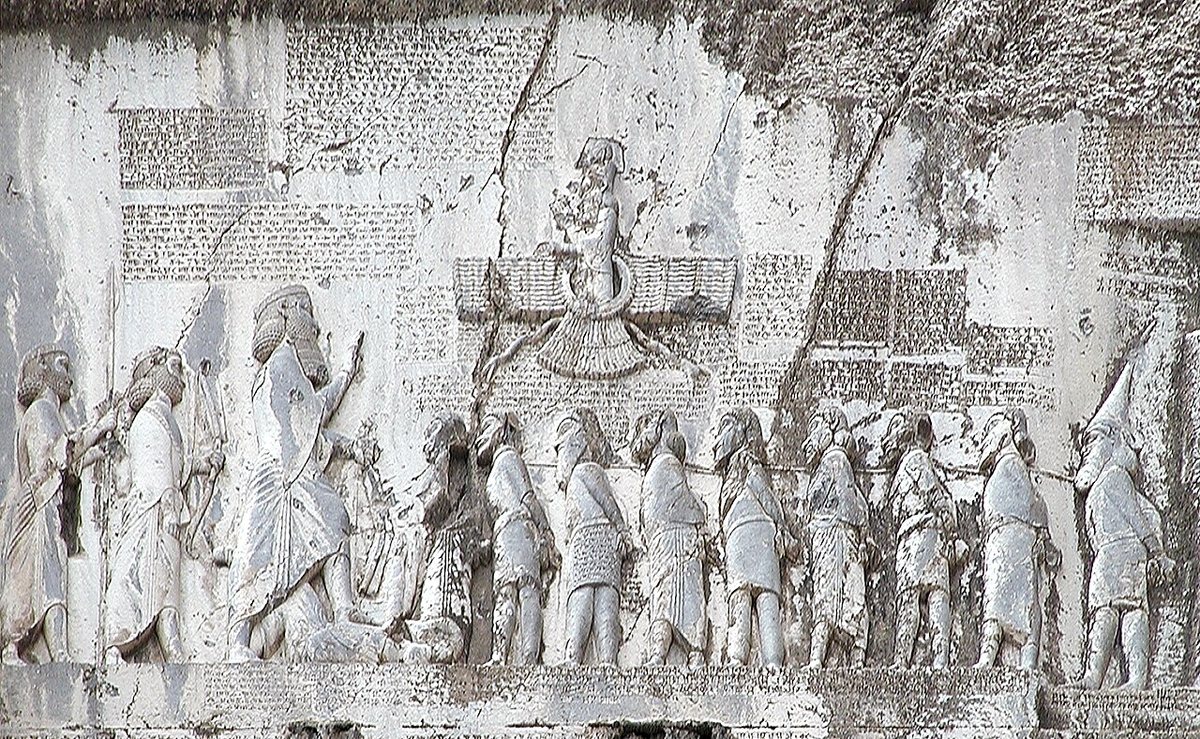
Darius I came to power in 522 BCE amid the revolts that broke out after the death of Cambyses II. By his own account he fought nineteen battles in a single year against leaders who had proclaimed themselves kings. He had his version of events carved into the limestone cliff at Behistun (today Bisotun; Old Iranian *Bagastāna, Greek Bagistanon, ‘place of the god(s)’), some hundred metres above the old road from Babylon to Ecbatana. The inscription measures about 15 × 25 metres: the Old Persian text has 414 lines in five columns, the Elamite 260 lines in eight columns and the Babylonian 112 lines.
The text was meant to circulate throughout the empire. An Aramaic translation on papyrus from the reign of Darius II was found in Egypt. For the decipherment of cuneiform, Behistun played a role much like that of the Rosetta Stone for hieroglyphs; how Henry Rawlinson copied it and how Babylonian was read through it is told on the Mesopotamia page.
adam Dārayavauš xšāyaθiya vazraka xšāyaθiya xšāyaθiyānām
- adam
- I
- Dārayavauš
- Darius
- xšāyaθiya
- king
- vazraka
- great
- xšāyaθiya xšāyaθiyānām
- king of kings (-ānām = genitive plural)
I (am) Darius, the great king, king of kings…This is how the Behistun inscription begins (DB I 1); Old Persian leaves the verb ‘am’ unexpressed here. Words are separated by the slanting sign 𐏐. The name Dārayavauš is interpreted as ‘he who holds firm the good’; the Greeks made it Dareios. The title ‘king of kings’ outlived the empire by a thousand years: the Sasanian kings called themselves šāhān šāh, and xšāyaθiya became šāh.
A new script for Persian
Old Persian writing looks like Mesopotamian cuneiform, but it is a different system. The signs were carved in stone, and there are only a few dozen of them: 36 phonetic signs, eight logograms (signs for whole words, whose use was optional), a slanting word divider and numerals. Neither the shapes nor the values of the signs were taken from Babylonian writing; most scholars regard the script as a deliberately created new system. It runs from left to right.
When and on whose initiative it was created is debated. At Behistun (column IV, lines 88–92) Darius says he had the inscription made ‘in Aryan’ (fully preserved in the Elamite version); many scholars take this as a reference to the creation of the Persian script, but the passage is hard to interpret. Short inscriptions in the name of Cyrus II at Pasargadae and in the names of Darius’s ancestors from Hamadan are mostly thought to be later, made under Darius. According to another view (Rüdiger Schmitt), work on the script began as early as Cyrus.
The script was used almost only for royal inscriptions; the last king to use it was Artaxerxes III (4th century BCE). From everyday administration only an isolated Old Persian record on a clay tablet from Persepolis is known so far.
Old Persian signs
- avowel; also written after a consonant to mark long ā
- ivowel
- uvowel
- ka
- xax as in Scottish loch
- ga
- ta
- θaθ as English th
- da
- diseparate form of d before i
- pa
- ba
- ma
- ya
- va
- ra
- ša
- XŠlogogram xšāyaθiya ‘king’
- AMlogogram Auramazdā
- \word divider
- 1numeral
- 10numeral
xa-ša-a-ya-θa-i-yaxšāyaθiya ‘king’: the sign xa also stands for a bare x, long ā is marked by the sign a, and the vowel i by the sign i
There are 36 phonetic signs: three vowels and 33 signs for a consonant plus vowel. Only some consonants (for example d, m, v) have separate forms before i or u; the rest have a single sign. The script does not distinguish a consonant followed by a from a consonant with no vowel. The signs are rendered in the Noto Sans Old Persian font.
Officials wrote in Elamite and Aramaic
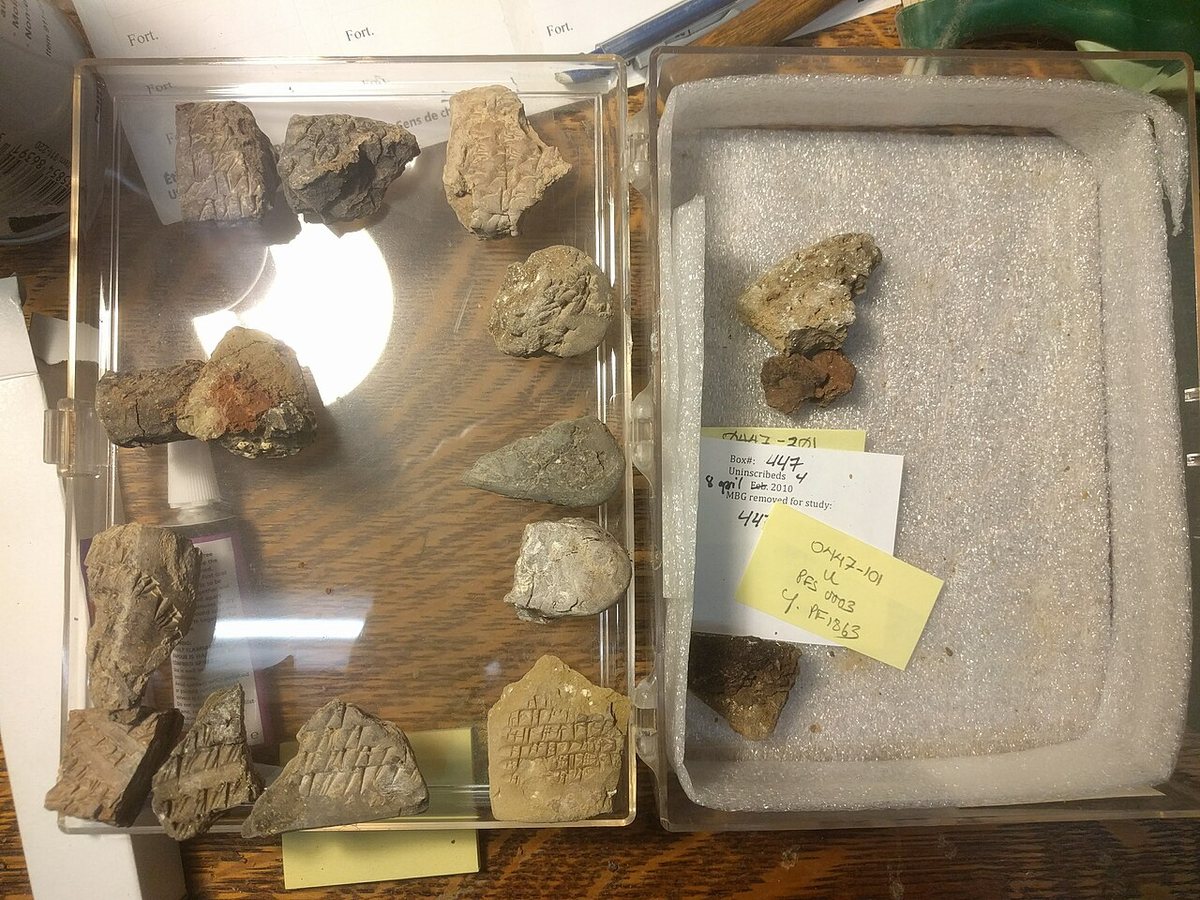
In March 1933 archaeologists of the University of Chicago under Ernst Herzfeld found tens of thousands of clay tablets and fragments in two rooms in the north-eastern fortification wall of Persepolis. This Fortification Archive covers the years 509–493 BCE (the 13th to 28th years of Darius’s reign) and records deliveries of grain, wine, beer, fruit and livestock and rations for workers, priests and travellers. More than 15,000 records are in Elamite, fewer than a thousand in Aramaic, and about 5,000 tablets bear only seal impressions; one tablet each was found in Greek, Old Persian, Babylonian and Phrygian. Richard Hallock published 2,087 Elamite tablets in 1969, and work on the archive continues.
Elamite, the language of an ancient kingdom in south-western Iran, has no demonstrated relationship to any known language. The Iranian names and words that appear in the Elamite and Aramaic tablets are among the richest indirect sources for Old Persian and other Old Iranian dialects.
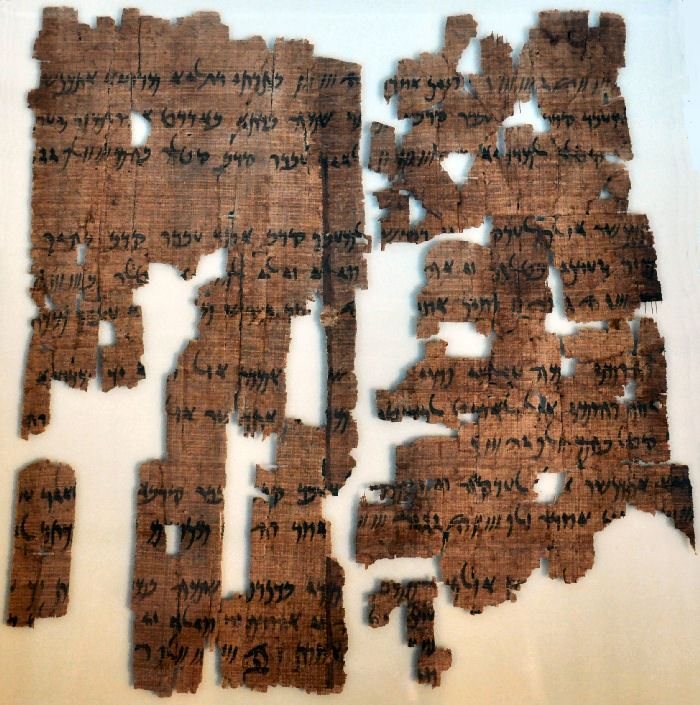
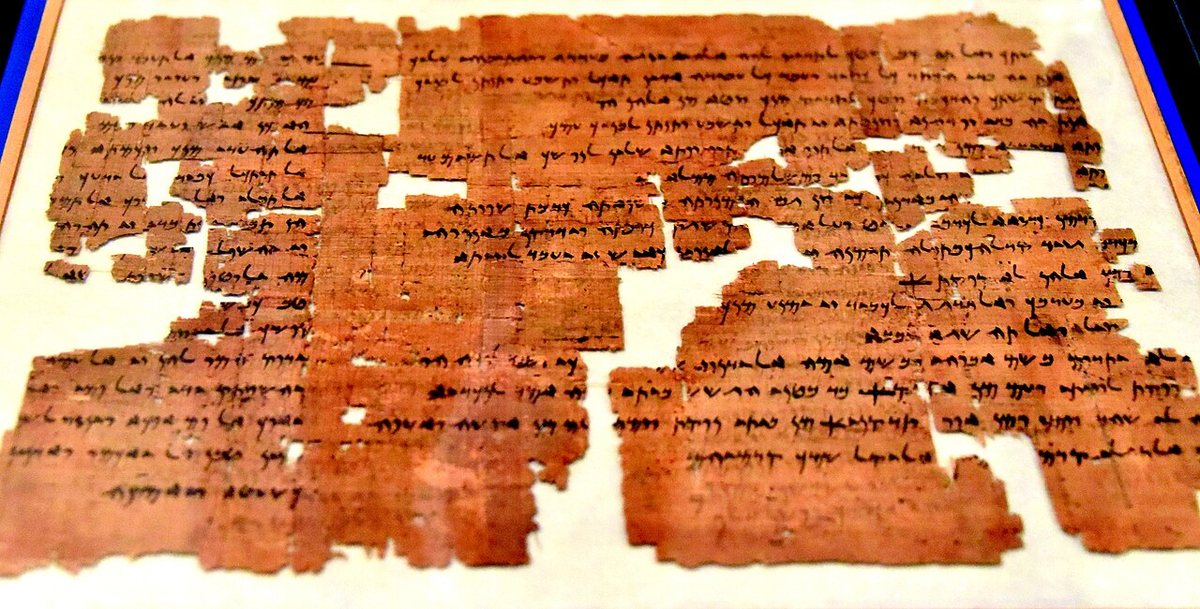
Across the empire, however, Aramaic was the main written language. It had already become a lingua franca under the Assyrian empire, and the Achaemenids used it in official correspondence from Egypt to Bactria. Most texts survive from Egypt, for example from the Nile island of Elephantine, home to a military garrison: contracts, letters and literature, such as the Story of Ahiqar the wise.
Aramaic papyri from Elephantine
Middle Persian and the scripts from Aramaic
Alexander the Great took Persepolis in 330 BCE and its palaces went up in flames; the Fortification Archive survived beneath the collapsed walls. After Alexander’s successors, the Seleucids, Iran was ruled by the Parthians (Arsacids) and from 224 CE by the Sasanians, who, like the Achaemenids before them, came from Persis. The language of their empire was Middle Persian, a direct descendant of Old Persian with a much simpler grammar.
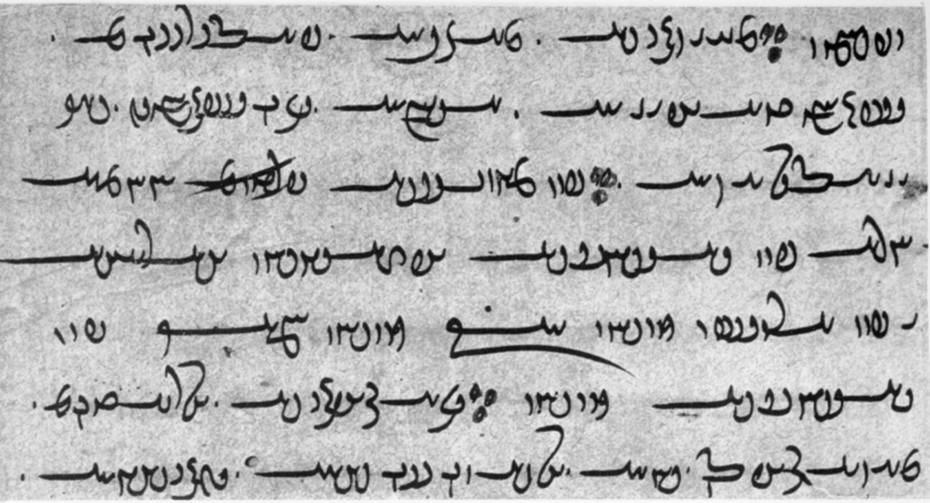
Cuneiform was no longer used. Iranian languages were written in scripts derived from Aramaic, known collectively as Pahlavi. Many common words in them were written in Aramaic but read in Iranian: the Aramaic 𐡌𐡋𐡊𐡀 malkā ‘king’ was written by the Sasanians in their inscriptions as 𐭬𐭫𐭪𐭠 (MLKA) but pronounced šāh; the word for bread was written as Aramaic LḤMʾ and read nān. Such words are called heterograms (Middle Persian huzwārišn) and resemble the Sumerograms of Akkadian and Hittite.
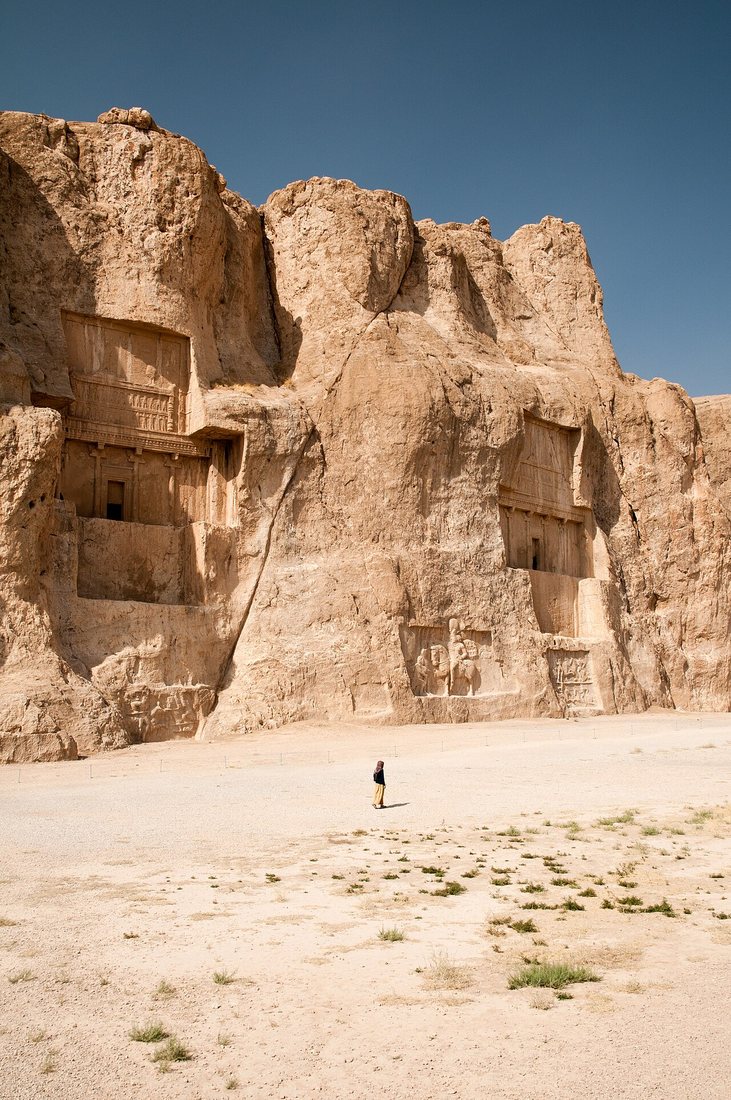
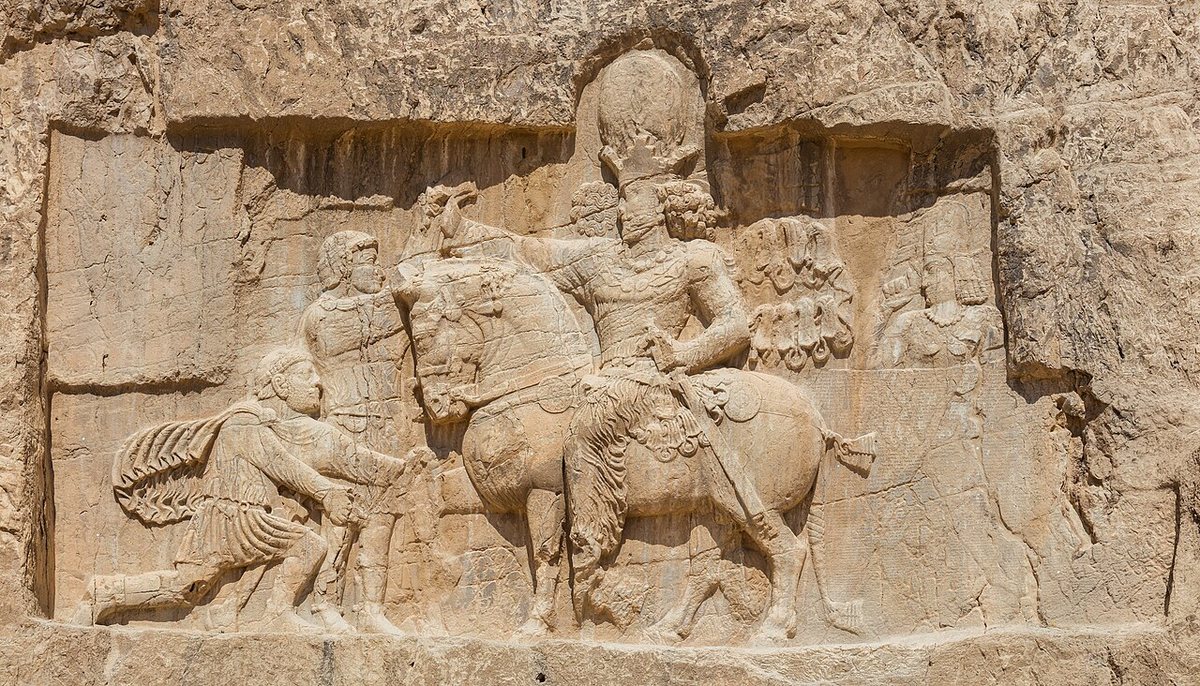
The most important Sasanian inscription is Shapur I’s account of his wars with Rome on the walls of the Kaʿba-ye Zartosht tower at Naqsh-e Rostam, discovered in 1936–1939. Like Behistun it is trilingual, only the languages are different: Middle Persian (35 lines), Parthian (30 lines) and Greek (70 lines). Among other things, Shapur claims to have captured the Emperor Valerian with his own hands.
The Avesta: sacred texts written down centuries later
The Avesta is the collection of sacred texts of Zoroastrianism, composed in Avestan, the second Old Iranian language. Its oldest part, the Gathas attributed to Zarathustra himself, is very close in language to the Indian Rigveda. Their date is disputed: older scholarship placed them in the 6th century BCE, while dates in the 2nd or early 1st millennium BCE now prevail.
The texts were handed down orally for centuries. They were written down only under the Sasanians, probably in the 5th or 6th century CE, and a special script was created for the purpose. It is based on Book Pahlavi but has 53 characters and, unlike Pahlavi, records the vowels precisely, so that the sacred texts could be recited correctly, as in 𐬀𐬵𐬎𐬭𐬀 ahura ‘lord’. It is written from right to left.
The Sasanian Avesta was lost; only the parts used in the liturgy survive, and the oldest extant manuscript dates from 1323. The Avesta was made known to Europe by Abraham Hyacinthe Anquetil-Duperron, who obtained manuscripts from the Parsis, the Iranian Zoroastrians of India, and published a French translation in 1771.
New Persian in Arabic script
In 651 the Sasanian empire fell to the Arab armies, and Arabic became the language of religion and administration. Persian did not disappear. From the 9th century it has been written in the Arabic script, extended with letters for sounds Arabic lacks (p, č, ž, g). It borrowed many Arabic words, by John R. Perry’s estimate about a fifth of everyday vocabulary, but in grammar and core vocabulary it continues Middle Persian. The Pahlavi script survived only in Zoroastrian religious literature.
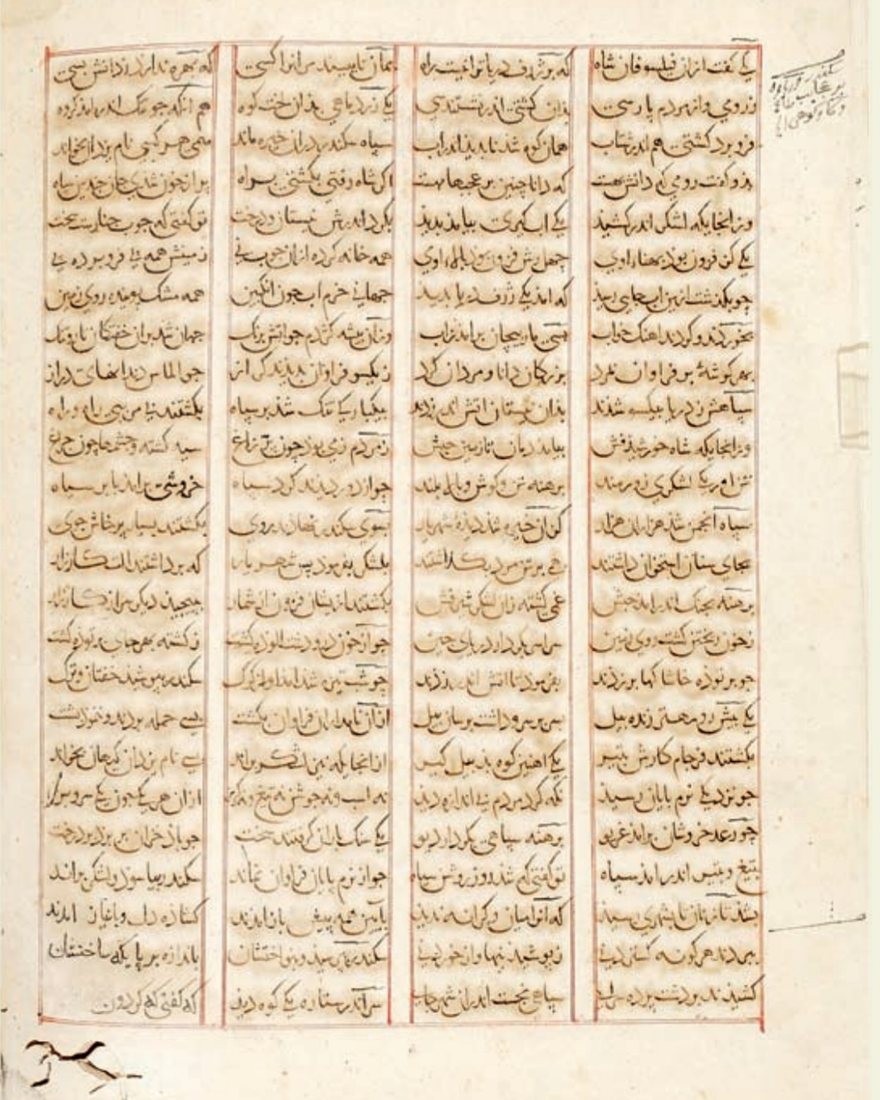
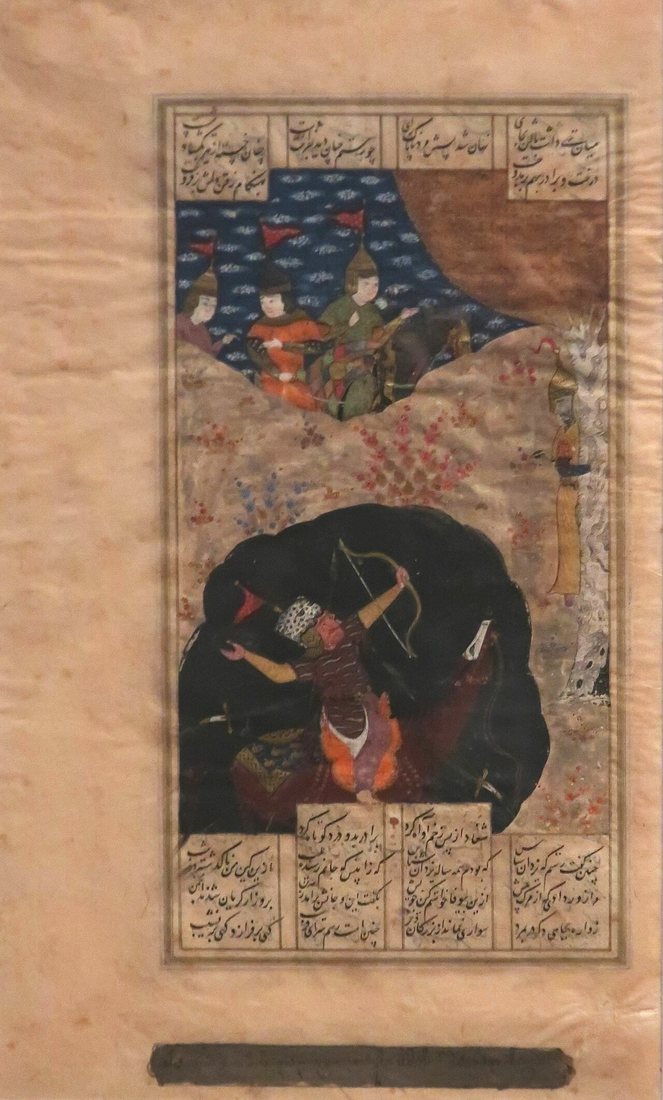
New Persian poetry arose at the courts of Iranian dynasties in the 9th and 10th centuries. Between 977 and 1010 Ferdowsi of Tus recast the history of the Iranian kings in verse as the Shahnameh, the ‘Book of Kings’, an epic of more than 50,000 couplets. He drew on a prose version that was largely a translation of the Middle Persian chronicle Khwaday-Namag from the Sasanian period. Persian then became a language of culture and government from Anatolia to India. Today it is spoken by some 130 million people; in Iran (Farsi) and Afghanistan (Dari) it is written in the Arabic script, in Tajikistan in Cyrillic.
The Book of Kings
One language, two and a half thousand years
Words from the Old Persian inscriptions with their Middle and New Persian forms. Some also show their Indo-European kinship with English or Latin:
| Old Persian | Middle → New Persian | meaning |
|---|---|---|
| brātā | brād(ar) → barādar | brother (cognate with English brother) |
| pitā | pidar → pedar | father (cognate with English father) |
| nāma | nām → nām | name (cognate with English name) |
| māha | māh → māh | moon, month (cognate with English moon, month) |
| martiya | mard → mard | person, man; originally ‘mortal’ (compare Latin mors ‘death’) |
| xšāyaθiya | šāh → šāh | king |
| vazraka | wuzurg → bozorg | great |
| dasta | dast → dast | hand |
| drauga | drōw → dorūġ | lie; in the Behistun inscription the rebels ‘lied’ |
| asa | asp → asb (from Median aspa) | horse |
Decipherment from the Persian side
Europe had known the cuneiform inscriptions of Persepolis since the 17th century. Faithful copies were published by Jean Chardin (1711) and Carsten Niebuhr, who visited Persepolis in 1765 (his copies were published in 1778) and distinguished three different scripts in the inscriptions. The simplest of them, with a few dozen signs, was Old Persian.
In 1802 Friedrich Münter guessed that a frequently repeated group of signs meant ‘king’. In the same year Georg Friedrich Grotefend, a schoolteacher at Göttingen, announced that he had found the names of Darius, his father Hystaspes and his son Xerxes in the inscriptions. He assumed that the Achaemenid inscriptions would be built like those of the Sasanian kings (‘X, great king, king of kings, son of Y’), which Antoine Isaac Silvestre de Sacy had read earlier. He identified the values of only eight signs correctly, and scholars rejected his work. Confirmation came in 1823, when Champollion read a hieroglyphic inscription with the name of Xerxes on an alabaster vase and Antoine-Jean Saint-Martin showed that its cuneiform version contained the same words.
The decipherment was completed by Eugène Burnouf, Christian Lassen and Henry Rawlinson, who in 1846–1847 published the full Old Persian text of the Behistun inscription. Old Persian then became the key to the Elamite and Babylonian versions and so to cuneiform as a whole. Excerpts from the Behistun inscription and other Old Iranian texts were translated into Czech by the Iranist Otakar Klíma (Sláva a pád starého Íránu, 1977; Oběti ohňům, 1985).
Timeline
- c. 550 BCECyrus II defeats the Medes; the Achaemenid empire is founded.
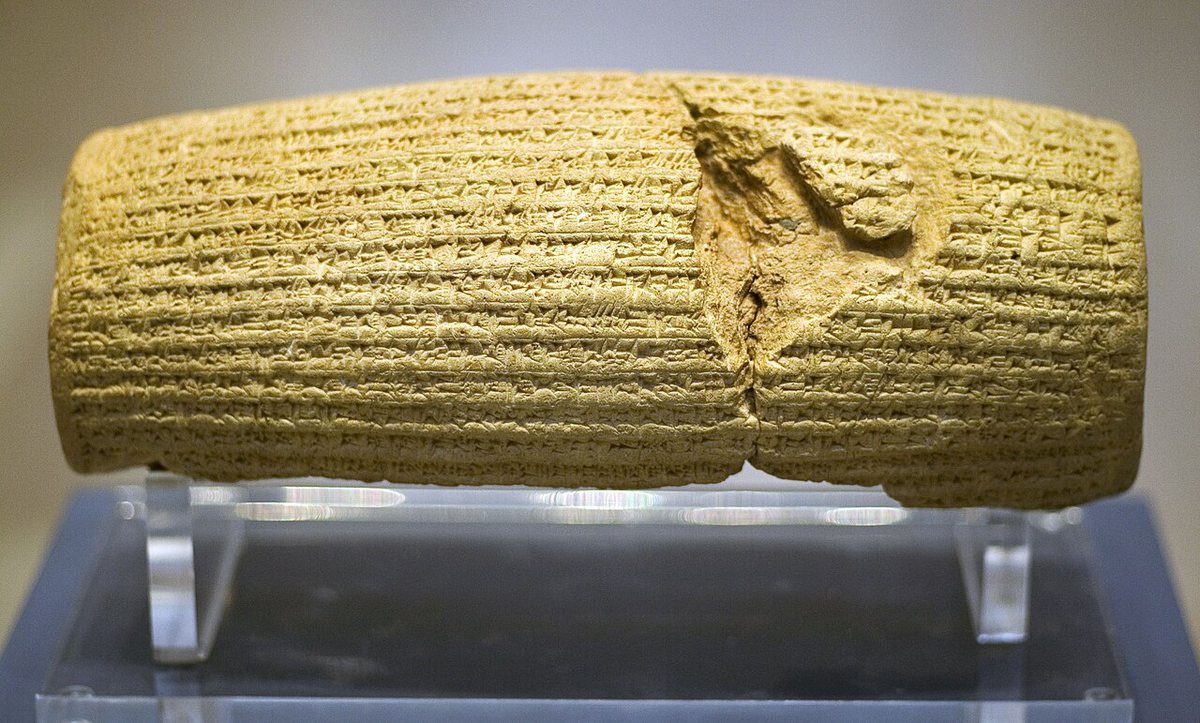
- 539 BCECyrus conquers Babylon; the Cyrus Cylinder.
- 522 BCEDarius I takes the throne; soon after, he has the Behistun inscription carved.
- 509–493 BCEElamite and Aramaic tablets of the Persepolis Fortification Archive.
- 5th c. BCEAramaic papyri from Elephantine.
- 330 BCEAlexander the Great burns Persepolis; end of the Achaemenid empire.
- 224 CEThe Sasanians come to power; Middle Persian is the state language.
- after 260Shapur’s trilingual inscription on the Kaʿba-ye Zartosht.
- c. 5th–6th c.The Avestan script is created and the Avesta written down.
- 651Fall of the Sasanian empire after the Arab conquest.
- 9th c.New Persian in the Arabic script.
- 1010Ferdowsi completes the Shahnameh.
- 1323Oldest surviving Avesta manuscript.
- 1802Grotefend reads the names of Achaemenid kings.
- 1847Rawlinson publishes the Old Persian text of Behistun.
- 1933Discovery of the Persepolis Fortification Archive.
Iranian languages on the globe
Tap a language to show it on the globe:
Sources and further reading
- Roland G. Kent: Old Persian. Grammar, Texts, Lexicon. American Oriental Society, 2nd ed. 1953.
- Rüdiger Schmitt: Die altpersischen Inschriften der Achaimeniden. Reichert, 2009.
- Pierre Briant: From Cyrus to Alexander. A History of the Persian Empire. Eisenbrauns, 2002.
- Amélie Kuhrt: The Persian Empire. A Corpus of Sources from the Achaemenid Period. Routledge, 2007.
- Otakar Klíma: Sláva a pád starého Íránu (The Glory and Fall of Ancient Iran). Orbis, Prague 1977 (series Stopy, fakta, svědectví).
- Otakar Klíma: Oběti ohňům. Výběr z památek staroíránské a středoíránské literatury (Offerings to the Fires: A Selection from Old and Middle Iranian Literature). Odeon, Prague 1985.
- Glottolog 5 (languages and their classification).