Languages of antiquity
The Phoenicians
The Levantine coast and the Mediterranean · c. 1200–146 BCE
The Phoenicians, merchants and seafarers from Tyre, Sidon and Byblos, spread a script of only twenty-two signs across the Mediterranean. From the Phoenician alphabet came the Greek alphabet, and from it the Latin and Cyrillic scripts – and via Aramaic also the Hebrew and Arabic scripts. The letters of this very text have Phoenician ancestors.
Merchants of the sea
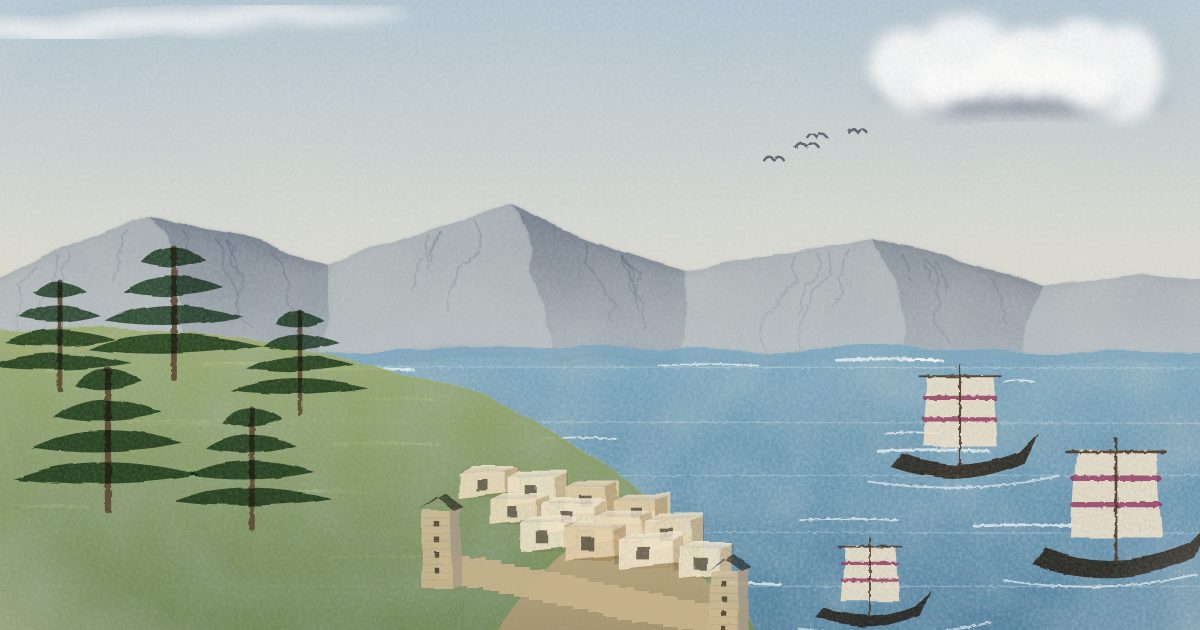
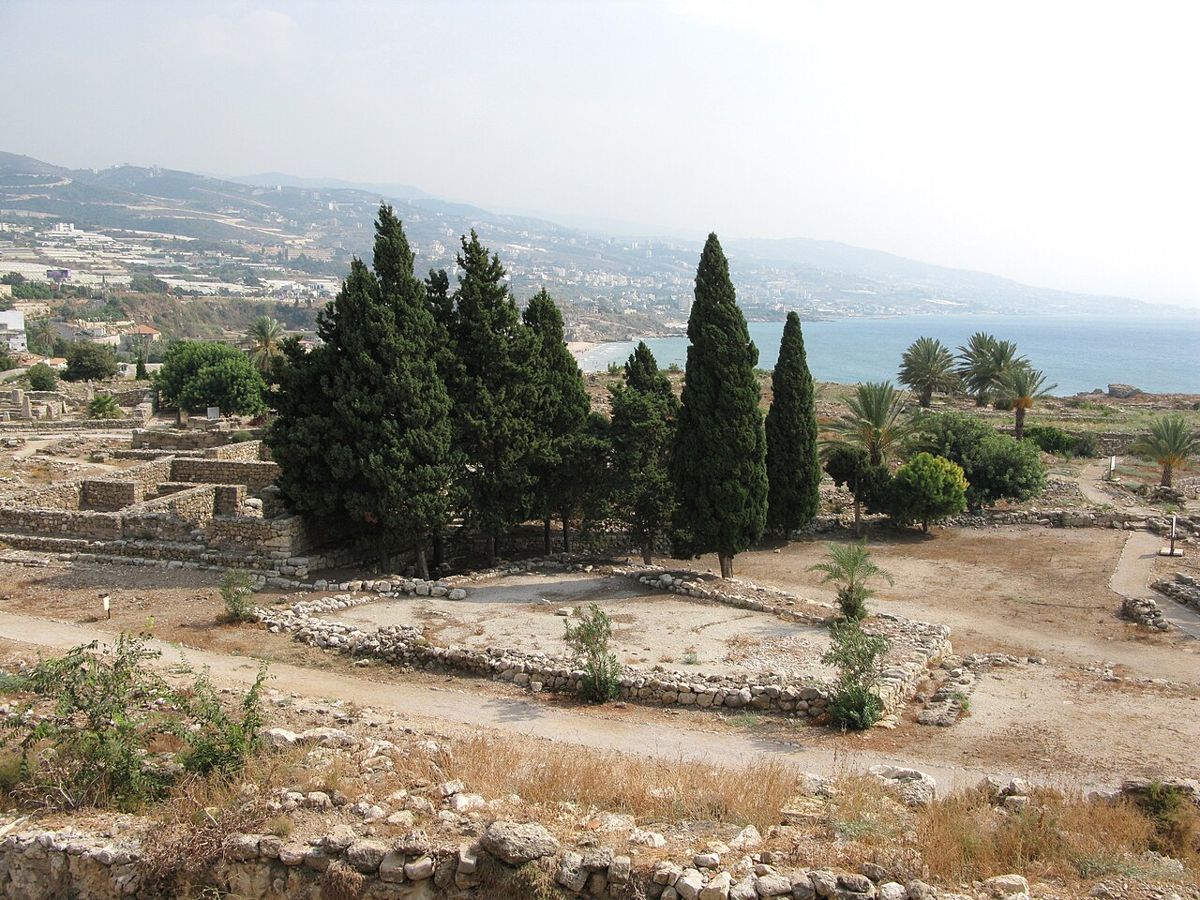
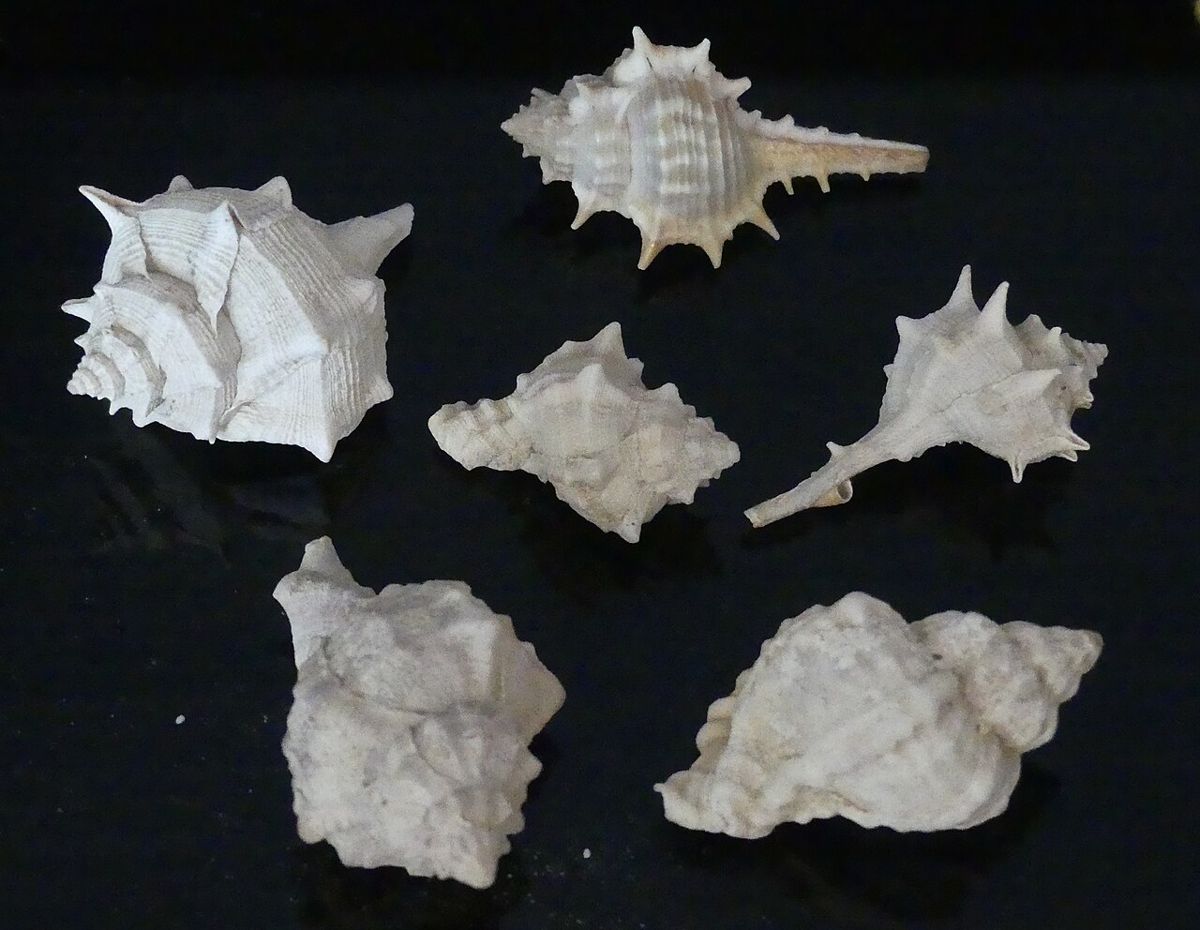
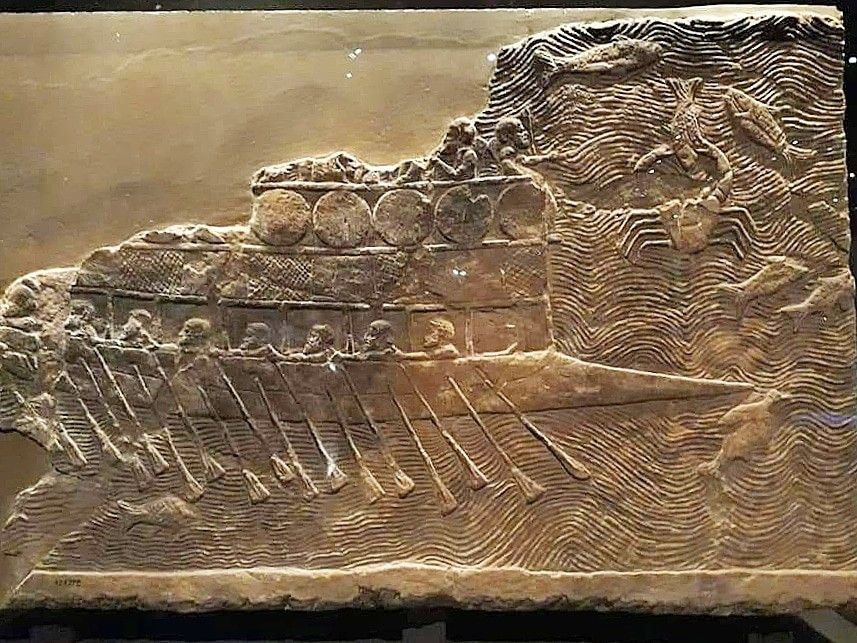
After the collapse of the great Bronze Age empires around 1200 BCE, independent port cities flourished on the narrow coast below the mountains of Lebanon: Tyre, Sidon, Byblos and Arwad. They identified themselves mainly by their cities (whether they also called themselves Canaanites is disputed); the name Phoenicians was given to them by the Greeks and is usually linked with the Greek word for purple.
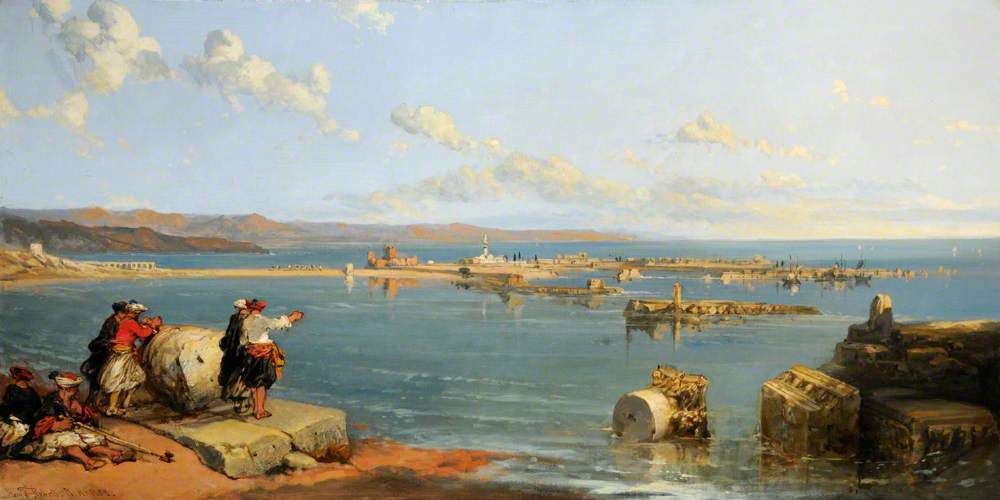
The Phoenicians exported cedar wood, glass, ivory and above all purple dye from murex sea snails. They founded settlements on Cyprus, Sicily and Sardinia, in Spain and in North Africa. The most famous, Carthage, was according to tradition founded by Tyre in 814 BCE; after three Punic Wars with Rome it was destroyed in 146 BCE.
Tyre, purple and ships
An alphabet of twenty-two letters
The Phoenician alphabet grew out of the Proto-Sinaitic and Proto-Canaanite scripts, whose signs imitated Egyptian hieroglyphs. Its emergence as a 22-letter script is conventionally dated to c. 1050 BCE. It recorded only consonants (technically an abjad), ran from right to left, and in the earliest inscriptions words were separated by a short stroke or dot.
Each letter had a name beginning with its sound: ʾalp “ox”, bet “house”, mem “water”, ʿain “eye”, rosh “head”. The letter shapes originally depicted these things – and the ox head, turned upside down, is still our A.
The Phoenician alphabet and ours
- ʾalp → Aox
- bet → Bhouse
- gaml → C, Gthrowing stick? camel?
- delt → Ddoor
- he → E?
- wau → F, U, V, W, Yhook, peg
- zai → Zweapon?
- ḥet → Hfence?
- ṭet → (Greek theta)wheel?
- yod → I, Jhand
- kaf → Kpalm
- lamd → Lox-goad
- mem → Mwater
- nun → Nsnake? fish?
- semk → (Greek xi)pillar? support?
- ʿain → Oeye
- pe → Pmouth
- ṣade → (Greek san)?
- qof → Q?
- roš → Rhead
- šin → Stooth
- taw → Tmark
Below each sign: the letter's name, its Latin descendant and the meaning of the name. Meanings with a question mark are uncertain, and the others are the usual interpretations. The Phoenician letter names are not directly attested; they are reconstructed from Hebrew and Greek names. The Greeks turned the consonants ʾalp, he, ʿain and yod into the vowels A, E, O and I, and wau became upsilon (Y). The signs are rendered with the Noto Sans Phoenician font.
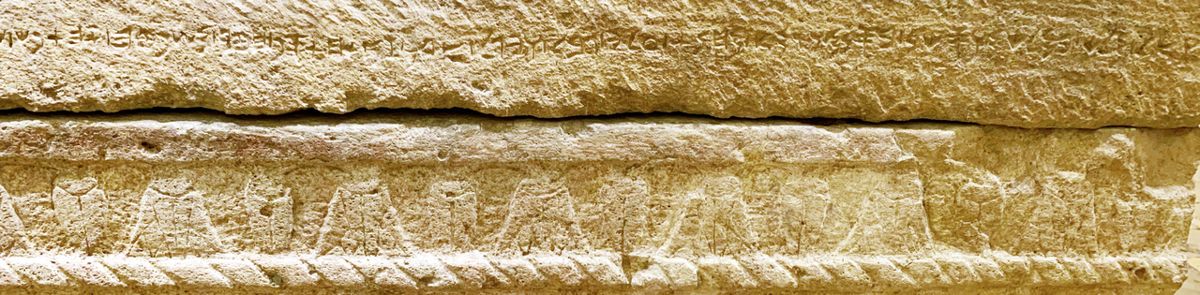
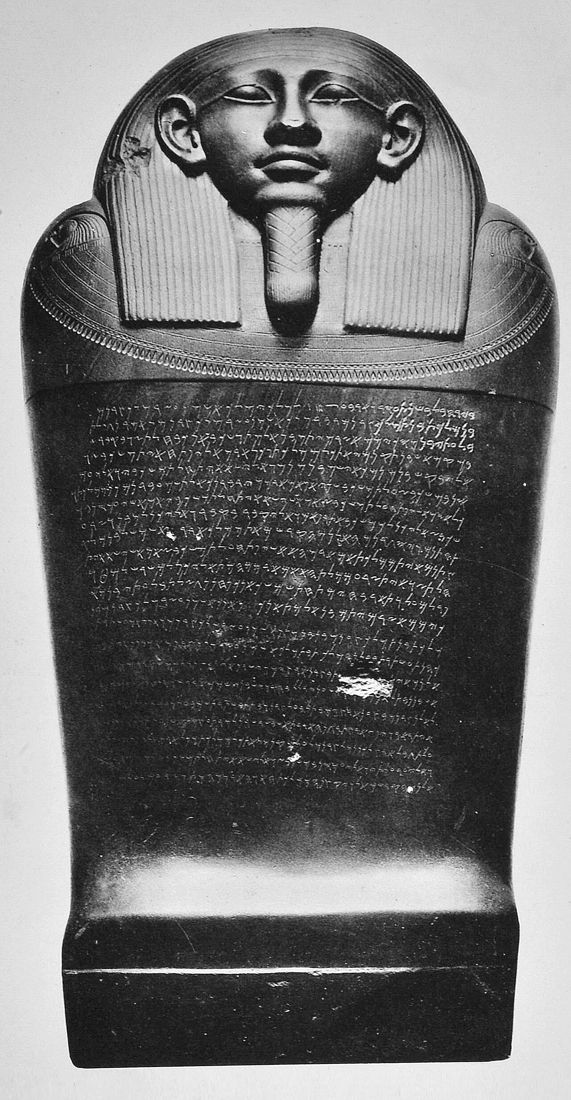
ʾrn z pʿl … bn ʾḥrm mlk gbl lʾḥrm ʾbh
- ʾrn z
- this coffin
- pʿl
- made
- …
- (name, damaged)
- bn ʾḥrm
- son of Ahiram
- mlk gbl
- king of Byblos
- lʾḥrm ʾbh
- for Ahiram, his father
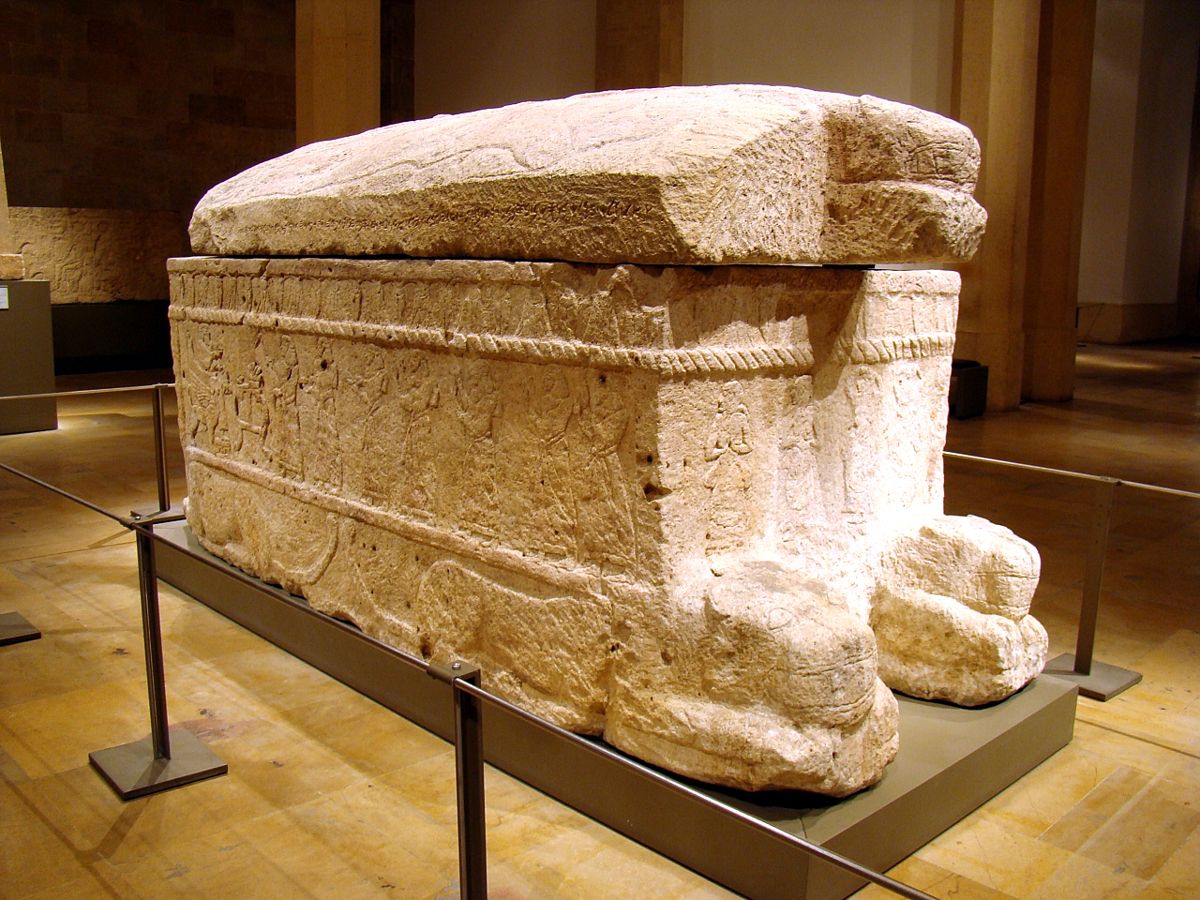
This coffin … son of Ahiram, king of Byblos, made for Ahiram, his father.The opening of the inscription on the sarcophagus of King Ahiram of Byblos, considered the earliest known text in the fully developed Phoenician alphabet; it is usually dated to around 1000 BCE, but the date is disputed. It reads from right to left, and words are separated by the vertical mark 𐤟. The son's name is damaged and its reading uncertain.
Decipherment: the cippi from Malta
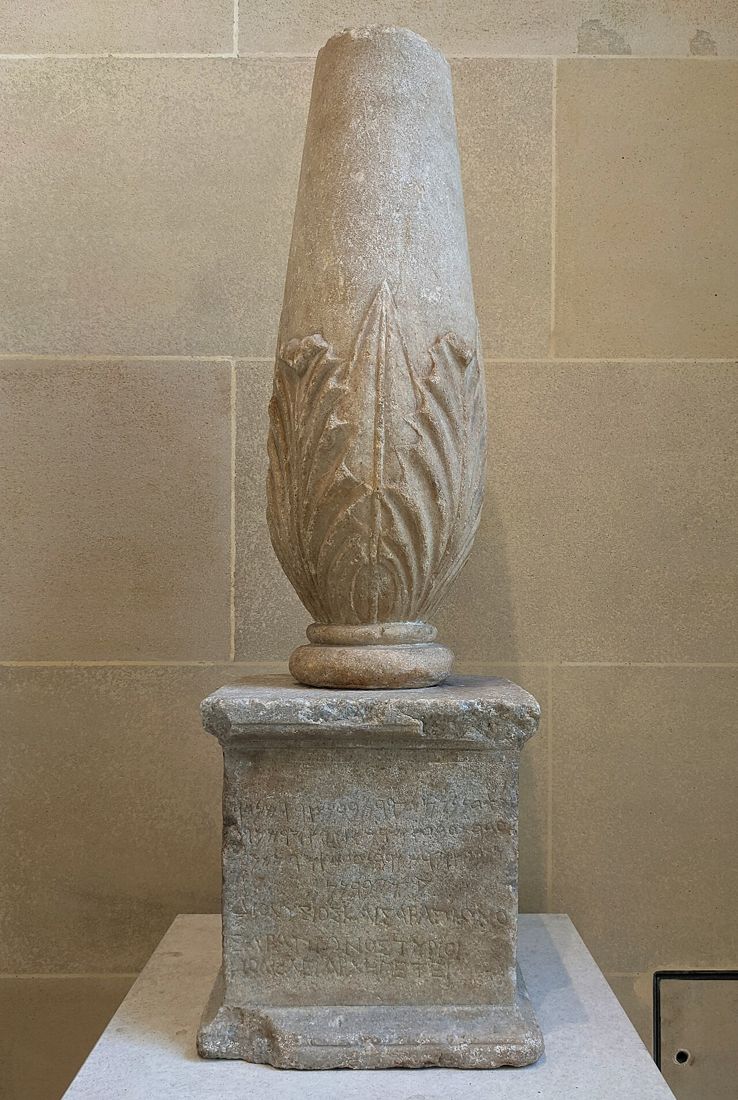
The Phoenician script was easier to decipher than hieroglyphs or cuneiform: the language is close to Hebrew and the letters resemble old Hebrew and Greek ones. Decisive was a pair of marble pillars (cippi) from Malta, from the 2nd century BCE, with the same dedication to the god Melqart in Phoenician and Greek. From them the French scholar Jean-Jacques Barthélemy determined the values of most Phoenician letters in 1758.
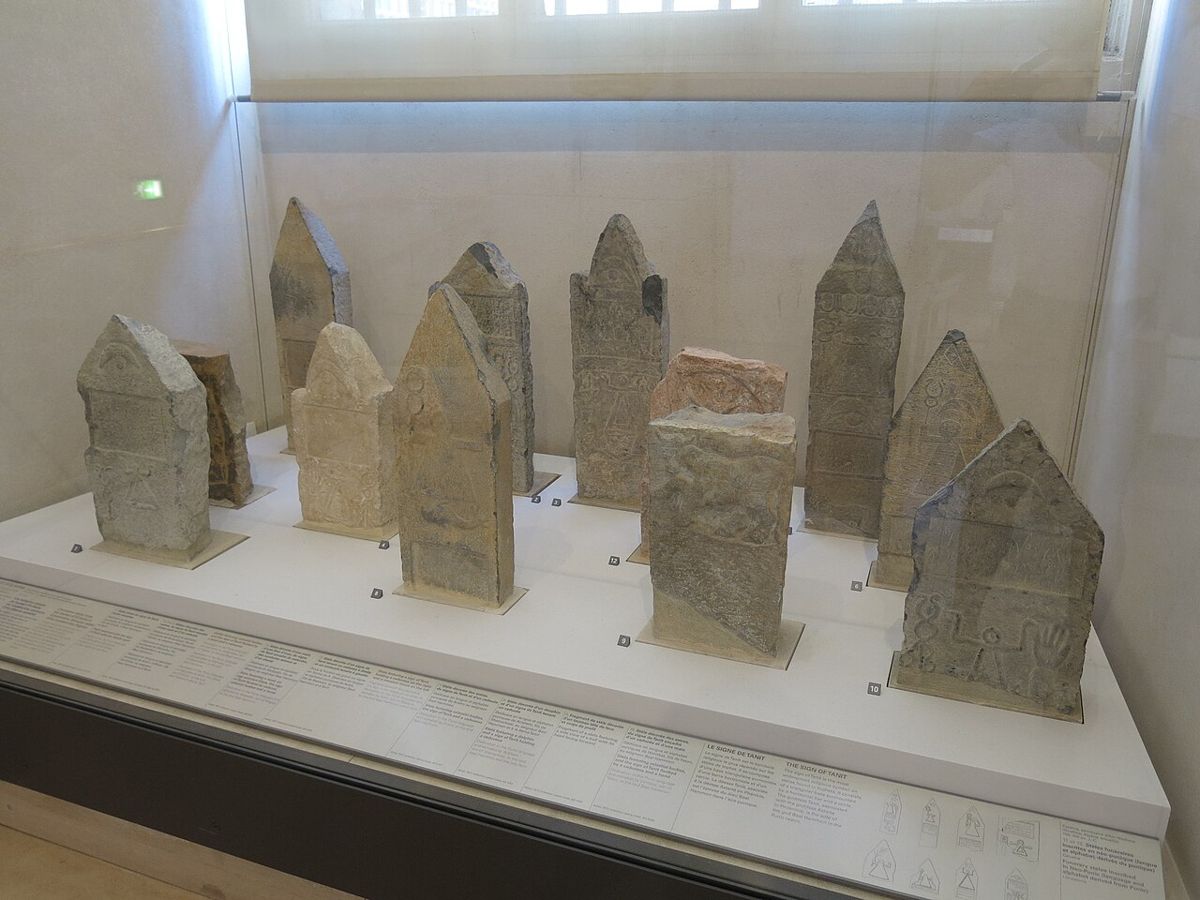
One cippus is now in the Louvre, the other in Malta. Few Phoenician texts survive and they are short – mostly inscriptions on stone; books written on papyrus have perished.
Phoenician writing across the Mediterranean
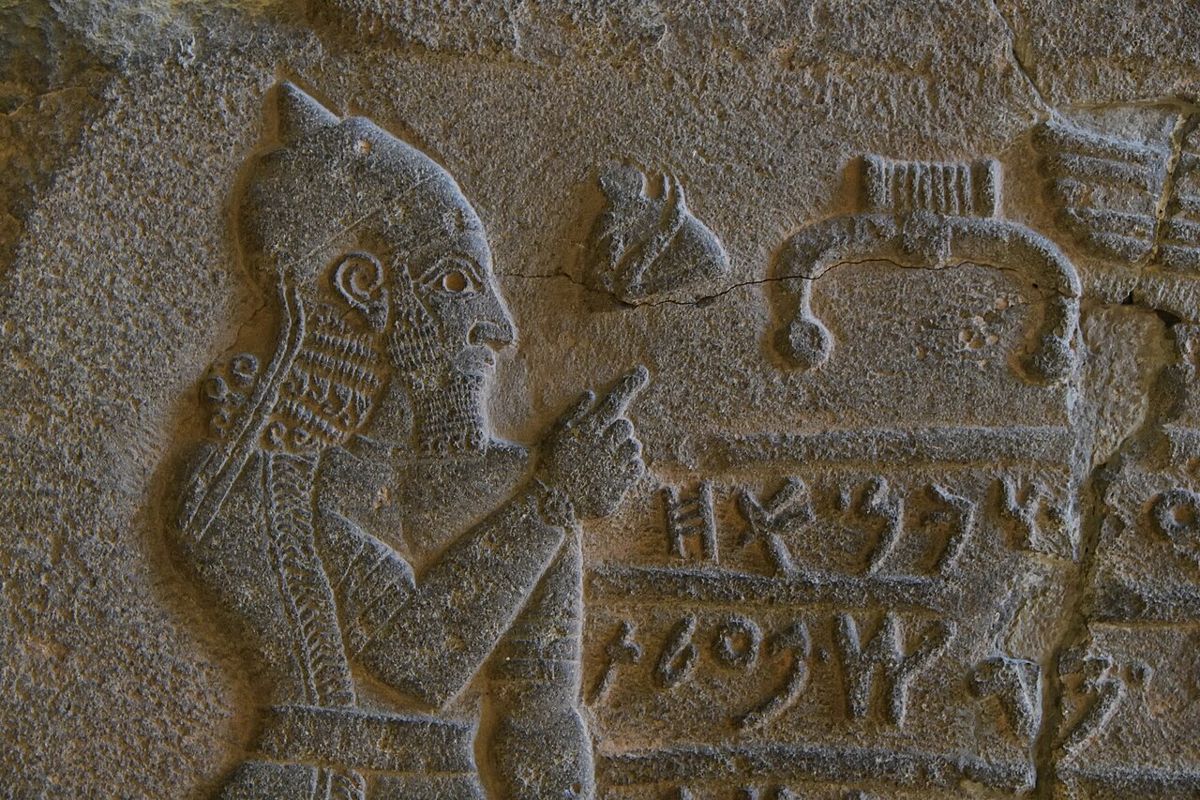
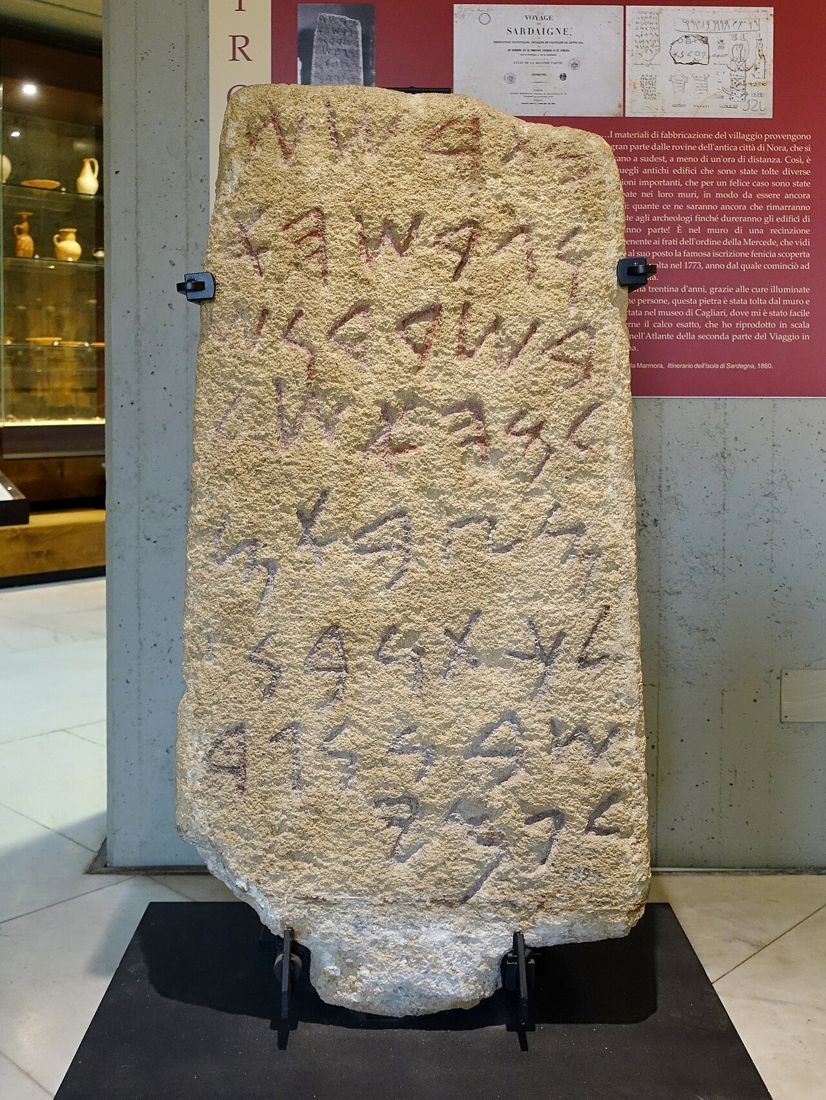
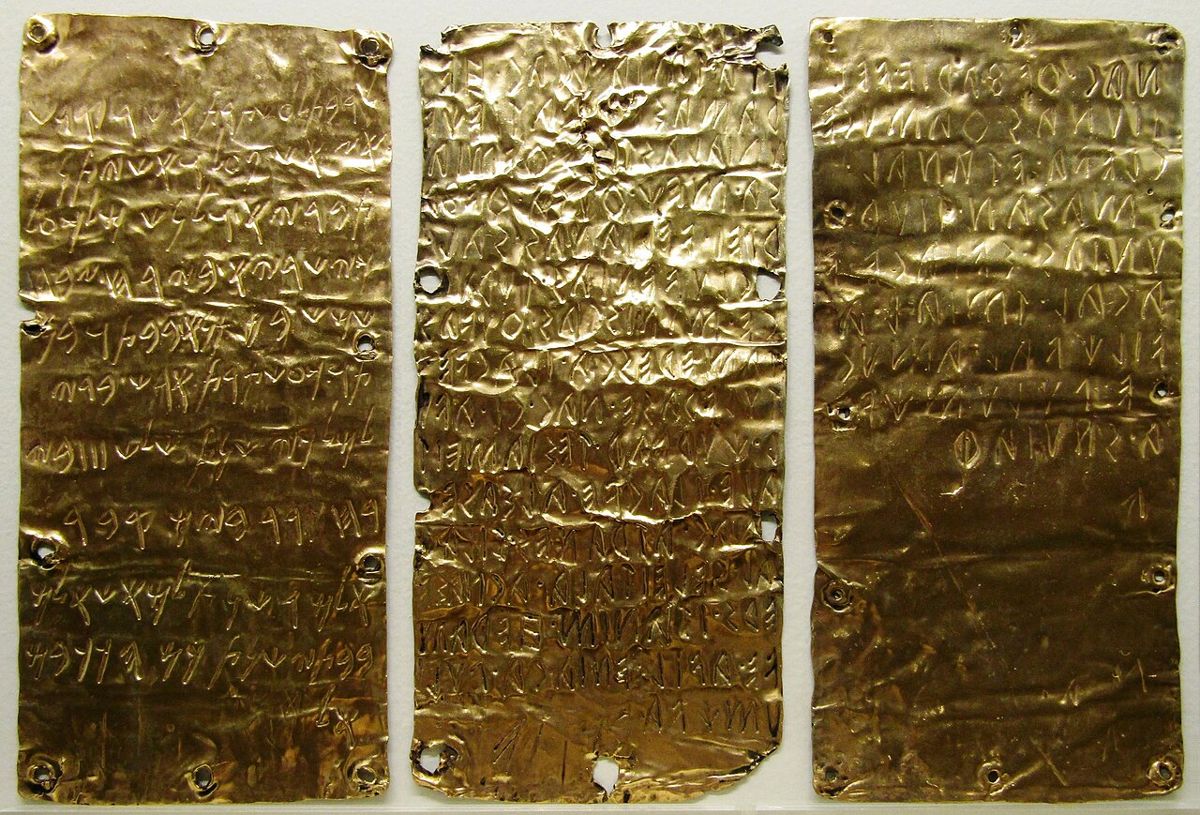
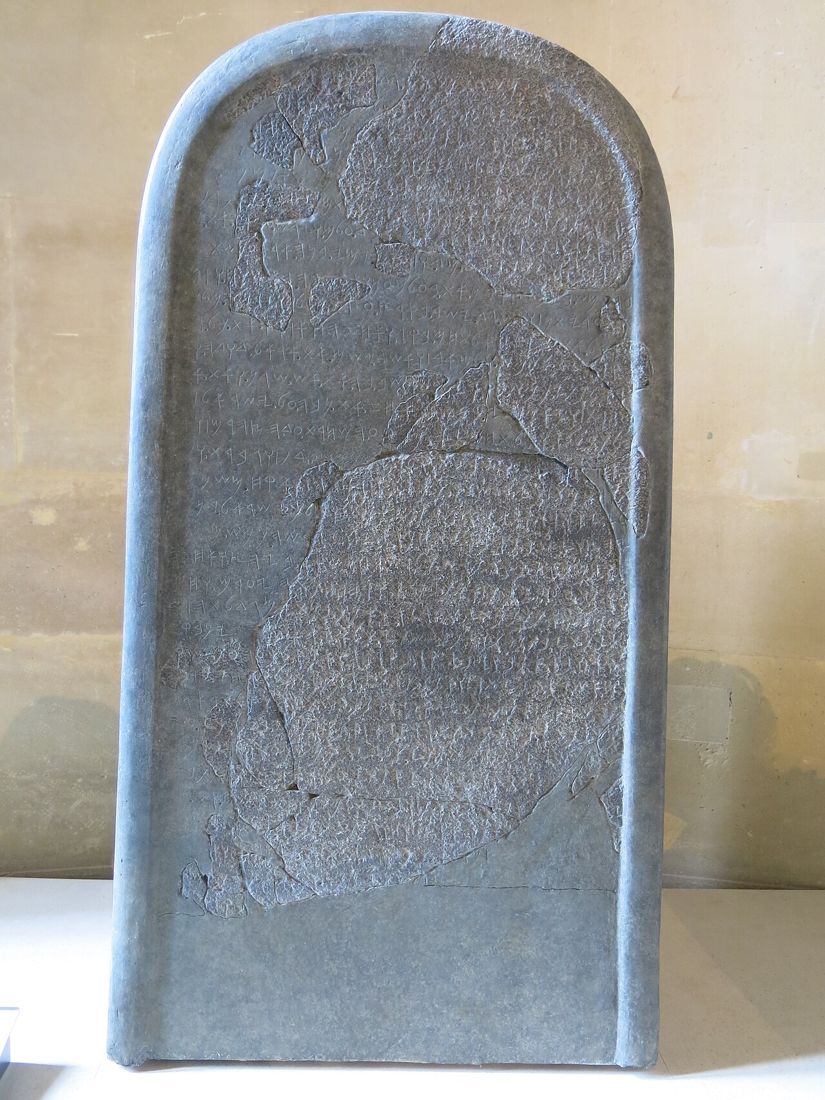
The Phoenician alphabet was not used by Phoenicians alone. The stele of King Kilamuwa from Sam'al in modern Turkey, the Nora Stone from Sardinia and the gold tablets from Pyrgi in Italy, which carry a parallel (not word-for-word) dedication in Etruscan and Phoenician, show how far the script travelled. The stele of King Mesha of Moab and the earliest Hebrew inscriptions are written in very similar scripts.
Inscriptions
Punic and Carthage
In Carthage and its settlements Phoenician developed into Punic. It outlived Carthage by centuries: it was still spoken in North Africa in the time of Saint Augustine (d. 430 CE), who knew it at least in part. A few lines of Punic also appear in Plautus' Roman comedy Poenulus (The Little Carthaginian) – written in Latin letters and so, unusually, with their vowels.
Descendants of the Phoenician alphabet
In the 8th century BCE the Greeks adopted the Phoenician alphabet and added vowels; the Greek names alpha and beta gave us the word alphabet. From the Greek alphabet came the Etruscan script and from it the Latin alphabet in which English is written, and at the end of the 9th century CE also Cyrillic.
In the east the Phoenician script developed into Aramaic, and from Aramaic came the Hebrew square script, Syriac and, via Nabataean, Arabic. The Greek word biblos, “papyrus, book” – and so the Bible – is also linked with the name of Byblos, through which Egyptian papyrus reached Greece.
Timeline
- 14th–13th c. BCEThe cuneiform alphabet of Ugarit.
- c. 1200 BCECollapse of the Bronze Age empires; the Phoenician cities flourish.
- c. 1050 BCEConventional date for the start of the 22-letter Phoenician alphabet.
- c. 1000 BCE (disputed)The inscription on Ahiram's sarcophagus at Byblos.
- 9th c. BCEThe Kilamuwa stele, the Mesha stele; around 800 the Nora Stone.
- 814 BCETraditional date of the founding of Carthage.
- 8th c. BCEThe Greeks adopt the alphabet and add vowels.
- c. 500 BCEThe gold tablets of Pyrgi.
- 332 BCEAlexander the Great takes Tyre.
- 146 BCEThe Romans destroy Carthage.
- 5th c. CESaint Augustine mentions Punic as a living language.
- 1758Barthélemy deciphers the Phoenician script.
Languages on the globe
Tap to show a language on the globe:
Sources and further reading
- Charles R. Krahmalkov: A Phoenician-Punic Grammar. Brill 2001.
- Josephine Quinn: In Search of the Phoenicians. Princeton University Press 2018.
- Glenn E. Markoe: Phoenicians. British Museum Press 2000.
- Joseph Naveh: Early History of the Alphabet. Magnes Press 1982.
- Glottolog 5 (languages and their classification).