Languages of antiquity
The Germanic peoples and runes
Northern and central Europe · runes from the 2nd century, a Gothic Bible from the 4th
The Germanic peoples first wrote in runes, a script of 24 letters that most likely took shape in the first two centuries CE on the model of one of the Mediterranean alphabets. They cut runes into weapons, jewellery and, later, stones; the oldest securely dated inscriptions come from Danish bogs of the 2nd century. In the 4th century the Gothic bishop Wulfila devised an alphabet of his own, based on the Greek one, to translate the Bible, and Gothic thus became the first Germanic language with substantial texts. English, German, Dutch and the Nordic languages all descend from the speech of the early Germanic peoples.
The Germanic peoples and their language
The Germanic peoples were not a single nation but many tribes linked by related speech. Their common ancestor, Proto-Germanic, is generally thought to have developed in the last centuries BCE in southern Scandinavia and what is now northern Germany. It is not attested in any connected texts; linguists reconstruct it by comparing the later languages. The Romans knew the Germanic peoples as neighbours on the Rhine and the Danube, and around 98 CE Tacitus devoted a treatise, the Germania, to them.
The Germanic languages fall into three branches. The eastern branch, to which Gothic, Vandalic and Burgundian belonged, has no living descendants. The northern branch produced Old Norse and from it Icelandic, Norwegian, Swedish, Danish and Faroese. The western branch includes English, German, Dutch, Frisian and Yiddish.
The consonant shift
What sets the Germanic languages apart from the other Indo-European languages is above all a regular change in the consonants, described by Jacob Grimm (and before him, in 1818, by the Danish linguist Rasmus Rask) and known as the First Germanic Sound Shift (Grimm's law). Where Latin, Greek or Czech have p, t, k, the Germanic languages have f, þ (English th), h; d became t and g became k. So Latin piscis corresponds to Gothic fisks and English fish, and Latin nox, noctis to Gothic nahts and German Nacht.
Gothic is the oldest Germanic language attested in substantial texts and preserves many archaic features, which is why it is quoted more than any other in comparative linguistics.
Related words
Gothic words, their counterparts in English, German and Icelandic, and related words in other Indo-European languages:
| Gothic | English · German · Icelandic | meaning and comparison |
|---|---|---|
| fisks | fish · Fisch · fiskur | fish; Latin piscis (p → f) |
| nahts | night · Nacht · nótt | night; Latin nox, noctis, Czech noc (k → h) |
| þata | that · das · það | that; Czech to (t → þ) |
| sitan | sit · sitzen · sitja | sit; Latin sedēre, Czech sedět (d → t) |
| ik | I · ich · ég | I; Latin ego (g → k) |
| kunnan | can · können · kunna | know, be able; Latin (g)nōscere, Greek gignṓskō, Czech znát (g → k) |
| dauhtar | daughter · Tochter · dóttir | daughter; Czech dcera |
Where the runes came from
The origin of the runes is disputed. Most scholars think they arose in the 1st or 2nd century on the model of one of the alphabets then in use in Italy and the Alps: the Latin alphabet, or one of the North Italic alphabets (Raetic, Venetic, North Etruscan), themselves derived from Etruscan. Scandinavian scholars tend to favour Latin, while others point out that some runes resemble letters of the Alpine alphabets in both shape and sound. About half the runes match letters of the Latin and North Italic alphabets in both shape and sound (for example ᚠ f, ᚱ r, ᛏ t); for the rest, interpretations differ. The angular shapes without horizontal strokes suited carving in wood.
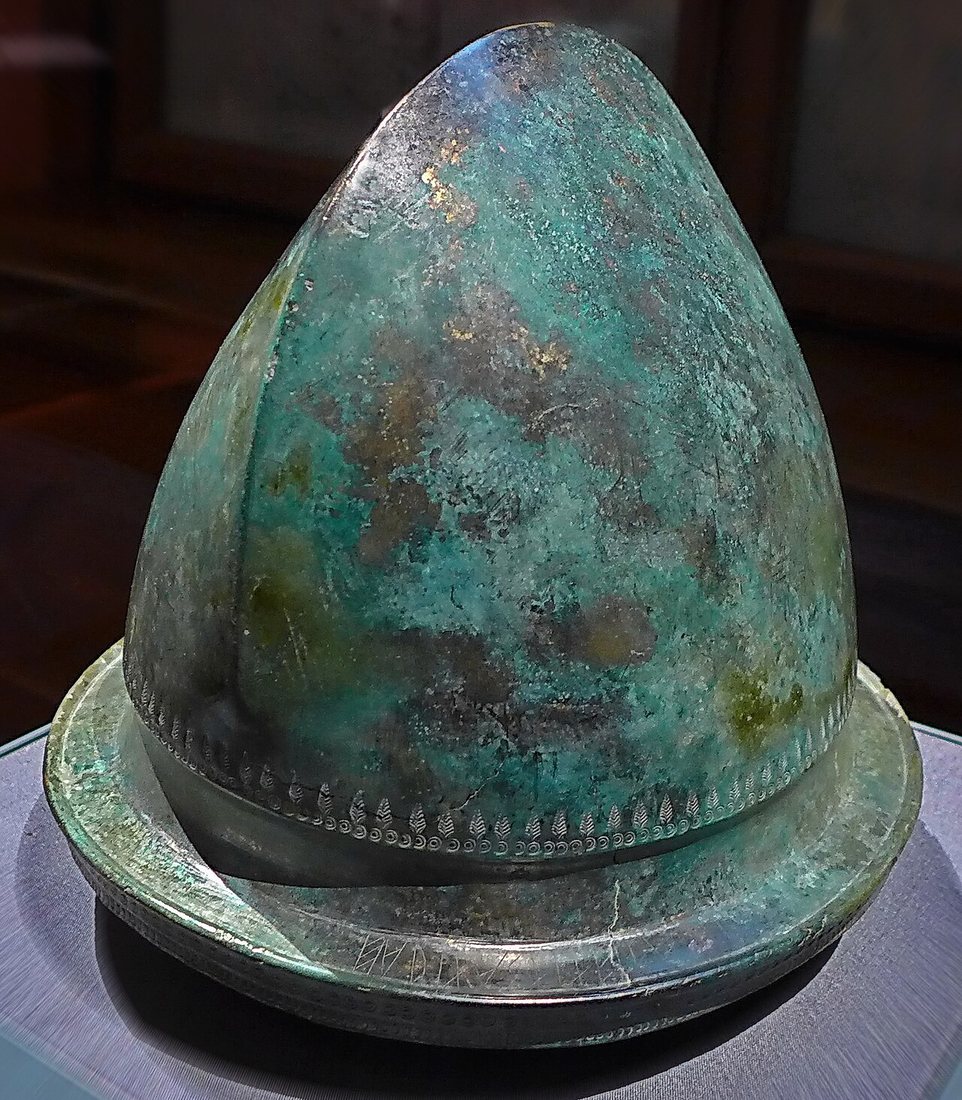
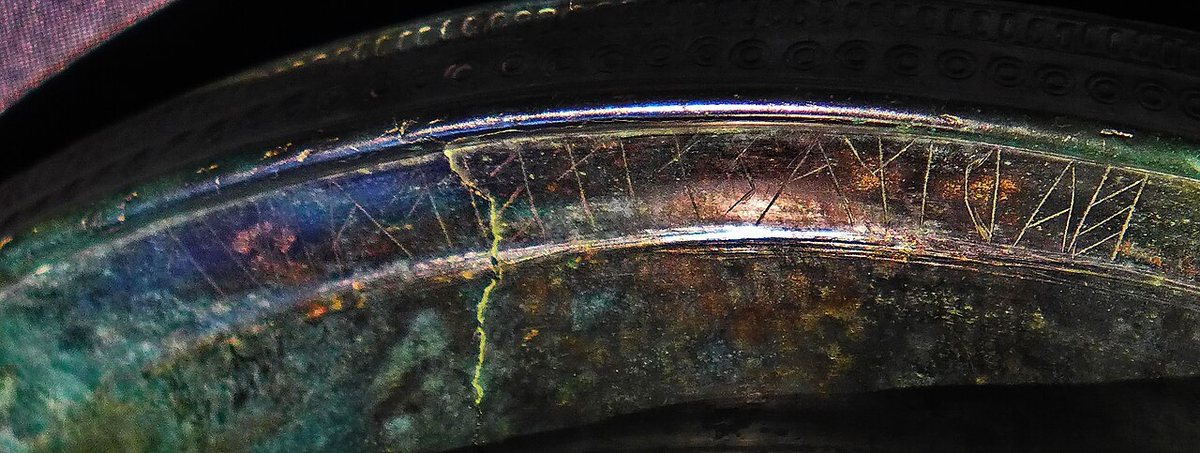
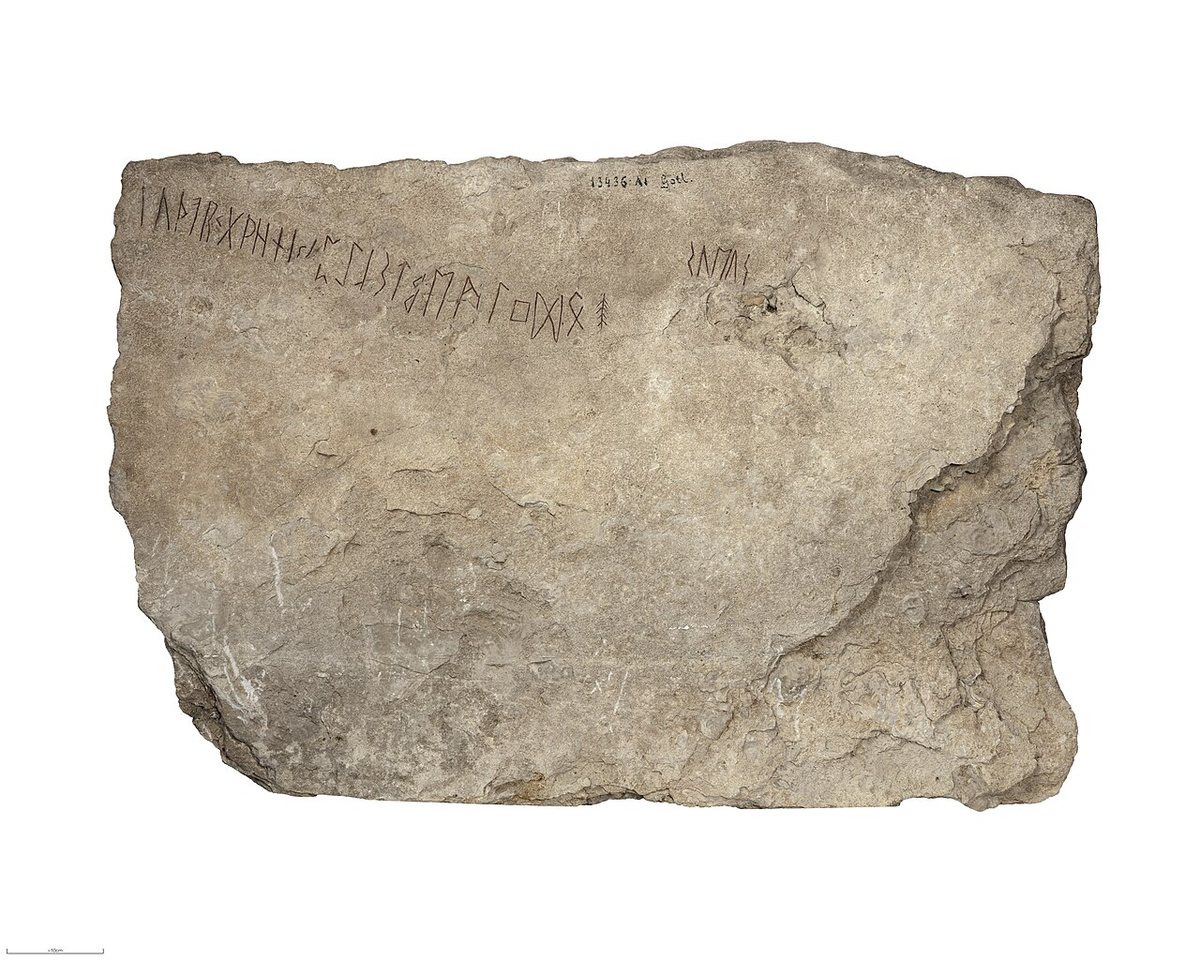
The earliest evidence of Germanic speakers meeting with writing may be the bronze helmet Negau B, from a hoard found in Slovenia in 1812. Scratched on its brim, right to left, in a North Etruscan alphabet, is 𐌇𐌀𐌓𐌉𐌙𐌀𐌔𐌕𐌉𐌕𐌄𐌉𐌅𐌀 (shown here left to right; transliterated hariχasti teiva). Nearly everyone reads the Germanic name Harigast in it; the rest is interpreted in various ways, for instance as ‘Harigast the priest’. When it was inscribed is uncertain; estimates range from the 4th to the 2nd century BCE. It is not a runic inscription but an older script of the kind from which the runes may have sprung.
The futhark of 24 letters
The oldest runic script is called the futhark after its first six letters (f, u, þ, a, r, k), or more precisely the Elder Futhark. It had 24 runes in a fixed order, divided into three groups of eight (the division already appears on 6th-century bracteates); today the groups are called ættir (Old Norse for ‘families’). Each rune had a name, usually a word beginning with its sound: ᚠ was called *fehu ‘cattle, wealth’, ᛗ *mannaz ‘man’. The Proto-Germanic names are nowhere written down; they are reconstructed from the Old English rune poem, the later Norse rune names and the names of the Gothic letters.
The earliest complete listing of all 24 runes is on the Kylver Stone from Gotland, from around 400. Runes were written left to right or right to left, sometimes alternating line by line, and words were often not separated. Some 350 Elder Futhark inscriptions are known, most of them short: an owner's or maker's name, a dedication, a charm. The knowledge of how to read them was lost, and the Elder Futhark was deciphered only in 1865, by the Norwegian scholar Sophus Bugge.
The Elder Futhark
- f*fehu ‘cattle, wealth’
- u*ūruz ‘aurochs’
- þ[θ]; name uncertain, Norse þurs ‘giant’
- a*ansuz ‘god’
- r*raidō ‘ride’
- kname uncertain
- g*gebō ‘gift’
- w*wunjō ‘joy’
- h*hagalaz ‘hail’
- n*naudiz ‘need’
- i*īsaz ‘ice’
- j*jēran ‘year, harvest’
- ïsound uncertain; *ī(h)waz ‘yew’
- prare; name obscure
- zlater r (ʀ); name uncertain (usually reconstructed as *algiz)
- s*sōwilō ‘sun’
- t*tīwaz, the god Týr
- b*berkanan ‘birch’
- e*ehwaz ‘horse’
- m*mannaz ‘man’
- l*laguz ‘water’
- ŋ*ingwaz, the god Ing
- d*dagaz ‘day’
- o*ōþalan ‘inherited land’
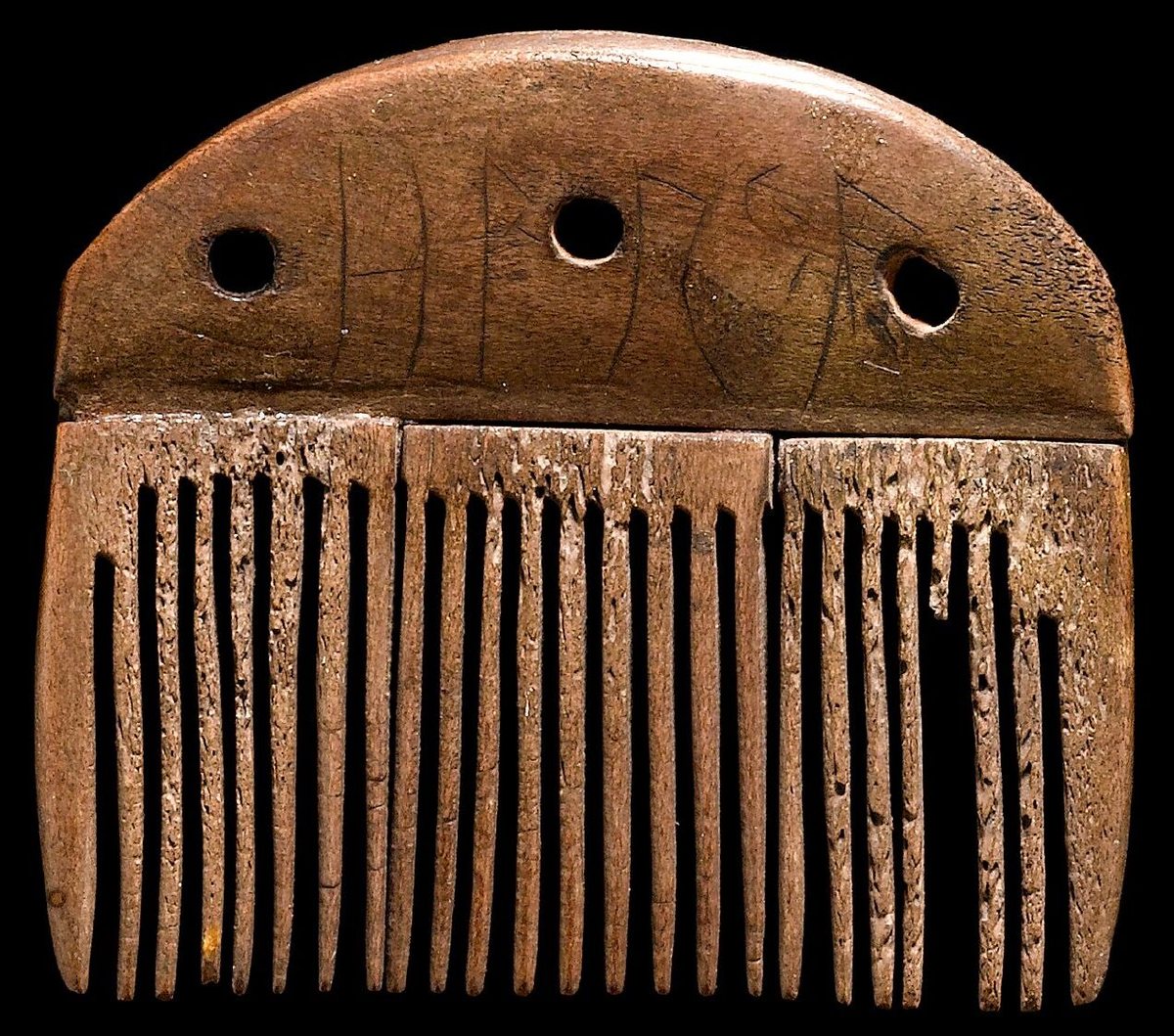
harjathe inscription on the Vimose comb (c. 150–200), most likely a man's name, perhaps ‘warrior’
The rune names are reconstructions (an asterisk marks an unattested form), and for several runes the name or sound is uncertain. Rune shapes varied from place to place and over time; Unicode encodes runes left to right. The characters are rendered in Noto Sans Runic.
Combs, jewellery and golden horns
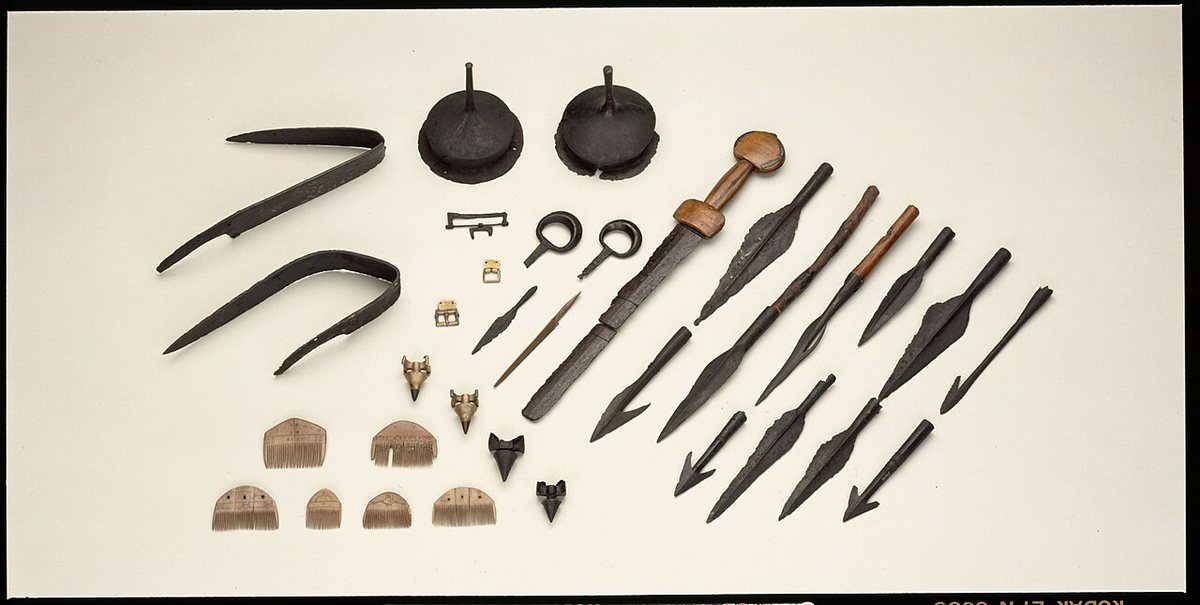
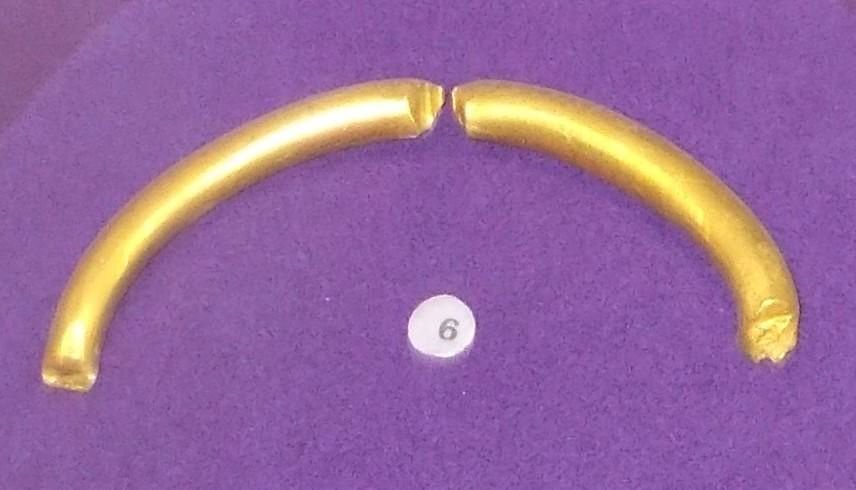
The oldest securely dated runic inscriptions come from Danish bogs, where weapons and equipment were deposited as offerings in the Roman period. The Vimose comb from Funen, of about 150–200, bears the word harja. In 2023 Norwegian archaeologists announced the Svingerud stone (Hole municipality), which on the dating of the grave was made at some point between the 1st century BCE and the 3rd century CE; it could thus be older still, but the date is uncertain. The Elder Futhark was not used only in the north: inscriptions are also known from the Rhineland, Alamannia and eastwards as far as the Carpathians, for example on the gold neck-ring from the Pietroasele treasure in Romania, whose inscription is read gutani… hailag and connected with the Goths.
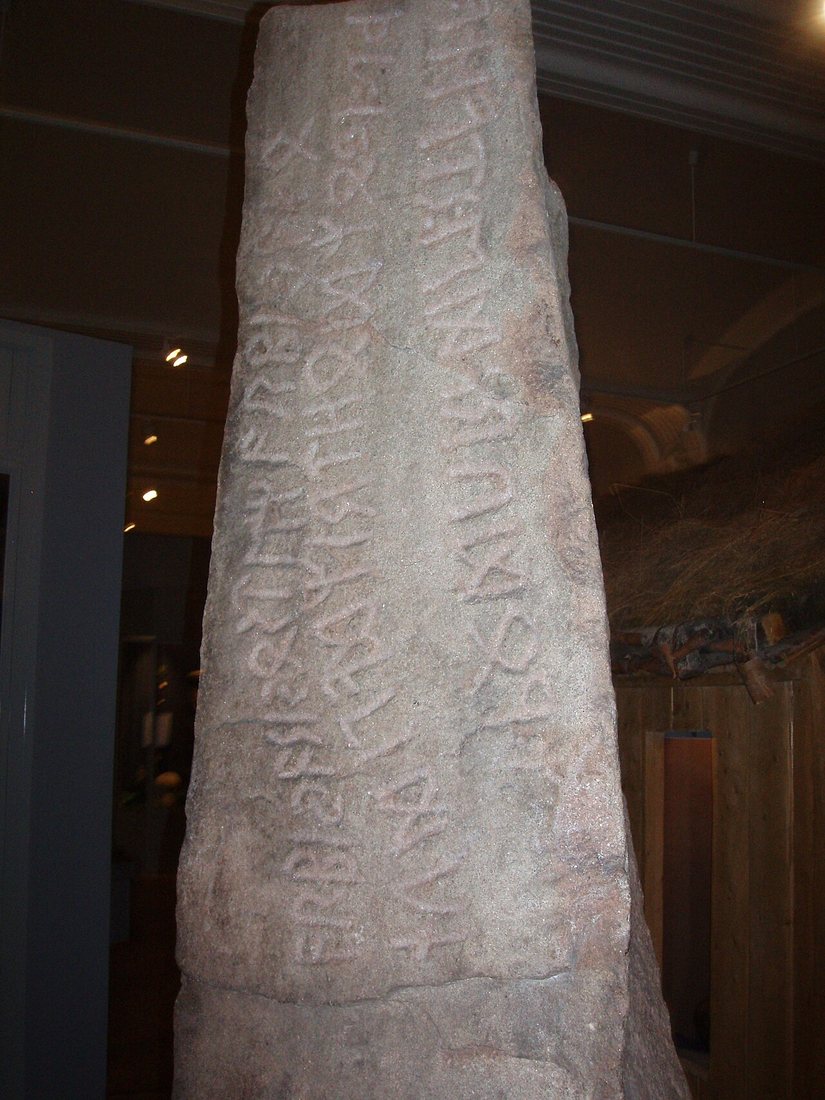
Around 400 runestones began to be raised as memorials (the only older one is the isolated find from Svingerud). The Tune stone in south-eastern Norway commemorates a man named Woduridaz and, on the usual reading, also mentions three daughters and an inheritance (þrijōz dohtrīz, ‘three daughters’). The most famous inscription of the early period, however, is the sentence on the golden horn of Gallehus.
Runes on objects
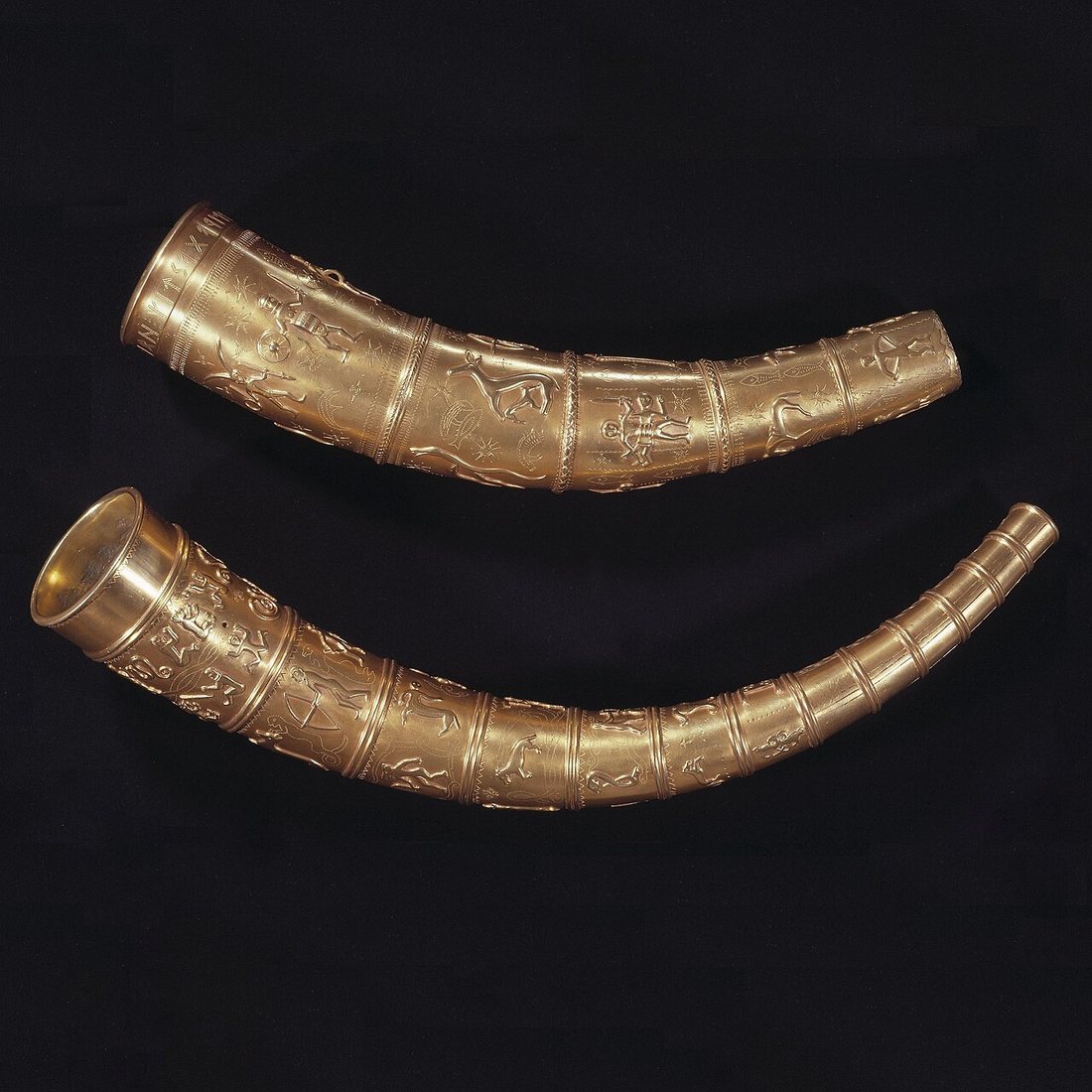
ek hlewagastiz : holtijaz : horna : tawido :
- ek
- I
- hlewagastiz
- Hlewagastiz (a name, perhaps ‘fame-guest’)
- holtijaz
- Holtijaz (most likely ‘son of Holt’)
- horna
- horn (accusative)
- tawido
- made
I, Hlewagastiz Holtijaz, made the horn.The inscription was on the shorter of the two golden horns, found in 1734 at Gallehus in southern Jutland; the horns dated from the early 5th century. In 1802 a thief melted them down, so the inscription is known only from drawings. It is one of the earliest complete sentences in the Elder Futhark and the oldest surviving line of Germanic verse: the words hlewagastiz, holtijaz and horna are bound by alliteration, the repetition of the initial h. Holtijaz is usually taken as a patronymic; others read it as ‘of the wood’. The colons are word dividers.
Viking-Age runes and runestones
In Scandinavia, during the 7th and 8th centuries, the number of runes shrank from 24 to 16. The result was the Younger Futhark, the script of the Viking Age, in a Danish and a Swedish-Norwegian form. One rune now had to stand for several sounds: ᚢ wrote u, o and y, ᚴ both k and g. Meanwhile Old Norse was developing and gaining sounds. Several thousand runestones are inscribed in the younger runes, most of them in Sweden, and most are memorials to dead relatives.
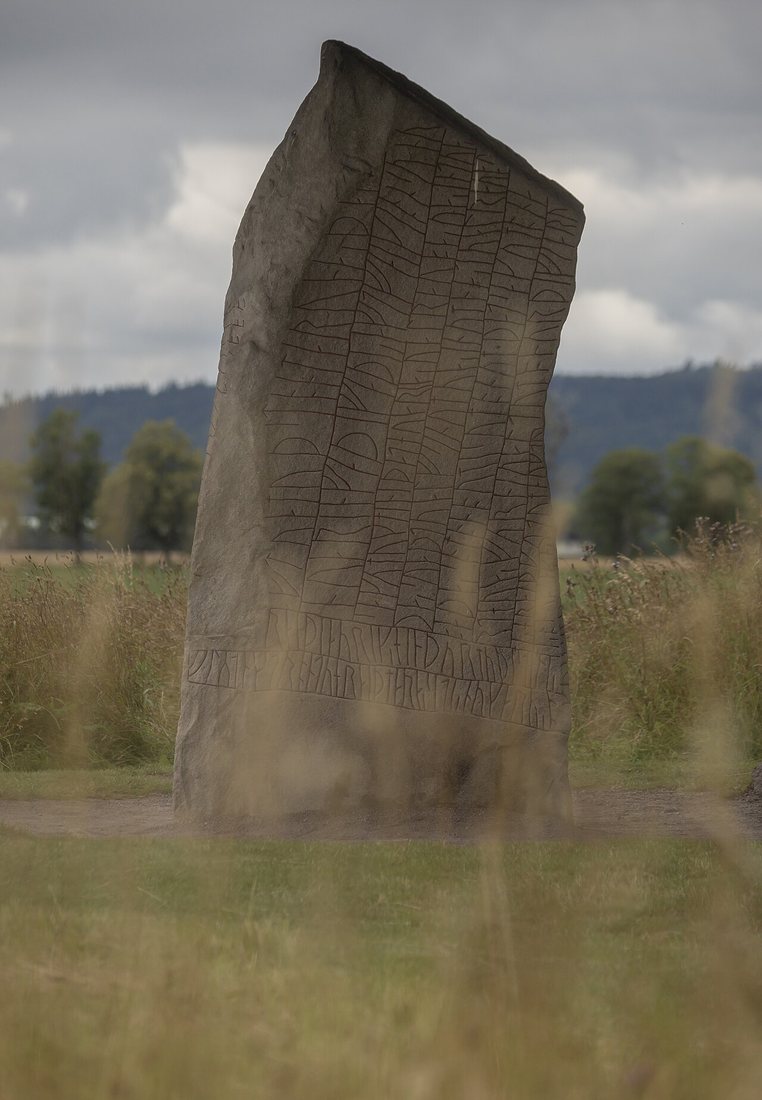
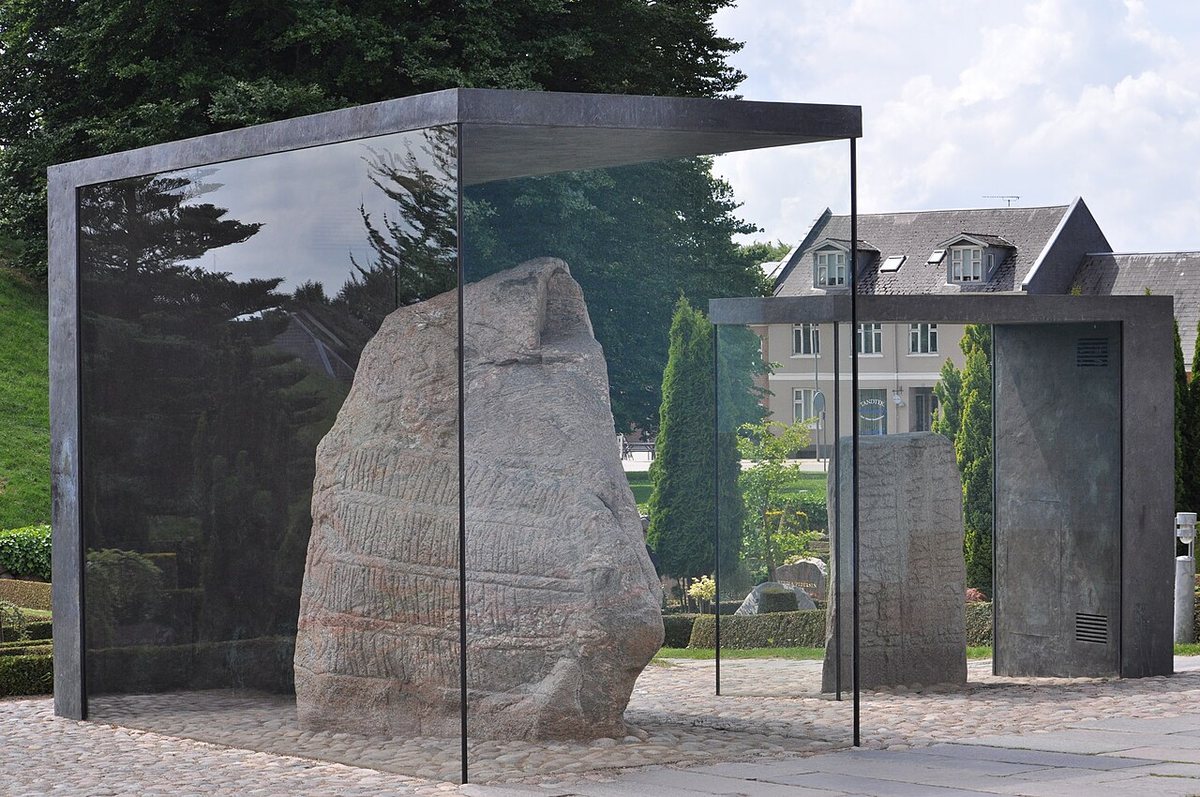
The Rök stone in Östergötland, Sweden, from the early 9th century, carries some 760 characters, the longest known runic inscription in stone. A father named Varinn raised it in memory of his dead son Vámóðr. The text is deliberately difficult: part of it is in cipher and part in the Elder Futhark; a stanza about Þjóðríkr, who ‘now sits on his Gothic horse’, is usually referred to the Ostrogothic king Theodoric the Great. The reading of the runes is mostly certain, the meaning of the whole is interpreted in different ways. At Jelling in Denmark, in the 10th century, King Gorm raised a stone for his wife Thyra, and his son Harald Bluetooth a large stone for his parents, proclaiming that Harald ‘won for himself all of Denmark and Norway and made the Danes Christian’.
The Anglo-Saxon futhorc
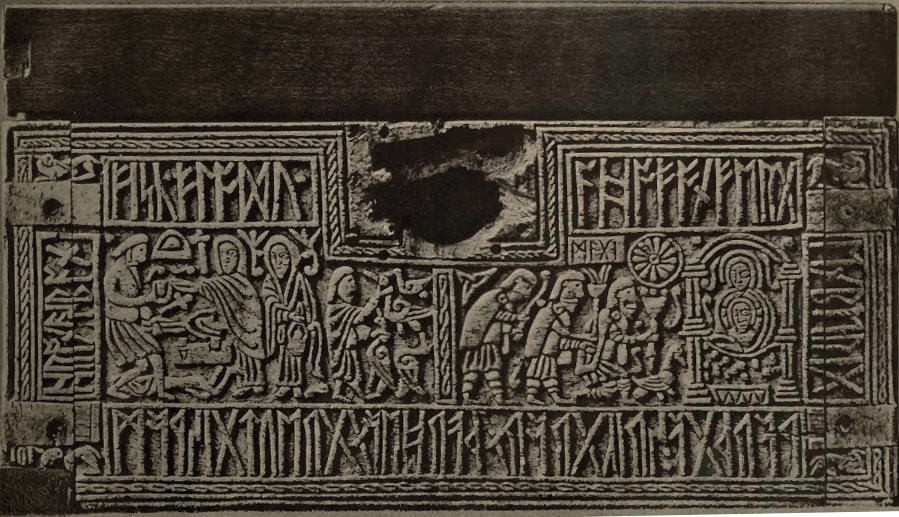
The Angles, Saxons and Frisians, by contrast, enlarged the runic row. Because the sound a split in Old English and Frisian, one rune became three: ᚪ āc, ᚫ æsc and ᚩ ōs. After the new values the row is called the futhorc. It had 28 letters, and in England later as many as about 33. Runes were used there from about the 5th century and survived the coming of Christianity: they appear on crosses, on St Cuthbert's coffin and on the whalebone Franks Casket, where runes mix with Latin letters and pagan legend with biblical scenes. From the 7th century, however, the Latin alphabet gradually displaced them, taking over two runes as letters: þ (thorn) and ƿ (wynn).
Wulfila and the Gothic alphabet
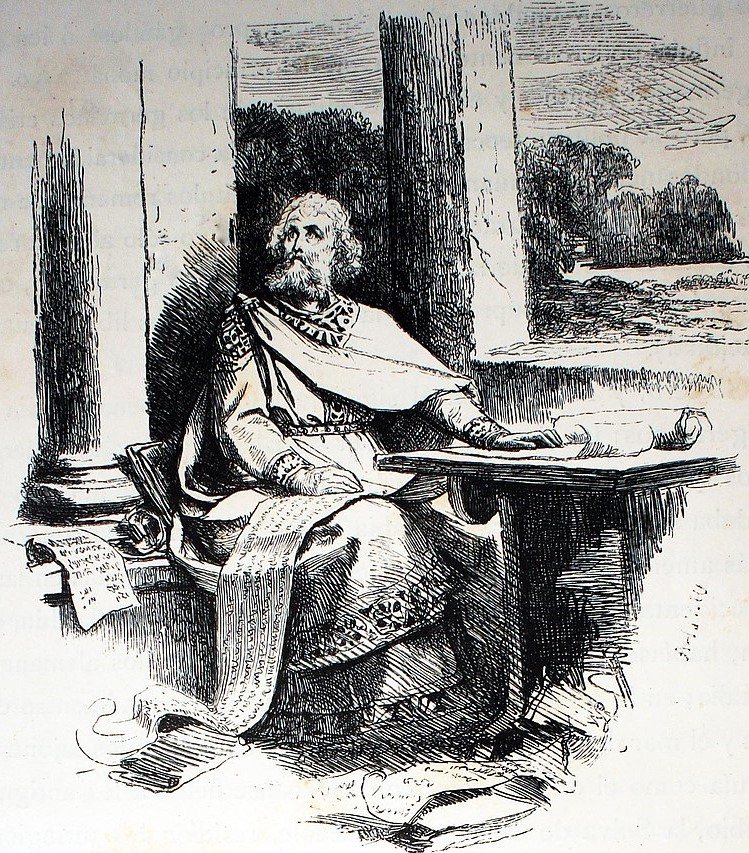
The Goths settled north of the Danube and the Black Sea during the 2nd and 3rd centuries. Among them grew up Wulfila (Latin Ulfilas, c. 311–383), descended in part from Christians of Asia Minor whom the Goths had carried off as captives. Around 341 he was consecrated bishop of the Goths; after a persecution of Christians he settled with his flock on Roman territory in Moesia (modern Bulgaria) in 348, and he died in Constantinople. He adhered to the Arian understanding of the faith, and so the Goths and the other Germanic peoples who took Christianity from them long remained Arians.
According to ancient authors, Wulfila devised an alphabet of his own for translating the Bible from Greek. Most of its letters come from the Greek alphabet, several resemble Latin letters in shape, and for two, j and u, a runic origin has been suggested; how much Latin and the runes contributed is disputed. Like the Greek letters, they also had numerical values. The translation is traditionally ascribed to Wulfila himself, but analysis of the text suggests that a team of translators worked on it, perhaps under his direction.
Gothic letters (a selection)
- a1; from Greek Α
- b2; from Greek Β
- g3; from Greek Γ
- d4; from Greek Δ
- e5; long [eː]
- q6; [kʷ]
- h8; shaped like Latin h
- þ9; [θ], in the place of Greek θ
- i10; ei = long [iː]
- j60; shape perhaps from Latin G or the rune ᛃ
- u70; shape perhaps from the rune ᚢ
- r100; shaped like Latin R
- s200; shaped like Latin S
- w400; from Greek Υ
- f500; shaped like Latin F
- ƕ700; [hʷ], a letter of its own
- o800; long [oː]
hlaifbread (accusative), from the Gothic Lord's Prayer; Czech chléb ‘bread’ comes from the same Germanic word
The number beside each letter is its numerical value. The alphabet had 27 characters, two of which (for 90 and 900) served only as numerals. The characters are rendered in Noto Sans Gothic.
The Silver Bible
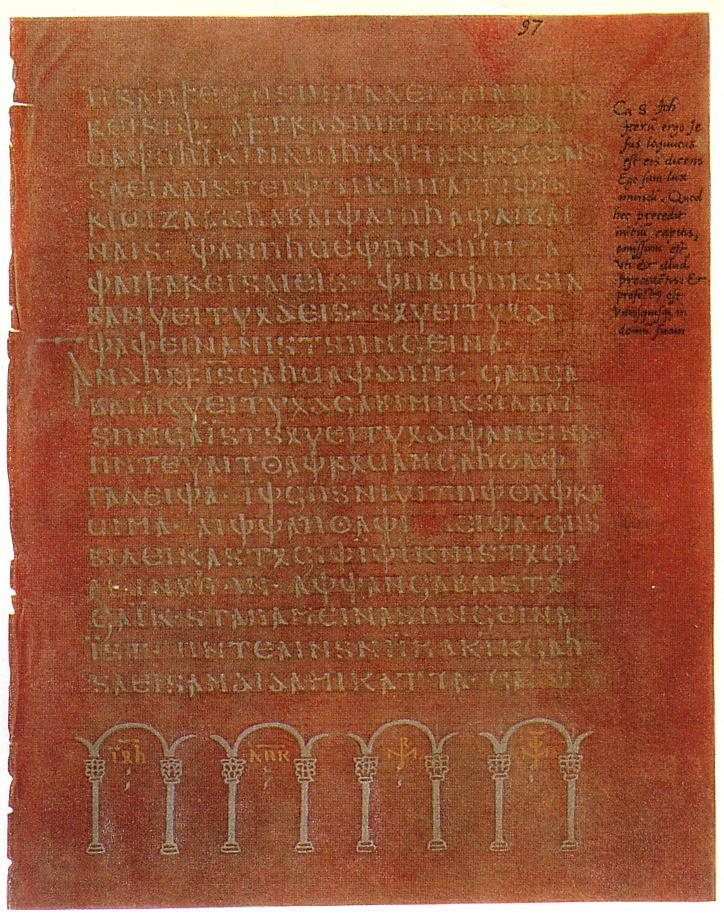
The Gothic Bible survives only in fragments, mainly of the Gospels and the Pauline Epistles. The most precious is the Silver Bible (Codex argenteus) of the 6th century, written in silver and gold ink on purple-dyed parchment. It was most likely made in Italy under the Ostrogothic king Theodoric the Great (died 526), perhaps at Ravenna. Of its original 336 leaves, 188 survive.
The codex came to light in the 16th century at Werden Abbey near Essen and passed into the collections of Emperor Rudolf II in Prague. In 1648 Swedish troops carried it off from there as war booty to Stockholm; after Queen Christina's abdication Isaac Vossius took it to the Netherlands, where in the 1660s Count Magnus Gabriel De la Gardie bought it and gave it to Uppsala University, where it still is. The final leaf was found in 1970 at Speyer. Since 2011 the codex has been on UNESCO's Memory of the World Register.
atta unsar þu in himinam, weihnai namo þein
- atta
- father
- unsar
- our
- þu
- thou
- in himinam
- in the heavens
- weihnai
- may (it) be hallowed
- namo
- name
- þein
- thy
Our Father, who art in heaven, hallowed be thy name.The opening of the Lord's Prayer (Matthew 6:9) in the Gothic translation as preserved in the Silver Bible. For ‘father’ Gothic uses atta here; fadar, cognate with English father, occurs only once in the Gothic texts. The digraph ei stands for long i, so weihnai was pronounced roughly [wiːhnɛː]. A little further on the prayer has hlaif unsarana ‘our bread’.
Germanic peoples in the Czech lands
After the Celtic Boii, after whom Bohemia is called Boiohaemum in Latin (the second part of the name is usually derived from Germanic *haimaz ‘home’), the Germanic Marcomanni came to Bohemia at the end of the 1st century BCE. They were led by Maroboduus, who built a powerful tribal confederation there; where his seat lay is not known. The Marcomanni and the Quadi were then neighbours of the Roman Empire for centuries, and from 166 to 180 they fought it in the Marcomannic Wars. During the Migration Period other Germanic groups passed through the Czech lands, among them the Langobards, and in the 6th century the Slavs arrived.
The oldest known inscription from a Slavic milieu is runic. A cattle rib from a Slavic settlement at Lány near Břeclav, from around 600, is carved with the last seven runes of the Elder Futhark. The find was published in 2021 by a team led by Jiří Macháček; whether the runes were carved by a Slav or by someone from a Germanic milieu remains open.
The Germanic languages today
Gothic died out in the early Middle Ages; in the 16th century, however, the Flemish diplomat Ogier Ghiselin de Busbecq recorded a few dozen words of Crimean Gothic, which survived in Crimea until the 18th century and was not a direct descendant of Wulfila's Gothic. Old Norse is preserved in the Icelandic sagas and Eddas, and Icelandic remains close to it today. About 515 million people speak a Germanic language as their mother tongue; the largest is English (360–400 million native speakers), followed by German (over 100 million) and Dutch (about 24 million).
Timeline
- 4th–2nd c. BCE?The Germanic name Harigast on helmet Negau B (date uncertain).
- late 1st c. BCEThe Marcomanni under Maroboduus move into Bohemia.
- c. 98Tacitus writes the Germania.
- c. 150–200The Vimose comb inscribed harja.
- 166–180Rome's Marcomannic Wars against the Marcomanni and Quadi.
- c. 341Wulfila consecrated bishop of the Goths.
- c. 369Traditional date for the completion of the Gothic Bible.
- c. 400The Kylver Stone with the full futhark row; the Tune stone.
- early 5th c.The Golden Horns of Gallehus.
- 6th c.The Silver Bible, most likely in Ostrogothic Italy.
- c. 600Runes on the rib from Lány near Břeclav.
- 7th–8th c.The 16-rune Younger Futhark emerges in Scandinavia.
- early 9th c.The Rök stone.
- 10th c.The runestones of King Gorm and Harald Bluetooth at Jelling.
- 1648Swedish troops carry the Silver Bible off from Prague.
- 1865Sophus Bugge deciphers the Elder Futhark.
Germanic languages on the globe
Tap a language to show it on the globe:
Sources and further reading
- R. I. Page: Runes. British Museum Press, 1987.
- Michael P. Barnes: Runes: A Handbook. Boydell Press, 2012.
- Klaus Düwel: Runenkunde. Metzler, 4th ed. 2008.
- D. Gary Miller: The Oxford Gothic Grammar. Oxford University Press, 2019.
- Don Ringe: From Proto-Indo-European to Proto-Germanic. Oxford University Press, 2006.
- Macháček, J., Nedoma, R., Dresler, P. et al.: Runes from Lány (Czech Republic) – The oldest inscription among Slavs. A new standard for multidisciplinary analysis of runic bones. Journal of Archaeological Science 127 (2021), 105333.
- Glottolog 5 (languages and their classification).