Languages of antiquity
The Slavs and Great Moravia
Central Europe and the Balkans · from Proto-Slavic to the first Slavic books
In 863 the brothers Constantine and Methodius came from Byzantium to Great Moravia. Constantine created a new script for the Slavic tongue, Glagolitic, and the two translated liturgical books into the language now called Old Church Slavonic, the first literary language of the Slavs. After Methodius’ disciples were driven out of Moravia, Bulgaria took up their writing and developed Cyrillic, and from there it spread to Rus’ and across the Balkans; in Croatia, Glagolitic lasted into the modern era. Czech, in the end, came to be written in the Latin alphabet.
One language, many dialects
The Slavic languages form one branch of the Indo-European family. Their closest relatives are the Baltic languages (Lithuanian and Latvian), with which they share a common ancestor, Proto-Balto-Slavic. The common ancestor of all Slavic languages, Proto-Slavic, is not attested in writing: linguists reconstruct it by comparing the later languages, and reconstructed words are therefore marked with an asterisk. Proto-Slavic broke up into separate languages in the second half of the 1st millennium CE, as the Slavs spread over much of eastern and central Europe and into the Balkans.
Even in the 9th century the differences between Slavic dialects were small, which is why a single literary language could serve Slavs in Moravia, Bulgaria and Rus’. Today the Slavic languages are divided into West Slavic (among them Czech, Slovak and Polish), East Slavic (Russian, Ukrainian, Belarusian) and South Slavic (Slovene, Serbian, Croatian, Bulgarian, Macedonian and others). Around the turn of the 21st century they were estimated to have some 315 million speakers.
From Proto-Slavic to today’s languages
Proto-Slavic forms are reconstructed (asterisk). The words show several regular changes: clusters such as *ol and *or between consonants were reversed in the south and west (hlava, głowa) but gained an extra vowel in the east (golova); of the major standard languages only Polish has kept nasal vowels (ą, ę; ręka, pięć), though distributed differently; Czech (like Slovak, Ukrainian and Belarusian) turned g into h; Old Church Slavonic and Russian insert an l after m (zemlja), the West Slavic languages do not.
| Proto-Slavic → Old Church Slavonic | Czech | Russian · Polish |
|---|---|---|
| *golva → glava | hlava ‘head’ | golova (голова) · głowa |
| *gordъ → gradъ | hrad ‘castle’ | gorod (город) ‘town’ · gród ‘stronghold’ |
| *melko → mlěko | mléko ‘milk’ | moloko (молоко) · mleko |
| *korva → krava | kráva ‘cow’ | korova (корова) · krowa |
| *rǫka → rǫka | ruka ‘hand’ | ruka (рука) · ręka |
| *pętь → pętь | pět ‘five’ | pyat’ (пять) · pięć |
| *zemja → zemlja | země ‘earth’ | zemlya (земля) · ziemia |
| *dьnь → dьnь | den ‘day’ | den’ (день) · dzień |
Great Moravia
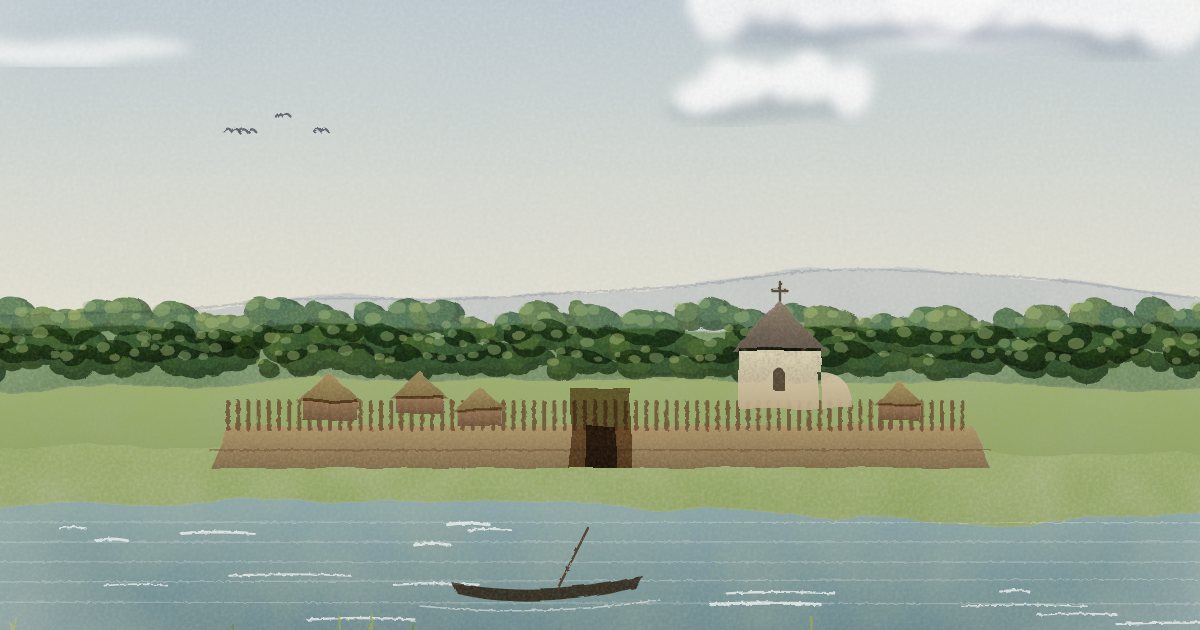
In the 9th century a Slavic state arose in the basin of the river Morava, which the Byzantine emperor Constantine VII Porphyrogenitus called ‘Great Moravia’ in the following century. According to the traditional account, around 833, under Prince Mojmír I, the Nitra region was joined to Moravia; the realm reached its greatest extent under Svatopluk (r. 870–894). Its core lay in today’s southern and eastern Moravia and western Slovakia. Christianity was first brought by priests from East Francia and from Italy and Dalmatia. The state fell to Hungarian attacks between 902 and 907; the exact date is unknown.
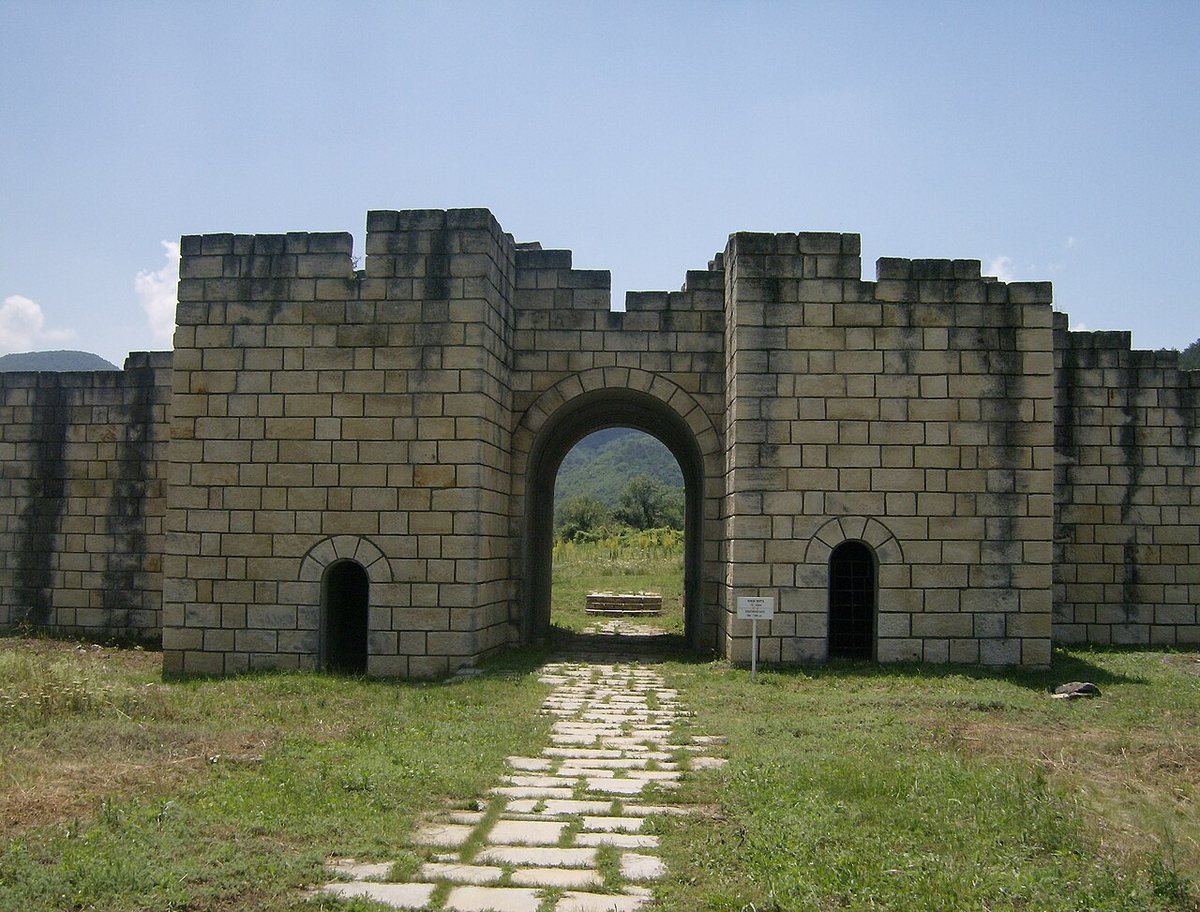
The best-explored stronghold is Mikulčice-Valy near Hodonín. Its six-hectare acropolis stood on an island in the Morava, protected by a rampart with a stone facing; archaeologists uncovered a palace and twelve churches, the earliest stone ones dated, by various estimates, from around 800 to the first half of the 9th century; among them is a three-aisled basilica measuring 35 × 9 m inside. Another centre was the Staré Město – Uherské Hradiště agglomeration. Where the main seat lay, called Veligrad by later tradition, is not known: Mikulčice and Staré Město are the chief candidates.
The mission from Thessalonica
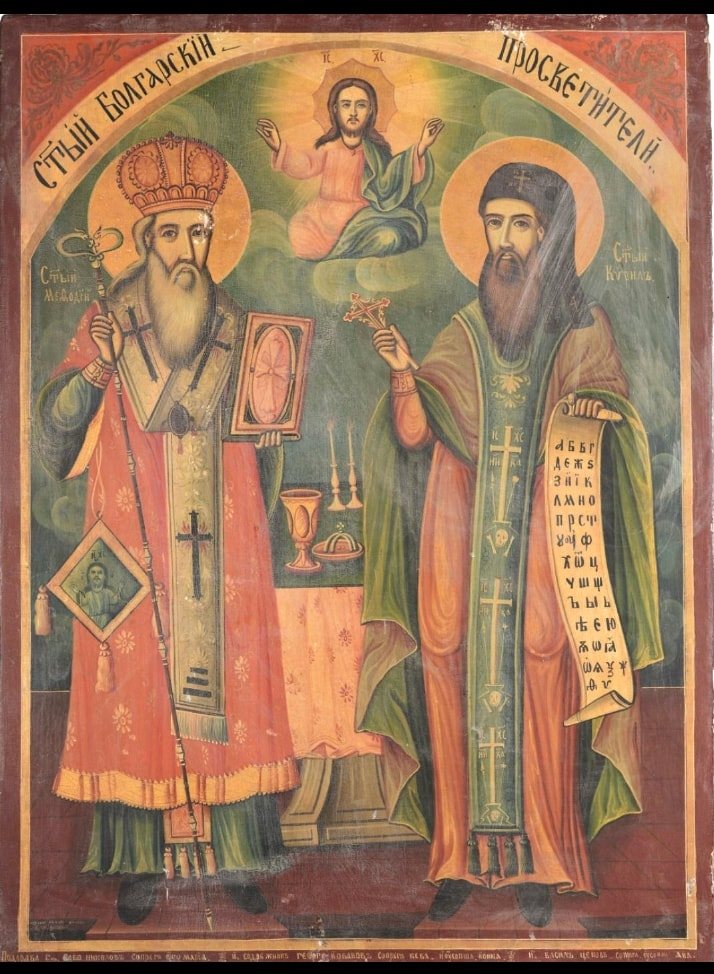
In 862 Prince Rastislav asked the Byzantine emperor Michael III for a ‘teacher’ who would explain the faith to his people in their own language; on the prevailing view he had first failed in Rome. The emperor and Patriarch Photius sent two brothers from Thessalonica, a city where Slavic was also spoken: the scholar and diplomat Constantine (born c. 827), who had already led an embassy to the Khazars, and his elder brother Methodius (born c. 815). In 863 they arrived in Moravia with translations already prepared.
In 867 the brothers set out for Rome by way of Pannonia, where Prince Kocel received them. In 868 Pope Hadrian II approved the Slavonic liturgy and had their disciples ordained. In Rome Constantine entered a monastery, took the name Cyril, and died there on 14 February 869. Methodius became archbishop with authority over Moravia and Pannonia. After several years’ imprisonment by Bavarian bishops (870–873) he returned to Moravia; in 880 Pope John VIII reaffirmed the Slavonic liturgy in the bull Industriae tuae. According to his Life he translated, with helpers, almost the entire Bible. He died on 6 April 885.
Glagolitic
For the Slavonic translations Constantine created a new script, now called Glagolitic (from Old Church Slavonic glagolъ, ‘word’, and glagolati, ‘to speak’). It was not a mere adaptation of an existing alphabet but had shapes of its own. On the prevailing view about 24 of the 41 known letters derive from Greek minuscule, the cursive hand of Byzantine manuscripts of the time, given an ornamental form; the origin of the rest is uncertain, with Hebrew and Samaritan letters or the Christian symbols of cross, circle and triangle suggested as models.
How many letters Glagolitic originally had is not known. The monk Khrabr speaks of 38; the 41 known today include ligatures added only in the 12th century. The letters had names taken from Slavic words and also served as numerals, in alphabetical order: Glagolitic ⰲ (v) stands for 3, whereas Cyrillic в stands for 2, because Cyrillic took its numerical values from the Greek alphabet (β = 2). The oldest Glagolitic is rounded; in Croatia an angular form developed later.
Glagolitic letters
- aazъ ‘I’ · number 1 · Cyrillic а
- bbuky ‘letter’ · number 2 · Cyrillic б
- vvědi ‘know’ · number 3 · Cyrillic в
- gglagoli ‘speak’ · number 4 · Cyrillic г
- ddobro ‘good’ · number 5 · Cyrillic д
- ejestь ‘is’ · number 6 · Cyrillic е
- žživěte ‘live!’ · number 7 · Cyrillic ж
- zzemlja ‘earth’ · number 9 · Cyrillic з
- kkako ‘how’ · number 40 · Cyrillic к
- lljudije ‘people’ · number 50 · Cyrillic л
- oonъ ‘he’ · number 80 · Cyrillic о
- sslovo ‘word’ · number 200 · Cyrillic с
- štšta (meaning unclear) · number 800 · Cyrillic щ
- ččrьvь ‘worm’ · number 1000 · Cyrillic ч
- ъjerъ · a very short vowel · Cyrillic ъ
- ějatь (transliterated ě) · Cyrillic ѣ
slovo (Cyrillic слово)‘word’; also the name of the letter ⱄ (s). Letters from the left: slovo, ljudije, onъ, vědi, onъ.
The signs are rendered in the rounded form of the Noto Sans Glagolitic font. Each letter is given with its Old Church Slavonic name, its numerical value and the corresponding Cyrillic letter. No numerical value is given for the last two letters.
Old Church Slavonic
The language into which the brothers translated was based, on the prevailing view, on the dialect of the Slavs around Thessalonica, that is, on South Slavic; in Moravia it took on West Slavic features. Old Church Slavonic is the oldest Slavic language attested in writing and therefore the chief witness to Proto-Slavic. It preserves the nasal vowels ę and ǫ, the very short vowels ъ and ь (the yers), the dual number and the aorist and imperfect past tenses.
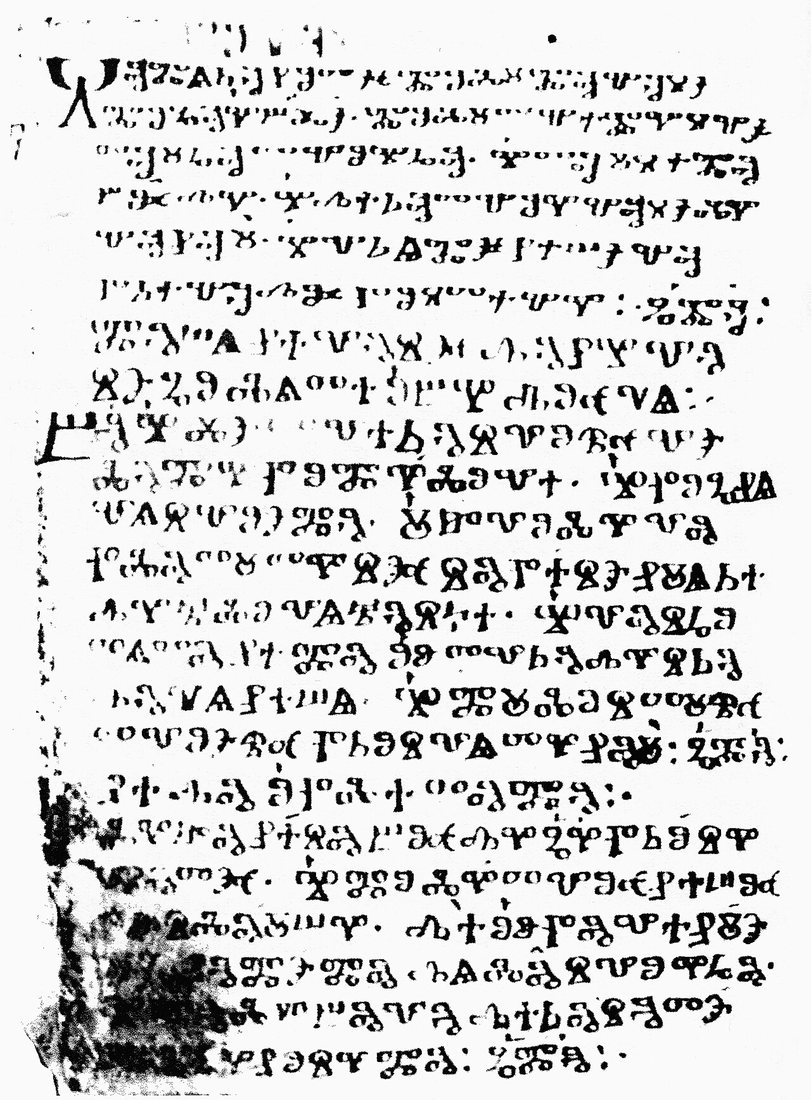
No manuscript survives from the time of the Moravian mission. Linguists therefore work from the oldest copies of the 10th and 11th centuries, the so-called canon; about two thirds of them are in Glagolitic. The oldest is usually taken to be the Kiev Missal: seven small parchment leaves (about 14.5 × 10.5 cm) with part of the Roman-rite mass, written no later than the second half of the 10th century (the first page is later, c. 1100). It has West Slavic features and probably originated in Bohemia or Moravia; the text it copies may go back to the Great Moravian period. It was acquired in Jerusalem in the 19th century by Archimandrite Antonin (Kapustin). In 1979 the Croatian Slavist Josip Hamm declared it a forgery by 19th-century Czech patriots, but the prevailing view holds it to be genuine.
From Moravia to Bulgaria
After Methodius’ death his opponent, Bishop Wiching of Nitra, persuaded Pope Stephen V to ban the Slavonic liturgy, and in 886 Methodius’ disciples were expelled from Moravia; some were sold into slavery. Clement, Naum and Angelar found refuge in Bulgaria with Prince Boris I, who had been baptised in 864/865 and wanted a liturgy in Slavic, independent of the Byzantine clergy. According to his Life, Clement taught some 3,500 pupils at Ohrid over seven years (886–893); the Ohrid school kept to Glagolitic as late as the 12th century. Naum worked at Pliska and at Preslav, where Prince Simeon I moved the capital in 893.
It was at Preslav that the script now bearing Cyril’s name took shape: Cyrillic. Most scholars hold that it was created by disciples of Constantine and Methodius in the late 9th or early 10th century from Greek uncials, with letters taken from Glagolitic for sounds that Greek lacked. Tradition ascribes it to Clement of Ohrid, but this is uncertain. The earliest Cyrillic inscriptions appear around Preslav, including the oldest dated Cyrillic inscription (Krepcha, 921). From Bulgaria, Old Church Slavonic writing spread to the Serbs and to Kievan Rus’. Since Bulgaria joined the European Union in 2007, Cyrillic has been the Union’s third official script, alongside Latin and Greek.
The oldest Gospel books
Bohemia: Sázava and Emmaus
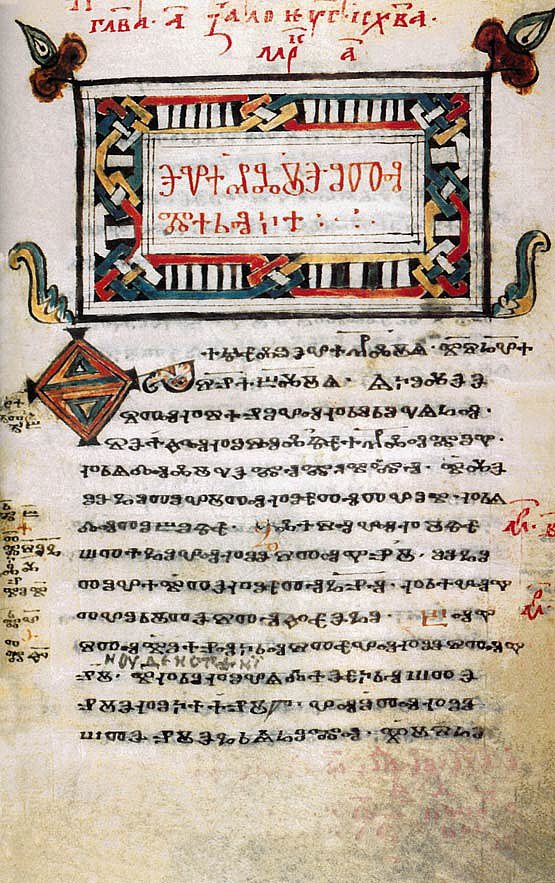
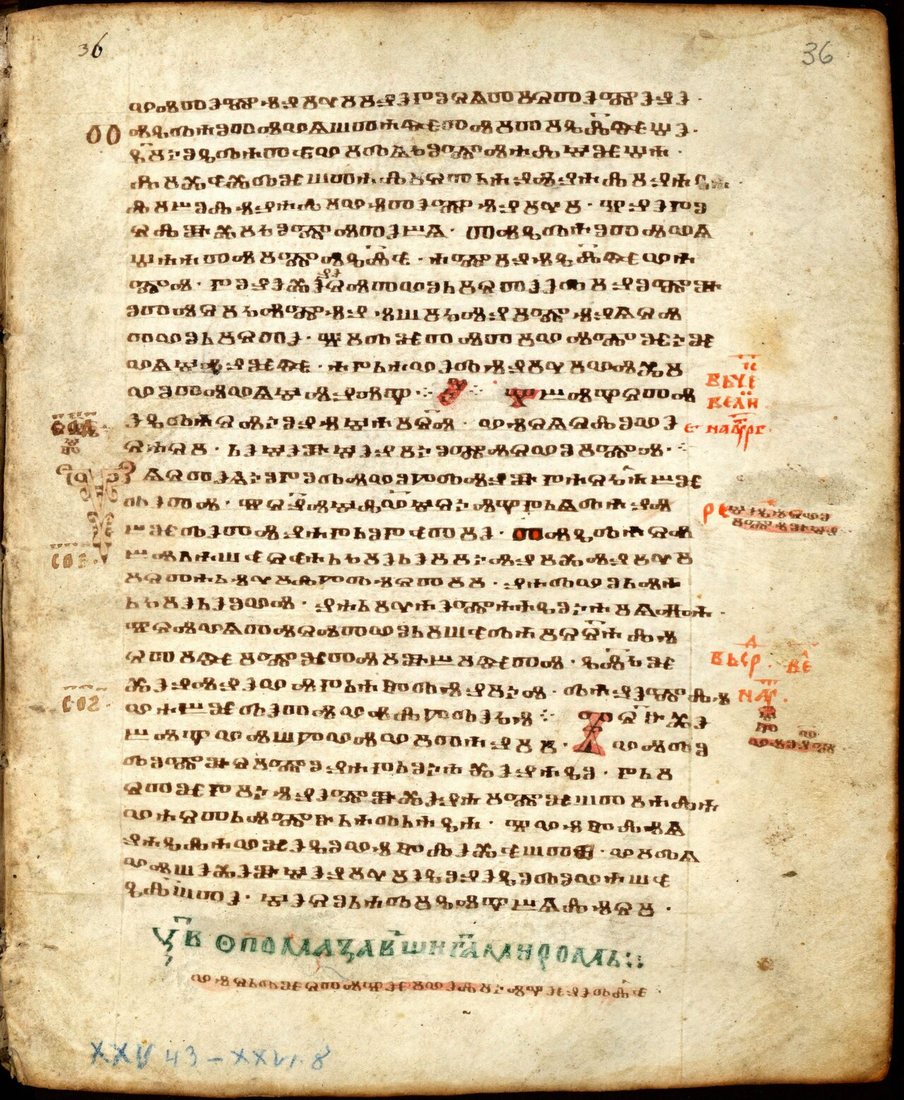
The Slavonic liturgy survived in Bohemia too in the 10th and 11th centuries; according to legend, Methodius baptised the Czech prince Bořivoj. A Czech recension of Old Church Slavonic, with features of the Czech of the time, is attested by the Prague Glagolitic Fragments, by legends and by glosses. Its last centre was the monastery at Sázava, which grew around 1032 out of the hermitage of St Procopius. Duke Spytihněv II expelled the Slavonic monks in 1056, Vratislav II recalled them in 1061, and Břetislav II expelled them for good at the end of 1096 (1097 is the traditional date). The monastery’s Slavonic books were then destroyed.
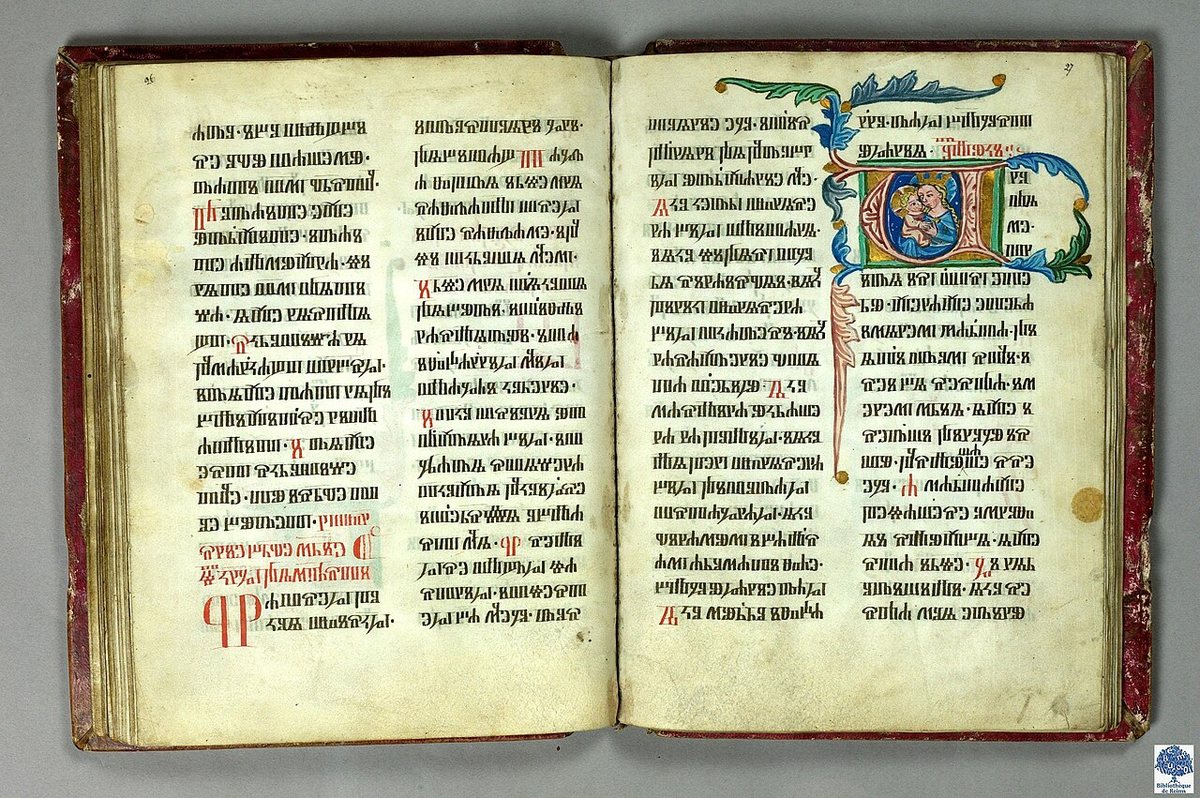
In 1347 Charles IV founded the Emmaus Monastery (Na Slovanech) in Prague’s New Town and brought in Benedictines from Croatia who used angular Glagolitic. Here, in 1395, the Glagolitic part of the Reims Gospel was completed; a note in the manuscript ascribes the Cyrillic part to St Procopius. The book left Prague, probably during the Hussite Wars, turned up in Constantinople and in 1574 was given by Cardinal Charles of Lorraine to Reims Cathedral, where French kings swore oaths on it during their coronation ceremonies. The last Glagolitic manuscript from Emmaus dates from 1450–1452. In 1926 Leoš Janáček set an Old Church Slavonic mass text as his Glagolitic Mass.
Croatian Glagolitic
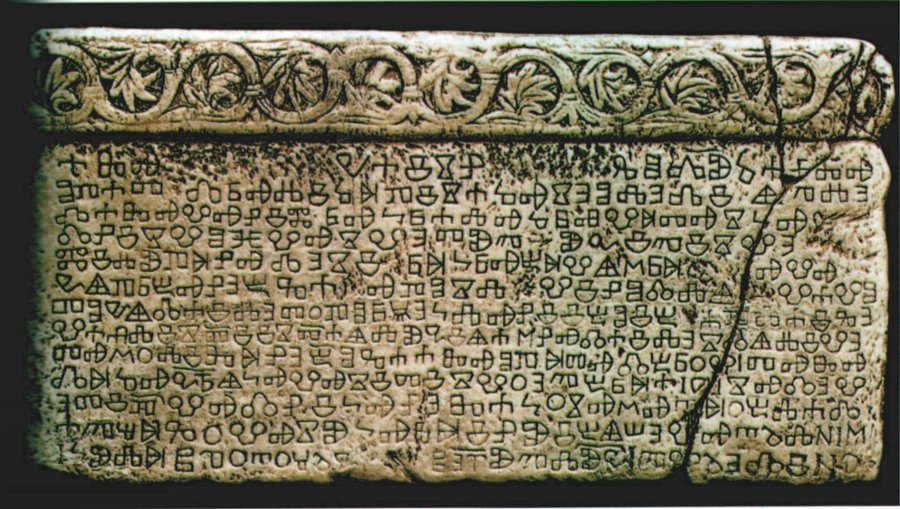
Glagolitic survived longest in Croatia, mainly on the coast and islands of the Kvarner and Dalmatia. Its best-known monument is the Baška tablet of about 1100, found on 15 September 1851 in the floor of the Church of St Lucy at Jurandvor on the island of Krk. It was part of an altar screen, and its inscription records King Zvonimir’s gift to a Benedictine abbey; it is the first native attestation of the Croats’ name. Its script stands at the transition from rounded to angular Glagolitic and includes a few Latin and Cyrillic letters.
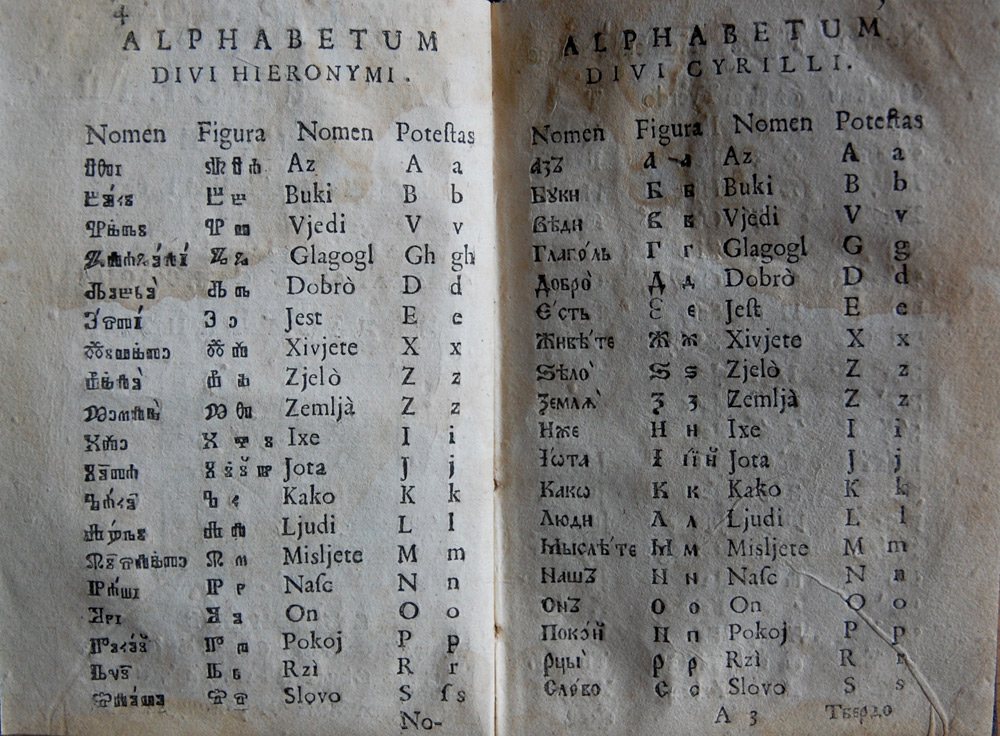
Croatian clergy claimed that Glagolitic had been created by St Jerome; this legend, known to Pope Innocent IV in 1248, helped defend the Slavonic liturgy within the Roman-rite Church. In 1483 the first printed Glagolitic missal appeared. On Krk, notaries were still writing in Glagolitic in the early 19th century, and in places it remained in liturgical use into the 20th century.
In Rus’: Ostromir and birch bark
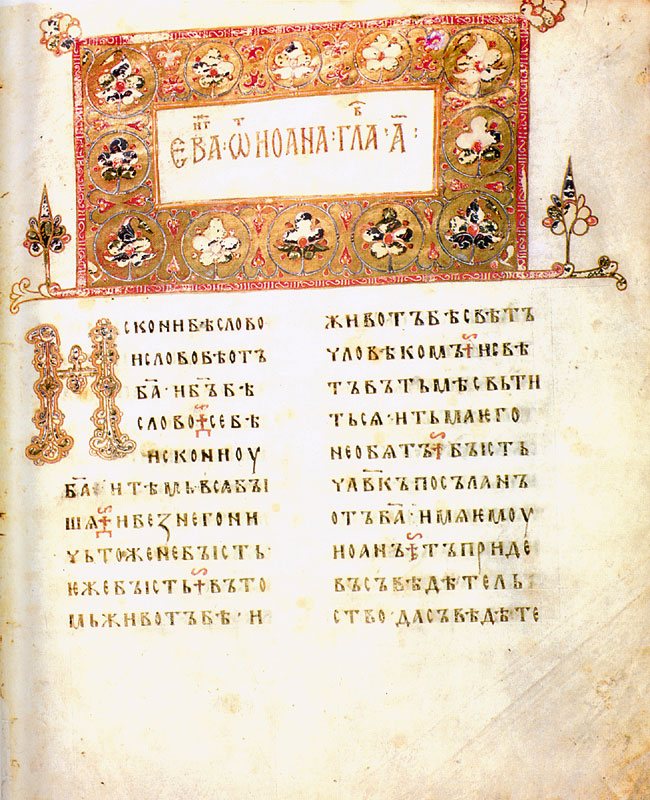
Old Church Slavonic books reached Kievan Rus’ after its Christianisation in the late 10th century, mostly already written in Cyrillic. The oldest dated book of Rus’ is the Ostromir Gospels, written in 1056–1057 by the deacon Gregory for Ostromir, the posadnik of Novgorod. It has 294 parchment leaves and is written in a local form of Church Slavonic: the scribe, for instance, no longer distinguished the nasal vowel ǫ from u, as matched his own speech.
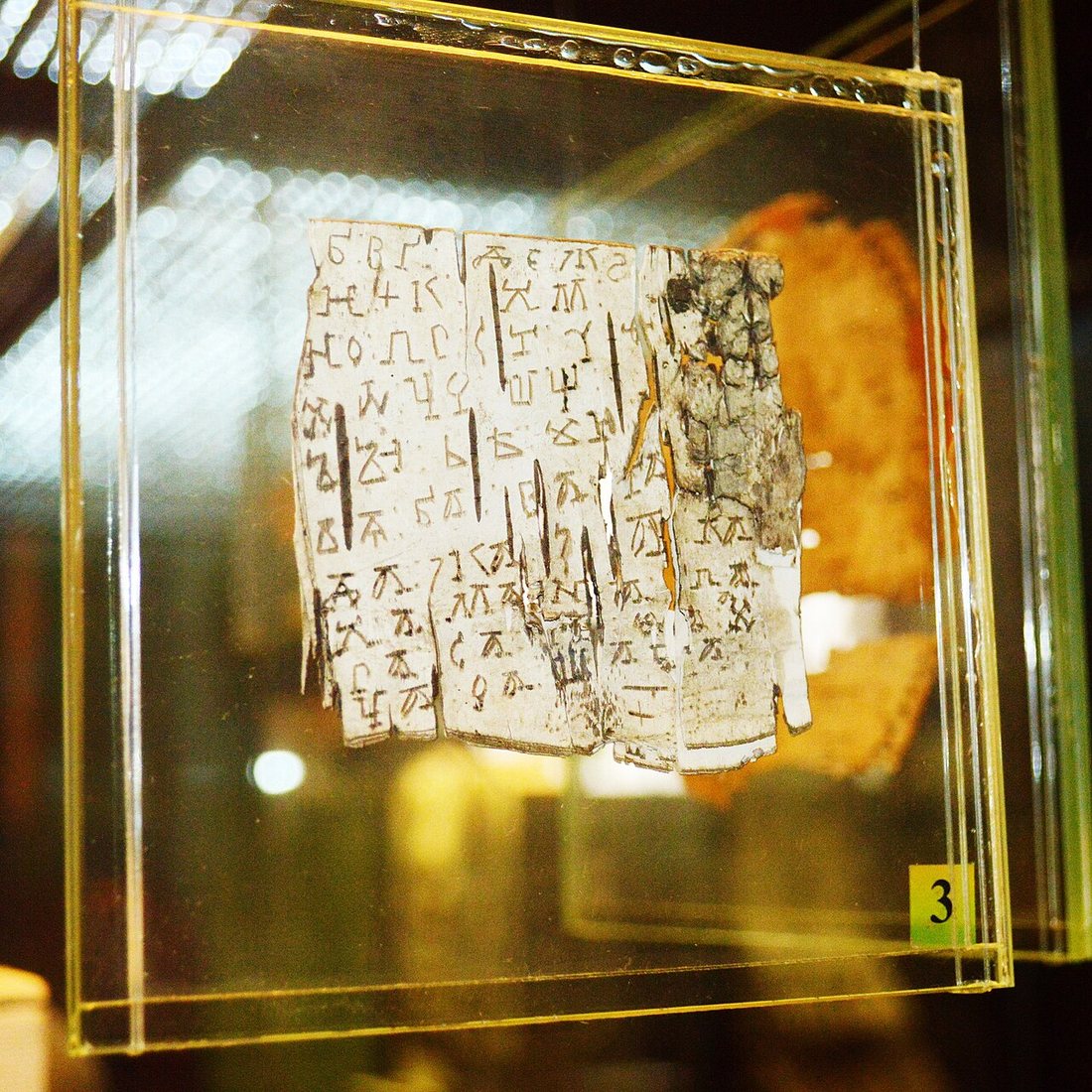
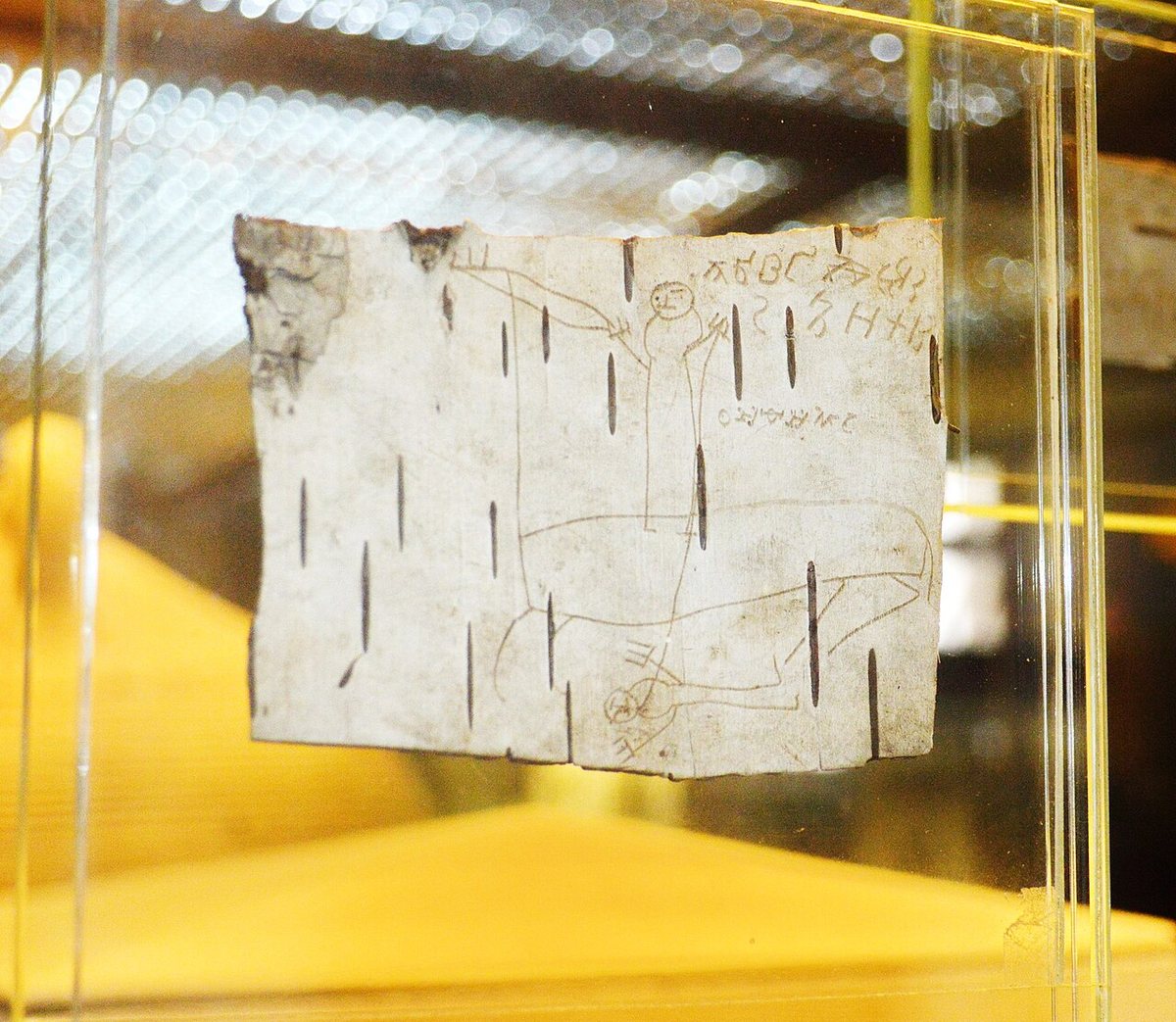
How people in Rus’ actually spoke is shown by letters on birch bark. The first was found in Novgorod on 26 July 1951 by Nina Akulova; by 2018 more than 1,200 had been found, 1,113 of them in Novgorod, where damp soil sealed off from the air kept them from decaying. The letters were scratched into the bark with a stylus. Most are ordinary private and business messages in the Old Novgorod dialect of the 11th–15th centuries; among the best known are the school exercises and drawings of a boy named Onfim from the 13th century.
Books and messages of Rus’
Czech in the Latin alphabet
Latin had been the main written language in Bohemia before, and after the end of the Slavonic liturgy at Sázava it remained the only one; Czech was written in the Latin alphabet, as the Freising manuscripts, in a language close to Slovene, had already been around 1000. The earliest evidence is single Czech words, mostly names of people and places, in Latin charters. The oldest surviving Czech sentence is usually taken to be a note added in the early 13th century to the foundation charter of the Litoměřice chapter (the charter itself is dated 1057 and already contains single Czech words, mostly place names).
The Latin alphabet had no letters for many Czech sounds, so scribes made do with digraphs, groups of letters that they used inconsistently. The treatise De orthographia Bohemica of the early 15th century, traditionally attributed to Jan Hus (the authorship is uncertain), proposed writing soft consonants with a dot above the letter and long vowels with an acute accent; the dot later developed into the háček. Diacritics on the Czech model were adopted by, among others, the Croatian and Slovene Latin alphabets and by Lithuanian. In Slovakia, Latin and Czech long served as written languages; standard Slovak was codified only by Anton Bernolák in the late 18th century and by Ľudovít Štúr in the 1840s.
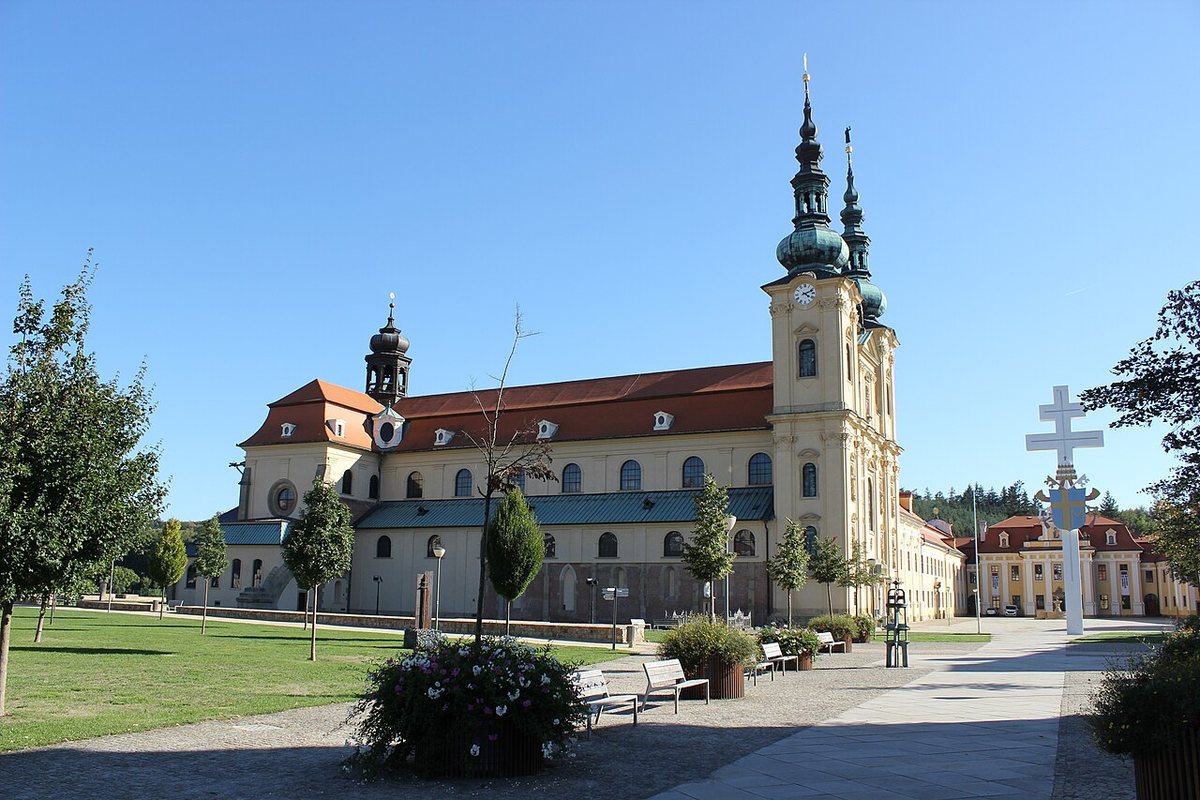
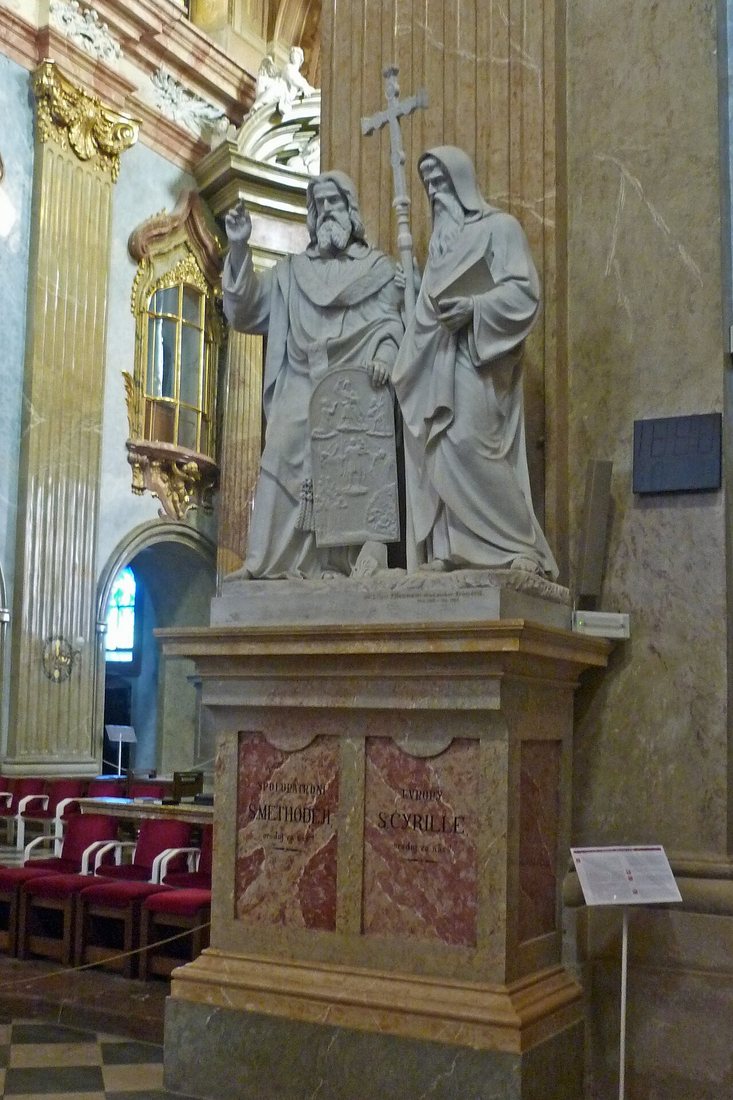
The heritage of Cyril and Methodius remains part of Czech tradition. Their day, 5 July, is a public holiday in the Czech Republic, and Velehrad is their main place of pilgrimage.
Timeline
- 6th c.Byzantine historians first write about the Slavs in detail (Sklavenoi).
- c. 833Mojmír I joins the Nitra region to Moravia.
- 862Rastislav asks Emperor Michael III for a teacher.
- 863Constantine and Methodius arrive in Moravia; Glagolitic.
- 868Pope Hadrian II approves the Slavonic liturgy.
- 14 Feb 869Constantine (Cyril) dies in Rome.
- 885–886Methodius dies (6 April 885); his disciples are expelled from Moravia and go to Bulgaria.
- 893Simeon I moves the capital to Preslav, whose school develops Cyrillic.
- 902–907The fall of Great Moravia.
- 10th c.The Kiev Missal, usually regarded as the oldest Old Church Slavonic manuscript.
- c. 1032Sázava Monastery is founded; the Slavonic liturgy lasts there until 1096/1097.
- 1056–1057The Ostromir Gospels.
- c. 1100The Baška tablet on Krk.
- 1395The Glagolitic part of the Reims Gospel is completed at Emmaus in Prague.
- 1483The first printed Glagolitic book, a Croatian missal.
- 1951The first birch-bark letter is found in Novgorod.
Slavic languages on the globe
Tap a language to show it on the globe:
Sources and further reading
- Horace G. Lunt: Old Church Slavonic Grammar. Mouton de Gruyter, 7th ed. 2001.
- Alexander M. Schenker: The Dawn of Slavic: An Introduction to Slavic Philology. Yale University Press, 1995.
- Francis Dvornik: Byzantine Missions among the Slavs: SS. Constantine-Cyril and Methodius. Rutgers University Press, 1970.
- Vladimír Vavřínek: Cyril a Metoděj mezi Konstantinopolí a Římem [Cyril and Methodius between Constantinople and Rome]. Vyšehrad, 2013.
- Josef Vajs: Rukověť hlaholské paleografie [Handbook of Glagolitic palaeography]. Orbis, 1932.
- Glottolog 5 (languages and their classification).