Languages of antiquity
Aksum
Ethiopia and Eritrea · from South Arabian inscriptions to a living liturgy
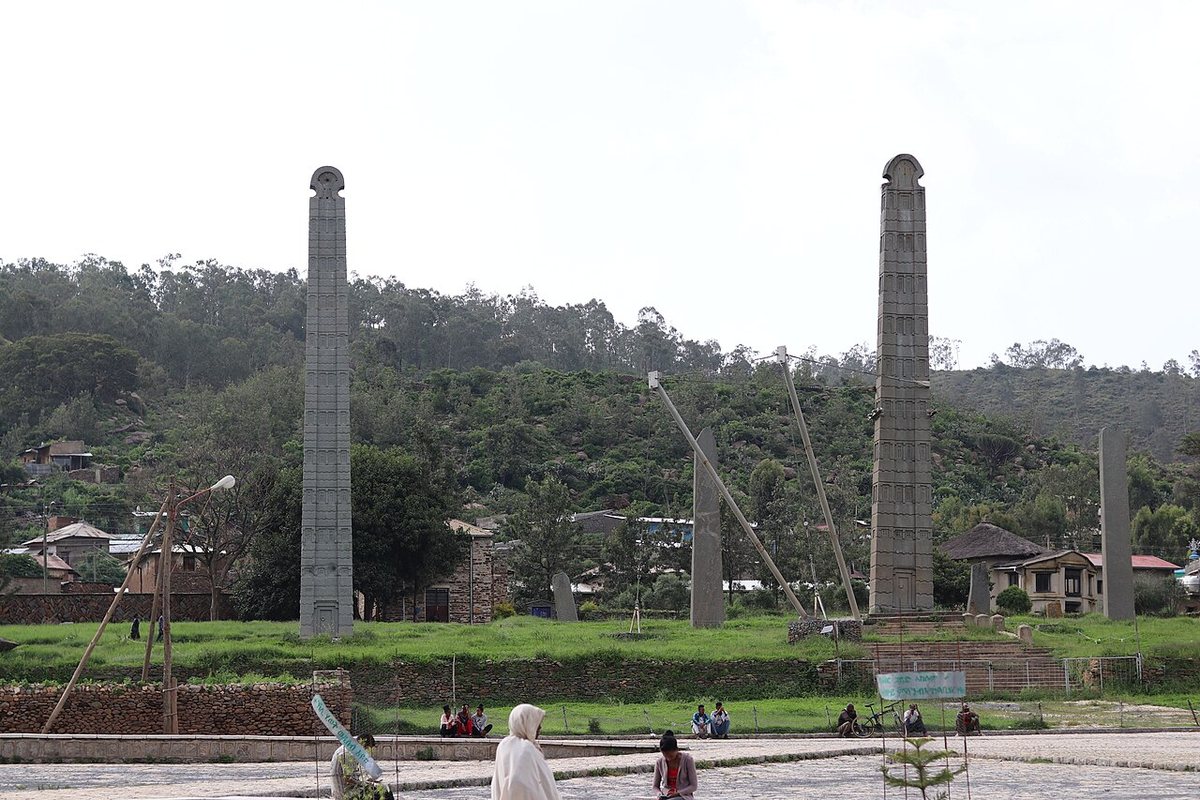
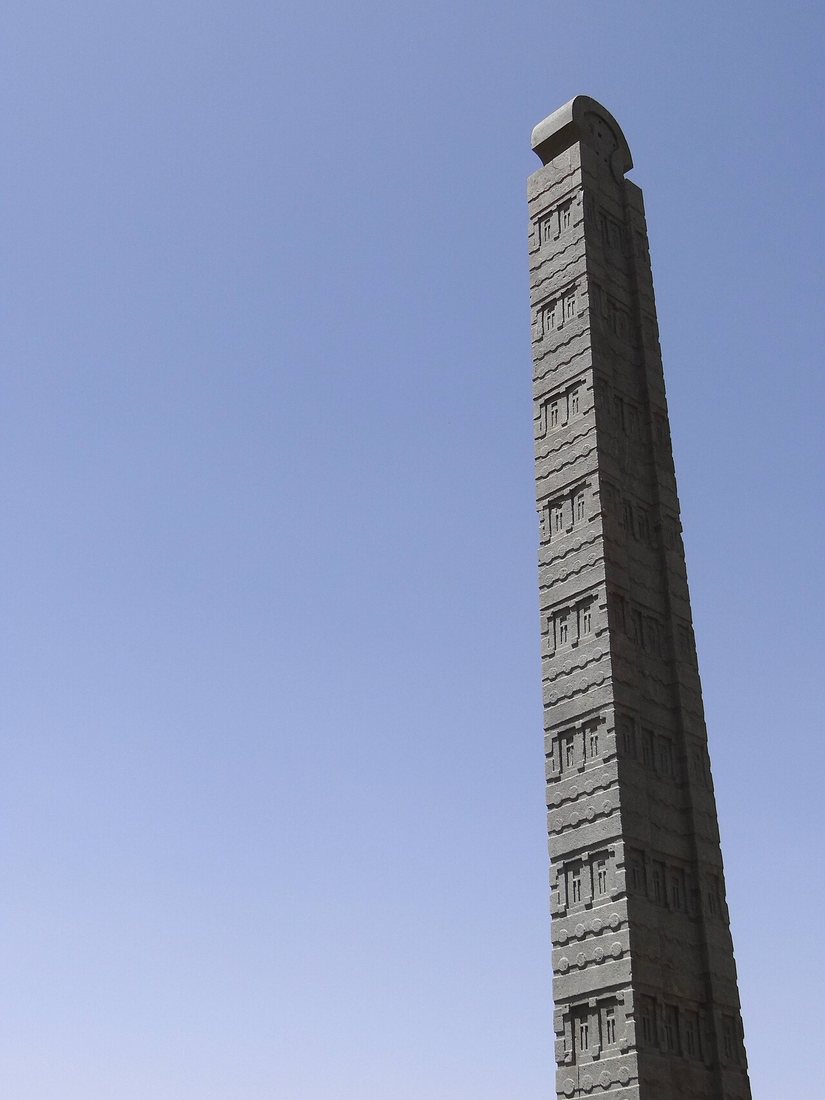
The Kingdom of Aksum, in what is now northern Ethiopia and Eritrea, controlled trade on the Red Sea in the first centuries CE, struck gold coins and raised stone stelae more than twenty metres high. Its language, Geʽez, was written in a script derived from South Arabian, and in the 4th century, under King Ezana, that script acquired vowel marks. The result was the syllabic Ethiopic script, still used today for Amharic and Tigrinya, while Geʽez itself survives as the sacred language of the Ethiopian and Eritrean churches.
A kingdom on the trade route
The Aksumite state arose on the Tigray plateau and in what is now Eritrea; archaeological evidence places its emergence somewhere between 150 BCE and 150 CE. Its capital was Aksum, linked to the sea by the port of Adulis. It is first mentioned in the Periplus of the Erythraean Sea, a mid-1st-century merchants’ guide, which names Aksum and Adulis and lists ivory and tortoiseshell as the main exports.
The route between Roman Egypt and India ran through the Red Sea, and Aksum grew rich on it. In the 3rd century the prophet Mani, founder of Manichaeism, counted Aksum among the four great kingdoms of the world, alongside Rome, Persia and “Silis”, usually identified with China. In the 520s King Kaleb conquered Himyar in South Arabia. From the 7th century the kingdom declined: the Arab expansion cut it off from Mediterranean trade and coinage ceased. The state came to an end in unclear circumstances around 960.
South Arabian forerunners
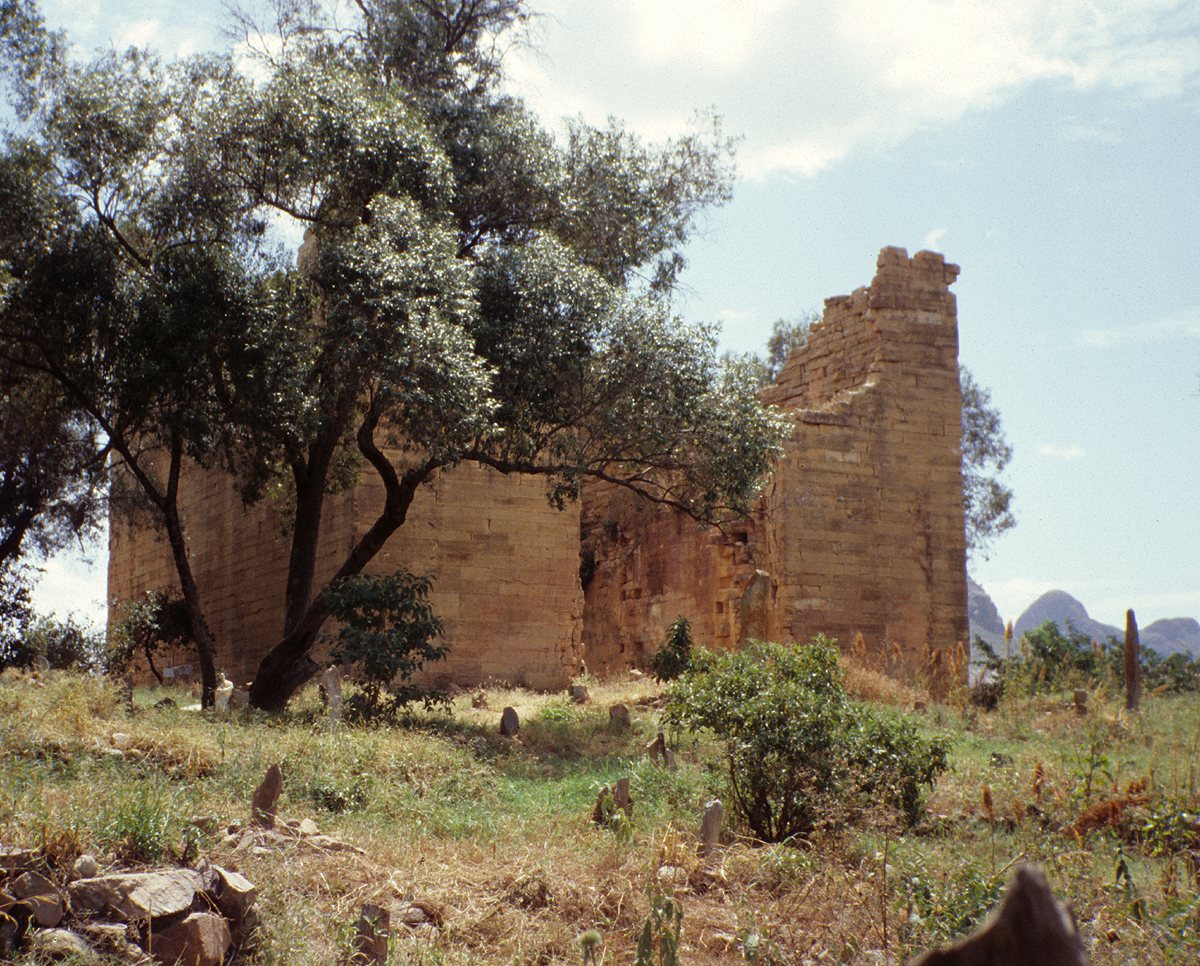
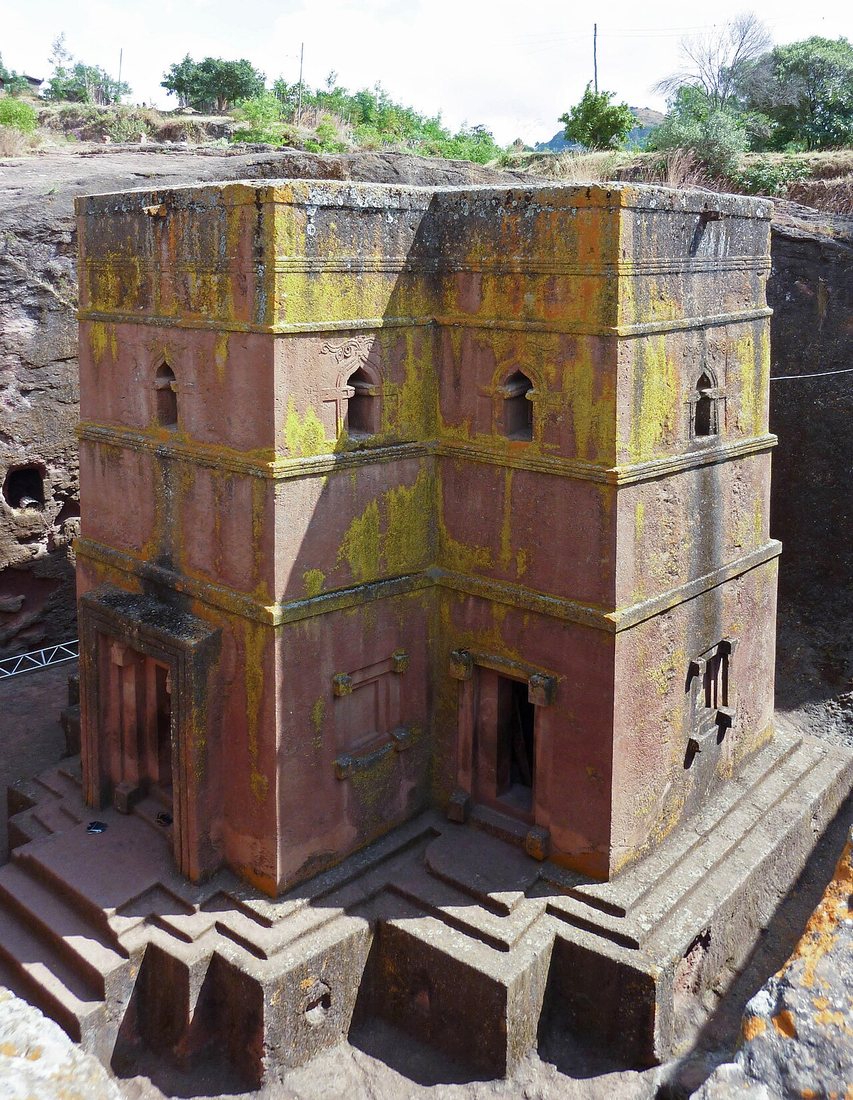
Before Aksum, the same region was home to a kingdom known from its inscriptions as Dʿmt (Daʿamat), probably centred on Yeha. Its temple in the Sabaean style, dated by comparison with South Arabian buildings to about the 7th century BCE, is regarded as the oldest standing building in Ethiopia. Inscriptions from the mid-1st millennium BCE are written in Sabaic, the language of the South Arabian kingdom of Saba in today’s Yemen, and in South Arabian script.
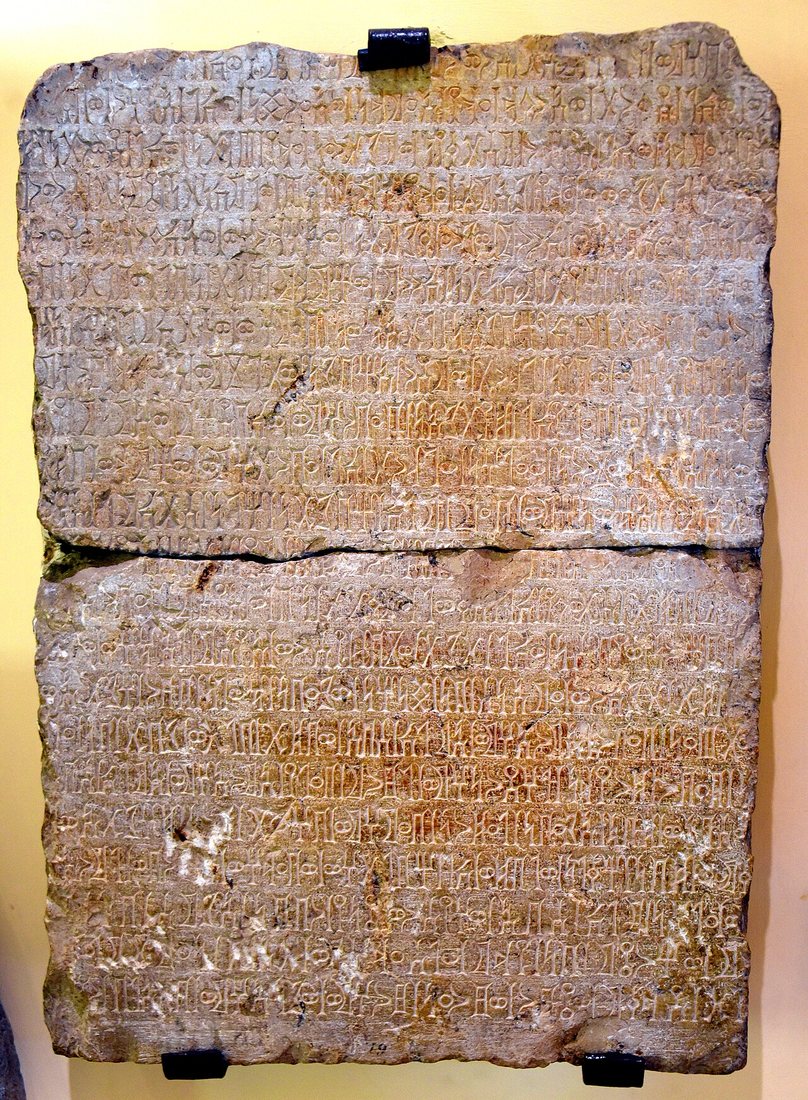
The older idea that Ethiopian civilisation was founded by Sabaean immigrants has been abandoned; Semitic-speaking people lived in the area earlier, and Sabaean influence is now considered limited. It left a lasting mark on writing, however. The South Arabian script (Arabic musnad) is consonantal and does not write vowels; it usually runs right to left, sometimes boustrophedon, and separates words with a vertical bar. The Ethiopic script developed from it.
The Geʽez language
Geʽez, also called Classical Ethiopic in scholarly literature, is a Semitic language. It belongs to the Ethio-Semitic languages, specifically to their northern branch together with Tigrinya and Tigre; Amharic belongs to the southern branch. It did not develop from Sabaic. On the prevailing view, however, it is not the common ancestor of the modern Ethio-Semitic languages either, but split off early from an unattested common parent language.
Like other Semitic languages, Geʽez is built on consonantal roots and has internal (broken) plurals, which change the vowels inside the word: bet “house” – ʾabyāt “houses”, faras “horse” – ʾafrās, kokab “star” – kawākəbt. The usual word order is verb – subject – object, and the object takes the ending -a: takala bəʾsi ʿəḍa “the man planted a tree”. Possession is expressed by a construct phrase, as in Hebrew: walda nəguś “the son of the king”. Typical of the Ethio-Semitic languages are ejective consonants, pronounced with the glottis closed, and labialised velars (kʷ, gʷ).
Semitic words
Geʽez words often have close counterparts in Hebrew and Arabic; the relationship shows above all in the consonants of the root:
| Geʽez | meaning | Hebrew / Arabic |
|---|---|---|
| ቤት bet | house | bayit / bayt |
| ስም səm | name | šēm / ism |
| አብ ʾab | father | ʾāb / ʾab |
| እድ ʾəd | hand | yād / yad |
| ርእስ rəʾs | head | rōʾš / raʾs |
| ወልድ wald | son | yeled “child” / walad “child, son” |
| ኮከብ kokab | star | kôkāb / kawkab |
| ሰላም salām | peace, greeting | šālôm / salām |
| አሐዱ ʾaḥadu | one | ʾeḥād / ʾaḥad |
| ንጉሥ nəguś | king | – (hence the Ethiopian title negus) |
Vowels attached to consonants
The earliest records of Geʽez used a script without vowels, with signs almost identical to the basic forms of the later script. The Hawulti stela at Matara in Eritrea is often regarded as the oldest known example, though its date is uncertain. The kings of Aksum had inscriptions carved both in this script and in South Arabian. In the 4th century, under King Ezana, the first inscriptions with fully marked vowels appear. The vowel was attached to the consonant sign by a small change of shape: an added stroke, a ring or a bend. The alphabet thus became an abugida, a script in which each sign stands for a consonant with a particular vowel.
Each consonant has seven forms, known as orders. The basic first order is read with the vowel a, the others with u, i, ā, e, ə and o. The sixth order also serves for a consonant with no vowel, so the name of the language, ግዕዝ, Gəʿəz, is written with three sixth-order signs. Why and under what influence the vowel marks arose is unknown. Influence from the Indian scripts, which work in a similar way and which the Aksumites could have known through the India trade, has been suggested; Ethiopian tradition credits the invention to Frumentius. Unlike its South Arabian model, the Ethiopic script is written left to right.
Seven orders and basic signs
- la1st order: basic form
- lu2nd order
- li3rd order
- lā4th order
- le5th order
- lə / l6th order: ə or no vowel
- lo7th order
- ha
- ma
- sa
- qaejective kʼ
- ba
- na
- ʾaglottal stop
- ka
- wa
- ʿapharyngeal ʿayin
- za
- ga
gə-ʿə-zGəʿəz, the name of the language: three sixth-order signs, g, ʿ and z with no vowel or with ə
Transliteration follows Lambdin’s grammar (a, ā); the Encyclopaedia Aethiopica writes the same vowels as ä and a. Beware of the Unicode names: the sixth order is named e.g. ETHIOPIC SYLLABLE LE, the fifth LEE. The signs are rendered in Noto Serif Ethiopic.
Letters from Saba
Of the 29 letters of the South Arabian script, 24 correspond to Ethiopic letters with the same sound. Many shapes changed only a little; the Ethiopic signs are shown here in the first order (with the vowel a):
| South Arabian | Ethiopic | sound |
|---|---|---|
| 𐩠 | ሀ | h |
| 𐩡 | ለ | l |
| 𐩣 | መ | m |
| 𐩧 | ረ | r |
| 𐩨 | በ | b |
| 𐩩 | ተ | t |
| 𐩬 | ነ | n |
| 𐩱 | አ | ʾ |
| 𐩫 | ከ | k |
| 𐩥 | ወ | w |
| 𐩲 | ዐ | ʿ |
| 𐩴 | ገ | g |
Ezana, Frumentius and the cross
Ezana reigned from the 320s to about 360 and is one of the best-documented kings of Aksum. According to the church historian Rufinus, the boys Frumentius and Edesius of Tyre were taken as slaves to the Aksumite court after their ship put in at a Red Sea harbour and the local people killed the crew. The brothers helped educate the young heir and encouraged Christianity. Frumentius later asked Patriarch Athanasius in Alexandria for a bishop for Aksum and was himself consecrated, traditionally in 328, or according to others between 340 and 346. He became the first bishop of Ethiopia.
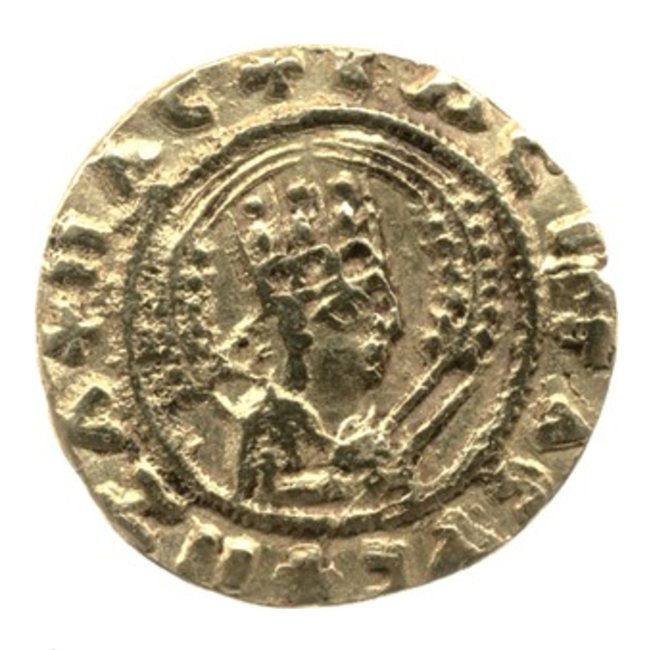
Ezana’s inscriptions record the change of faith. The earlier ones invoke the god Mahrem, in the Greek versions Ares, the later ones “the Lord of Heaven”; the Greek version of one late inscription calls the king a servant of Christ. Around 340 the crescent and disc on Ezana’s coins were replaced by the cross. A letter of 356/357 from the Roman emperor Constantius II, addressed to Ezana and his brother Sazanas, asked for Frumentius to be replaced by an Arian bishop; it failed.
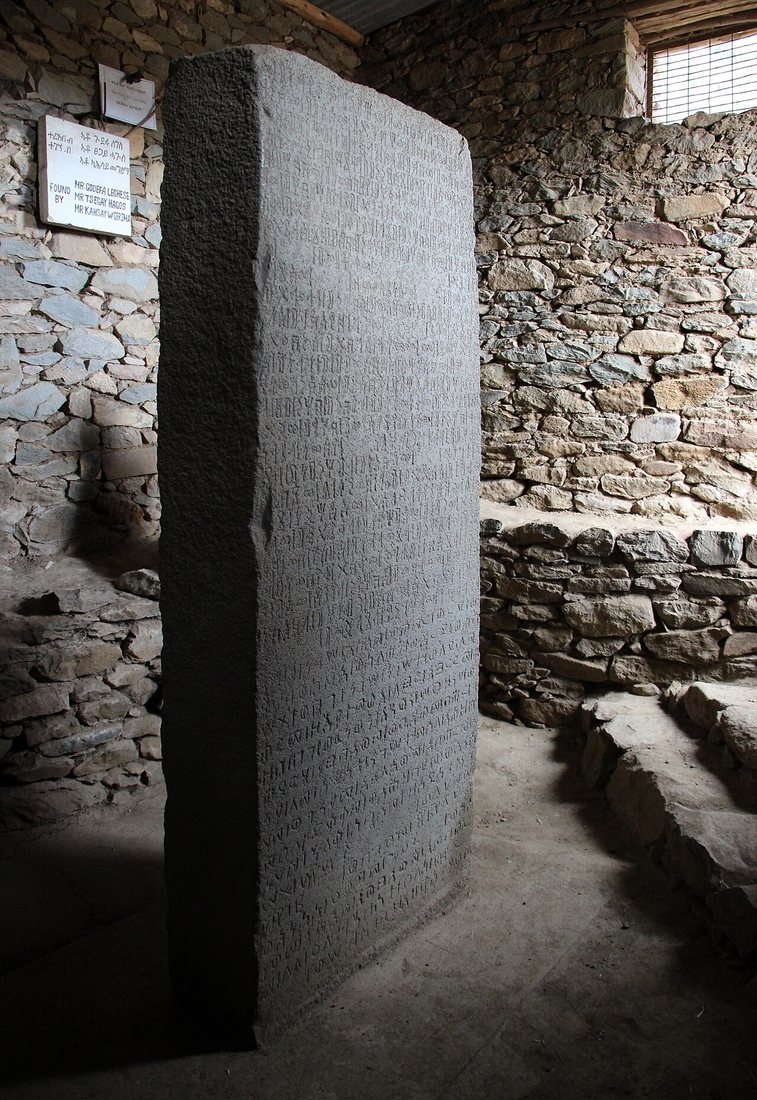
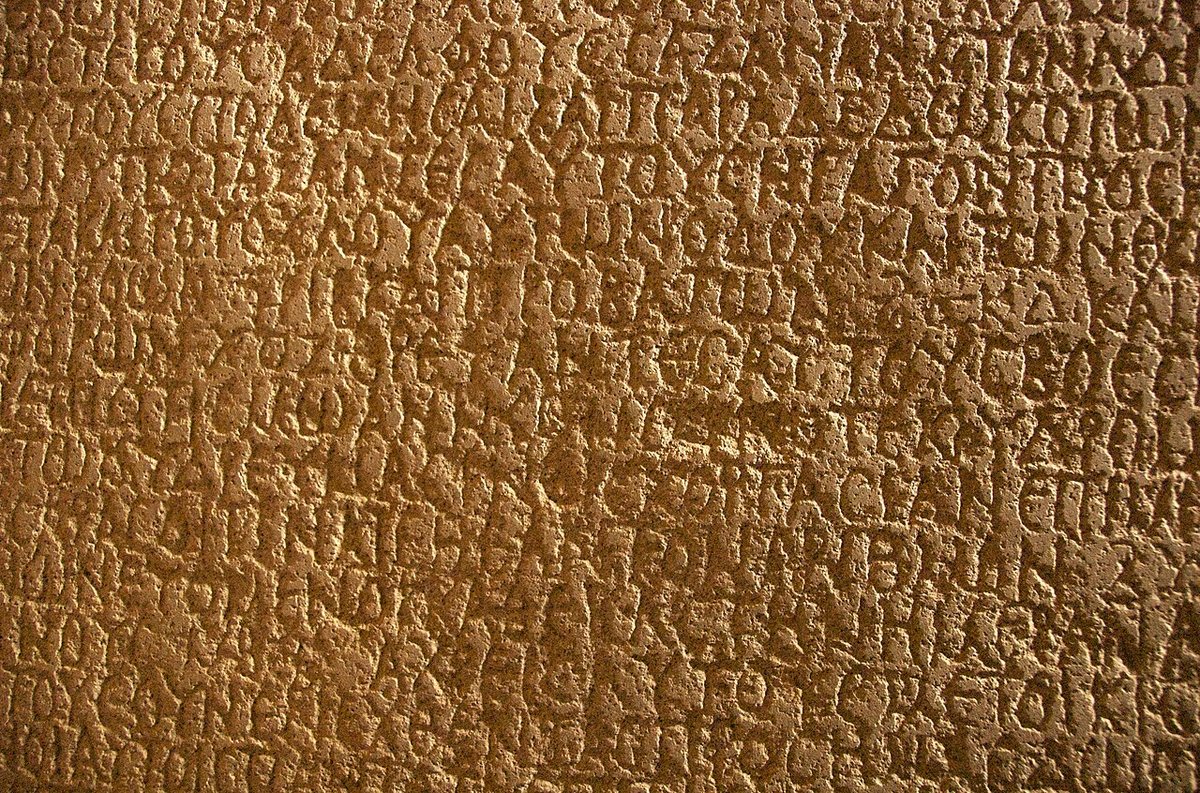
The Ezana Stone, now kept under shelter at Aksum, carries its account of a campaign against the Beja three times: in Greek, and in Geʽez written in both Ethiopic and South Arabian script. On the prevailing view, the South Arabian version is also in Geʽez, merely imitating Sabaic forms.
Gold with Greek legends
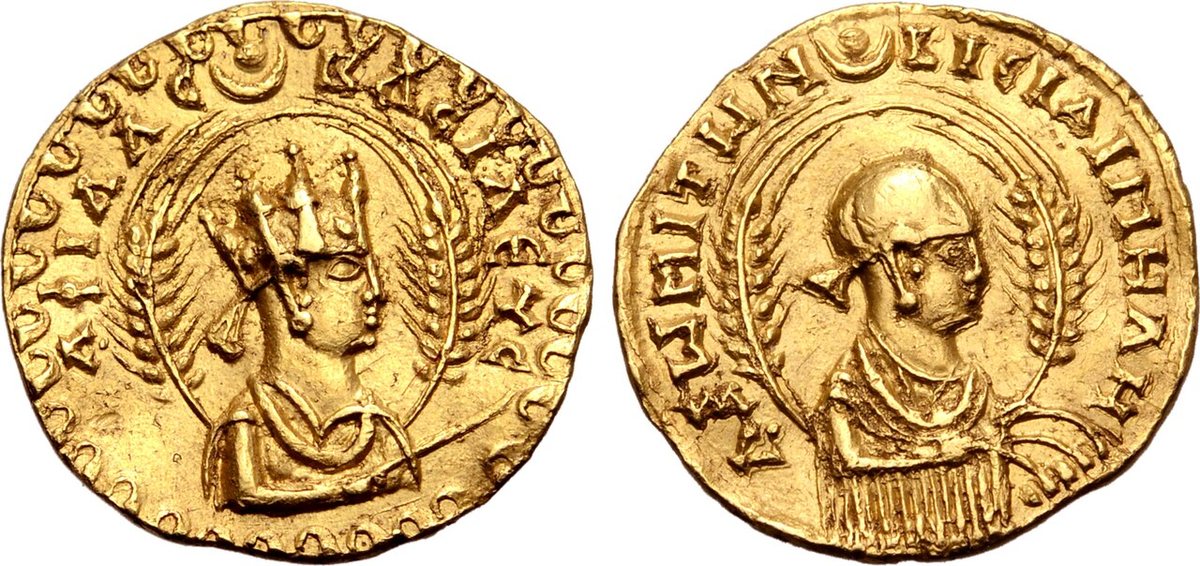
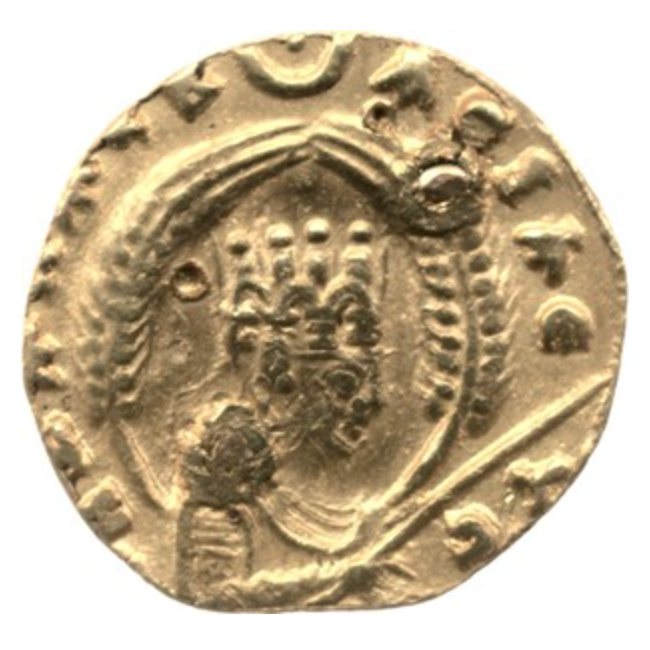
Aksum began striking its own coins around 270, under King Endybis, as the only sub-Saharan African state of its time to do so. It issued gold, silver and bronze. The gold coins, used in foreign trade as well, almost always carry Greek legends, such as “king of the Aksumites”; on silver and bronze, Geʽez gradually replaced Greek. Aksumite coins have been found as far away as Caesarea in Palestine and southern India.
Some coins bear a short motto, in Greek τοῦτο ἀρέσῃ τῇ χώρᾳ, “may this please the country”, later also in Geʽez. Ezana’s coins with the cross are, on the prevailing view, among the very first coins to show the Christian cross. Minting probably ended in the 7th century.
From crescent to cross
The Bible in Geʽez
Christianity brought an age of translation. Most texts from the Aksumite period are Christian translations from Greek: the Gospels, the whole Bible and collections of church rules and writings. The Ethiopian Bible has 81 books, including works that other churches did not accept, such as Jubilees and the Book of Enoch. Enoch survives complete only in Geʽez.
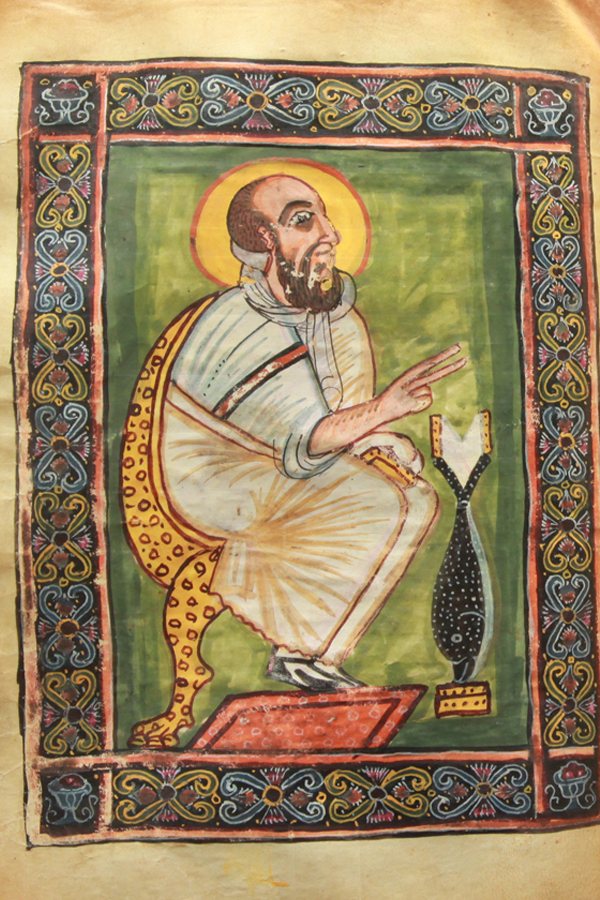
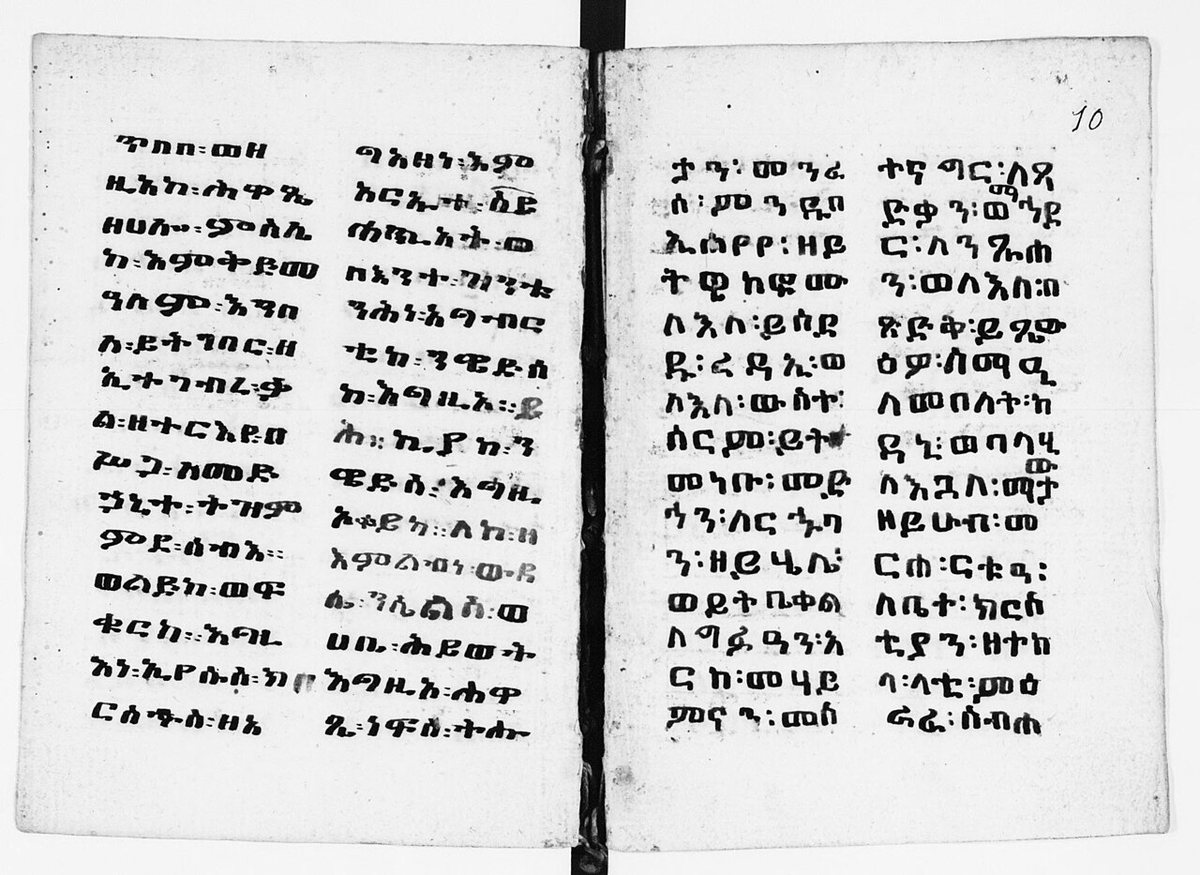
The oldest known manuscripts in Geʽez are two gospel books from the Abba Garima monastery in Tigray. Tradition attributes them to Saint Garima, one of the so-called Nine Saints, who according to tradition arrived in Ethiopia in 494. European scholars once dated them as late as about 1100, but radiocarbon dating has placed them in 390–570 (Garima 2) and 530–660 (Garima 1). Garima 2 is thus among the oldest surviving illuminated gospel books in the world.
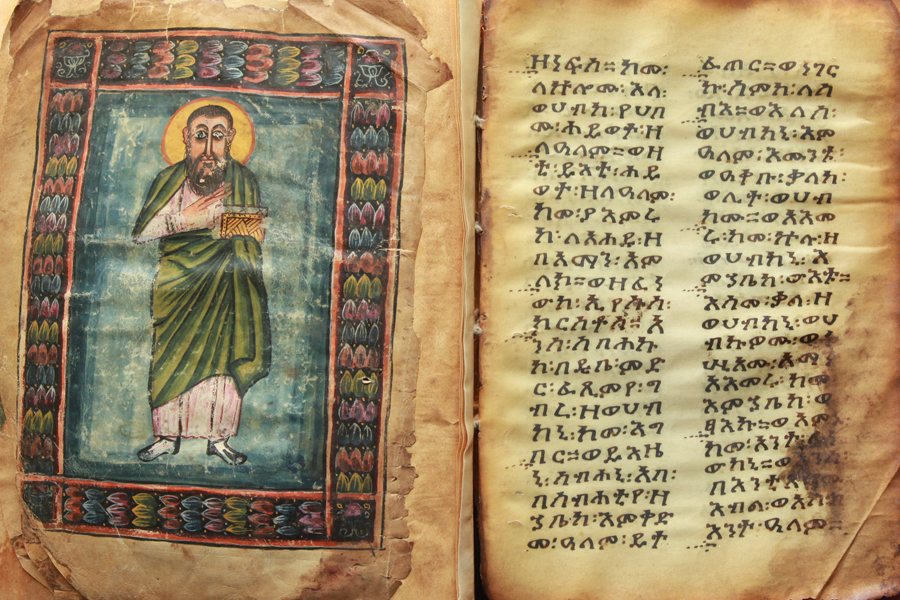
qāla barakat za-Henok za-kama bāraka ḫəruyāna wa-ṣādəqāna …
- qāla barakat
- word of blessing (qāla = “word” in the construct state)
- za-Henok
- of Enoch
- za-kama
- with which
- bāraka
- he blessed
- ḫəruyāna
- the chosen
- wa-ṣādəqāna
- and the righteous
The word of blessing of Enoch, with which he blessed the chosen and righteous …The opening of the Book of Enoch. Words are separated by the colon-like ፡. The ending -a marks both the object (ḫəruyāna) and the first member of a construct phrase (qāla). The conjunction wa- “and” shares its origin with Arabic wa- and Hebrew wə-; barakat “blessing” corresponds to Arabic baraka and Hebrew bərākā, ṣādəq “righteous” to Hebrew ṣaddîq.
A dead language, a living liturgy
When Geʽez ceased to be an everyday spoken language is uncertain; estimates range roughly from the 10th to the 14th century. It was replaced by Amharic in the south and by Tigrinya and Tigre in the north. Yet it remained the written language of state and church until the 19th century, much like Latin in medieval Europe. In the 14th and 15th centuries, when it was no longer spoken, Geʽez literature flourished: translations from Arabic, saints’ lives and royal chronicles were written.
In the 14th century Yeshaq, a church dignitary of Aksum, compiled the Kebra Nagast, “The Glory of the Kings”, the story of the Queen of Sheba, King Solomon and their son Menelik, from whom Ethiopia’s Solomonic dynasty claimed descent. Around 1450 the law code Fetha Nagast was translated into Geʽez; it remained in force until the constitution of 1931.
Today Geʽez is the liturgical language of the Ethiopian and Eritrean Orthodox churches, the Eastern-rite Catholic churches of both countries and the Ethiopian Jews (Beta Israel). The Ethiopic script, called fidal in Amharic and Tigrinya (fidäl in the usual scholarly transcription of Amharic), is used for Amharic, for Tigrinya in Eritrea and Ethiopia, for Tigre and for a number of other languages, including several non-Semitic ones.
Later manuscripts
Timeline
- c. 7th c. BCESabaean-style temple at Yeha.
- mid-1st mill. BCESabaic inscriptions in South Arabian script in the kingdom of Dʿmt.
- c. 150 BCE – 150 CEEmergence of the Aksumite state (on archaeological evidence).
- mid-1st c.The Periplus of the Erythraean Sea mentions Aksum and Adulis.
- early 3rd c.King GDRT intervenes in South Arabia; the probably oldest surviving royal inscription in Geʽez is ascribed to him.
- c. 270First Aksumite coins (King Endybis).
- 320s – c. 360Reign of King Ezana; the first inscriptions with vowels.
- 328, or 340–346Frumentius consecrated first bishop of Aksum.
- c. 340The cross replaces the crescent and disc on Ezana’s coins.
- 390–660The Abba Garima gospel books (radiocarbon dating).
- 520sKing Kaleb conquers Himyar in South Arabia.
- 7th c.Decline of the kingdom; coinage ends.
- c. 960End of the Kingdom of Aksum.
- 14th c.The Kebra Nagast; Geʽez is now only a written and liturgical language.
- 1937The Italians carry off the Aksum stela to Rome.
- 2005–2008The stela returns to Aksum and is raised again.
Languages on the globe
Tap a language to show it on the globe:
Sources and further reading
- Stuart Munro-Hay: Aksum: An African Civilisation of Late Antiquity. Edinburgh University Press, 1991.
- David W. Phillipson: Foundations of an African Civilisation: Aksum and the Northern Horn, 1000 BC – AD 1300. James Currey, 2012.
- Thomas O. Lambdin: Introduction to Classical Ethiopic (Geʽez). Scholars Press, 1978.
- Gene Gragg: Geʽez (Aksum). In: Roger D. Woodard (ed.): The Cambridge Encyclopedia of the World’s Ancient Languages. Cambridge University Press, 2004.
- Wolf Leslau: Comparative Dictionary of Geʽez (Classical Ethiopic). Harrassowitz, 1987.
- Glottolog 5 (languages and their classification).