Languages of antiquity
The Göktürks and the Orkhon script
The Mongolian steppe and southern Siberia · runic inscriptions of the 8th–10th centuries
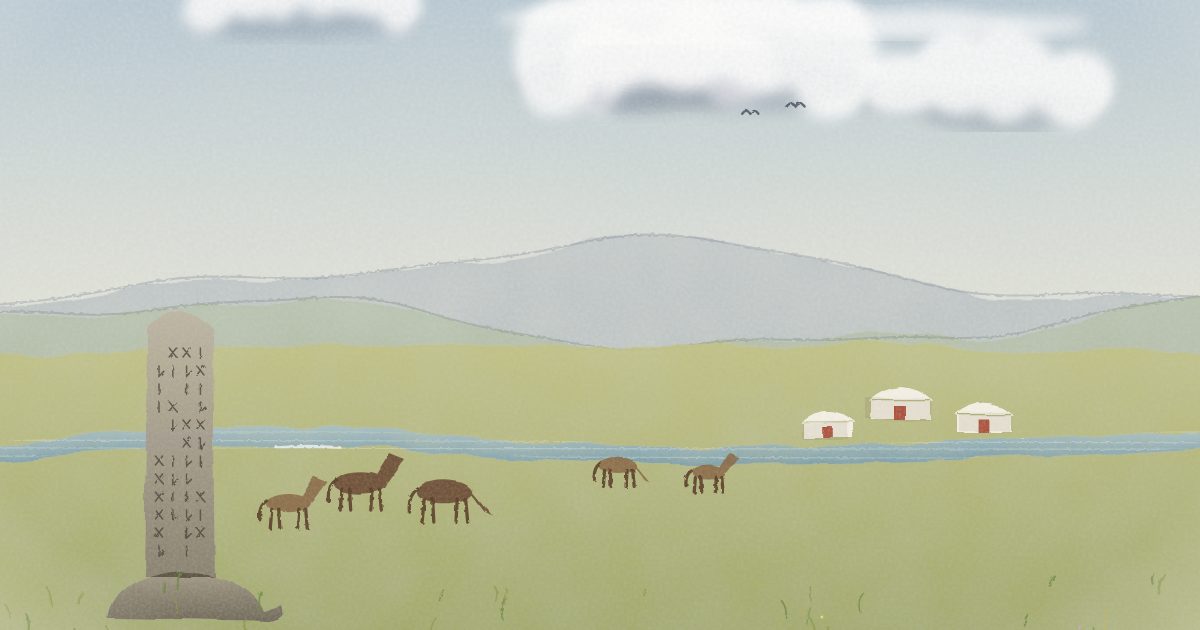
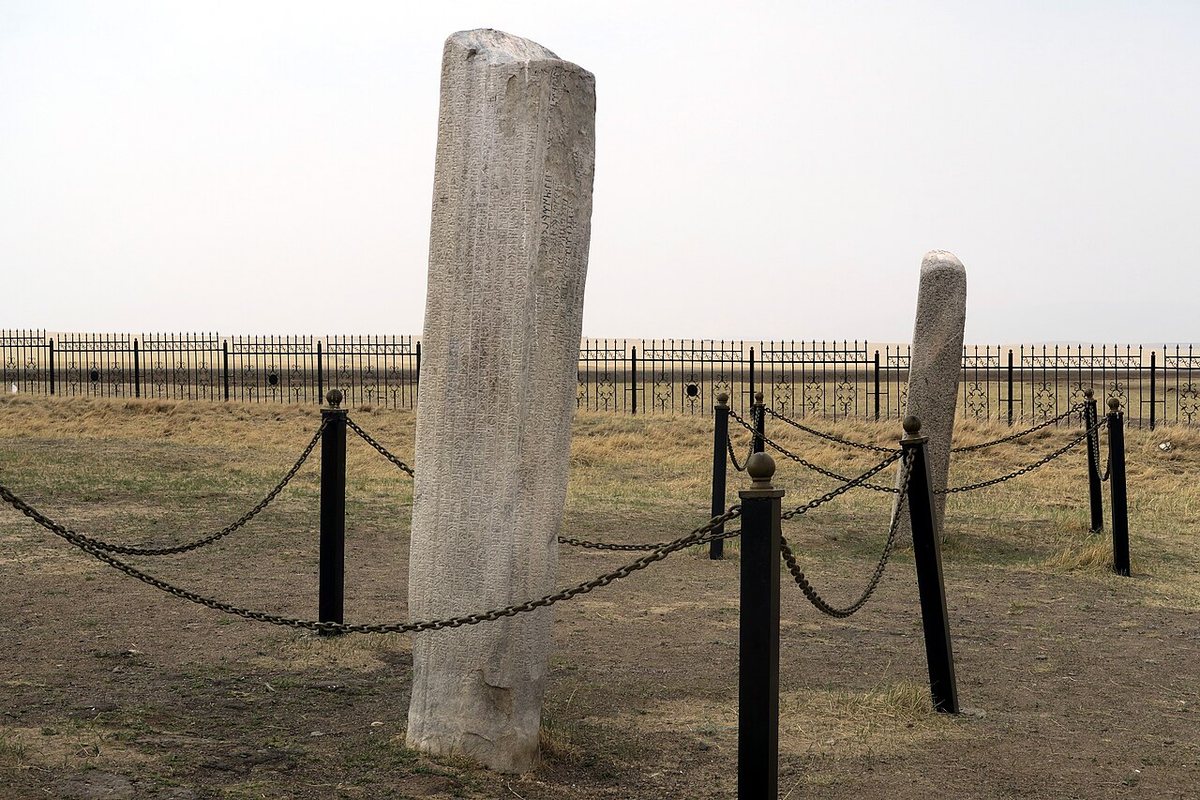
On stone steles in the Mongolian steppe the Göktürks left the oldest continuous texts in a Turkic language. Their runic script, written from right to left, has two letters for many consonants, depending on whether a word contains front or back vowels. The 8th-century inscriptions tell of the rise, fall and restoration of a steppe empire. They were deciphered in 1893 by the Danish linguist Vilhelm Thomsen, and their language, the earliest attested Turkic, is close to the ancestors of languages spoken today by some 200 million people.
An empire on the Mongolian steppe
The Göktürks (Old Turkic Türk, Chinese 突厥 Tujue) were a nomadic people of Inner Asia ruled by the Ashina clan. Under Bumin Qaghan (d. 552) and his sons they threw off the rule of the Rouran and founded the First Turkic Khaganate, a steppe empire whose ruler bore the title qaghan. At its height in the late 6th century it reached from Manchuria to the Black Sea, but it soon split into eastern and western halves.
In 630 the Chinese Tang dynasty defeated the Eastern Turks and captured their qaghan, and for half a century they lived under Chinese rule. In 682 Ilterish Qaghan and his adviser Tonyukuk rose in revolt and restored the empire, now called the Second Turkic Khaganate. Under Ilterish's sons, Bilge Qaghan (683–734) and his brother, the general Kül Tigin (684–731), it flourished again. After Bilge's death it weakened, and in 744 it was defeated by the Uyghurs, allies of the Tang. The oldest continuous texts in any Turkic language date from the Second Khaganate.
Old Turkic
The language of the runic inscriptions is called Old Turkic. It is the earliest attested Turkic language; anything older is known only from foreign, mainly Chinese, sources. Turkic languages are spoken today by some 200 million people, above all in Turkish, then Uzbek, Azerbaijani, Kazakh, Uyghur, Turkmen, Tatar, Kyrgyz and many others from the Balkans to Siberia.
Old Turkic shows features that are almost universal in the family: vowel harmony (the vowels of a word are either all front or all back), agglutination (grammatical meanings are expressed by suffixes added one after another), subject–object–verb word order and no grammatical gender. It belongs to the large Common Turkic group; the Oghur branch, whose only living member is Chuvash, stands apart (Old Turkic toquz ‘nine’ against Chuvash tăχăr).
The language of the inscriptions from Mongolia and the Yenisei differs only slightly from that of the later Uyghur manuscripts from Eastern Turkestan (Xinjiang), but according to Marcel Erdal they represent different dialects. The inscriptions also contain words of non-Turkic origin, such as titles borrowed from Iranian languages.
Old words in today's languages
The Turkic languages are still close to one another, and many basic words differ only in their sounds. Old Turkic words (transliterated) and their counterparts in Turkish and Kazakh (Kazakh in Cyrillic):
| Old Turkic | meaning | Turkish · Kazakh |
|---|---|---|
| ata | father | ata · ата |
| qız | girl, daughter | kız · қыз |
| baš | head | baş · бас |
| köz | eye | göz · көз |
| qan | blood | kan · қан |
| at | horse | at · ат |
| sub | water | su · су |
| ot | fire | od (usually ateş, from Persian) · от |
| taɣ | mountain | dağ · тау |
| kök | blue; sky | gök · көк |
| täŋri | sky, the sky god | tanrı ‘god’ · тәңір |
| bir | one | bir · бір |
| toquz | nine | dokuz · тоғыз |
Runes written from right to left
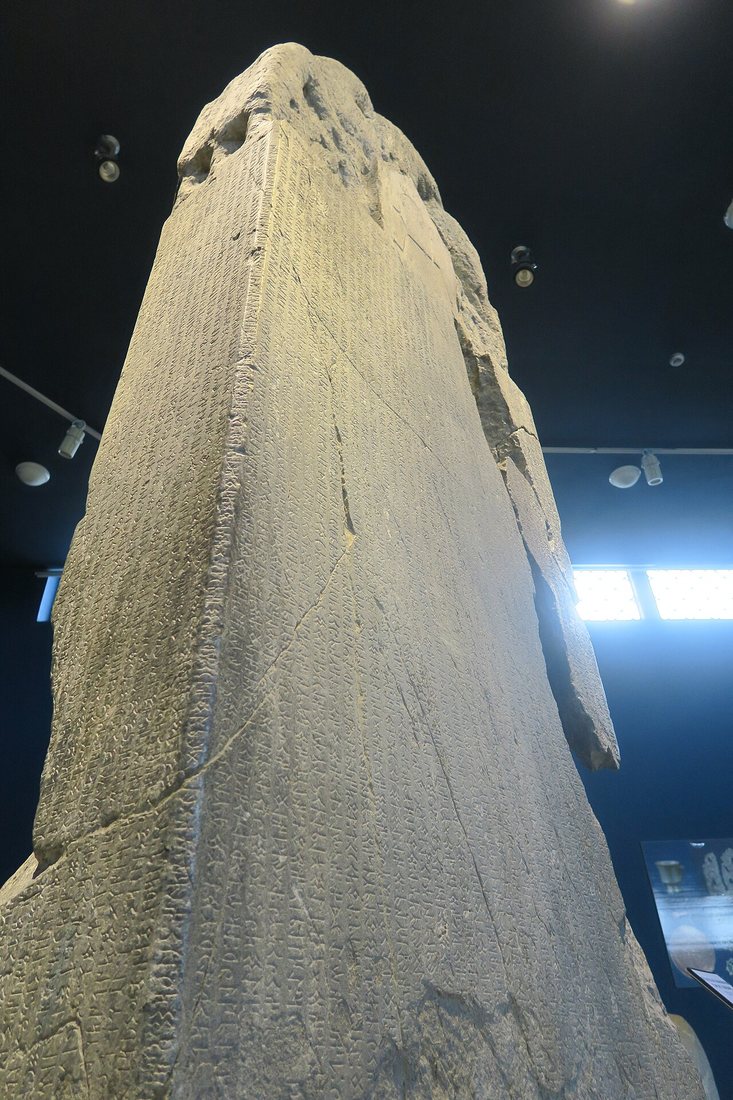
Because of its angular letters, well suited to carving in stone, the Old Turkic script is also called the Turkic runes. It has nothing to do with the Germanic runes; it is an alphabet. It runs from right to left, on the steles in vertical lines. Words are divided by a colon-like sign (in Unicode ⁚, TWO DOT PUNCTUATION), elsewhere by a ring.
The script is adapted to vowel harmony. Its eight vowels are written with only four letters (a/ä, ı/i, o/u, ö/ü), and inside a word vowels are often not written at all. Many consonants, however, have two letters: one for words with back vowels (a, ı, o, u), the other for words with front vowels (ä, i, ö, ü). The shape of the consonant thus tells the reader which vowel to supply. In 1893 Vilhelm Thomsen marked the two sets with superscript ¹ and ², as transliterations still do. Several further letters write whole groups of sounds, such as nt, lt, nč, ök or oq.
The name of the sky god, täŋri, is therefore written with four letters, 𐱅𐰭𐰼𐰃 (t² ŋ r² i): the front-set consonants reveal that the missing vowel is the front ä.
Old Turkic letters (a selection)
- a, ävowel; often left unwritten inside a word
- ı, ivowel
- o, uvowel
- ö, üvowel
- b¹b with back vowels (a, ı, o, u)
- b²b with front vowels (ä, i, ö, ü)
- r¹back set
- r²front set
- t¹back set
- t²front set
- q¹back k [q]
- k²front k
- ŋboth sets
- mboth sets
t² ü r² k² → türkthe name of the Türks; read from right to left, with all consonants from the front set
Superscript ¹ marks the letter used in words with back vowels, ² the one used with front vowels (Vilhelm Thomsen's convention). Values follow the standard tables; letter shapes varied from place to place. Unicode has included the Old Turkic script since version 5.2 (2009), in the block U+10C00–U+10C4F, which distinguishes Orkhon and Yenisei forms. The letters are rendered in Noto Sans Old Turkic, and the page sets them from right to left.
Words in runes
How words from the Old Turkic inscriptions and manuscripts are written. The letters are listed in reading order, from right to left:
| in runes | letters | reading and meaning |
|---|---|---|
| 𐱅𐰭𐰼𐰃 | t² ŋ r² i | täŋri ‘sky, the sky god’; the vowel ä is not written |
| 𐱅𐰇𐰼𐰚 | t² ü r² k² | türk, the name of the Türks; all consonants from the front set |
| 𐰉𐰆𐰑𐰣 | b¹ o d¹ n¹ | bodun ‘people’; back-set consonants, the second vowel unwritten |
| 𐰚𐰇𐰜 | k² ö ök | kök ‘blue, heavenly’; the last letter writes the group ök/kö |
| 𐰋𐰃𐰠𐰏𐰀 | b² i l² g² ä | bilgä ‘wise’, a title of Bilge Qaghan and of Tonyukuk |
| 𐱃𐰆𐰪𐰸𐰸 | t¹ o ñ uq uq | Toñuquq, Tonyukuk; the etymology of the name is disputed |
| 𐰃𐰺𐰴 𐰋𐰃𐱅𐰃𐰏 | ı r¹ q¹ · b² i t² i g² | ırq bitig ‘book of omens’, the title of the Dunhuang manuscript |
Where the script came from
The origin of the script is uncertain. Thomsen already believed it came from one of the scripts descended from Aramaic, and in the prevailing view its closest ancestor is the Sogdian script, used by the Iranian merchants of Sogdiana, who were influential at the Göktürk court. Only some of the letters match, however, and no direct derivation has been proven, so the question remains disputed. An older idea that the letters grew out of tamgas, the brands nomads used to mark their livestock, is considered unprovable.
Chinese sources of the 7th century contradict each other as well. The Book of Zhou says the Turks had a script similar to that of the Sogdians, while the Book of Sui and the History of the Northern Dynasties say they had none. The runic inscriptions themselves date only from the 8th century; nothing certain is known of any earlier forms of the script.
The Orkhon inscriptions
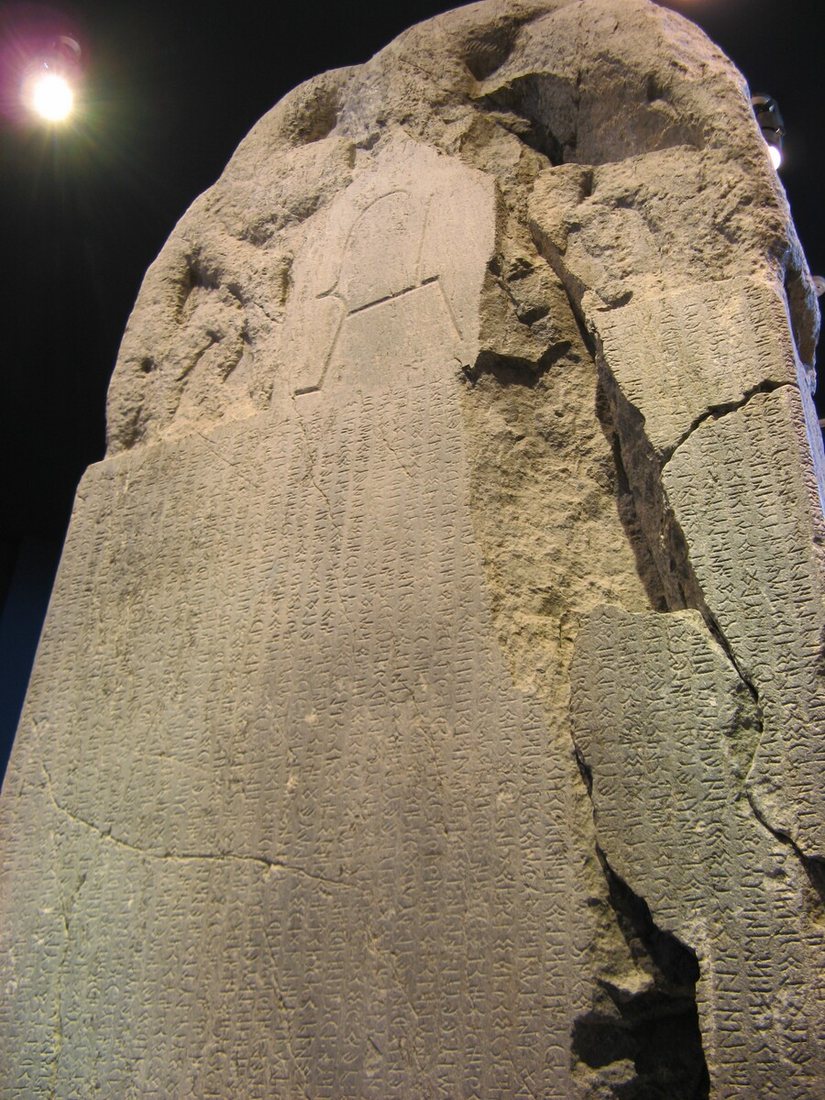
In 1889 an expedition led by Nikolai Yadrintsev found two large inscribed stone steles in the valley of the Orkhon River in central Mongolia, at the site of Khöshöö Tsaidam. They originally stood on stone turtles within walled enclosures. Bilge Qaghan set up one in 732 in memory of his brother Kül Tigin; the other was made in 735 for Bilge himself by his son. According to the inscriptions, the Old Turkic texts on both were composed by Prince Yollıg Tigin, Bilge's son.
The inscriptions are bilingual. Beside the Turkic text, the Kül Tigin stele carries a Chinese inscription, traditionally said to have been composed in the name of the Tang emperor Xuanzong; the Turkic text is not a translation of it, however, and tells the story in its own way. It recounts the legendary origins of the Türks, the golden age of their empire, the fifty years of subjection to China when ‘the Turkic begs gave up their Turkic names and took Chinese ones’, and the liberation under Ilterish. It urges the Türks to stay in the sacred Ötüken mountains and not to be seduced by Chinese riches and cunning words.
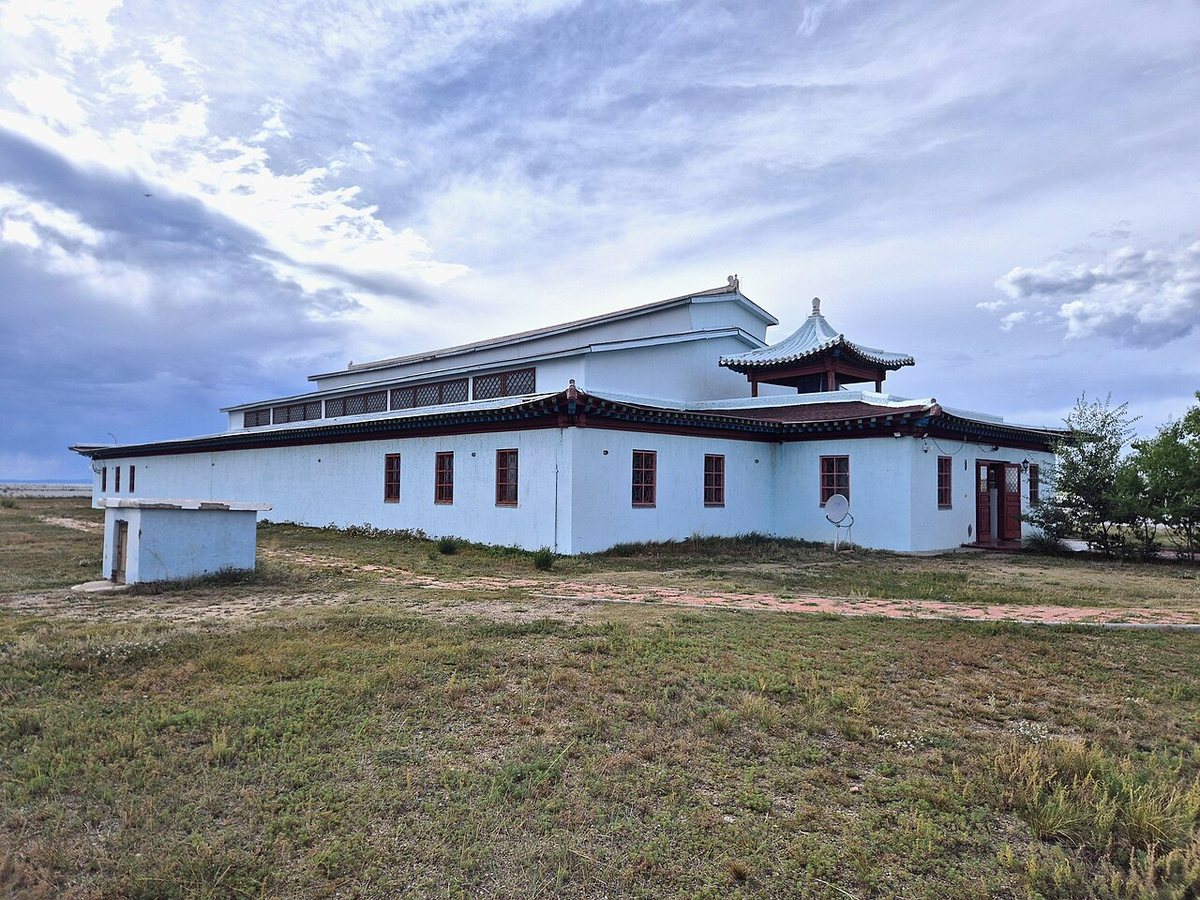
The Orkhon Valley has been on the UNESCO World Heritage List since 2004. The Kül Tigin stele is now kept in the Göktürk Museum on the site.
Tonyukuk
The third great inscription of the Second Khaganate is that of Tonyukuk, on two steles at Bayn Tsokto near Nalaikh, not far from present-day Ulaanbaatar. Tonyukuk (c. 646 – c. 726) served four qaghans as adviser and commander and was Bilge Qaghan's father-in-law. The inscription tells in the first person how he helped to restore the empire: ‘I, the wise Tonyukuk, was born (or: brought up) in the realm of Tabgach’, that is, China; ‘the Turkic people was subject to China.’
Since the text speaks in Tonyukuk's own voice, it is placed within his lifetime. The exact date is uncertain: it is usually put shortly after 716, by other scholars around 720 or later. Either way it is somewhat older than the steles of Kül Tigin and Bilge.
Inscriptions from the Yenisei
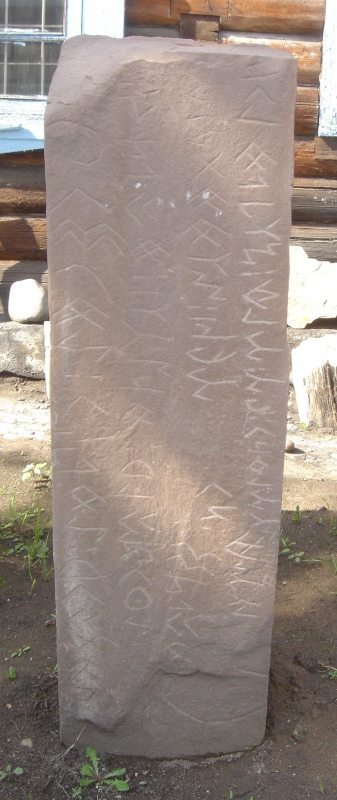
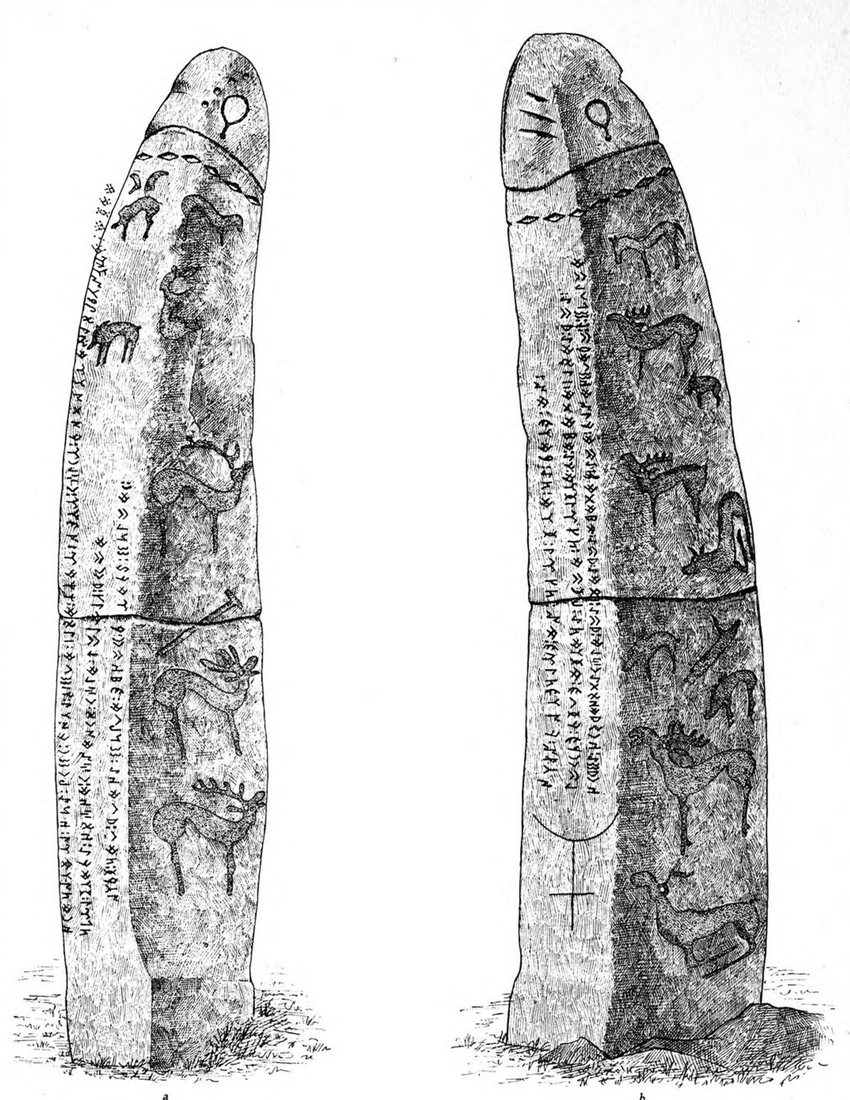
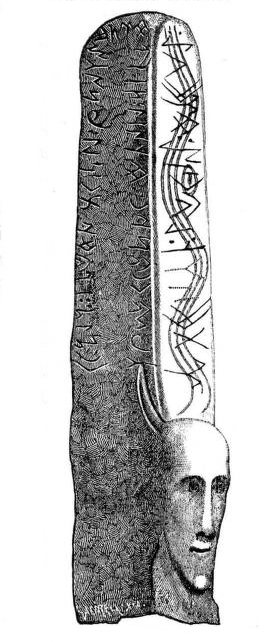
Runic inscriptions have been found not only in Mongolia but above all in the upper Yenisei basin in southern Siberia, in present-day Tuva and Khakassia, and in smaller numbers in the Altai, the Talas valley and Xinjiang. The survey by Kazakhstan's language committee lists 54 from the Orkhon area, 106 from the Yenisei, 15 from Talas and 78 from the Altai; Marcel Erdal counts about two hundred inscriptions in all.
The Yenisei inscriptions are mostly short epitaphs in which the dead speak of their family, herds and titles. They are mostly attributed to the Yenisei Kyrgyz and usually placed in the 8th–10th centuries, although individual stones are hard to date. Some of their letters differ from the Orkhon forms. The first Old Turkic inscription seen by Europeans came from the Yenisei: the Uybat I stele near Abakan, found in 1721 by the explorer Daniel Gottlieb Messerschmidt.
Stones from the Yenisei
Irk Bitig, the Book of Omens
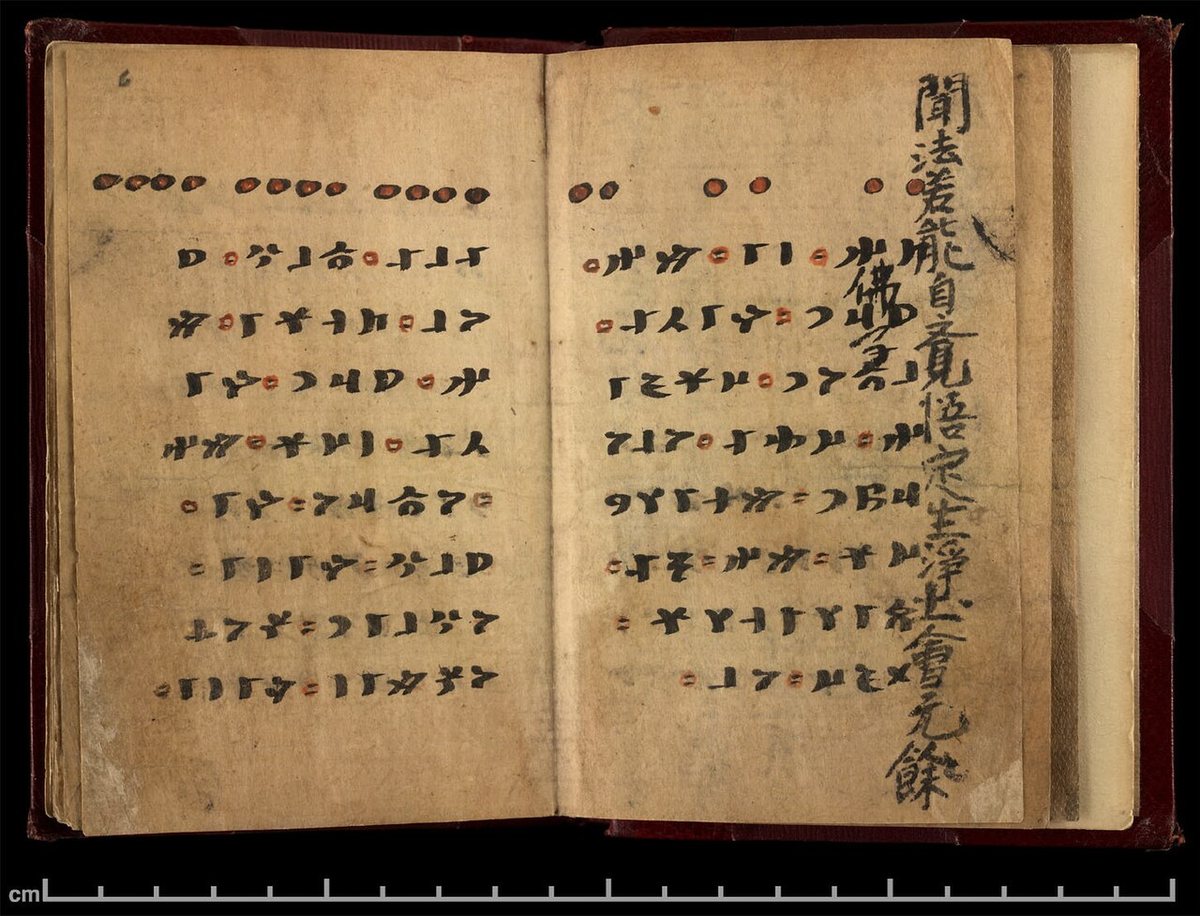
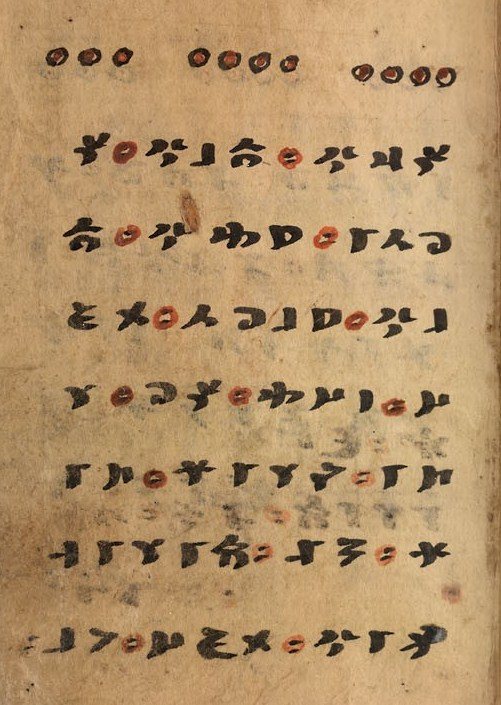
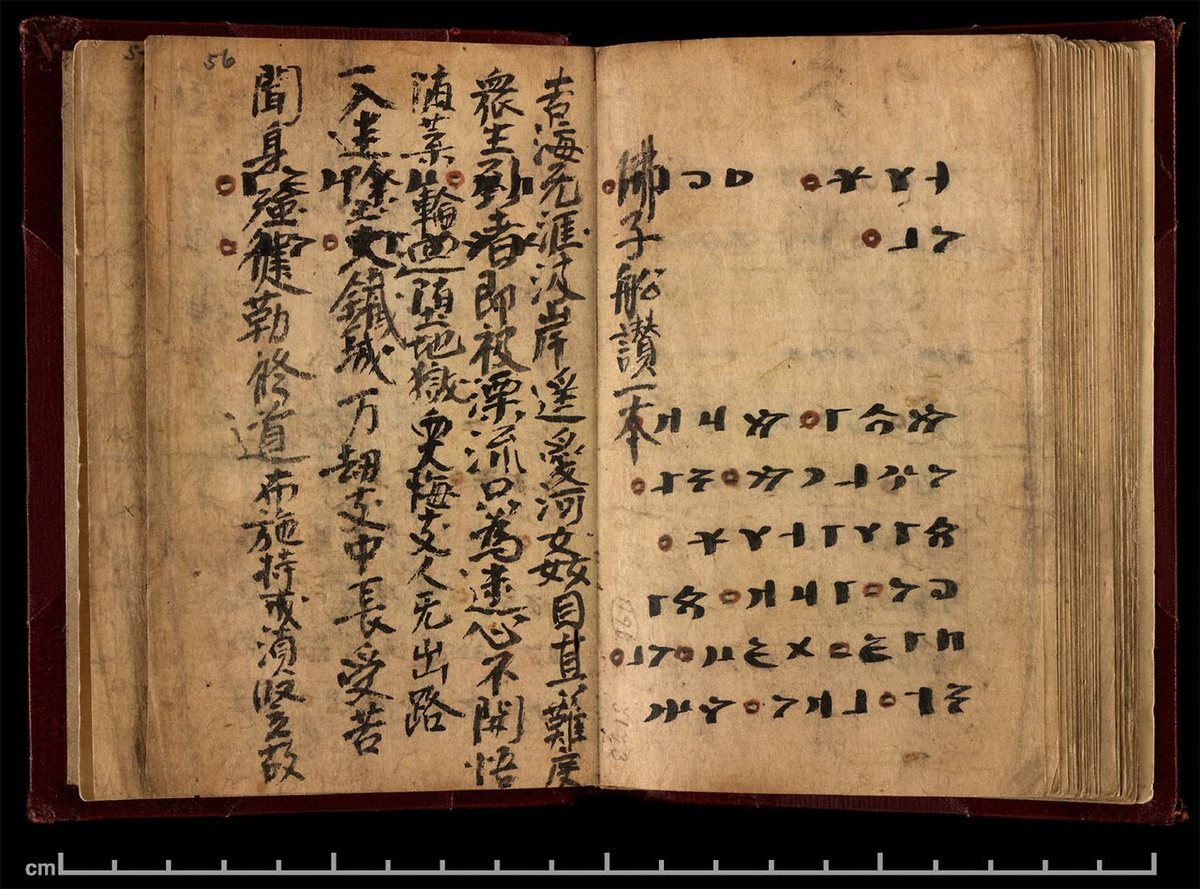
Besides the stones, a few manuscripts in the runic script survive, from Eastern Turkestan and from Dunhuang. The most important is the Irk Bitig, the ‘Book of Omens’, the only complete manuscript text in this script. Aurel Stein found it in 1907 in the walled-up ‘Library Cave’ of the Buddhist Mogao caves near Dunhuang, and it is now in the British Library in London.
It is a small booklet of 58 folios, each page about 13 × 8 cm. The Old Turkic text fills 104 pages, written in black ink with red word dividers. It contains 65 omens. Each is headed by three groups of one to four red dots, probably the result of three throws of an oblong die with four marked sides (or of one throw of three such dice); then comes a short image from the nomads' world (a falcon in a sandalwood tree, a horse lost in the desert, a khan returning from a victorious battle) and the verdict ‘know thus: it is good’ or ‘bad’. The main text ends: ‘Now, my dear sons, know thus: this book of divination is good.’
According to its colophon the copy was written in a year of the tiger in a Manichaean monastery; it is most often dated to the 9th century, by Louis Bazin to 930 or 942. The copyist's errors show that it is a copy of an older text. The blank pages at the beginning and end were later filled with Buddhist verses in Chinese.
Decipherment
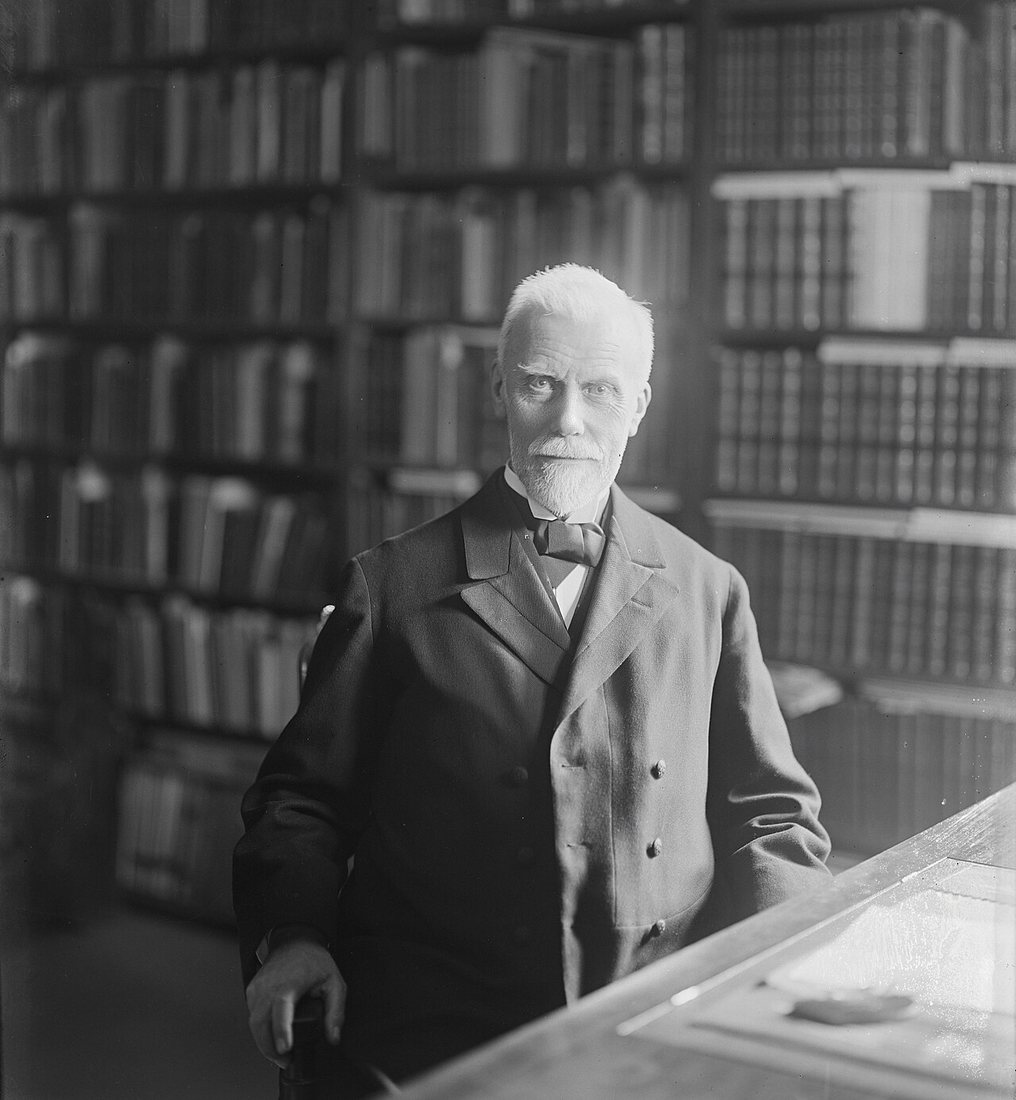
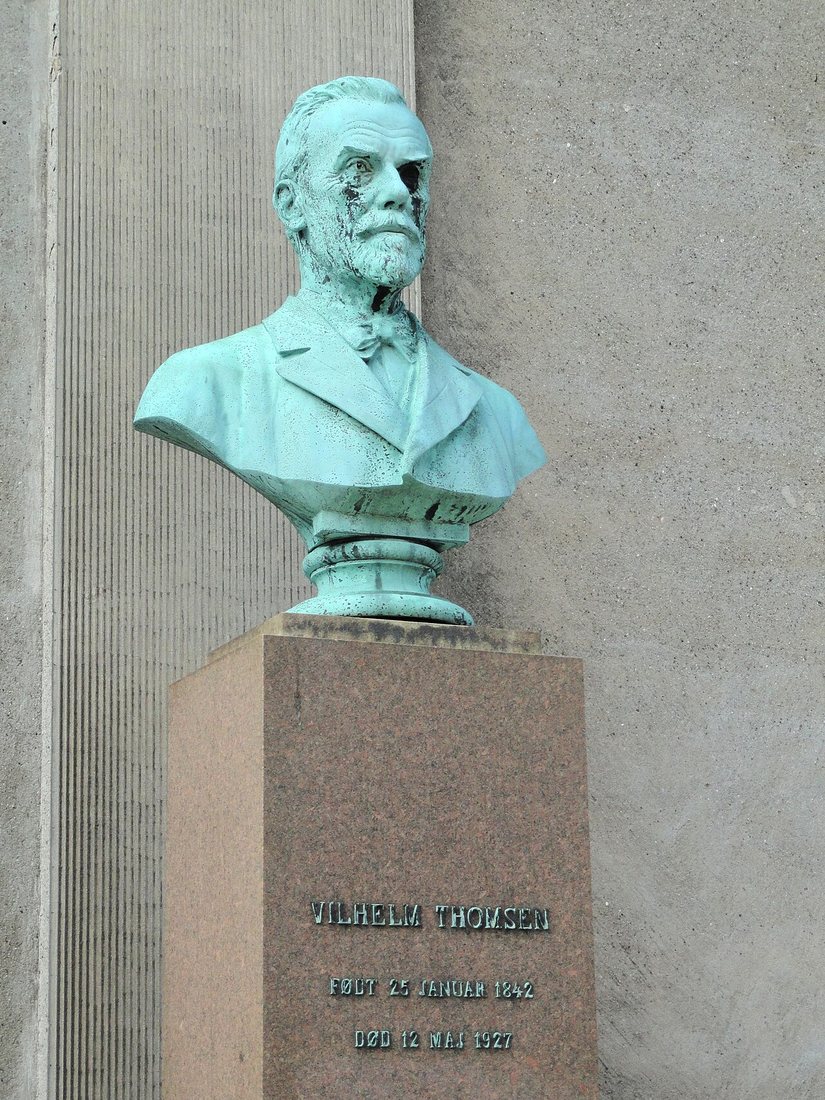
The Orkhon inscriptions were published by Vasily Radlov (Wilhelm Radloff, 1837–1918), a German-born scholar and leading Russian Turkologist. The Chinese text on the Kül Tigin stele offered a lead: it revealed to whom the stone was dedicated and when it was made. Yet the runes were first deciphered by the Danish linguist Vilhelm Thomsen (1842–1927) of Copenhagen.
Thomsen established that the script runs from right to left and recognised that its consonants form two sets governed by vowel harmony. According to the usual account, his first keys were the words täŋri ‘sky’, türk and the name Kül Tigin, known from the Chinese part of the inscription. He presented his results to the Royal Danish Academy of Sciences on 15 December 1893. Radlov soon published the first translations, Thomsen his French study Inscriptions de l'Orkhon déchiffrées in 1896 and a fuller Danish translation in 1922.
The end of the runic script
After 744 the runic script was taken over by the Uyghurs, who succeeded the Göktürks in Mongolia. In 840 their khaganate was destroyed by the Yenisei Kyrgyz, and the Uyghurs moved to the oases of Turfan and to Gansu. There Turkic texts were soon written in the Old Uyghur script, derived from Sogdian, and in other scripts brought by Buddhism and Manichaeism, and from the 10th and 11th centuries, with Islam, in the Arabic script. The runes were used roughly from the 8th to the 10th century and then fell into oblivion.
Today the Old Turkic inscriptions are seen as a shared heritage of the Turkic peoples. Letters of the Orkhon script appear, for example, on the Azerbaijani 5-manat banknote issued since 2006.
Timeline
- 552Bumin Qaghan founds the First Turkic Khaganate.
- 630The Tang defeat the Eastern Turks and capture their qaghan.
- 636–659The Chinese Book of Zhou, Book of Sui and History of the Northern Dynasties disagree on whether the Turks have a script.
- 682Ilterish Qaghan and Tonyukuk restore the Turkic empire.
- c. 716–725The Tonyukuk inscription (date uncertain).
- 732Stele of Kül Tigin, who died in 731.
- 735Stele of Bilge Qaghan, who died in 734.
- 744The Uyghurs defeat the last Göktürk khaganate.
- 840The Yenisei Kyrgyz destroy the Uyghur khaganate.
- 9th–10th c.The Irk Bitig manuscript (a year of the tiger).
- 1721D. G. Messerschmidt finds the Uybat I stele on the Yenisei.
- 1889Yadrintsev's expedition discovers the Orkhon inscriptions.
- 15 Dec 1893Thomsen announces the decipherment.
- 1907Aurel Stein finds the Irk Bitig at Dunhuang.
- 2004The Orkhon Valley is inscribed on the UNESCO World Heritage List.
- 2009The Old Turkic script is encoded in Unicode 5.2.
Old Turkic on the globe
Select the language to show it on the globe:
Sources and further reading
- Talat Tekin: A Grammar of Orkhon Turkic. Indiana University, Bloomington – Mouton, The Hague 1968 (Uralic and Altaic Series 69).
- Marcel Erdal: A Grammar of Old Turkic. Brill, Leiden 2004.
- Talat Tekin: Irk Bitig. The Book of Omens. Harrassowitz, Wiesbaden 1993.
- Peter B. Golden: An Introduction to the History of the Turkic Peoples. Harrassowitz, Wiesbaden 1992.
- Lars Johanson, Éva Á. Csató (eds.): The Turkic Languages. Routledge, London 1998.
- Vilhelm Thomsen: Inscriptions de l'Orkhon déchiffrées. Société finno-ougrienne, Helsingfors 1896.
- Glottolog 5 (languages and their classification).