Languages of antiquity
Ancient India
The Indian subcontinent · from the Indus seals to Indian numerals
The Indian subcontinent produced a system of signs that no one has yet been able to read, and one of the most exact oral traditions in the world: the hymns of the Rigveda were handed down by memory for centuries. Sanskrit, the language of the Vedas and of Pāṇini’s grammar, led European scholars to the discovery of the Indo-European language family. The Brahmi script, in which King Ashoka had his inscriptions carved in the 3rd century BCE, is the ancestor of most scripts of South and South-East Asia, and Brahmi numerals are the ancestors of the digits we write today.
Cities of the Indus Valley
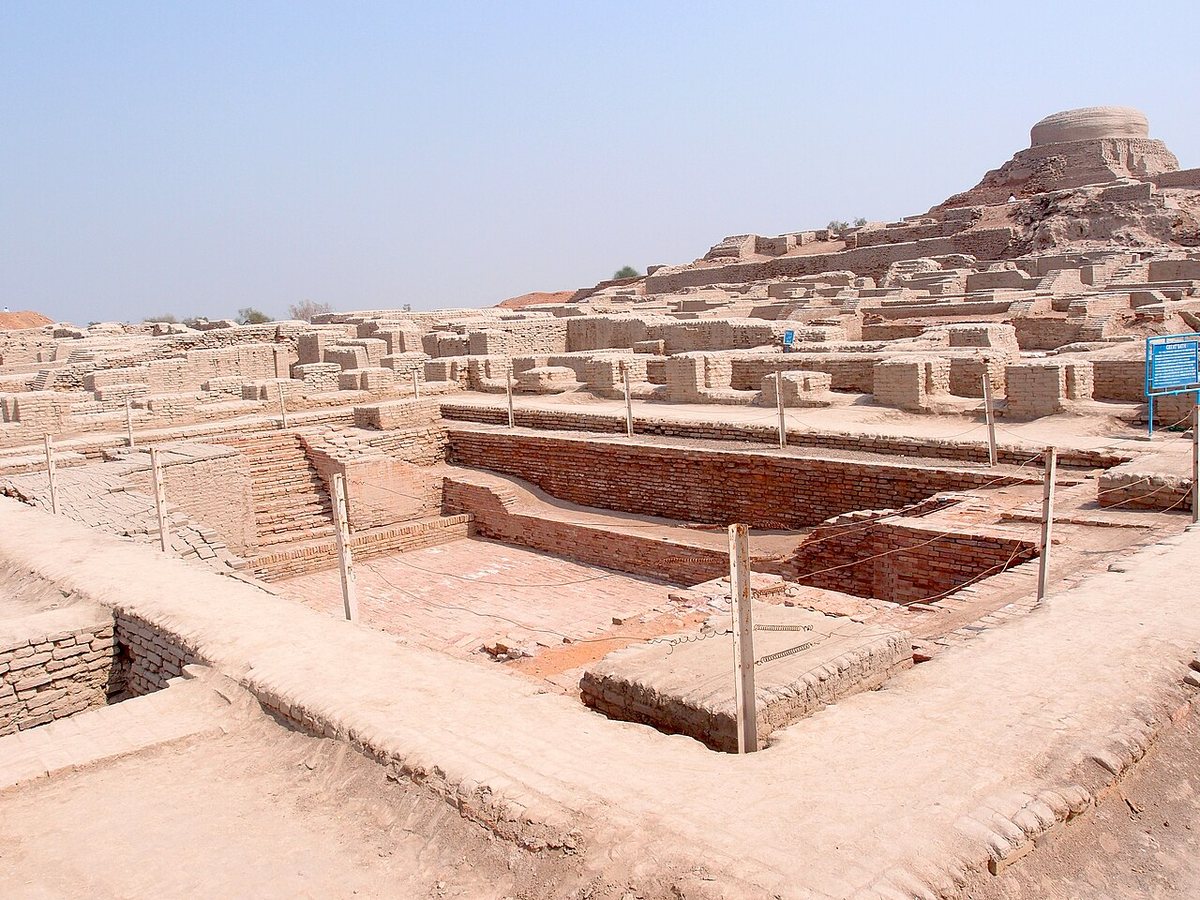
In the basin of the Indus and its tributaries, in today’s Pakistan and north-western India, there stood in the 3rd millennium BCE cities with regular streets, drains and houses of baked brick. The so-called Harappan civilisation, named after the site of Harappa, was at its height from about 2600 to 1900 BCE. Its largest known cities were Mohenjo-daro and Harappa, and Dholavira in present-day Gujarat. It traded as far as Mesopotamia, where seals bearing its signs have also been found.
The significance of the sites was recognised by the Archaeological Survey of India only in the 1920s. Daya Ram Sahni excavated at Harappa, R. D. Banerji recognised the great age of Mohenjo-daro in 1922–1923, and the Survey’s Director General John Marshall announced the discovery of an unknown civilisation in the Illustrated London News in September 1924.
Inscriptions no one can read
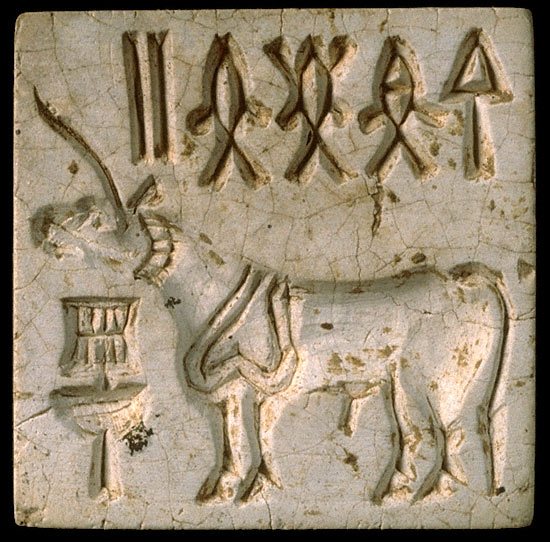
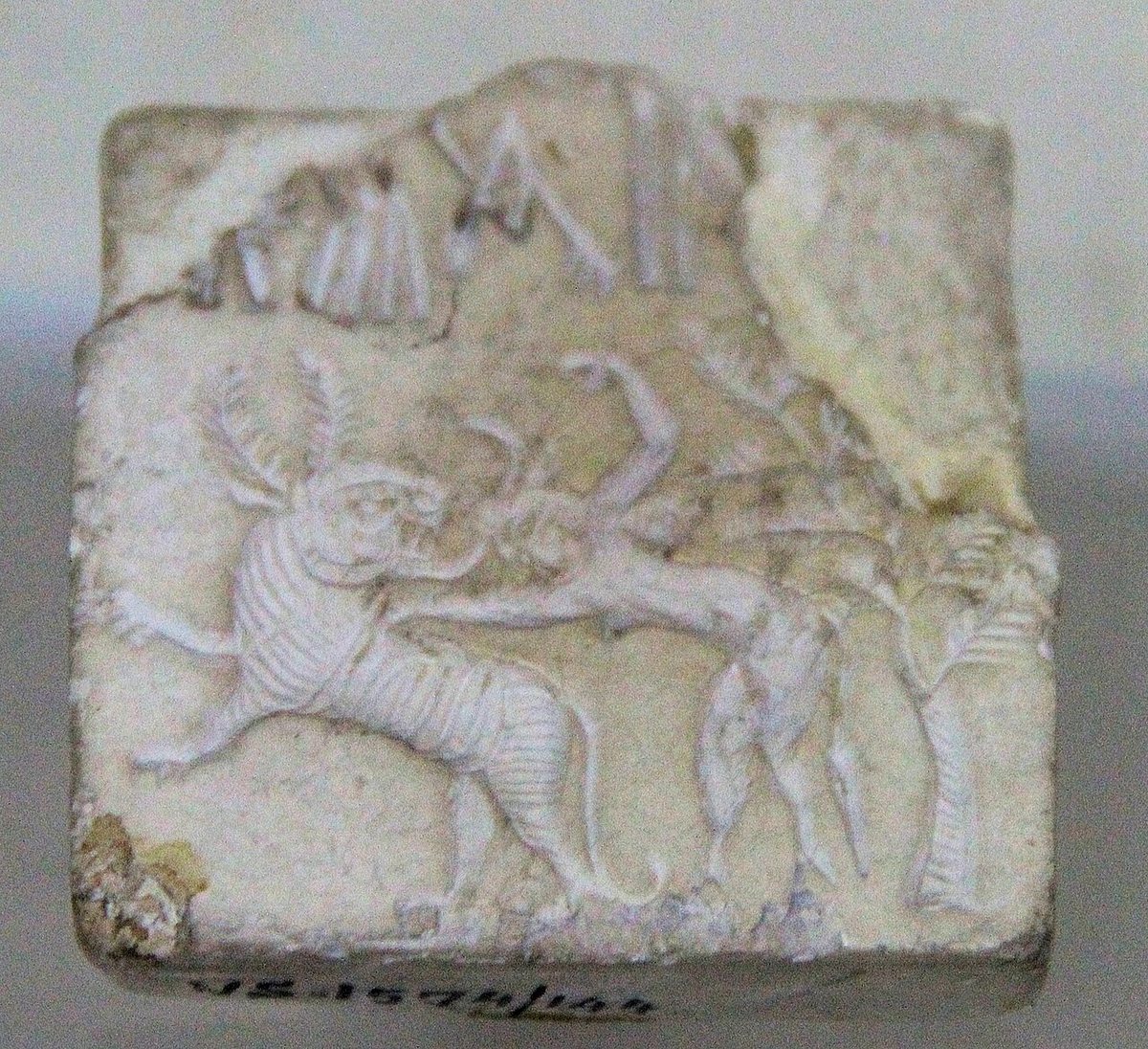
Some four to five thousand inscribed objects survive from the Harappan civilisation. Most are small square seals, 2–3 cm a side, showing an animal, most often the so-called unicorn (probably a bull drawn in profile), with a short inscription above it. Some 400 distinct signs are identified (from just under 400 to over 600, depending on the sign list), too many for a purely phonetic script, so the system is usually thought to have been logo-syllabic, with signs for words and for syllables. Most inscriptions read from right to left. The most striking comes from Dholavira: ten large signs of gypsum once set into a wooden board about 3 m long, found in a side room of the northern gateway.
Three things stand in the way of decipherment. The inscriptions are very short, about five signs on average. The language they record is unknown: an early Dravidian language is the most common proposal (Asko Parpola, Iravatham Mahadevan, and the Soviet team of Yuri Knorozov), but it has not been demonstrated. And there is no bilingual inscription of the kind that unlocked Egyptian hieroglyphs. In 2004 Steve Farmer, Richard Sproat and Michael Witzel went further and argued that the signs do not record language at all but form a non-linguistic symbol system. Parpola and others rejected their arguments, but the debate is not settled. The Indus script is not in Unicode, so it appears here only in photographs.
Seals from the Indus Valley
The Vedas: sacred texts without writing
The oldest form of the Indo-Aryan languages is Vedic Sanskrit. Its principal monument is the Rigveda, a collection of 1,028 hymns in ten books (maṇḍalas) with some 10,600 verses. The hymns are usually dated to roughly 1500–1000 BCE; a more precise date is not possible. The earliest written evidence of Indo-Aryan words comes not from India but from the Near East, from the kingdom of Mitanni (c. 1450–1350 BCE): the names of its kings, technical terms of horse training and, in a 14th-century BCE treaty between a Hittite king and a ruler of Mitanni, the gods Mitra, Varuna, Indra and the Nāsatyas invoked as witnesses.
The Vedic texts were handed down orally for centuries, from teacher to pupil. They were memorised in several ways at once: as continuous recitation (saṃhitāpāṭha), word by word (padapāṭha) and in further permutations, so that an error in one form could be caught by comparison with another. Not only the words survived but also the tonal accent, which the spoken language had long since lost. When the Rigveda was first written down is unclear; according to Michael Witzel the oldest known manuscripts come from Nepal and date to around 1040. Thirty Rigveda manuscripts held by the Bhandarkar Oriental Research Institute in Pune were inscribed on UNESCO’s Memory of the World Register in 2007.
Pāṇini and the “refined” language
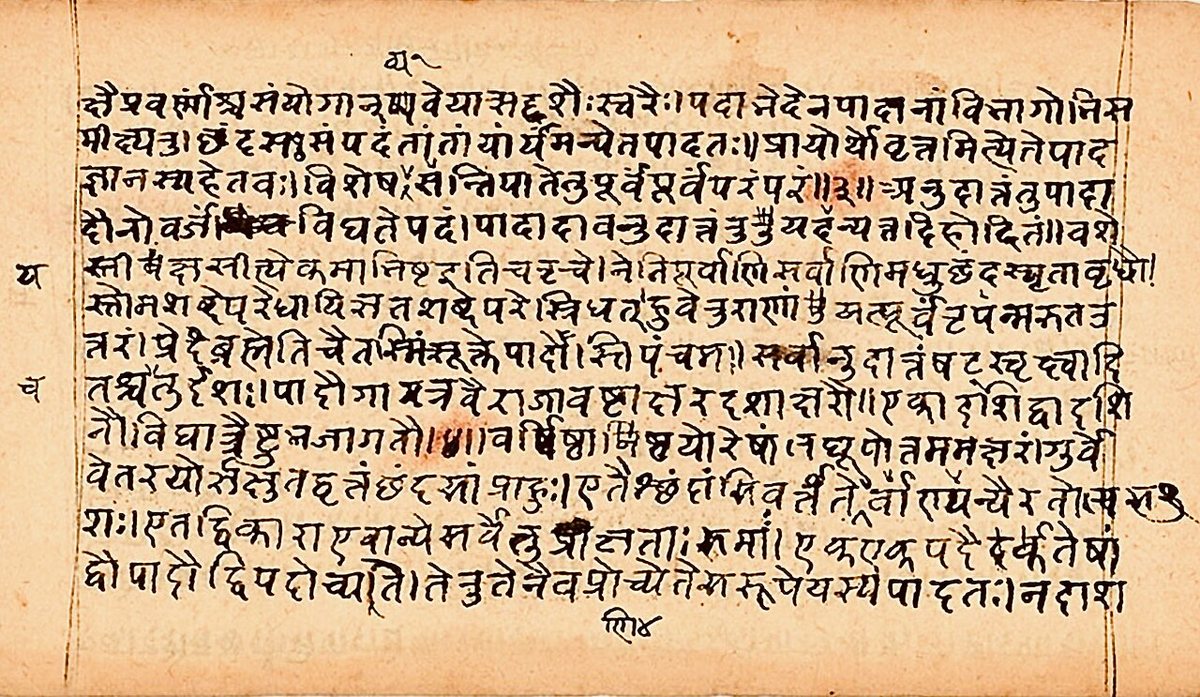
The classical form of Sanskrit was fixed by the grammar called the Aṣṭādhyāyī (“Eight Chapters”), the work of Pāṇini. Tradition says he came from Śalātura in Gandhara, in the north-west of the subcontinent. His date is disputed: estimates range from the 6th to the 4th century BCE, and many scholars, on the evidence of the coins he mentions, favour the mid-4th century. In 3,959 terse rules (sūtras) he describes the sounds, word forms and word formation of the language so systematically that his work is counted among the high points of linguistics as a whole; Leonard Bloomfield explicitly praised and drew on his methods; how strongly he influenced Ferdinand de Saussure is disputed.
The word Sanskrit, संस्कृत saṃskṛta, means “refined, polished”, in contrast to प्राकृत prākṛta, “natural, common”, the term for vernacular speech. For two thousand years Sanskrit served as the language of religion, learning and literature, much as Latin did in Europe.
In 1786 the judge and orientalist William Jones told the Asiatic Society in Calcutta that Sanskrit was so closely related to Greek and Latin that all three must have “sprung from some common source, which, perhaps, no longer exists”. Others had noticed the resemblances before him, but his statement became the best known, and it gave the impulse for comparative linguistics and the description of the Indo-European language family.
Sanskrit and its European relatives
These words are not borrowings: they descend from the same Indo-European parent language and differ by regular sound changes. Sanskrit words are given in their stem form or the nominative:
| Sanskrit | Latin | English |
|---|---|---|
| मातृ mātṛ | māter | mother |
| भ्रातृ bhrātṛ | frāter | brother |
| स्वसृ svasṛ | soror | sister |
| नव nava | novus | new |
| द्वौ dvau | duo | two |
| त्रयः trayaḥ | trēs | three |
| दश daśa | decem | ten |
| नामन् nāman | nōmen | name |
| जीव jīva | vīvus | quick (originally “alive”) |
| अग्नि agni | ignis | — (ignite is from Latin) |
| वेद veda | videō “I see” | wit |
The Prakrits: everyday speech
Alongside Sanskrit people spoke Middle Indo-Aryan languages, known collectively as the Prakrits. They differ from Sanskrit by regular sound changes: consonant clusters were simplified or turned into double consonants, so that Sanskrit dharma (“order, law, teaching”) becomes dhamma, karma becomes kamma and sūtra becomes sutta.
The earliest evidence of Middle Indo-Aryan is Ashoka’s inscriptions of the 3rd century BCE and the oldest layer of Pali, the language of the Theravada Buddhist canon, still used as a sacred language in Sri Lanka and South-East Asia. The oldest Jain texts are in Ardhamagadhi, lyric poetry such as the Gāhā Sattasaī was composed in Maharashtri Prakrit, and in Sanskrit drama women and characters of lower rank usually speak Prakrit. In the north-west, Gandhari was written. Through a late stage called Apabhraṃśa, the Prakrits gave rise to the modern Indo-Aryan languages, among them Hindi and Urdu, Bengali, Punjabi, Marathi and Gujarati; some 800 million people speak Indo-Aryan languages today.
The inscriptions of Ashoka
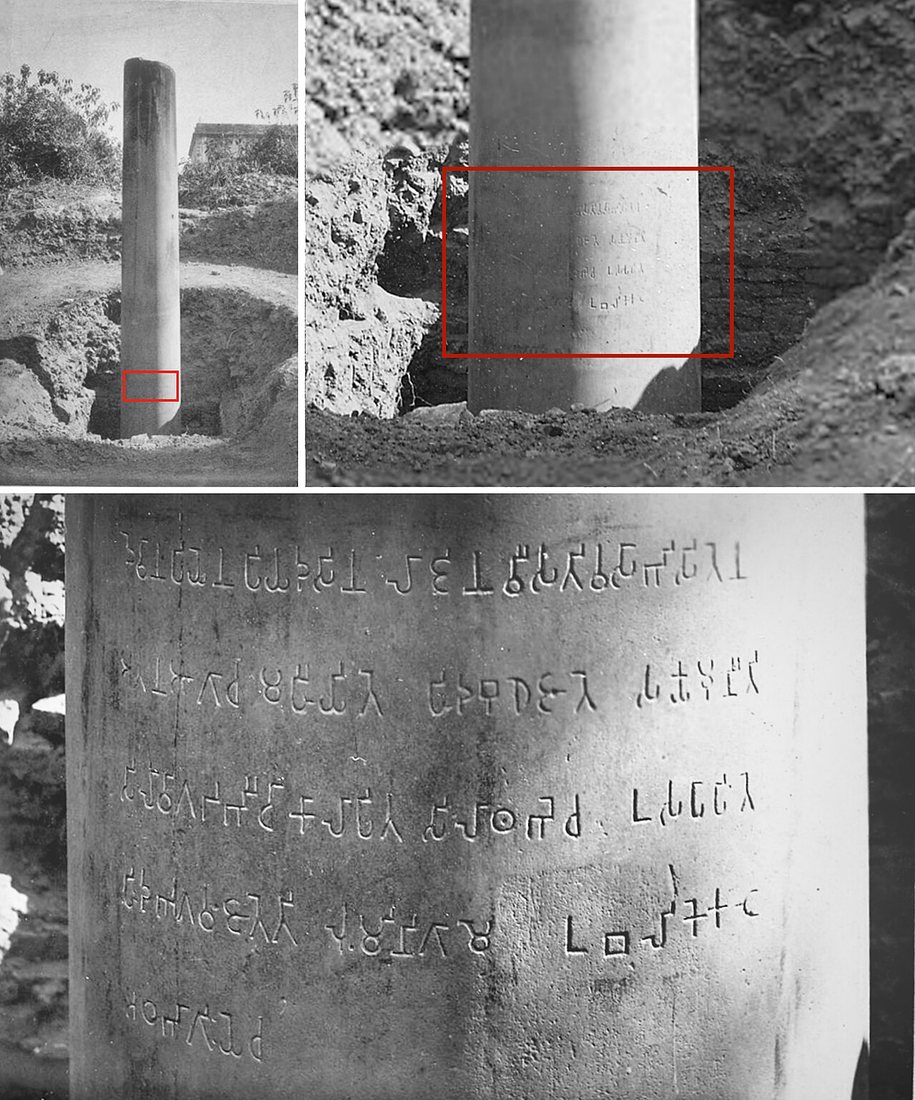
India’s oldest securely dated written records, leaving aside the Indus signs, were carved on the orders of Ashoka of the Maurya dynasty, who ruled most of the subcontinent from about 268 to 232 BCE. After the bloody conquest of Kalinga he turned, in his own words, to the Dharma and to Buddhism, and had more than thirty inscriptions cut into rocks and on stone pillars across his empire. He called them dhaṃma lipi, “inscriptions of the Dharma”. They urge moral conduct, tolerance between religions and care for animals, and in them the king calls himself Devānampiya Piyadasi, “Beloved of the Gods, He who looks kindly”.
The inscriptions are in Prakrit and, over most of the empire, in the Brahmi script. The scribes adapted the text to local speech: the eastern versions, for example, have l for r (lājā for rājā, “king”). In the north-west, at Shahbazgarhi and Mansehra in today’s Pakistan, the same edicts are written in Kharosthi, and at Kandahar in today’s Afghanistan Ashoka had inscriptions carved in Greek and Aramaic. That “Beloved of the Gods” really was Ashoka was confirmed only in 1915 by an inscription at Maski in southern India that also gives his name.
hida budhe jāte sakyamunī ti
- hida
- here (Sanskrit iha)
- budhe
- the Buddha (nominative; eastern ending -e)
- jāte
- born (Sanskrit jātaḥ)
- sakyamunī
- sage of the Śākya clan (Śākyamuni)
- ti
- particle closing a quotation or a reason (Sanskrit iti)
Here the Buddha Śākyamuni was born.A clause from the inscription on the Lumbini pillar (c. 248 BCE). Ashoka says that in the twentieth year after his consecration he came in person and worshipped this place because the Buddha was born here; he had a stone pillar set up and made the village of Lummini free of taxes, paying only an eighth share of its produce. It is the earliest record of the epithet Śākyamuni. The text shows features of eastern Prakrit: the nominative in -e (budhe) and l for r (lājina, “by the king”). Ashoka’s scribes did not write double consonants, so budhe stands for Sanskrit buddhaḥ. Words are not consistently separated on the stone; the spaces here are added. On the stone kya is a single conjunct (ya beneath ka); the Noto Sans Brahmi font has no conjuncts, so here ka carries a virama mark (vowel killer).

Brahmi: a consonant with a built-in a
Brahmi was written from left to right and is an abugida, a script in which every consonant sign also carries the vowel a: 𑀓 is read ka. Any other vowel is indicated by a stroke or hook attached to the consonant (𑀓𑀺 ki, 𑀓𑀼 ku); independent vowel signs are used only at the start of a word or after another vowel. The origin of the script is disputed. Most scholars hold that it was modelled on a Semitic script, most probably Aramaic, while others argue for an origin within India; a link with the Indus script, which some have proposed, has not been demonstrated. The earliest securely dated Brahmi inscriptions are Ashoka’s; potsherds bearing a few Brahmi characters from Anuradhapura in Sri Lanka, dated to the 6th–4th century BCE, remain controversial.
Over the following centuries Brahmi gave rise to the great majority of the scripts of South and South-East Asia. The northern branch led through the Gupta script to Nagari, attested from the 7th century, and on to Devanagari, in regular use from the 8th century, used today for Hindi, Marathi, Nepali and Sanskrit. The southern branch produced, among others, the Tamil, Telugu and Kannada scripts, and travelled with merchants and monks to South-East Asia, where it gave rise to the Khmer, Thai, Lao, Burmese and Javanese scripts. The Tibetan script also derives from Indian models. All of them keep, in essence, the principle of Brahmi: a consonant carries the vowel a, and other vowels are added as signs.
Brahmi characters
- avowel
- ivowel
- uvowel
- ka
- khaaspirated k
- ga
- ta
- da
- dhaaspirated d
- na
- pa
- ma
- ya
- ra
- la
- va
- sa
- ha
- kāka + sign ā
- kika + sign i
- kuka + sign u
- keka + sign e
dhaṃ-ma-li-pidhaṃma lipi, “inscription of the Dharma” – Ashoka’s own name for his edicts. The dot after dha is the anusvāra (ṃ); later Pali writes dhamma, Sanskrit dharma.
The characters are rendered in Noto Sans Brahmi, in shapes close to those of Ashoka’s inscriptions; in later centuries the forms changed considerably. The Indus script is not in Unicode.
Kharosthi: right to left
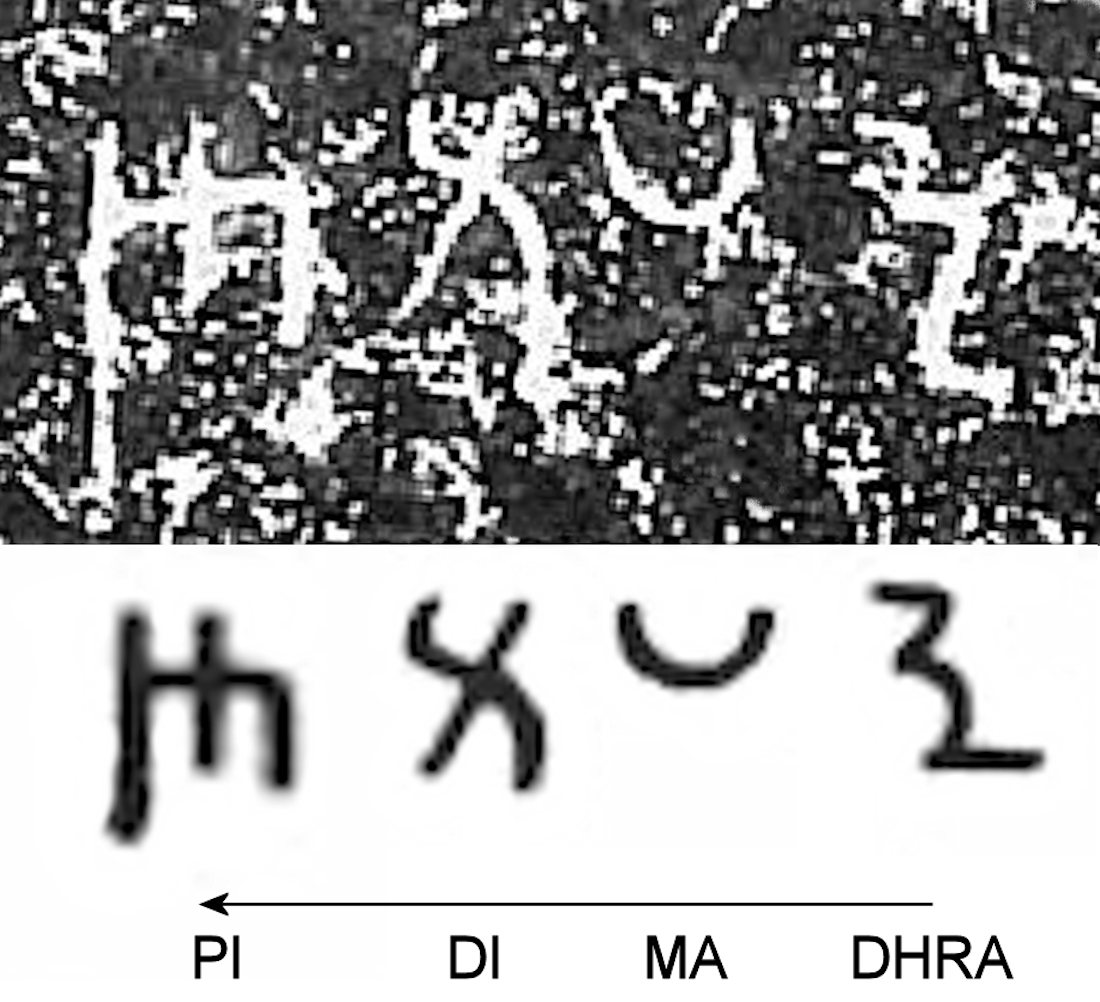
In the north-west of the subcontinent, in Gandhara (today’s northern Pakistan and eastern Afghanistan), another script was used: Kharosthi. It derives from the Aramaic script used there under the Persian Achaemenid Empire and, like Aramaic, was written from right to left. It shares with Brahmi, however, the principle of the inherent vowel a and of vowel signs. Ashoka’s edicts at Shahbazgarhi and Mansehra are in Kharosthi, and the First Rock Edict reads 𐨢𐨿𐨪𐨨 𐨡𐨁𐨤𐨁 (dhrama dipi) instead of the eastern dhaṃma lipi. The word dipi, “inscription”, is the same as Old Persian dipi in Darius’s inscription at Behistun; on a widely held view, Indian lipi was also borrowed from Persian.
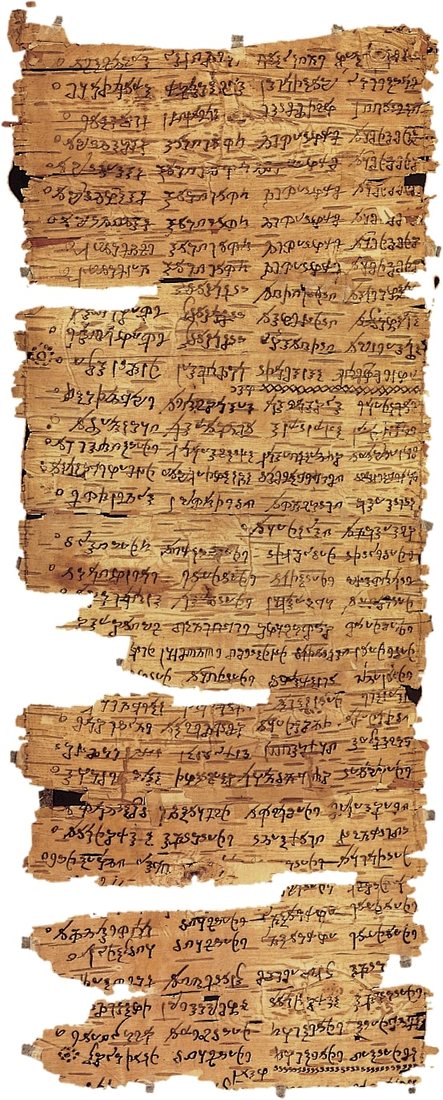
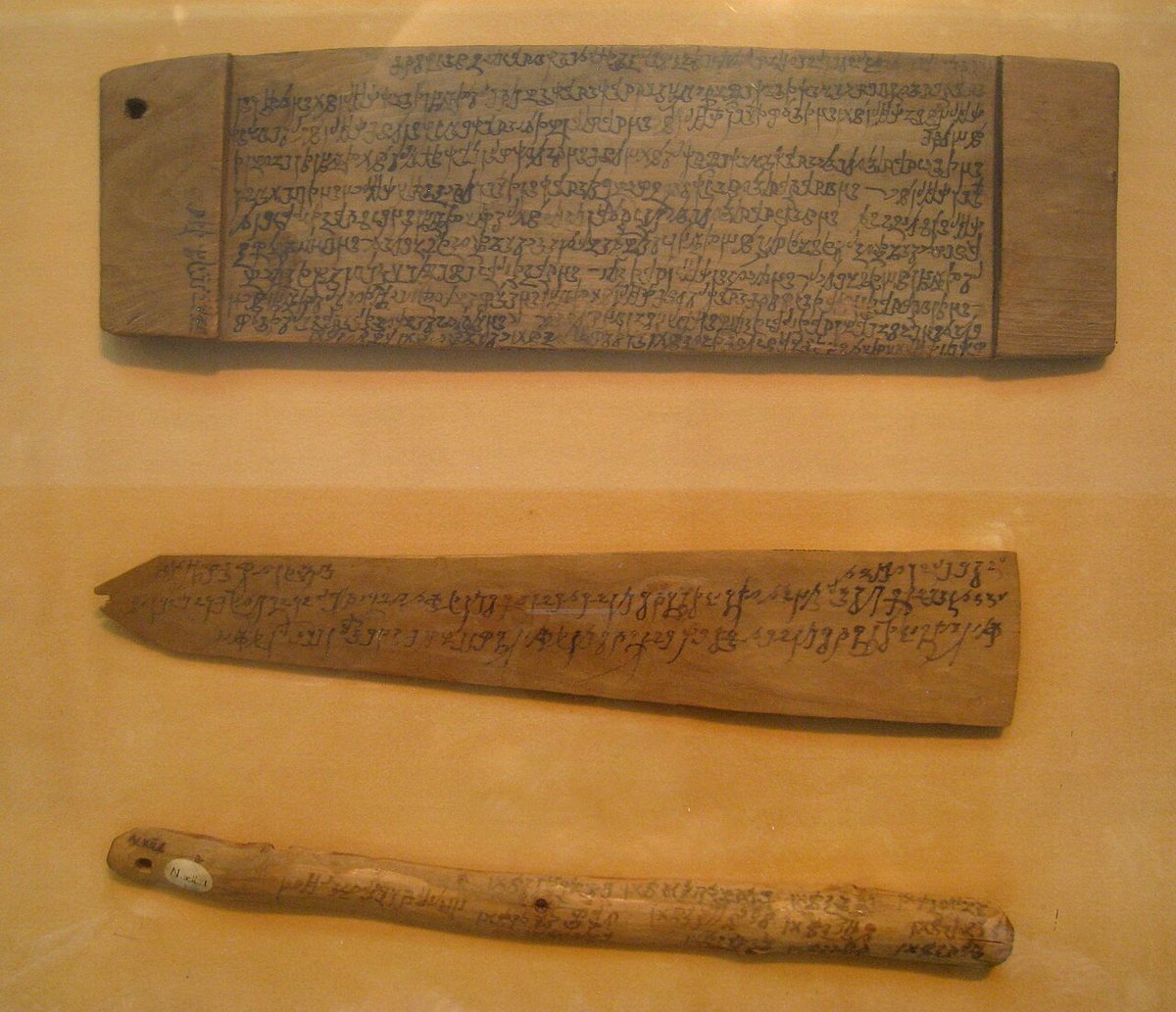
The oldest known Buddhist manuscripts, and at the same time the oldest surviving manuscripts from South Asia, are written in Kharosthi and the Gandhari language: birch-bark scrolls from the 1st century BCE to the 3rd century CE. A group of some eighty fragments acquired by the British Library in 1994 dates from the first half of the 1st century CE; the scrolls had been stored in clay pots and probably come from the area around Hadda in eastern Afghanistan. In India Kharosthi fell out of use around the 3rd century CE; in oases of the Tarim Basin such as Niya and Khotan it survived longer.
On birch bark and wood
Decipherment: a gift at Sanchi
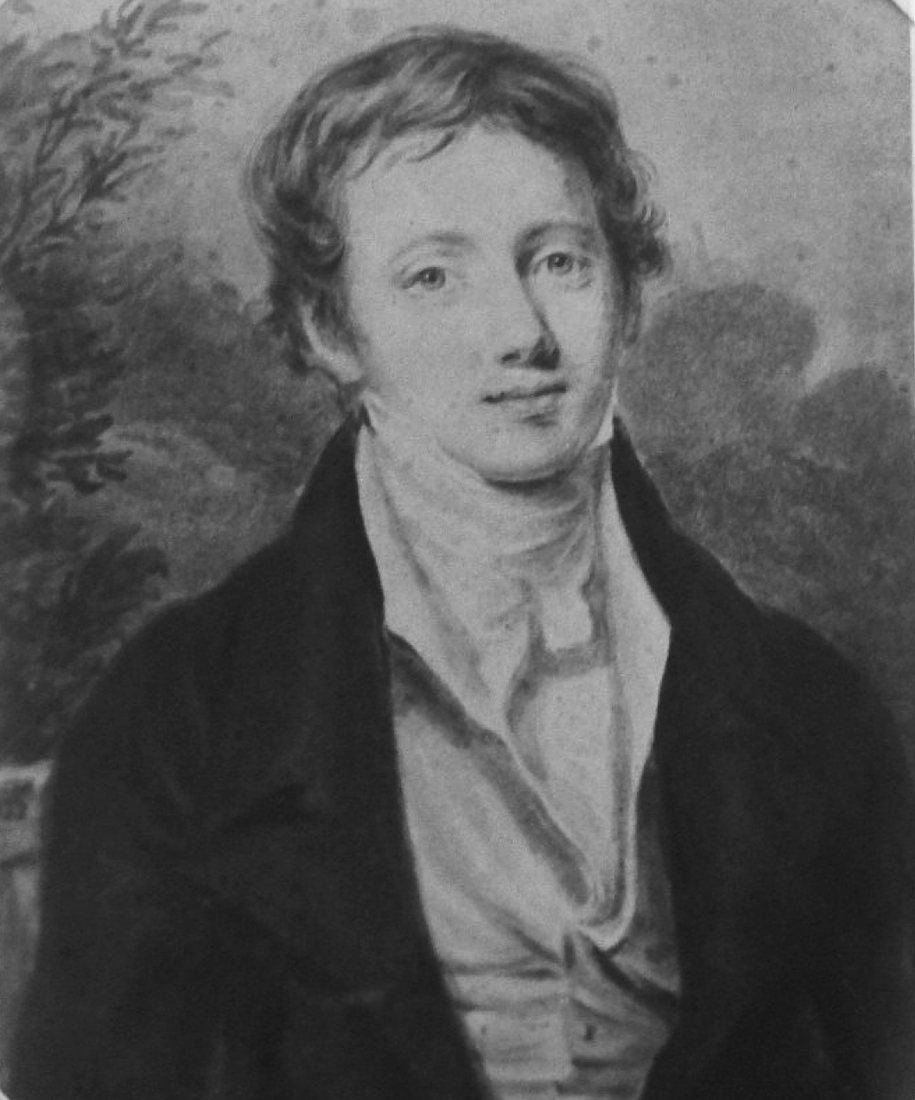
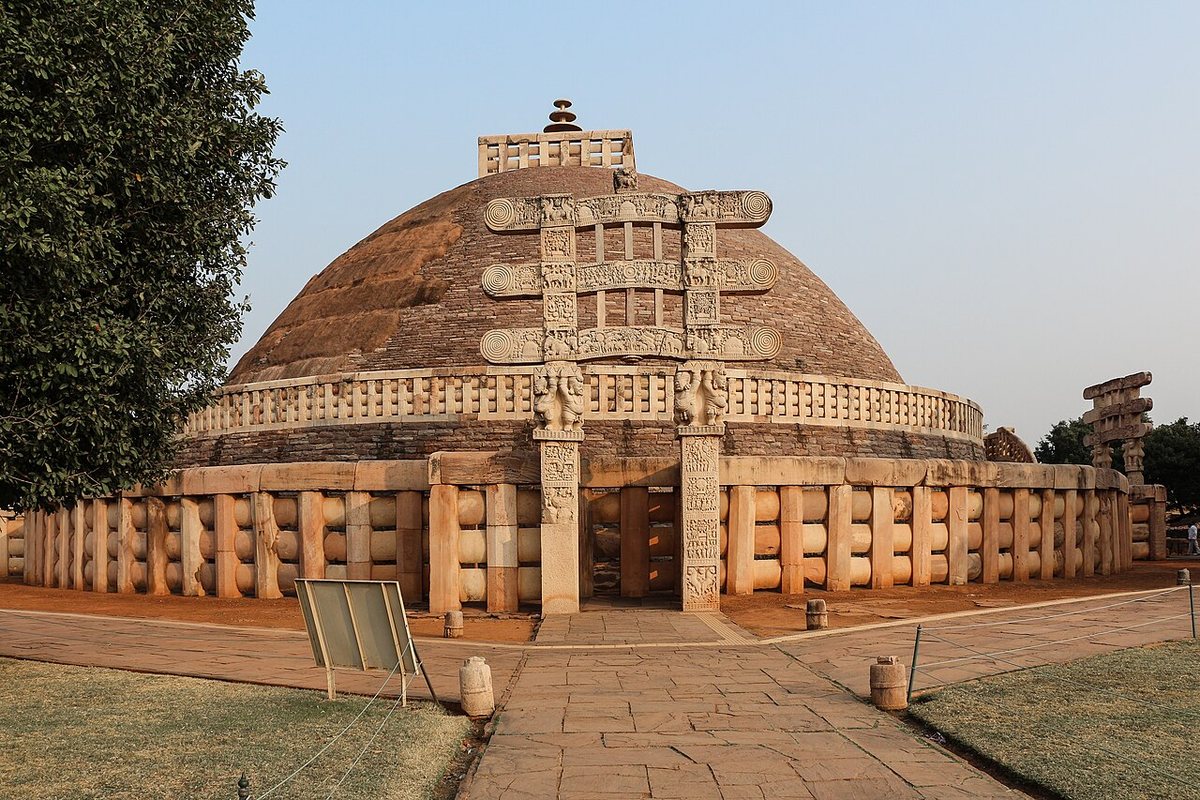
Knowledge of Brahmi was lost during the Middle Ages, because the scripts that developed from it had come to look very different. In the 19th century the old inscriptions were taken up by scholars of the Asiatic Society of Bengal in Calcutta. The decisive step came in 1837 from its secretary James Prinsep (1799–1840), an official of the mint, who built on the work of Christian Lassen, Edwin Norris, Horace Hayman Wilson and Alexander Cunningham. He noticed that many short donors’ inscriptions from the stupas at Sanchi ended with the same two signs and guessed that they meant dānaṃ, “gift”. From this and other inscriptions he worked out the values of the signs and read Ashoka’s edicts on the pillars at Delhi and Allahabad.
Prinsep first took the king who calls himself Devānampiya Piyadasi for a ruler of Sri Lanka; he identified him with Ashoka from the Sri Lankan chronicles in Pali, which George Turnour brought to his attention. Kharosthi was deciphered independently by Prinsep (1835), Christian Lassen (1838) and others from the bilingual coins of the Indo-Greek kings, which bore a Greek legend on the obverse and a Prakrit one in Kharosthi on the reverse.
A Greek who wrote in an Indian language
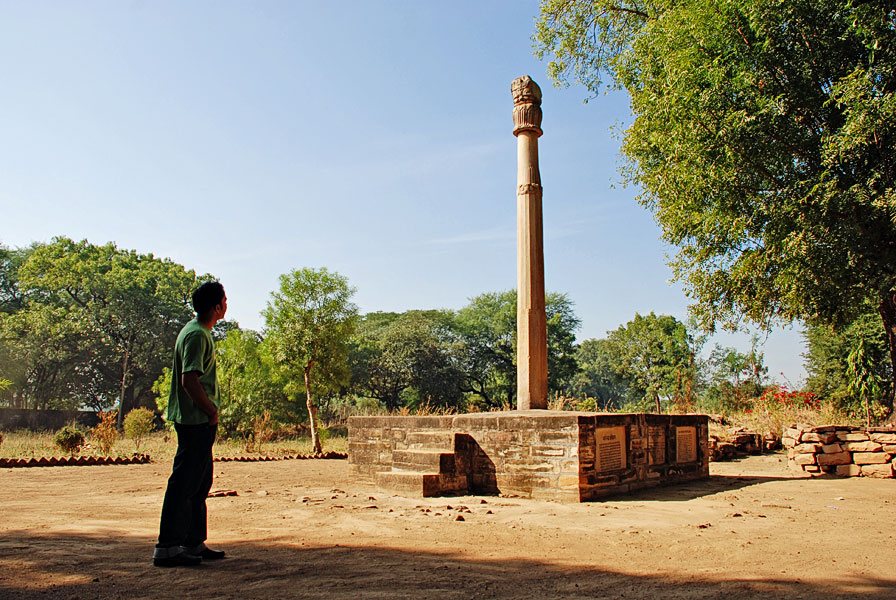
How varied the linguistic world of northern India was is shown by a pillar at Besnagar near Vidisha, about 11 km from Sanchi. It was set up around 113 BCE by Heliodorus, son of Dion, from Taxila, ambassador of the Indo-Greek king Antialcidas to King Bhagabhadra. Its inscription is not in Greek but in Prakrit, written in Brahmi. In it Heliodorus calls himself a devotee (bhāgavata) of the god Vāsudeva, to whom he dedicated this pillar as a “Garuda standard”; Garuda is the divine bird on which Vishnu rides. A shorter inscription below names three virtues that lead to heaven (self-restraint, generosity and vigilance) and corresponds to a verse of the Mahābhārata.
Alexander Cunningham described the pillar as early as the 1870s, but the inscription was discovered only in 1909–1910 by a team led by H. H. Lake, once the pillar had been cleaned of a thick coat of red paint.
Zero and Indian numerals
The numerals we write today also come from India. Brahmi numerals already appear in Ashoka’s inscriptions, at first without a zero and without place value, with separate signs for tens and hundreds. From around 600 CE inscriptions begin to use a decimal place-value system with nine digits and a dot for an empty place; in the 7th century the astronomer Brahmagupta described calculating with zero as a number. The earliest securely dated inscription with a sign for zero in India itself comes from the Chaturbhuj temple at Gwalior and dates from 876; in South-East Asia, dots for zero are attested in inscriptions as early as 683 (Cambodia, Sumatra). Persian and Arab mathematicians adopted the system from Indian scholars; around 825 al-Khwarizmi wrote a treatise on calculation with Hindu numerals. Leonardo Fibonacci introduced it to Europe with his Liber Abaci (1202), and Europeans came to call the digits Arabic numerals.
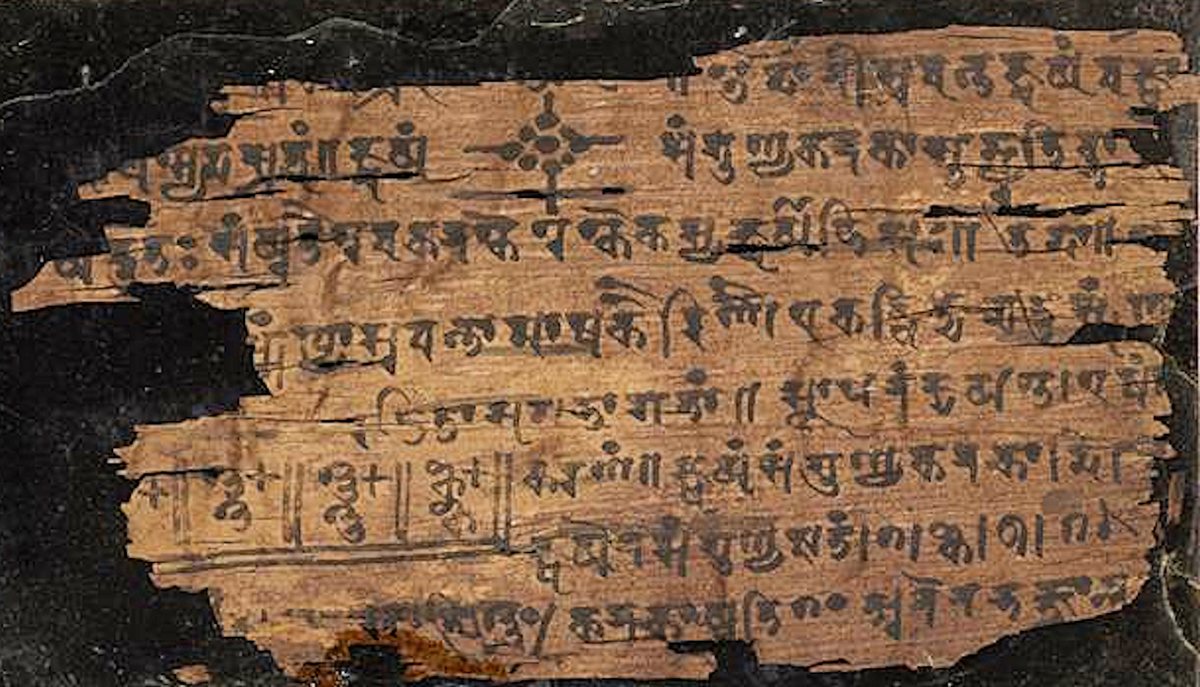
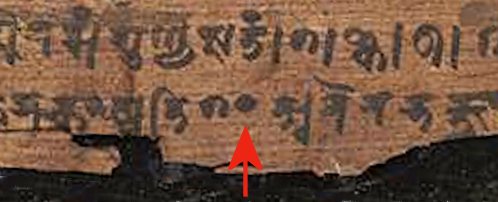
The Bakhshali manuscript holds a special place: a mathematical text on seventy leaves of birch bark, dug up by a farmer in 1881 near the village of Bakhshali, not far from Mardan in present-day Pakistan. It is written in an early form of the Sharada script, in a language close to Sanskrit, and a dot stands for zero. In 2017 the Bodleian Library in Oxford, where the manuscript is kept, announced that radiocarbon testing had dated one of its leaves to the 3rd–4th century CE, and the manuscript was hailed as the oldest record of zero. The dating was criticised by historians of mathematics (Plofker, Hayashi and others), and in 2024 the Oxford laboratory itself, after new measurements of five leaves including the one earlier dated to the 3rd–4th century, placed the manuscript in roughly 800–1100. It is therefore probably not older than the Gwalior inscription.
Timeline
- c. 2600–1900 BCEMature Harappan civilisation; seals with Indus inscriptions.
- c. 1500–1000 BCEComposition of the hymns of the Rigveda (approximate dating).
- 14th c. BCEIndo-Aryan divine names in the Hittite treaty with Mitanni.
- 6th–4th c. BCEPāṇini composes the Aṣṭādhyāyī (dating disputed).
- c. 260 BCEAshoka’s Greek–Aramaic inscription at Kandahar.
- c. 248 BCEAshoka visits Lumbini and sets up an inscribed pillar there.
- c. 113 BCEHeliodorus erects his pillar at Besnagar.
- early 1st c. CEThe Gandharan Buddhist scrolls now in the British Library.
- c. 825Al-Khwarizmi writes on calculation with Hindu numerals.
- 876Gwalior inscription: the earliest securely dated zero in India.
- 14th c.Sultan Firuz Shah Tughlaq moves two Ashokan pillars to Delhi; no one can read them.
- 1786William Jones on the kinship of Sanskrit with Greek and Latin.
- 1837James Prinsep deciphers Brahmi.
- 1881A mathematical manuscript on birch bark is found at Bakhshali.
- 1924John Marshall announces the discovery of the Indus civilisation.
- 1994The British Library acquires some of the oldest known Buddhist manuscripts.
Languages of India on the globe
Tap a language to show it on the globe:
Sources and further reading
- Richard Salomon: Indian Epigraphy. A Guide to the Study of Inscriptions in Sanskrit, Prakrit, and the Other Indo-Aryan Languages. Oxford University Press, 1998.
- Asko Parpola: Deciphering the Indus Script. Cambridge University Press, 1994.
- Colin P. Masica: The Indo-Aryan Languages. Cambridge University Press, 1991.
- Thomas Burrow: The Sanskrit Language. Faber and Faber, 1955; new ed. 1973.
- Richard Salomon: Ancient Buddhist Scrolls from Gandhāra. University of Washington Press, 1999.
- Kim Plofker: Mathematics in India. Princeton University Press, 2009.
- Glottolog 5 (languages and their classification).