Languages of the Ancient World
The Maya
Mesoamerica · from the first inscriptions to the fall of Nojpetén
The Maya left the only pre-Columbian script of the Americas known to have been able to record anything that could be said, and the only one largely deciphered. Thousands of inscriptions on stelae, temples and pottery tell of kings, wars and gods, and the four surviving books hold astronomical tables. They were deciphered only in the second half of the 20th century, and more than six million people speak Mayan languages today.
Cities in the forest
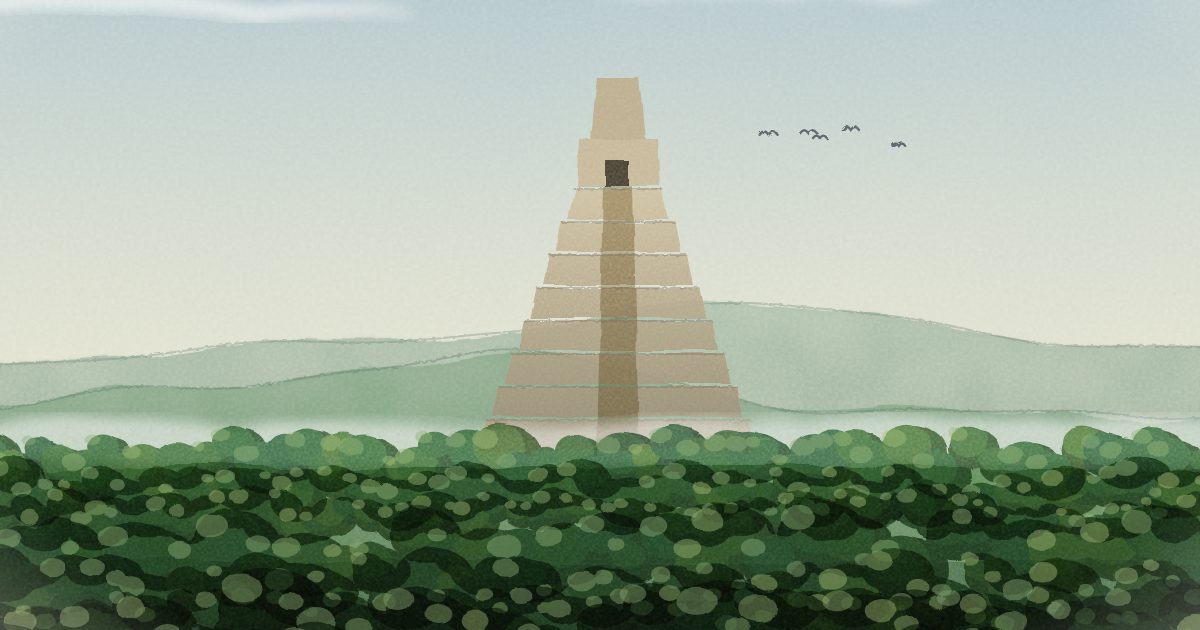
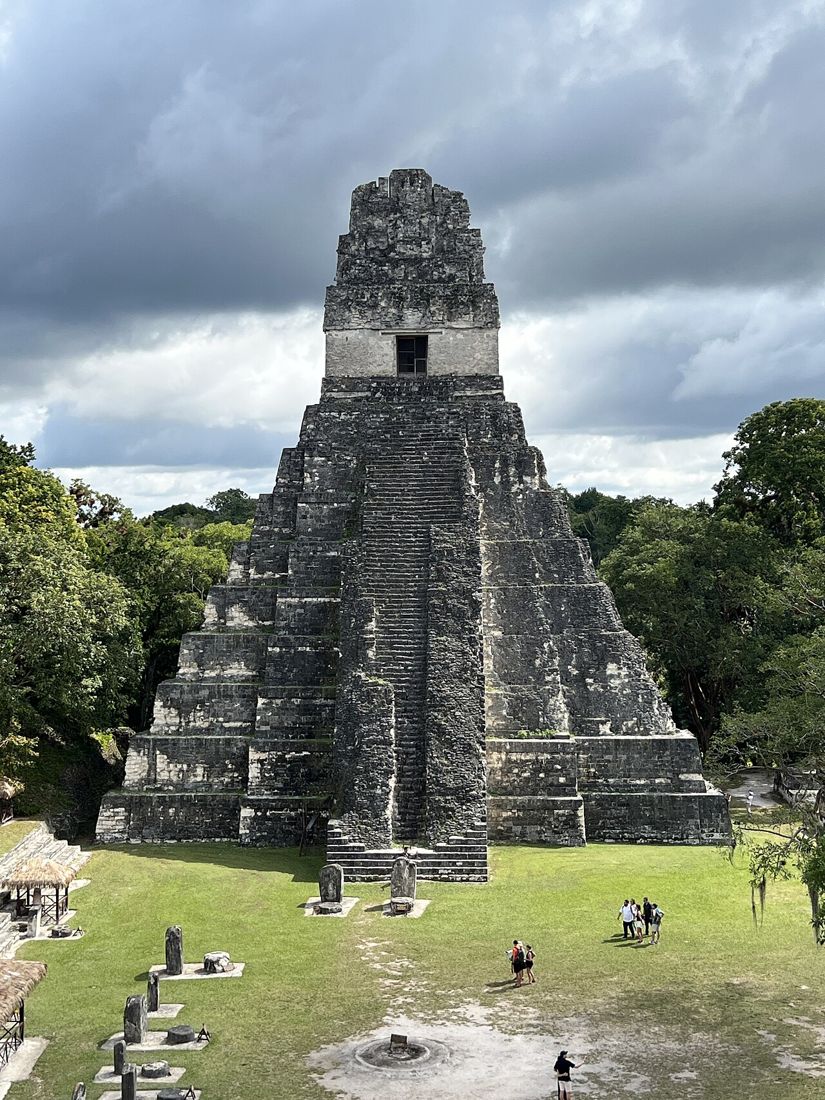
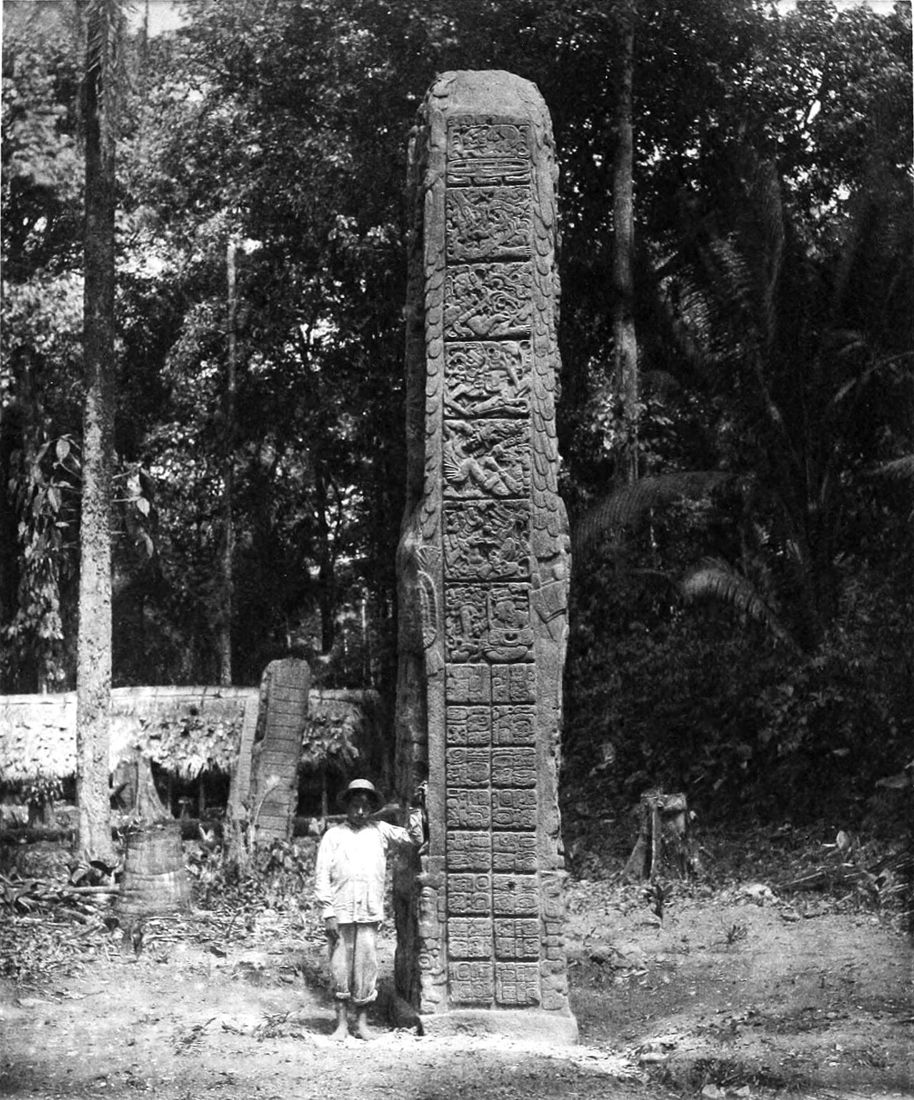
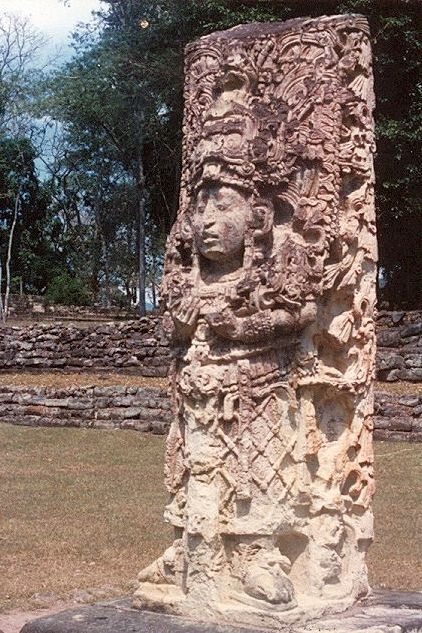
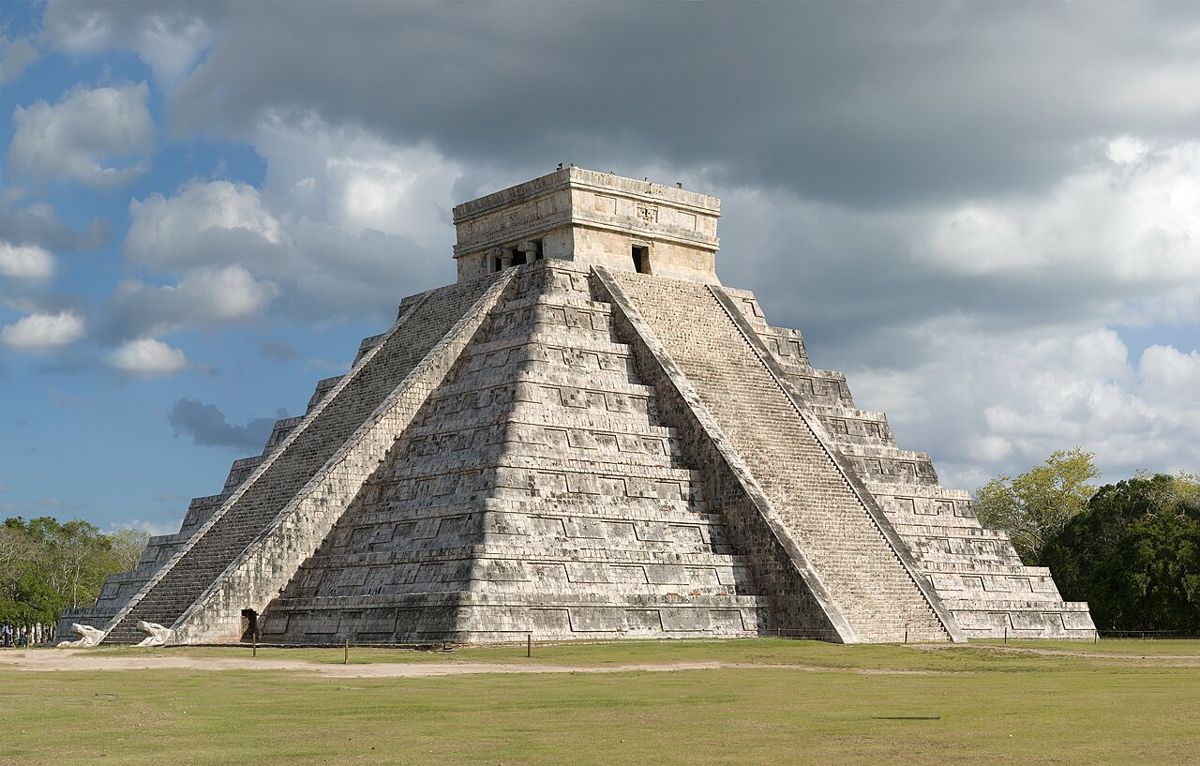
Maya cities grew up in the tropical lowlands of Guatemala, Belize and southern Mexico and in the highlands to the south. In the Classic period (c. 250–900) they were ruled by kings bearing the title ajaw, “lord”; Tikal, Calakmul, Palenque and Copán competed as city-states, and no single empire ever formed. Kings had their reigns, the births of heirs, victories and rituals recorded on stone stelae, altars and stairways.
In the 9th century the great cities of the southern lowlands stopped building and recording dates, and within a few generations they were largely abandoned. The causes are still debated; drought, warfare and exhausted land are all considered. In northern Yucatán, Chichén Itzá and later Mayapán continued to flourish. The Spanish began subjugating the Maya region in the 1520s; the last independent Maya city, Nojpetén on an island in Lake Petén Itzá, fell only in 1697.
The language of the inscriptions
The Mayan languages form a family of their own. Some thirty are spoken today, by more than six million people, mainly in Guatemala and Mexico; in 1996 Guatemala officially recognised 21 of them.
Classic-period inscriptions are written mostly in one language, known as Classic Maya. It belongs to the Chʼolan branch; on the prevailing view it is the ancestor of the Eastern Chʼolan languages, of which Chʼortiʼ survives today, and it is closely related to Chʼol. It apparently served as a prestige written language, much like Latin in medieval Europe, even where other languages were spoken, though local, e.g. Yucatecan, features also appear in the inscriptions. The earliest inscriptions identifiable as Maya date to the 3rd century BCE (San Bartolo, Guatemala).
Signs for words and for syllables
The Maya script is logosyllabic, much like modern Japanese writing. Some signs (logograms) stand for whole words, others for a syllable (consonant plus vowel, or a vowel alone). A scribe could write a word with a single logogram, entirely in syllables, or with both at once, the syllable sign then hinting at how to read the logogram. The word bʼalam “jaguar” is attested as a logogram, as the syllables bʼa-la-ma, and as a combination of the two.
Signs are grouped into square blocks, usually one to four signs each. The blocks are read in pairs of columns, left to right and top to bottom. A syllable ending in a consonant is spelled with two signs, the second vowel being silent: the name Pakal is written pa-ka-la.
How words are spelled
In transliteration, capitals mark a logogram and lower case the syllabic signs:
| spelling | reading | meaning |
|---|---|---|
| PAKAL-la, pa-ka-la | pakal | shield; the name of King Pakal |
| BʼALAM, bʼa-la-ma | bʼalam | jaguar |
| AJAW, a-ja-wa | ajaw | lord, ruler |
| KʼINICH | kʼinich | radiant, sun-like; a royal title |
| ka-ka-wa | kakaw | cacao (written on vessels for cacao drinks) |
| TUN | tuun | stone; also a calendar year of 360 days |
Counting in twenties
The Maya counted in twenties and wrote numbers positionally, much as we do with decimal digits. Three signs were enough: a dot for one, a bar for five and a shell for zero. Numbers up to nineteen were made of dots and bars; higher places were stacked above, the lowest at the bottom. The number 33 is a dot (one twenty) above thirteen (three dots above two bars).
Like their Mesoamerican predecessors, the Maya used a zero sign for an empty place, independently of the Old World. In the calendar the count differed slightly: the third place was worth not 400 but 360 days.
Maya numerals
- 0shell
- 1dot
- 2
- 3
- 4
- 5bar
- 6
- 7
- 10two bars
- 13
- 15three bars
- 19
1 over 1333 = 1 × 20 + 13; the higher place stands above the lower
The signs are rendered in the Noto Sans Mayan Numerals font. Unicode so far includes only the Maya numerals, not the other Maya signs (as of 2026).
Calendars and the Long Count
The Maya kept several calendars at once. The sacred count, tzolkʼin, had 260 days (13 numbers and 20 day names); the civil year, haabʼ, had 365 days (18 months of 20 days plus 5 extra days). The two came round together every 52 years, in the so-called Calendar Round.
On stelae, dates were also written in the Long Count: the number of days since a mythical beginning which, by the most widely accepted correlation, falls on 11 August 3114 BCE. The units are the day (kʼin), 20 days (winal), 360 days (tuun), 7,200 days (kʼatun) and 144,000 days (bʼakʼtun). The date 13.0.0.0.0, 21 December 2012, was not the end of the world: an inscription at Palenque refers to a date in the year 4772.
Four books
The Maya also wrote books: long strips of paper made from the inner bark of a wild fig tree, coated with a thin layer of lime (stucco) and folded like an accordion. There were probably hundreds, perhaps thousands. The Franciscan friar Diego de Landa (later Bishop of Yucatán), who saw idolatry in them, had books and images burned at Maní in Yucatán on 12 July 1562; by his own account, 27 books.
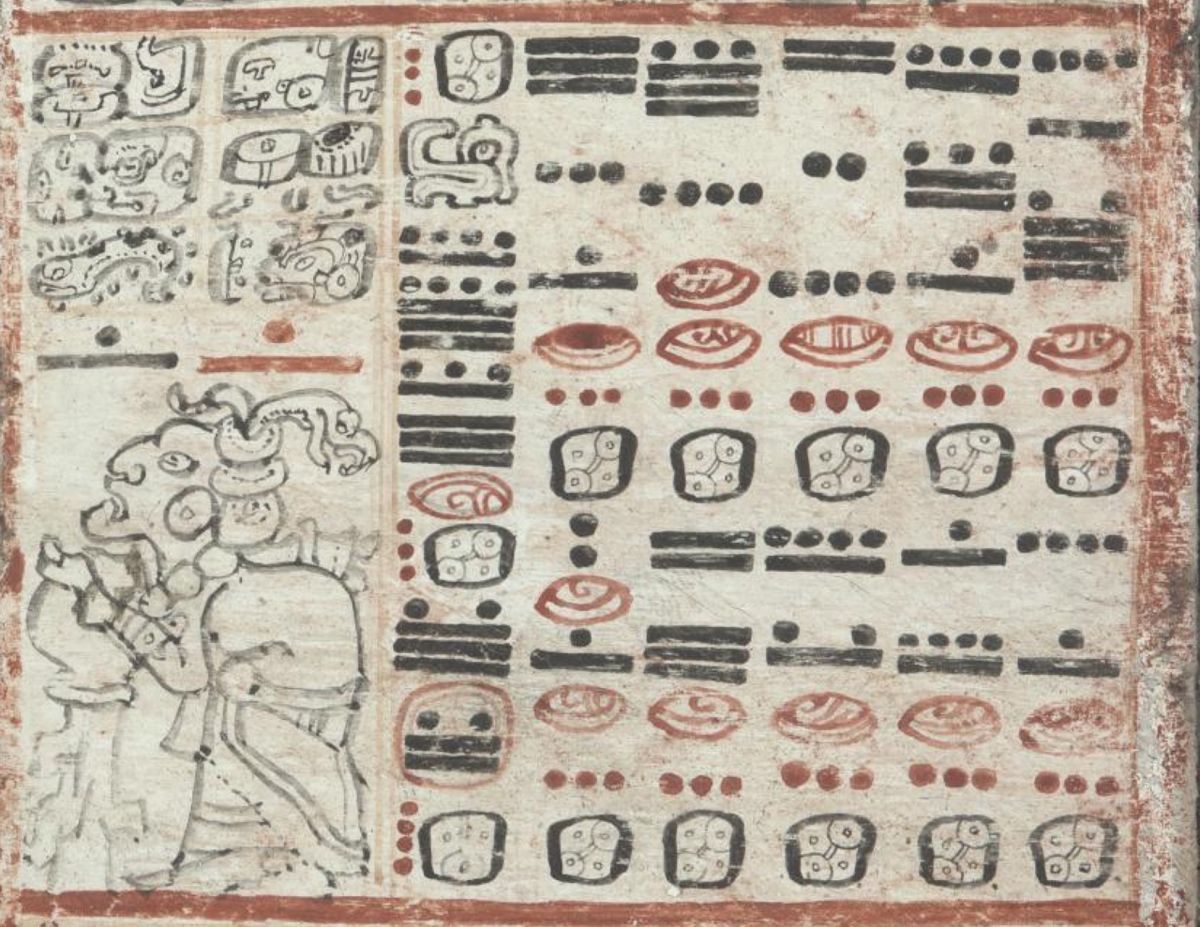
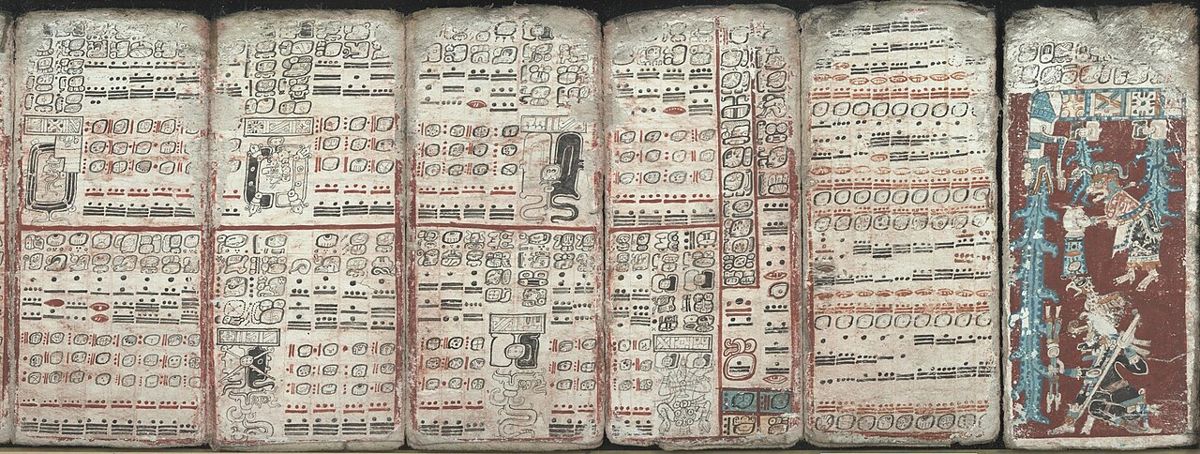
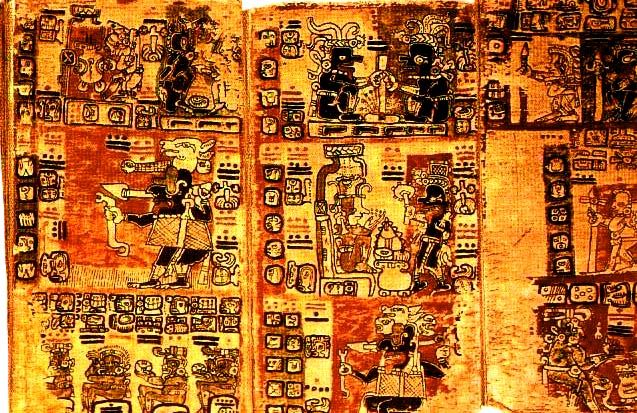
Only four Maya books survive, all from the Postclassic period (c. 11th–15th centuries): the Dresden, Madrid and Paris codices and the Maya Codex of Mexico (formerly the Grolier Codex), whose authenticity was confirmed by analysis in 2016. The Dresden Codex was bought in Vienna in 1739 by Johann Christian Götze, director of the royal library at Dresden. The librarian Ernst Förstemann published a facsimile in 1880 and in the following years worked out the Maya calendar and numbers from it. During the bombing of Dresden in February 1945 the codex was damaged by water in a flooded basement.
Decipherment, sign by sign
Numbers and the calendar could be read by the end of the 19th century, but the rest of the script long resisted. In the mid-20th century the most influential Mayanist, the British scholar J. Eric S. Thompson, held that the signs stood mainly for ideas unrelated to pronunciation.
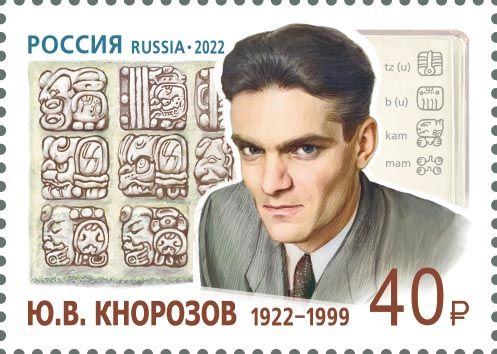
In 1952 the thirty-year-old Yuri Knorozov of Leningrad published an article arguing that the so-called Landa alphabet was in fact a list of syllables. Thompson rejected his work, and because few in the West dared contradict him, it gained ground only slowly. From 1960 Tatiana Proskouriakoff showed from the stelae of Piedras Negras that their dates record the births, accessions and deaths of real rulers: the inscriptions are history, not only astronomy.
The turning point came in December 1973 at the first Mesa Redonda conference at Palenque, where Linda Schele, Peter Mathews and Floyd Lounsbury read much of the list of Palenque’s kings. From the 1980s readings multiplied rapidly; by a 2008 estimate about 80% of Maya texts can be sounded out and about 60% understood.
Pakal and the Temple of the Inscriptions
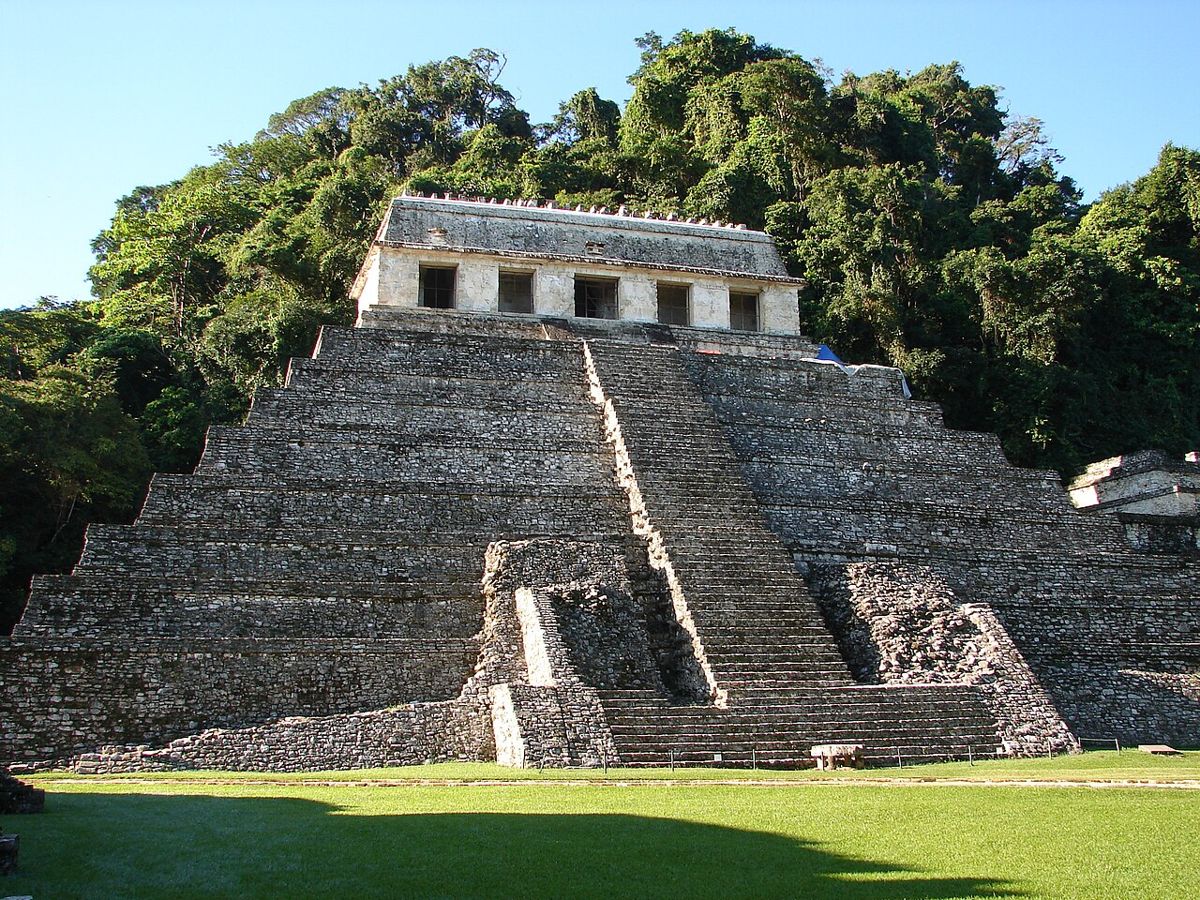
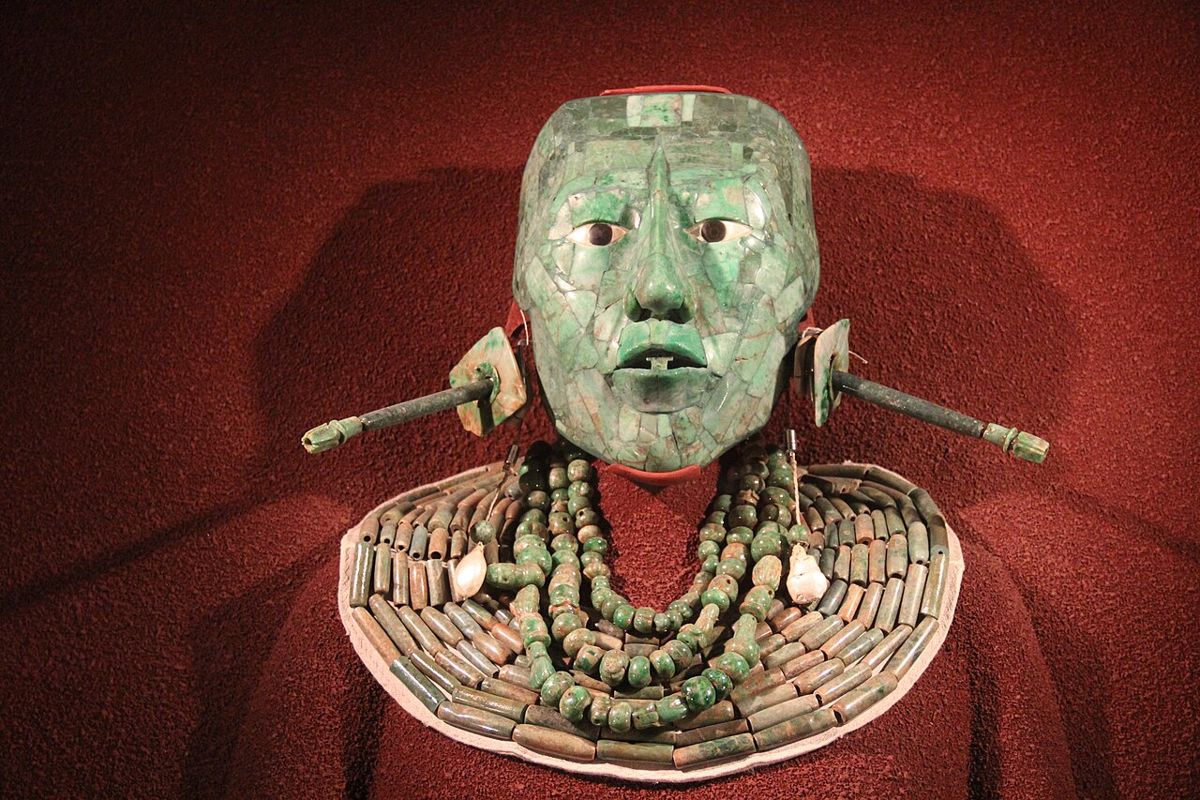
Kʼinich Janaabʼ Pakal was born in 603 and ruled Palenque from 615 until his death in 683. Above his tomb stands the Temple of the Inscriptions, whose text of 617 glyphs is one of the longest in the Maya world.
In 1948 (1949 in some sources) the Mexican archaeologist Alberto Ruz Lhuillier lifted a stone slab in the temple floor and found a stairway filled with rubble. He spent four years clearing it until, in 1952, he reached the tomb: the king’s skeleton lay in a sarcophagus, with a jade mask and necklaces.
Kings in stone
After the conquest
After the Spanish arrived, Mayan languages began to be written in the Latin alphabet. That is how native Maya texts survived: the Kʼicheʼ sacred book, the Popol Vuh, is known from a manuscript copied and translated into Spanish around 1701 by the Dominican friar Francisco Ximénez at Chichicastenango, and the books of Chilam Balam were written in Yucatec Maya.
The Maya script fell out of use during the colonial period. The Mayan languages did not: a large part of Guatemala’s population speaks one of them, and Yucatec Maya is still spoken across Yucatán.
Timeline
- 3rd c. BCEEarliest Maya inscriptions (San Bartolo, Chakjobon).
- c. 250–900Classic period: royal stelae and inscriptions.
- 615–683Reign of Kʼinich Janaabʼ Pakal at Palenque.
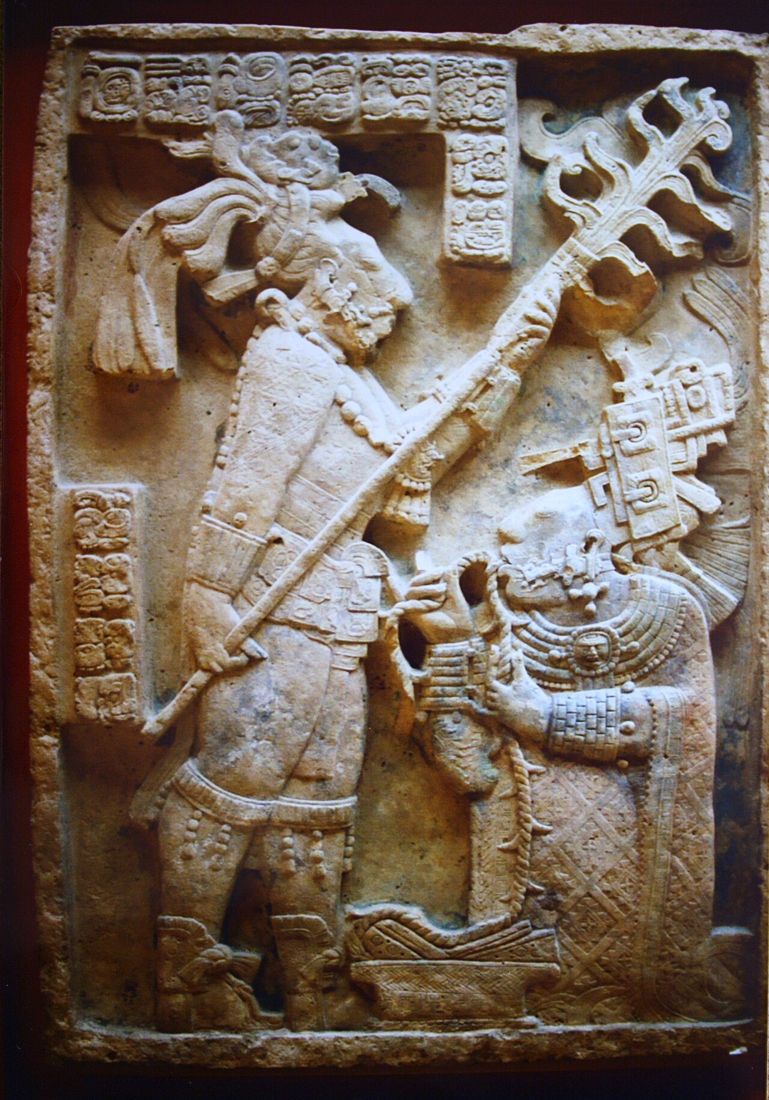
- c. 723–726Lintel 24 from Yaxchilan.
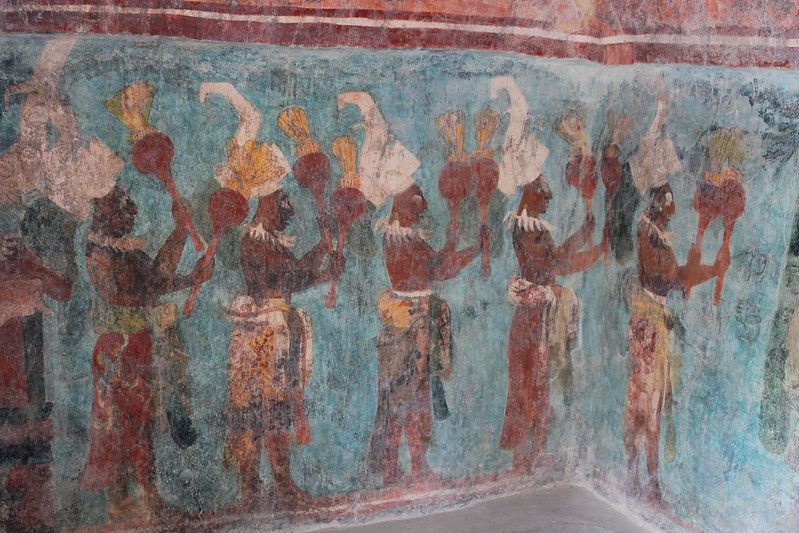
- c. 790Wall paintings at Bonampak.
- 9th c.Decline of the southern lowland cities.
- 12 July 1562Diego de Landa has Maya books burned at Maní.
- 1697The Spanish conquer Nojpetén, the last independent Maya city.
- c. 1701Francisco Ximénez copies the Popol Vuh.
- 1739The Dresden library buys a Maya codex.
- 1880Förstemann publishes a facsimile of the Dresden Codex.
- 1952Knorozov’s article on the syllabic script; Ruz Lhuillier finds Pakal’s tomb.
- 1960Proskouriakoff: the inscriptions record the history of rulers.
- 1973First Mesa Redonda at Palenque.
- 2016Authenticity of the Maya Codex of Mexico confirmed.
Mayan languages on the globe
Tap a language to show it on the globe:
Sources and further reading
- Michael D. Coe: Breaking the Maya Code. Thames & Hudson, 3rd ed. 2012.
- Simon Martin, Nikolai Grube: Chronicle of the Maya Kings and Queens. Thames & Hudson, 2nd ed. 2008.
- Stephen Houston, John Robertson, David Stuart: The Language of Classic Maya Inscriptions. Current Anthropology 41, 2000, pp. 321–356.
- Robert J. Sharer, Loa P. Traxler: The Ancient Maya. Stanford University Press, 6th ed. 2006.
- Glottolog 5 (languages and their classification).