Languages of antiquity
The Hittites
The Kingdom of Hatti in Anatolia · c. 1650–1180 BCE
In the Bronze Age the Hittites built an empire on the Anatolian plateau that rivalled Egypt, Mitanni and Assyria. Their language, Hittite, is the earliest attested Indo-European language – and it was deciphered by the Czech orientalist Bedřich Hrozný.
An empire on the Anatolian plateau
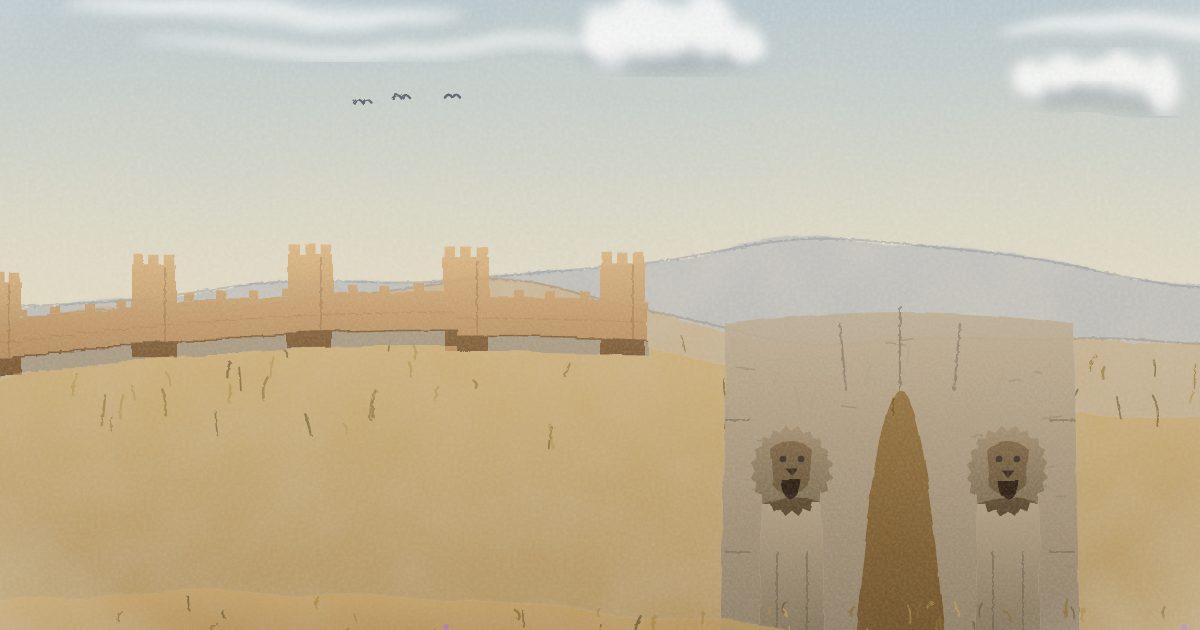
The heart of the Hittite empire lay in the bend of the Kızılırmak river, the ancient Halys. The Hittites called it the land of Hatti after its earlier inhabitants, the Hattians, whose unrelated language survives in religious texts. Around 1650 BCE King Labarna moved his seat to Hattusa and took the name Hattusili, “the man from Hattusa”.
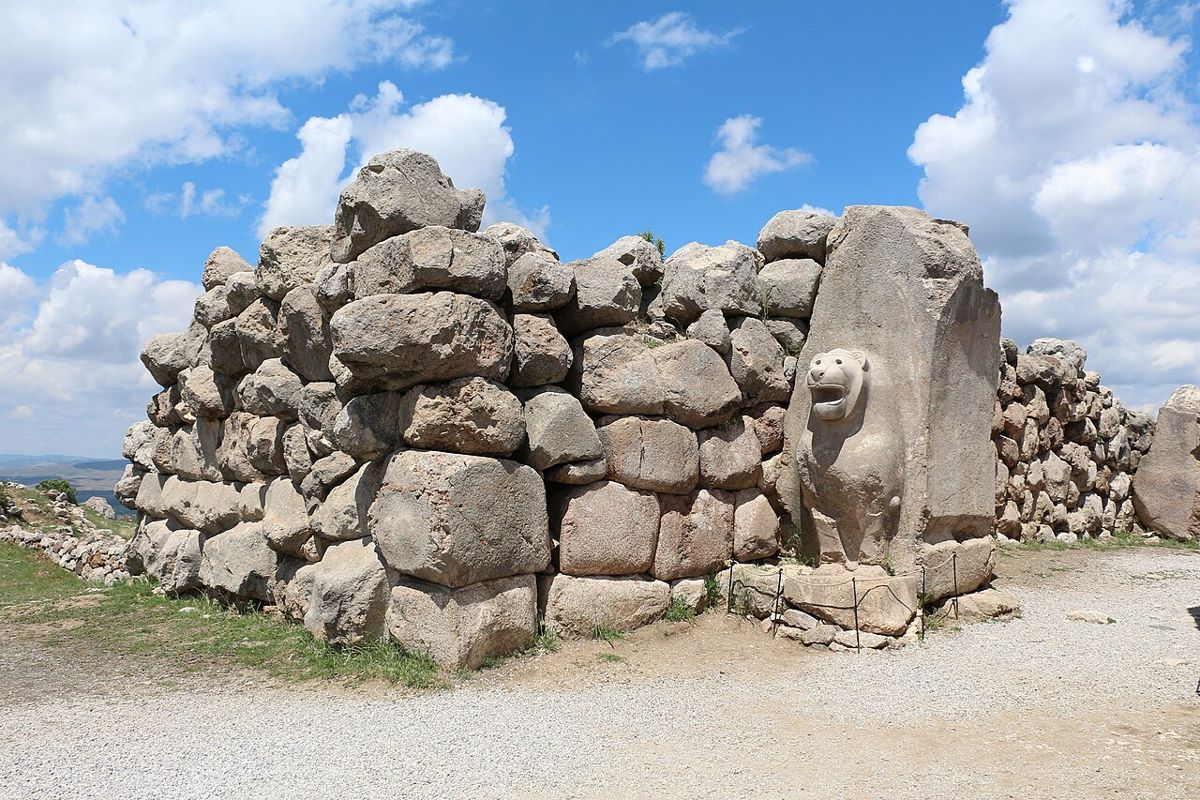
The empire reached its height in the 14th and 13th centuries BCE. It controlled most of Anatolia and northern Syria, and its kings corresponded with the pharaohs of Egypt and the rulers of Babylon as equals. Hattusa grew to some 180 hectares, enclosed by walls with gates, temples and the royal citadel of Büyükkale.
The earliest written Indo-European language
The Hittites called their language nešili, “the language of the city of Neša” (Kanesh, modern Kültepe). The earliest Hittite names and words appear as early as the 20th to 18th centuries BCE in the records of Assyrian merchants at Kanesh; continuous texts from Hattusa date from the 17th to the 13th century BCE. Hittite is thus several centuries older than the earliest Greek texts written in Linear B.
Hittite belongs to the Anatolian branch of Indo-European, together with Luwian, Palaic and the later Lycian, Lydian and Carian. All of them are extinct. The Anatolian branch was the first to split off from the other Indo-European languages, which makes it exceptionally valuable for comparative linguistics.
Cuneiform on clay tablets
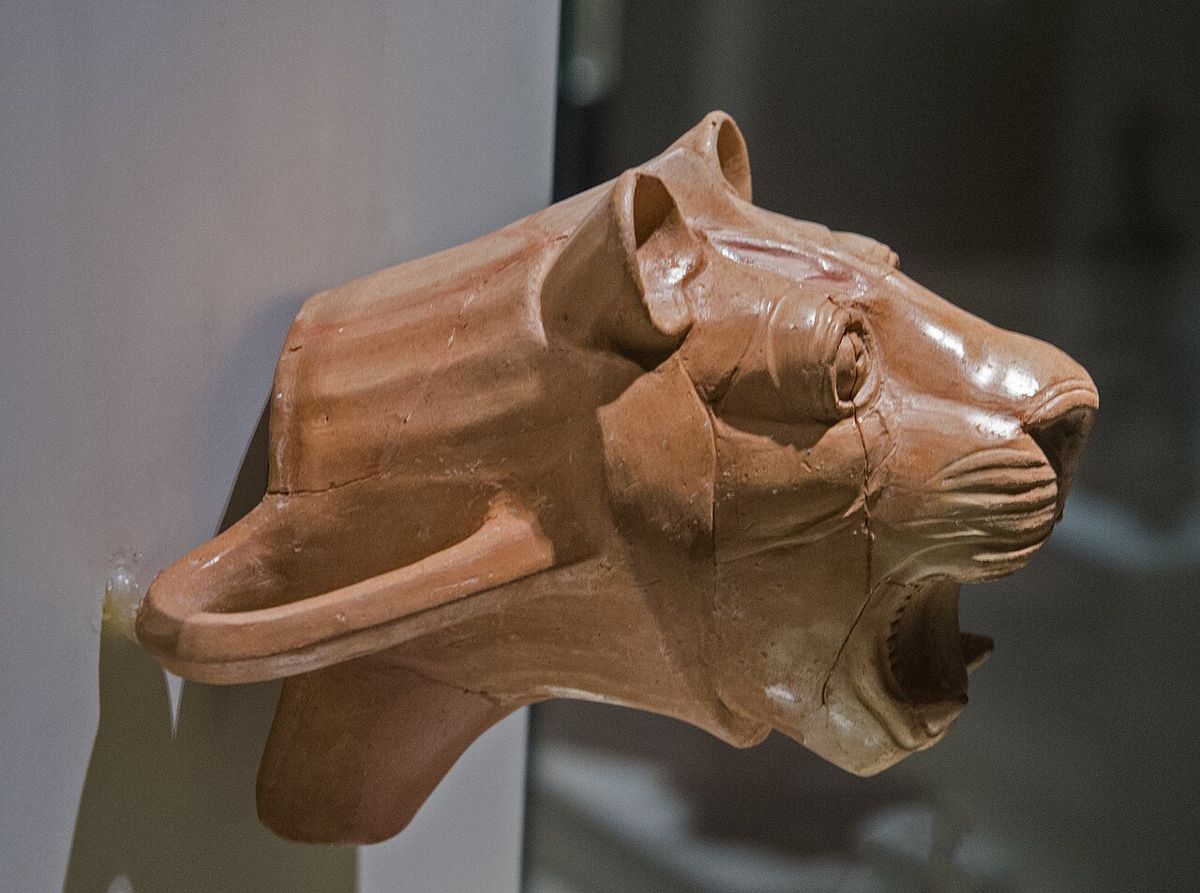
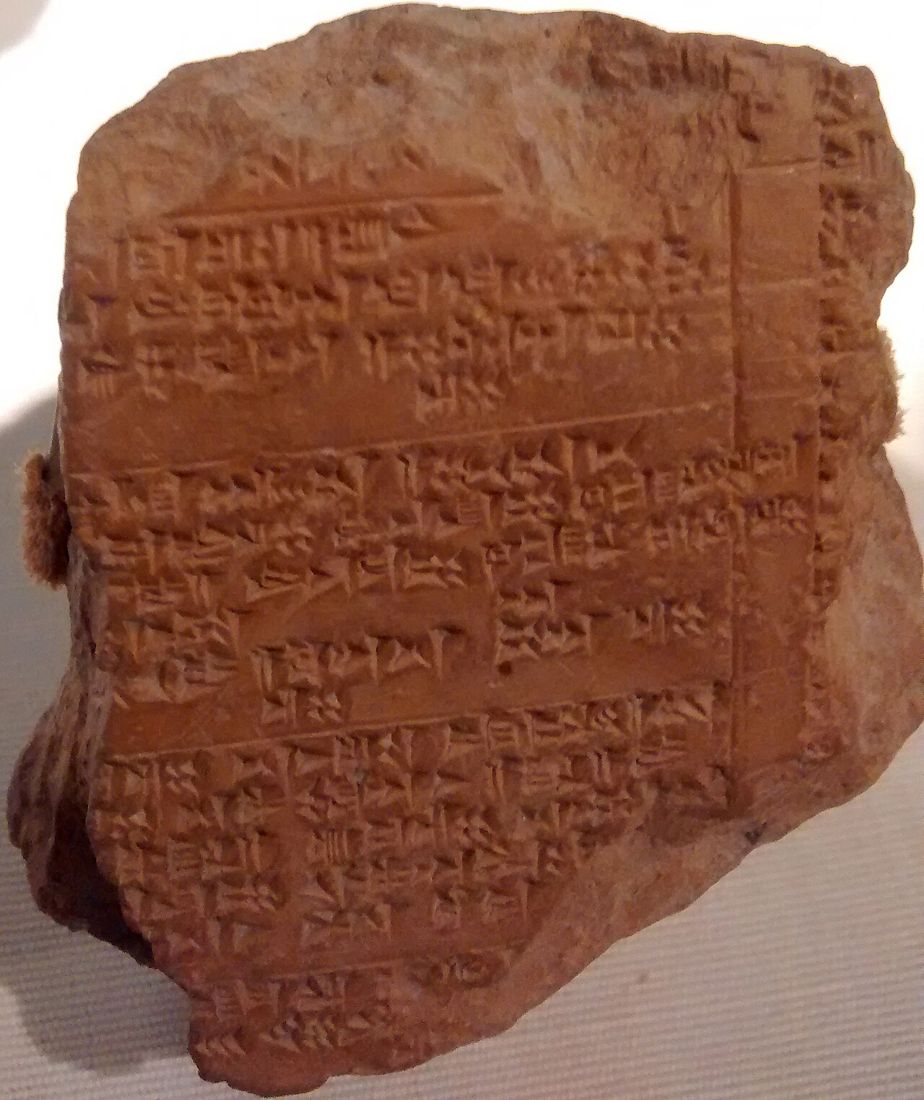
Hittite scribes adopted cuneiform from Old Babylonian Mesopotamia, probably by way of northern Syria. They wrote with a reed stylus in damp clay and then dried or baked the tablets. The Hittite sign inventory numbers about 375 signs, a large share of which have syllabic values.
The script combined three kinds of signs. Syllabic signs spelled Hittite words syllable by syllable. Sumerograms and Akkadograms were words taken over from Sumerian and Akkadian writing but read in Hittite – much as we read “&” as “and”. Determinatives were not read at all; they only marked the kind of word: god, city, wood, man.
Sample signs
- asyllable
- masyllable
- nusyllable
- zasyllable
- wasyllable
- tarsyllable
- LUGALSumerogram “king”
- NINDASumerogram “bread”
- DINGIRdeterminative before a god’s name
- URUdeterminative before a city name
URU Ḫa-at-tu-šathe city of Hattusa – the determinative URU is not read
The signs are rendered with a standard Unicode font using Mesopotamian sign shapes; on Hittite tablets they looked somewhat different.
Decipherment: Bedřich Hrozný
From 1906 the German archaeologist Hugo Winckler uncovered the archive of the Hittite kings at Boğazköy. Thousands of tablets could be read aloud, because cuneiform was known, but nobody understood their language. As early as 1902 the Norwegian linguist Jørgen Alexander Knudtzon had concluded from two letters found at Amarna in Egypt that the language was Indo-European, but his view was not accepted and Knudtzon later withdrew it himself.
Bedřich Hrozný, born in Lysá nad Labem in Bohemia, studied the tablets in Istanbul in 1914 and continued in Vienna. He announced the decipherment in a lecture in Berlin on 24 November 1915 and in the article “Die Lösung des hethitischen Problems”; in 1917 he published the first grammar, Die Sprache der Hethiter. He based his proof on morphology and sound correspondences; one sentence in particular became famous:
nu NINDA-an e-ez-za-at-te-ni wa-a-tar-ma e-ku-ut-te-ni
- nu
- and (Hrozný: now)
- NINDA-an
- bread (accusative)
- ezzatteni
- you will eat
- wātar-ma
- water, however
- ekutteni
- you will drink
Now you will eat bread, but water you will drink.The Sumerogram NINDA meant bread. The verb ezza- reminded Hrozný of Latin edo and German essen (“to eat”), and the word wātar of English water and German Wasser. From the forms of the words he then concluded that Hittite was Indo-European.
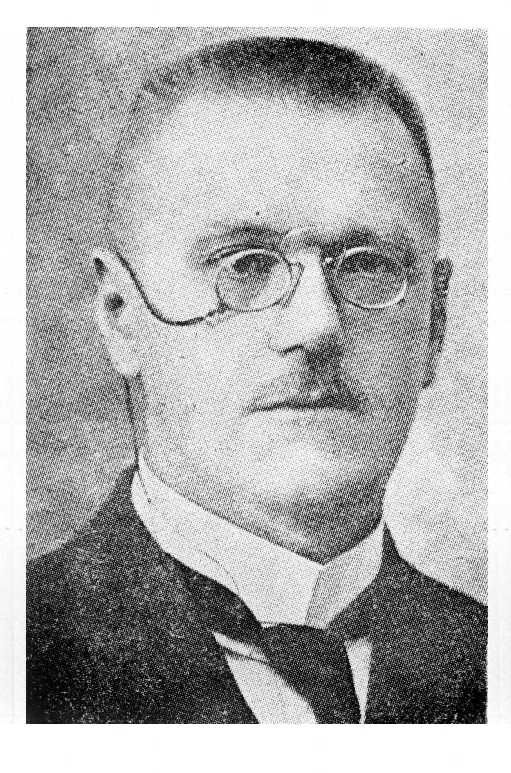
Hrozný after the decipherment
Hrozný became a professor at Charles University in Prague, where he founded the Seminar for Cuneiform Research and the History of the Ancient Orient; in 1939–1940 he was its rector. In 1925 he led the Czechoslovak excavations at Kültepe and found some thousand tablets of Assyrian merchants – at Kanesh, the very city whose name the Hittite word for the language preserves.
Words you will recognise
Hittite is a distant relative of English, Latin and Czech. The relationship shows in shared words inherited from Proto-Indo-European:
| Hittite | meaning | related words |
|---|---|---|
| wātar | water | Eng. water, Ger. Wasser, Czech voda |
| ed-, ezza- | to eat | Eng. eat, Lat. edere, Ger. essen |
| nepiš | sky | Czech nebe, Gk. nephos “cloud”, Lat. nebula |
| newa- | new | Eng. new, Lat. novus |
| kard- | heart | Eng. heart, Gk. kardia, Lat. cor |
| kuiš | who | Lat. quis, Eng. who |
| genu | knee | Eng. knee, Lat. genu, Gk. gony |
How Hittite worked
Hittite distinguished only two genders: common (for living beings and things alike) and neuter. The feminine gender known from other Indo-European languages did not exist. The verb had only two tenses, present and past; the future was expressed by the present – which is why “ezzatteni” means both “you eat” and “you will eat”.
The usual word order was subject – object – verb. A sentence often opened with a connective (nu, ta, šu), followed by a chain of small enclitics such as pronouns and particles. Scribes often marked Luwian words in Hittite texts with a special wedge, the so-called gloss wedge.
An archive in eight languages
Around 30,000 clay tablets and fragments come from Hattusa: laws, treaties, annals, prayers, oracles and rituals. Besides Hittite they contain texts in Luwian, Palaic, Hattic and Hurrian, in Akkadian and Sumerian, and also Indo-Aryan words. A treatise on training chariot horses, compiled after the Mitannian trainer Kikkuli, counts with Indo-Aryan numerals: aika “one”, tera “three”, panza “five”, satta “seven”.
The international language of diplomacy was Akkadian. That is why even the Hittite version of one of the oldest surviving peace treaties – the agreement of King Hattusili III with the Egyptian pharaoh Ramesses II from around 1259 BCE – is written in Akkadian. The Egyptian version is carved in hieroglyphs on temple walls at Karnak and the Ramesseum; an enlarged copy of the Hittite tablet hangs at the United Nations headquarters in New York.
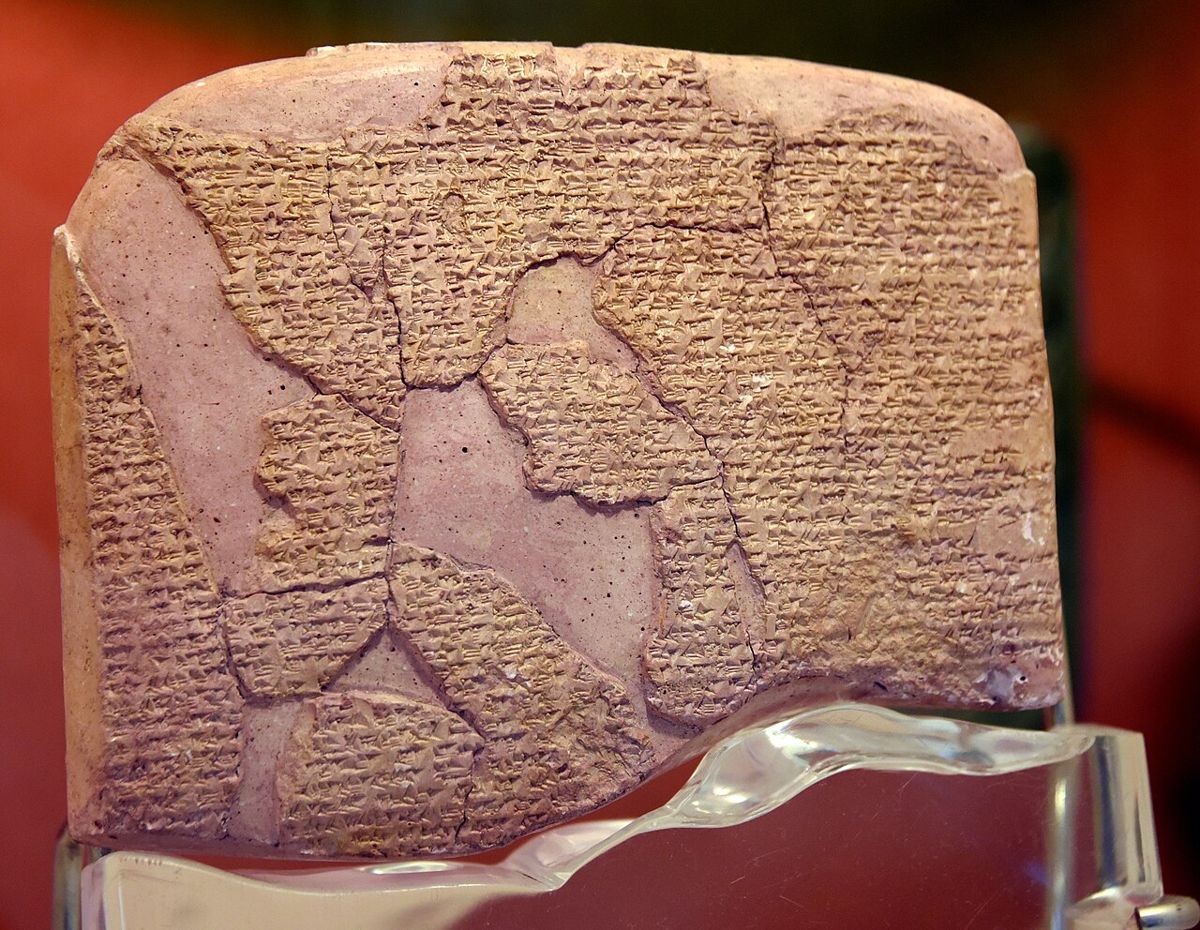
Hieroglyphs for kings and gods
For seals and rock inscriptions the Hittite kings used yet another script: Anatolian hieroglyphs. They were used to write Luwian, a language spoken by many people in the empire. The script has some five hundred signs – word signs and syllables – and the lines run alternately left to right and right to left, like a field being ploughed.
The hieroglyphs outlived the empire by five centuries. Their decipherment owed much to the bilingual inscription of Karatepe, excavated from 1947: the same text stands there in hieroglyphic Luwian and in the readable Phoenician alphabet. The sign 𔐀, a figure pointing to itself, means “I” – many inscriptions begin with it: “I am…”
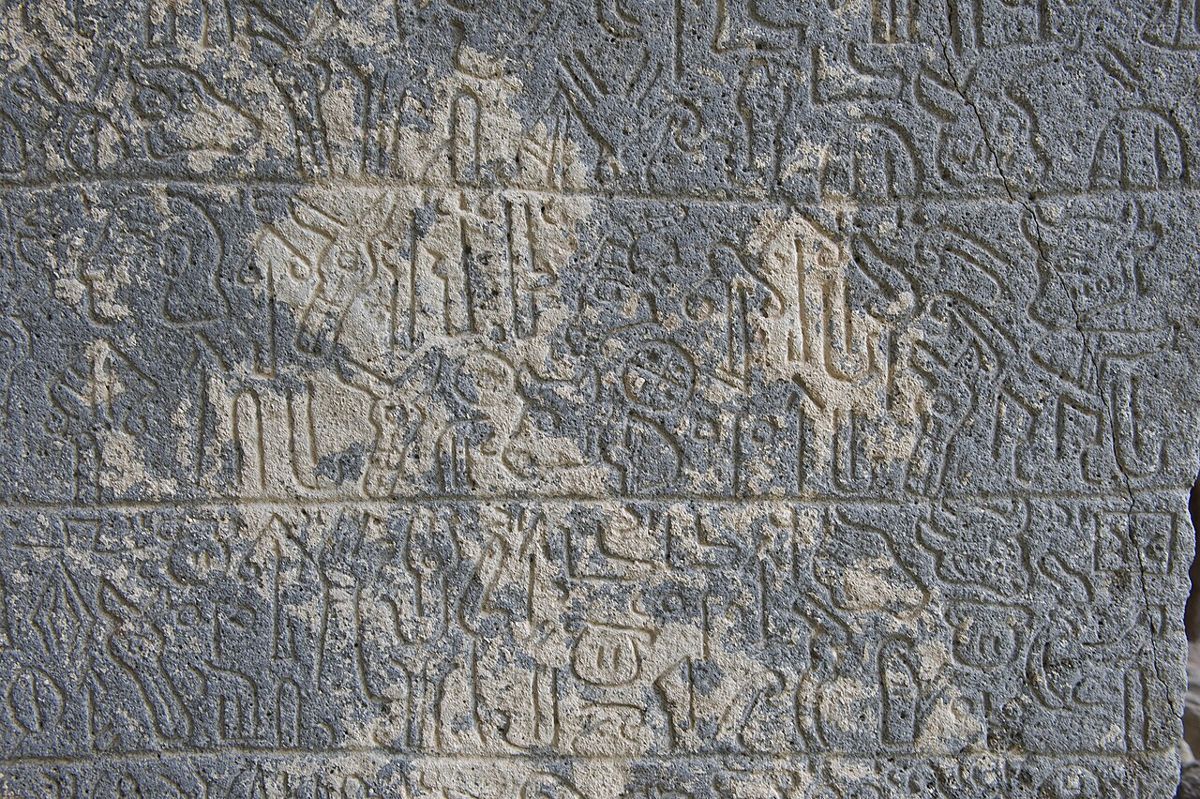
The thousand gods of Hatti
The Hittites spoke of “the thousand gods of the land of Hatti”: they adopted the deities of conquered and neighbouring peoples and wrote their names in the language of origin. In the rock sanctuary of Yazılıkaya near Hattusa they carved, in the 13th century BCE, long processions of gods and goddesses meeting at the storm god Teššub and the goddess Hebat.
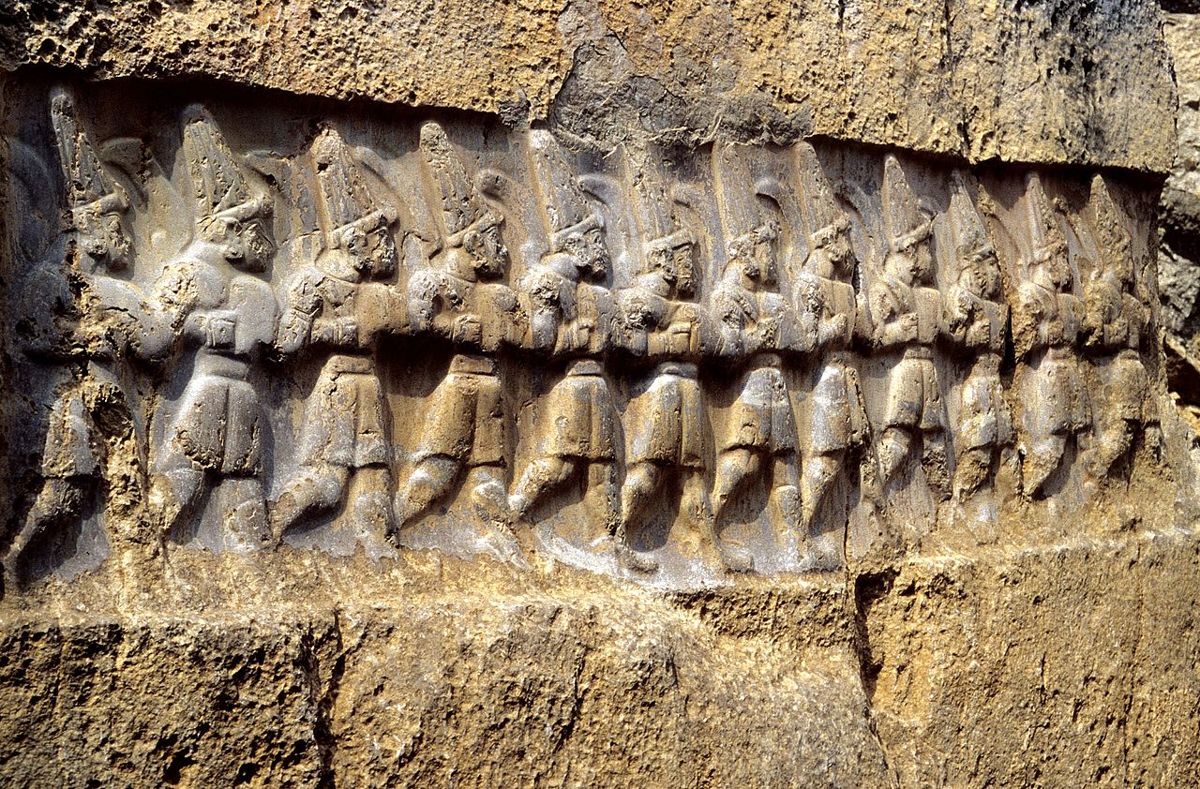
Hattusa today
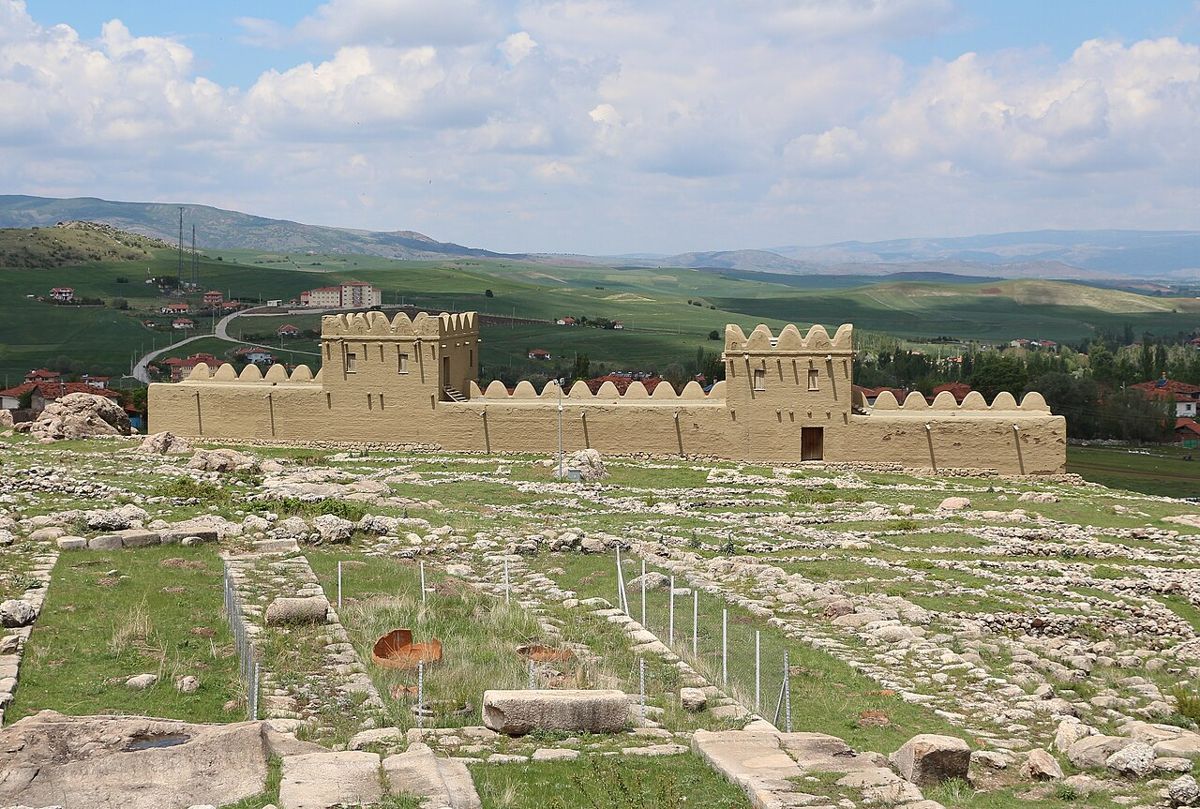
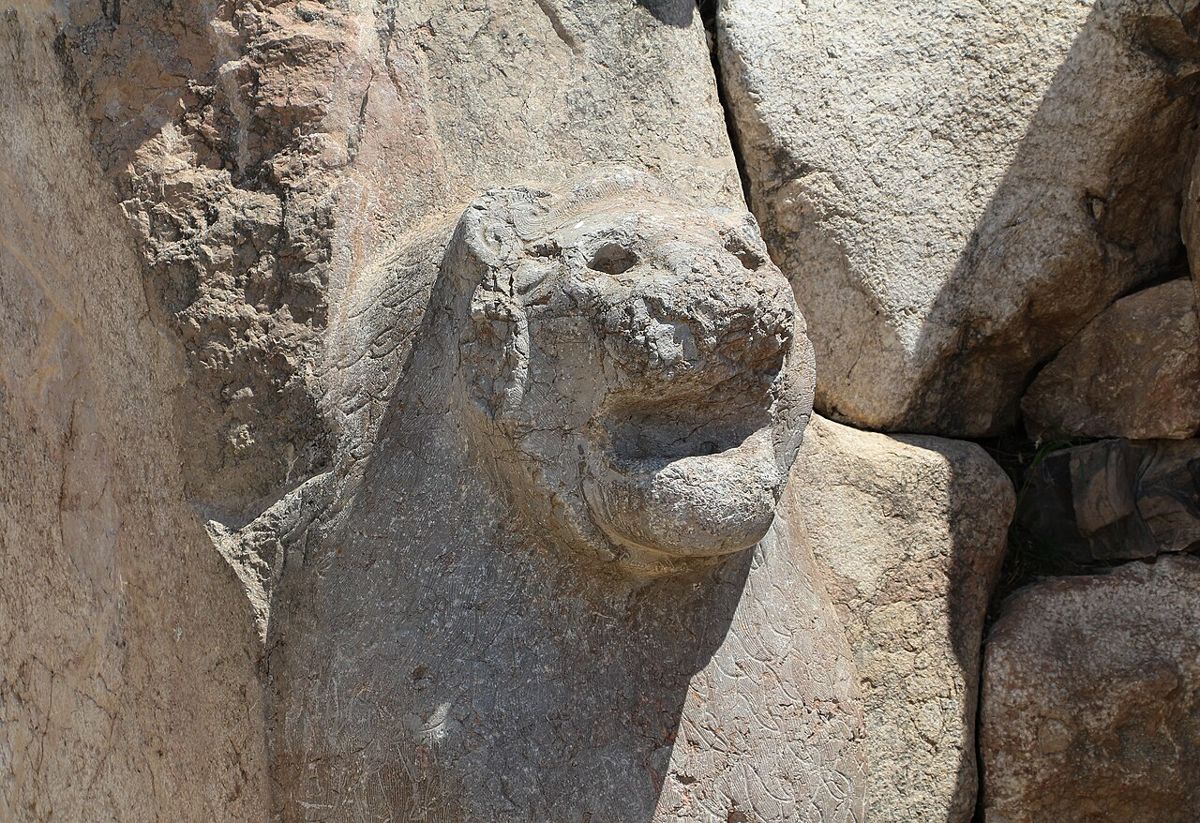
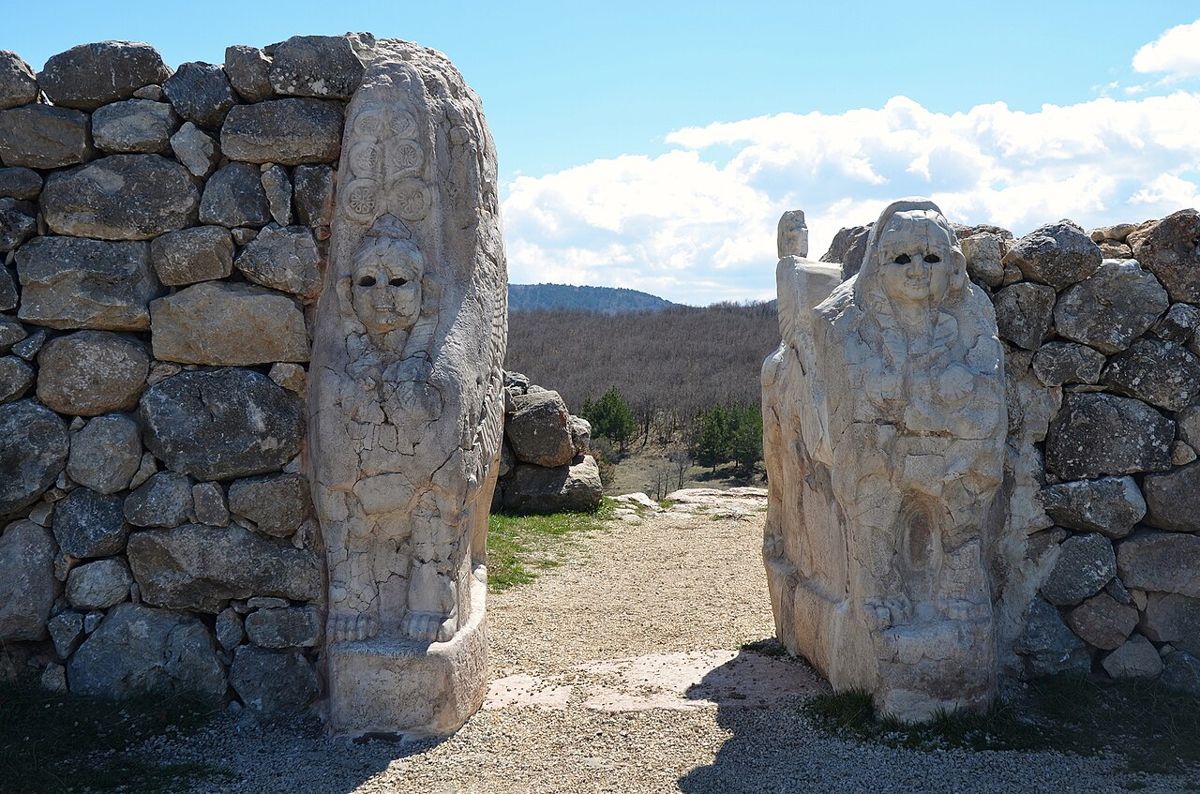
End and legacy
Around 1180 BCE, when many states of the eastern Mediterranean collapsed, the Hittite empire came to an end and Hattusa was abandoned. In northern Syria and south-eastern Anatolia, however, Neo-Hittite states such as Carchemish survived until the end of the 8th century BCE, writing in Luwian hieroglyphs.
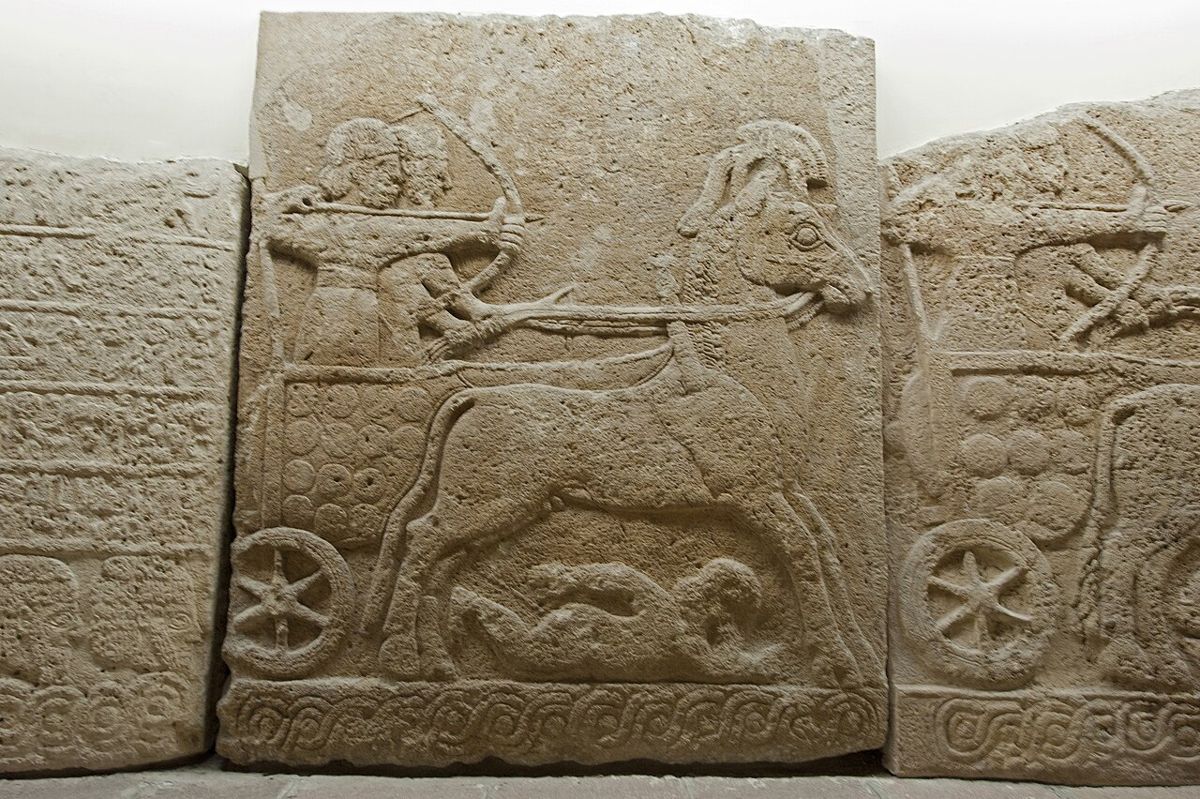
The Hittites were then forgotten for two and a half millennia, remembered only in the Bible. The French traveller Charles Texier described the ruins near the village of Boğazköy in the 1830s, but for a long time nobody knew whose city it had been. Only the tablet archive and Hrozný’s decipherment gave the Hittites back their history and their language.
Timeline
- 20th–18th c. BCEAssyrian merchants at Kanesh record Hittite names – the earliest traces of the language.
- c. 1650 BCELabarna moves his seat to Hattusa and takes the name Hattusili.
- 16th c. BCEMursili I sacks Babylon.
- 14th c. BCEUnder Suppiluliuma I, Hatti becomes a great power.
- 1274 BCEBattle of Kadesh between Muwatalli II and Ramesses II.
- c. 1259 BCEPeace treaty with Egypt.
- 13th c. BCEReliefs in the Yazılıkaya sanctuary.
- c. 1180 BCEEnd of the empire; Hattusa is abandoned.
- to the end of the 8th c. BCENeo-Hittite states write in Luwian hieroglyphs.
- 1906Hugo Winckler uncovers the archive at Boğazköy.
- 1915Bedřich Hrozný announces the decipherment of Hittite.
- 1947Excavations begin at Karatepe with its bilingual inscription.
- 1986Hattusa is inscribed on the UNESCO World Heritage List.
Languages of the empire on the globe
All of these languages are extinct. Tap to show them on the globe:
Sources and further reading
- Harry A. Hoffner, H. Craig Melchert: A Grammar of the Hittite Language. Eisenbrauns 2008.
- Trevor Bryce: The Kingdom of the Hittites. Oxford University Press 2005.
- Bedřich Hrozný: Die Sprache der Hethiter. Leipzig 1917.
- The Chicago Hittite Dictionary; Hethitologie-Portal Mainz (hethiter.net).
- Glottolog 5 (languages and their classification).