Languages of antiquity
Ancient Greece
The Aegean world · from the Mycenaean palaces to the Hellenistic age
Of all living Indo-European languages, Greek has the longest written history: from the Mycenaean tablets of the 15th–14th centuries BCE to the Greek of today. It was first written in the syllabic Linear B script, deciphered in 1952 by the architect Michael Ventris, and from the 8th century BCE in an alphabet taken over from the Phoenicians – the first alphabet to write vowels systematically.
The palaces of Crete and Mycenae
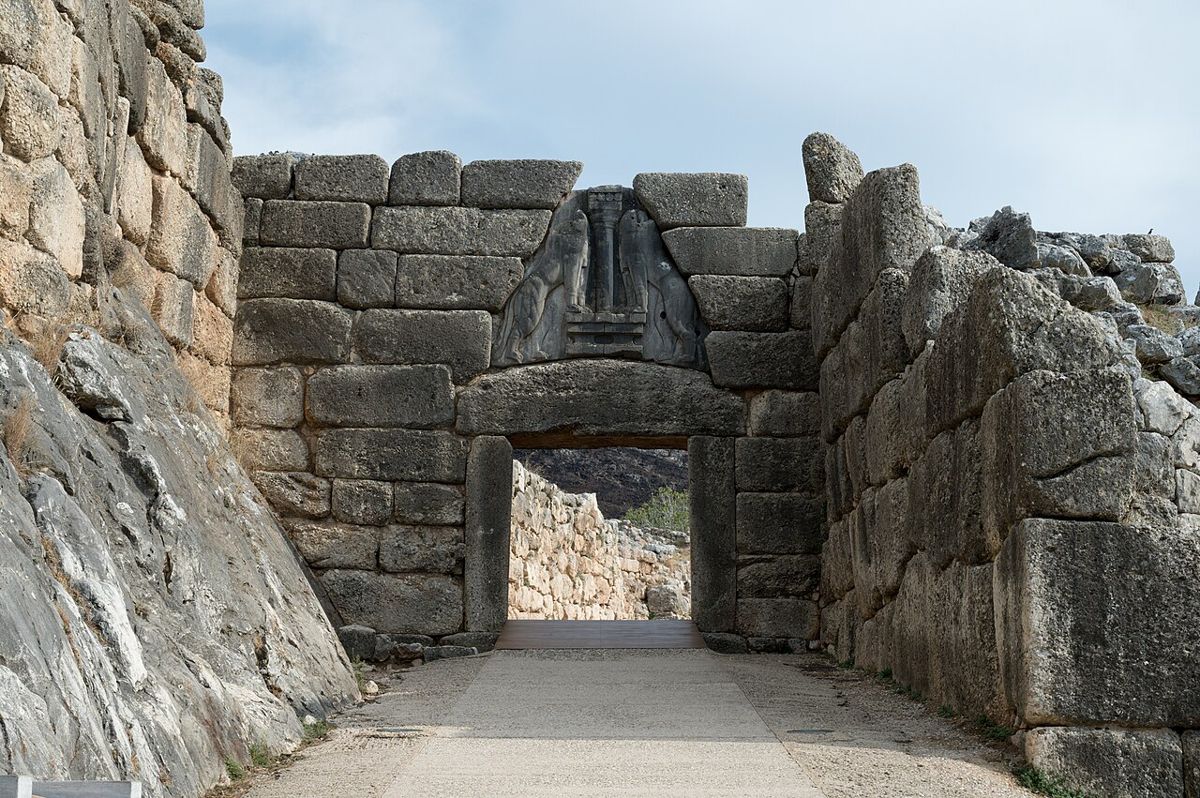
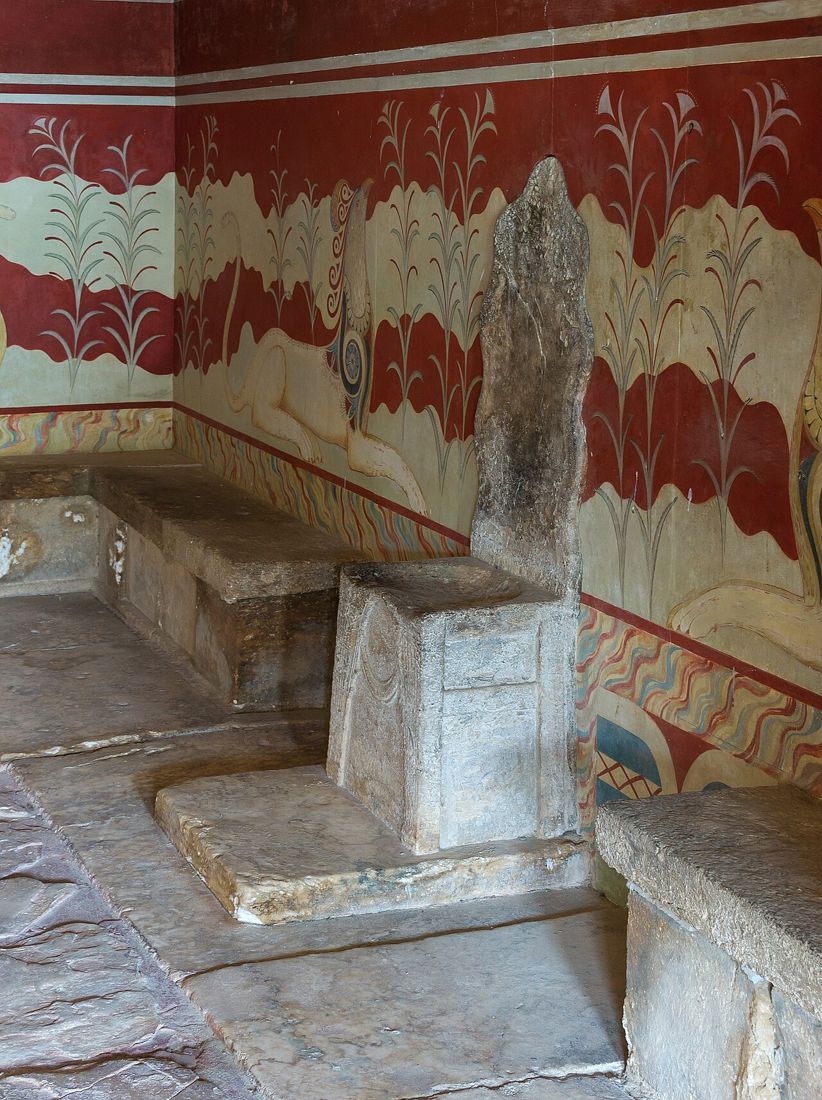
In the 2nd millennium BCE the palaces of the Minoan civilization (named by Arthur Evans after the legendary King Minos) arose on Crete, and fortified centres at Mycenae, Pylos and Thebes on the Greek mainland. Around 1450 BCE Mycenaean Greeks apparently took control of Knossos.
Around 1200 BCE the Mycenaean palaces fell, and writing with them. Centuries followed from which no inscription survives in Greece; only on Cyprus did Greek continue to be written, in the Cypriot syllabary. Writing returned to Greece only in the 8th century BCE – this time as an alphabet.
Scripts of the Aegean Bronze Age
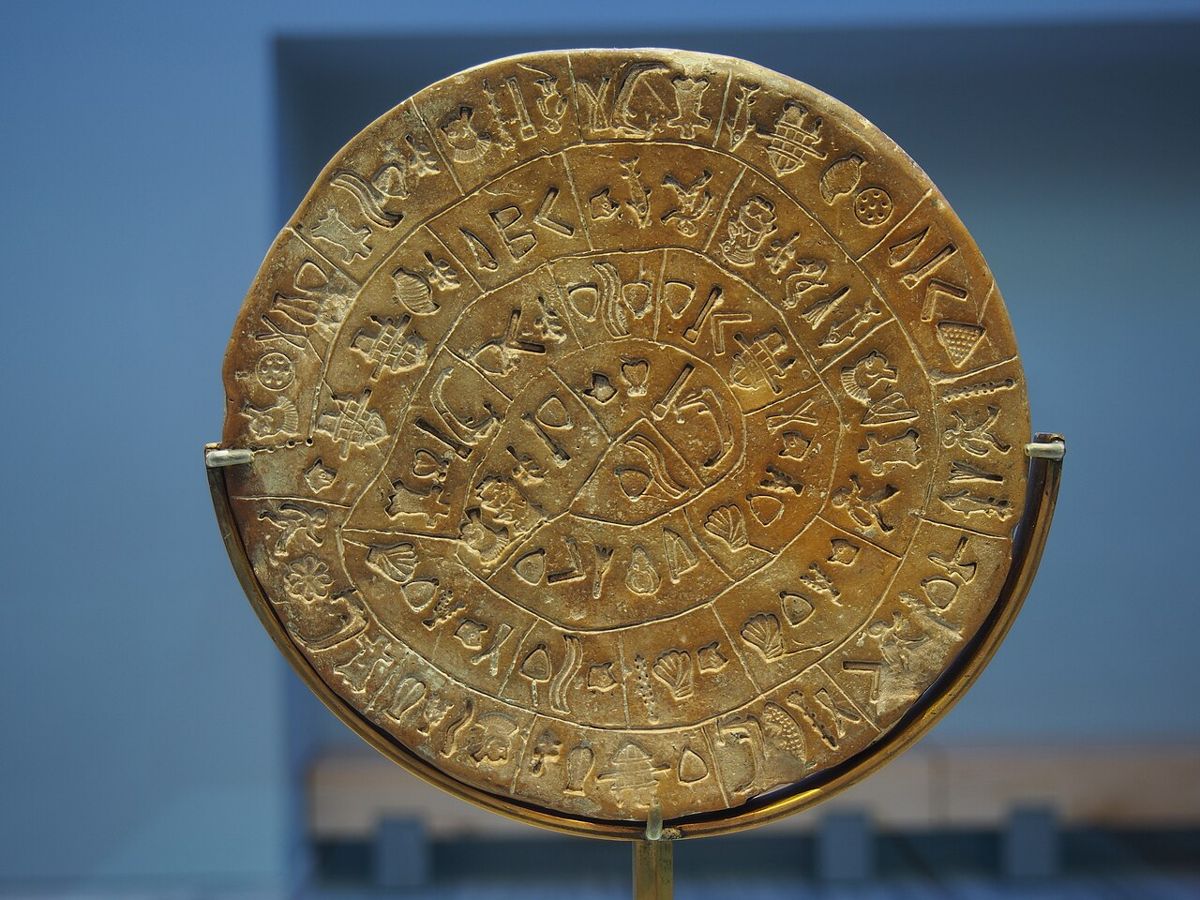
The Minoans wrote in Linear A (c. 1800–1450 BCE). Its signs resemble the later Linear B, so they can be roughly pronounced, but the language is unknown and the texts remain unintelligible. Even more mysterious is the Phaistos Disc, with impressions of 45 different signs pressed in with stamps; it is the only object of its kind and cannot yet be deciphered. Besides Linear A, Crete also used the Cretan hieroglyphic script.
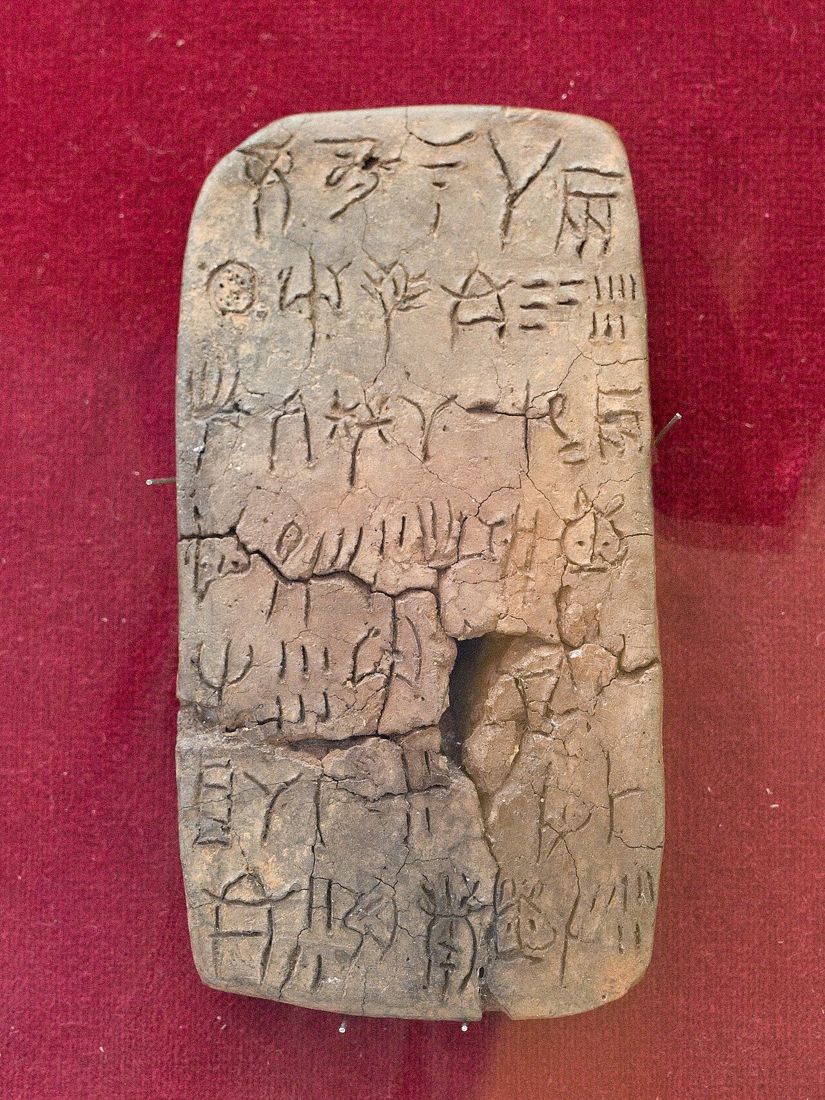
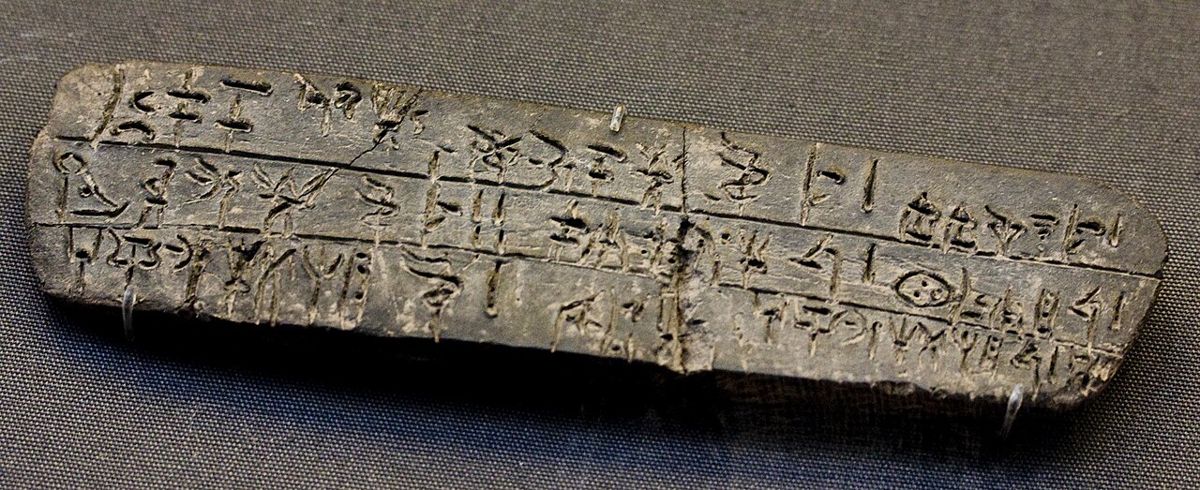
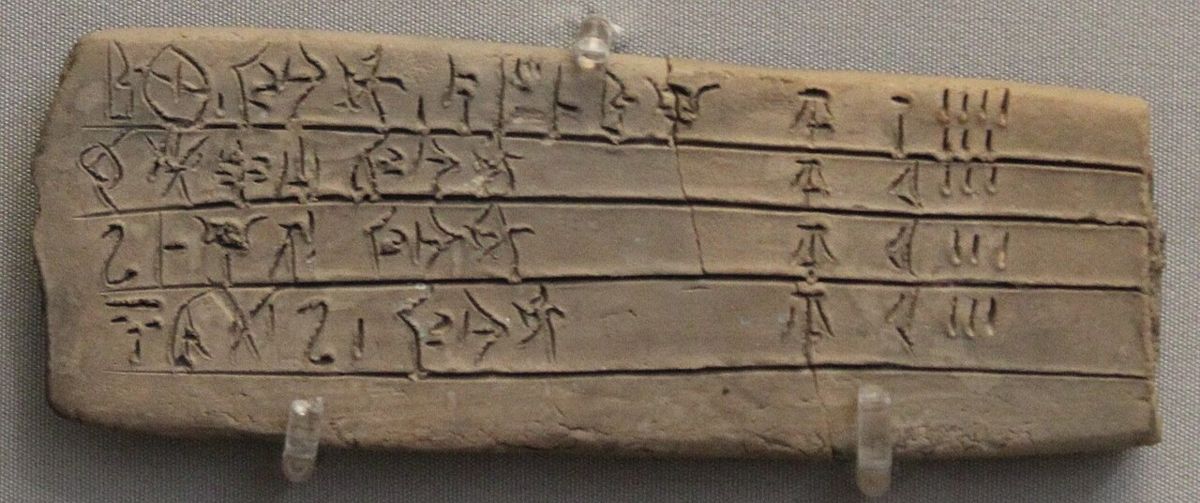
Mycenaean scribes adapted Linear A for Greek. The result was Linear B: some 90 syllabic signs plus pictorial signs for goods and animals. Thousands of clay tablets survive, mainly from Knossos and Pylos – not because they were meant to be kept, but because they were baked by the fires that destroyed the palaces.
Linear B signs
- asyllable
- esyllable
- isyllable
- osyllable
- usyllable
- dasyllable
- kasyllable
- masyllable
- nasyllable
- pasyllable
- rosyllable
- tasyllable
ko-no-soKnossos (Mycenaean Knōsos) – the consonant cluster kn- was written with a helping vowel (ko-no-), final -s was omitted and vowel length was not marked. The script also did not distinguish r from l.
The signs are rendered with the Noto Sans Linear B font.
Decipherment: the architect Michael Ventris
From 1900 the Knossos tablets were uncovered by the British archaeologist Arthur Evans, who named both scripts. The American archaeologist Carl Blegen found the Pylos archive in 1939. In the 1940s the American philologist Alice Kober showed that words in Linear B changed their endings – the language was inflected – and in 1948 she drew up the first table of signs sharing a consonant or a vowel.
Michael Ventris, an architect interested in the script since boyhood, built on her work and constructed a full grid of syllables from the way signs alternated. When he tentatively inserted Cretan place names such as ko-no-so (Knossos), Greek words began to appear. He announced the discovery on BBC radio on 1 July 1952 and published it in 1953 with the philologist John Chadwick. It was soon confirmed by a newly found tablet from Pylos on which the word ti-ri-po stands next to pictures of tripods. Ventris died in a car accident in 1956, aged 34.

Words from the Mycenaean tablets
Mycenaean Greek is several centuries older than Homer. The tablets record names of places, gods and objects:
| Linear B | transliteration | meaning |
|---|---|---|
| 𐀒𐀜𐀰 | ko-no-so | Knossos |
| 𐀞𐀂𐀵 | pa-i-to | Phaistos |
| 𐀴𐀪𐀡 | ti-ri-po | tripod (tripous) |
| 𐀡𐀮𐀅𐀃 | po-se-da-o | Poseidon |
| 𐀷𐀙𐀏 | wa-na-ka | ruler, king (wanax; in Homer anax) |
An alphabet with vowels
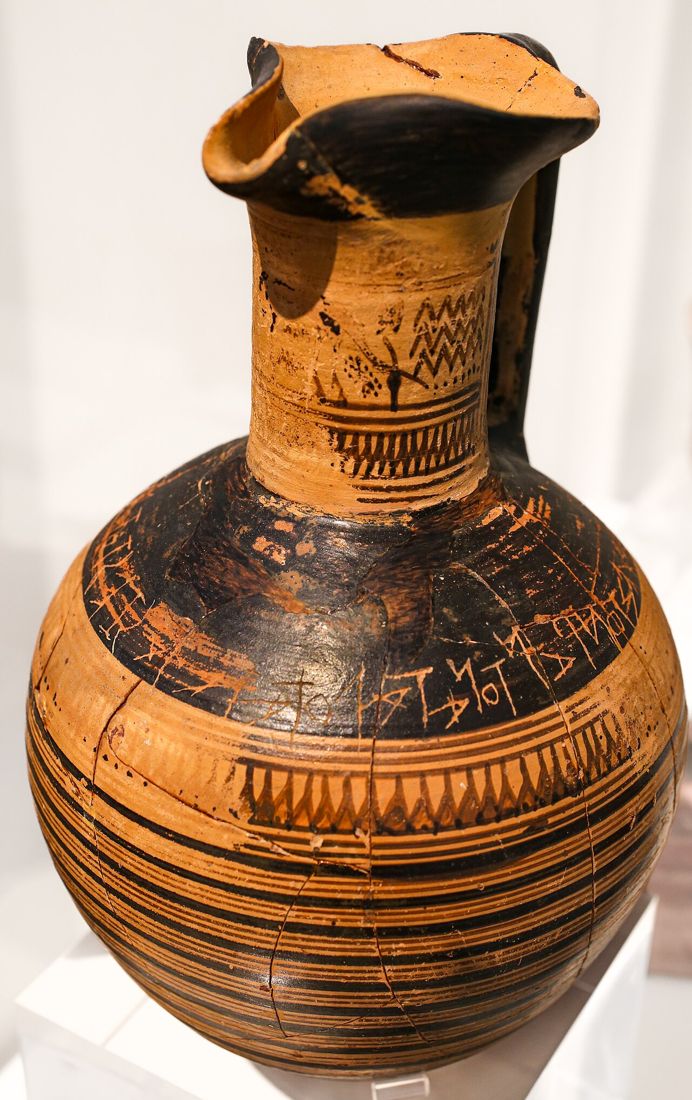
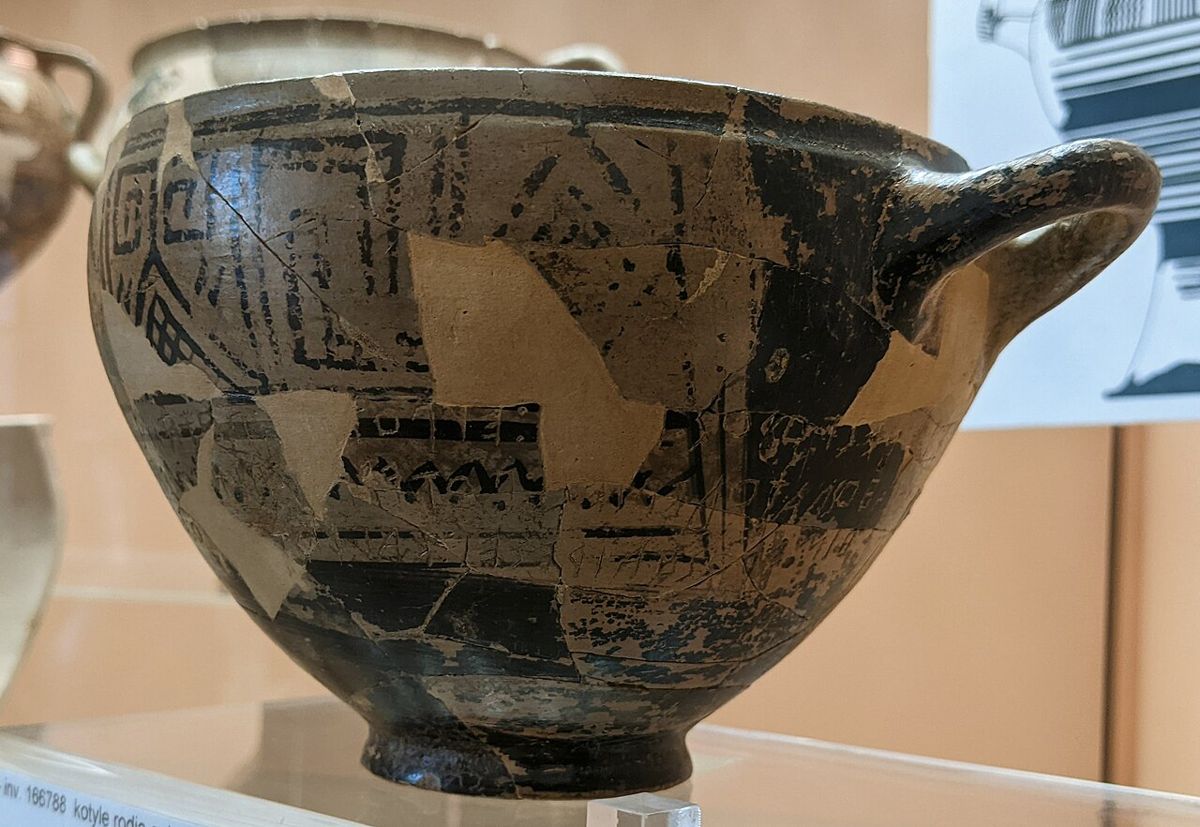
In the 8th century BCE the Greeks adopted the Phoenician script. Some Phoenician letters stood for consonants that Greek lacked, and the Greeks used them for vowels: ʾalp became alpha, he epsilon, ʿain omicron. For the first time a script systematically wrote both consonants and vowels. The Greeks also added new letters such as φ, χ, ψ and later ω.
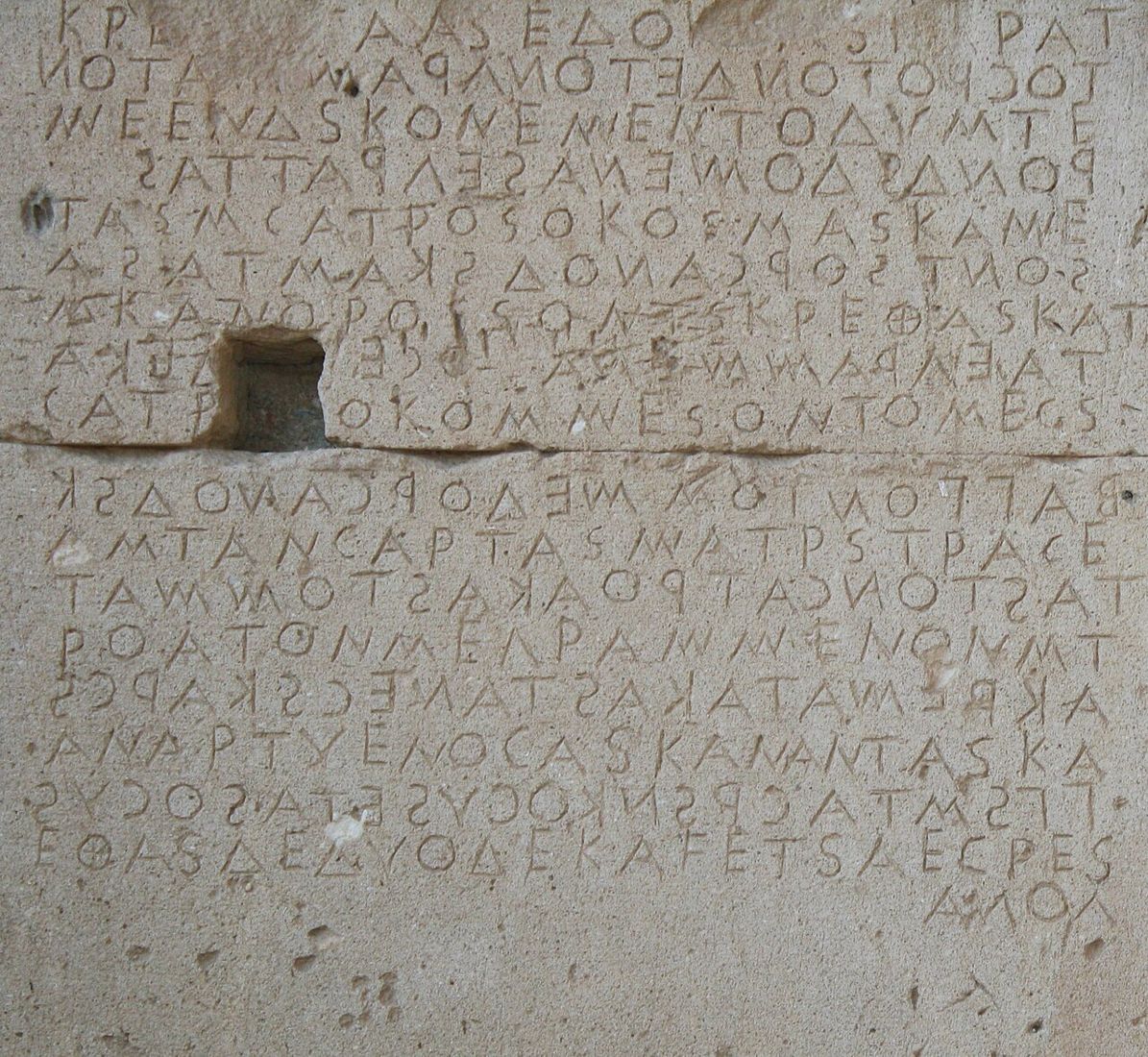
Individual Greek cities had their own local alphabets. The western, Euboean variant reached the Etruscans through the Greek colonies in Italy and from them the Romans – which is why the Latin alphabet gives H and X different values from Greek. Athens adopted the Ionic alphabet, the basis of today's Greek script, in 403/402 BCE.
The earliest Greek alphabetic inscriptions
Dialects and a common language
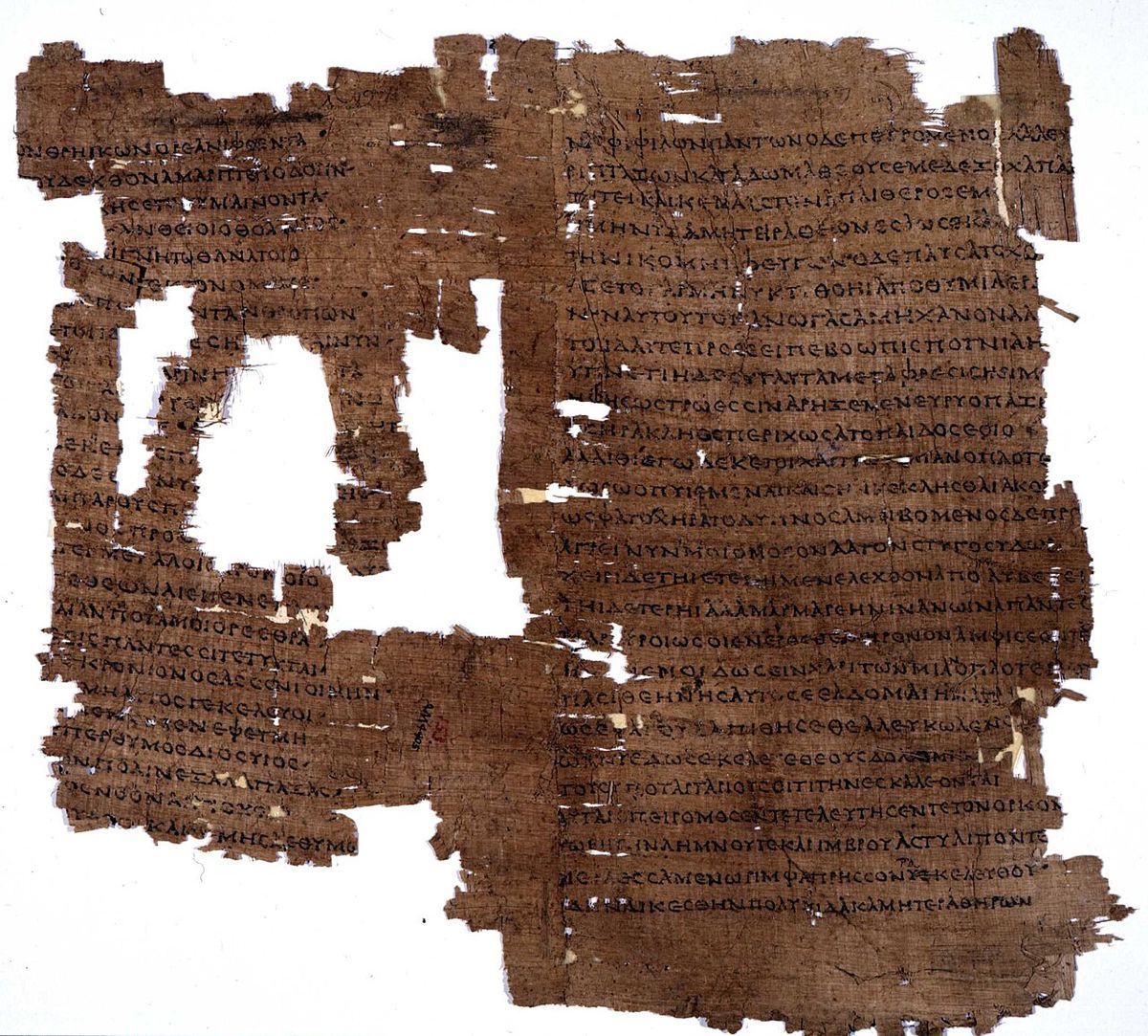
Ancient Greek had no single standard form. Homer's epics are in an artificial mixture of mainly Ionic and Aeolic forms, Doric was heard in choral lyric, and the Attic of Athens became the language of tragedy (with a Doric colouring in the choruses) and of classical prose – Thucydides, Plato and the orators; Herodotus, however, wrote in Ionic.
After the conquests of Alexander the Great a common Greek, the koine, developed from Attic with Ionic elements as the language of trade and administration from Egypt to India. The New Testament is written in koine. From it a direct line leads through Byzantine Greek to the Greek of today.
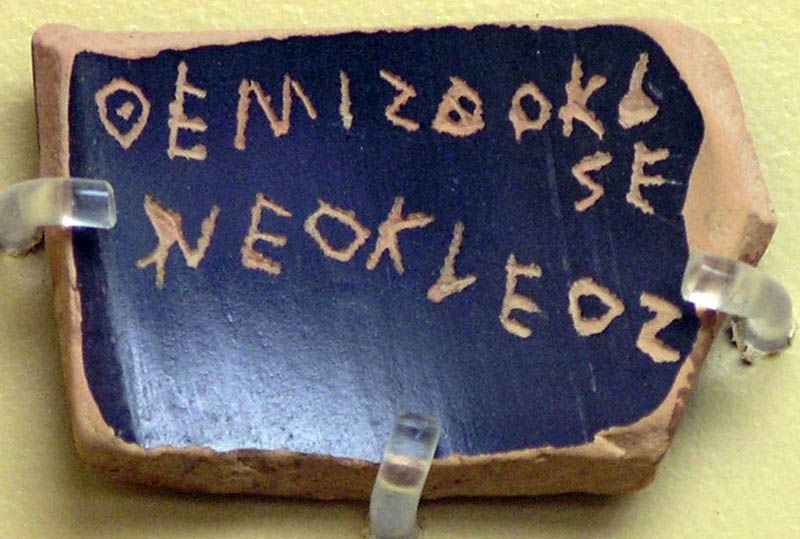
Democracy on potsherds
Once a year the Athenian assembly could decide to hold a vote on banishing a citizen who seemed dangerous. Voters then handed in a potsherd (ostrakon) bearing a name; whoever received the most votes, provided at least 6,000 citizens voted, had to leave for ten years. The thousands of surviving sherds attest to the spread of writing, but some were inscribed in advance: about 190 sherds naming Themistocles were written by only fourteen hands.
Greek words in English
Many learned and everyday words reached English from Greek, usually by way of Latin:
| Greek | original meaning | in English |
|---|---|---|
| δημοκρατία | rule of the people | democracy |
| φιλοσοφία | love of wisdom | philosophy |
| σχολή | leisure, discussion | school |
| οἰκονομία | household management | economy |
| ἄτομος | indivisible | atom |
| γραμματική | art of letters | grammar |
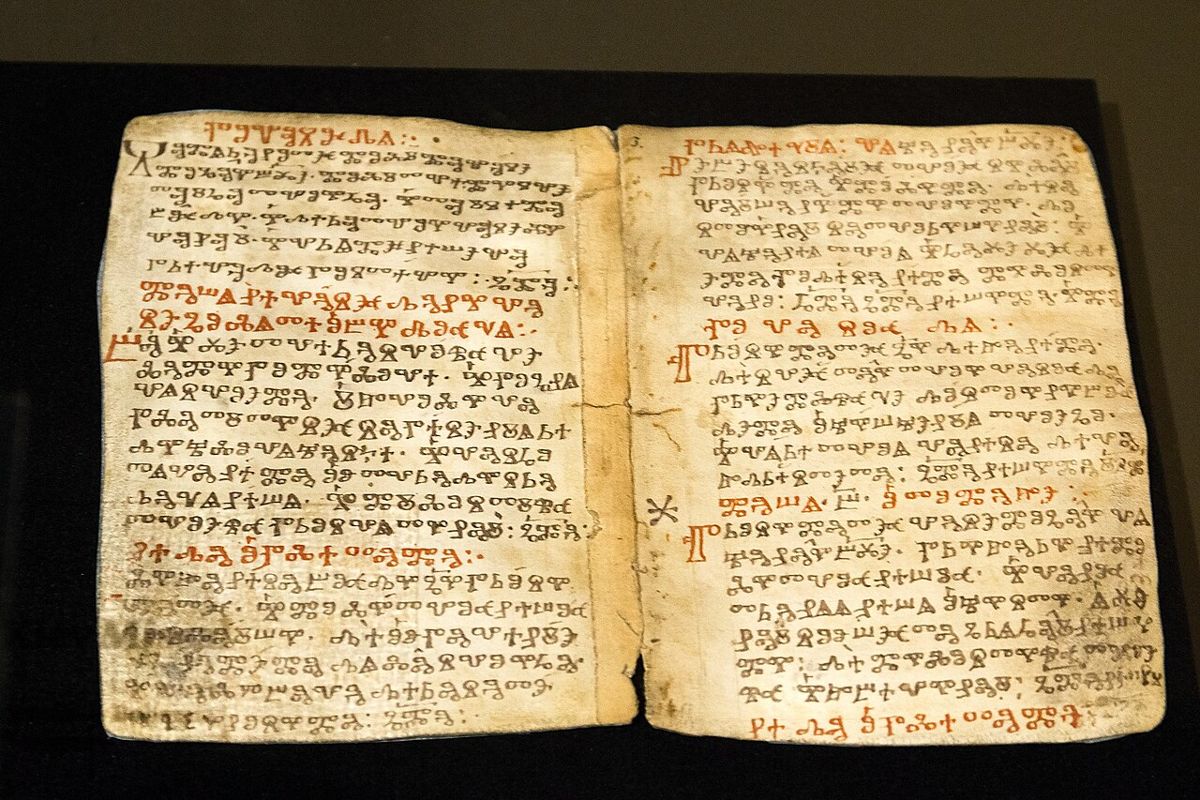
From the Greek script to Great Moravia
In 863 the brothers Constantine (Cyril) and Methodius of Thessalonica came to Great Moravia, sent by the Byzantine emperor. Constantine created a new script for the Slavic language, Glagolitic; many of its letters derive, on the prevailing view, from Greek minuscule. After Methodius' disciples were expelled from Moravia, a script based directly on the Greek alphabet arose in Bulgaria – Cyrillic, used today for Russian, Ukrainian, Bulgarian and Serbian.
The Kiev Missal of the 10th century, usually regarded as the oldest surviving Glagolitic manuscript, probably originated in Bohemia or Moravia; the text it copies may go back to the Great Moravian period.
Places and monuments
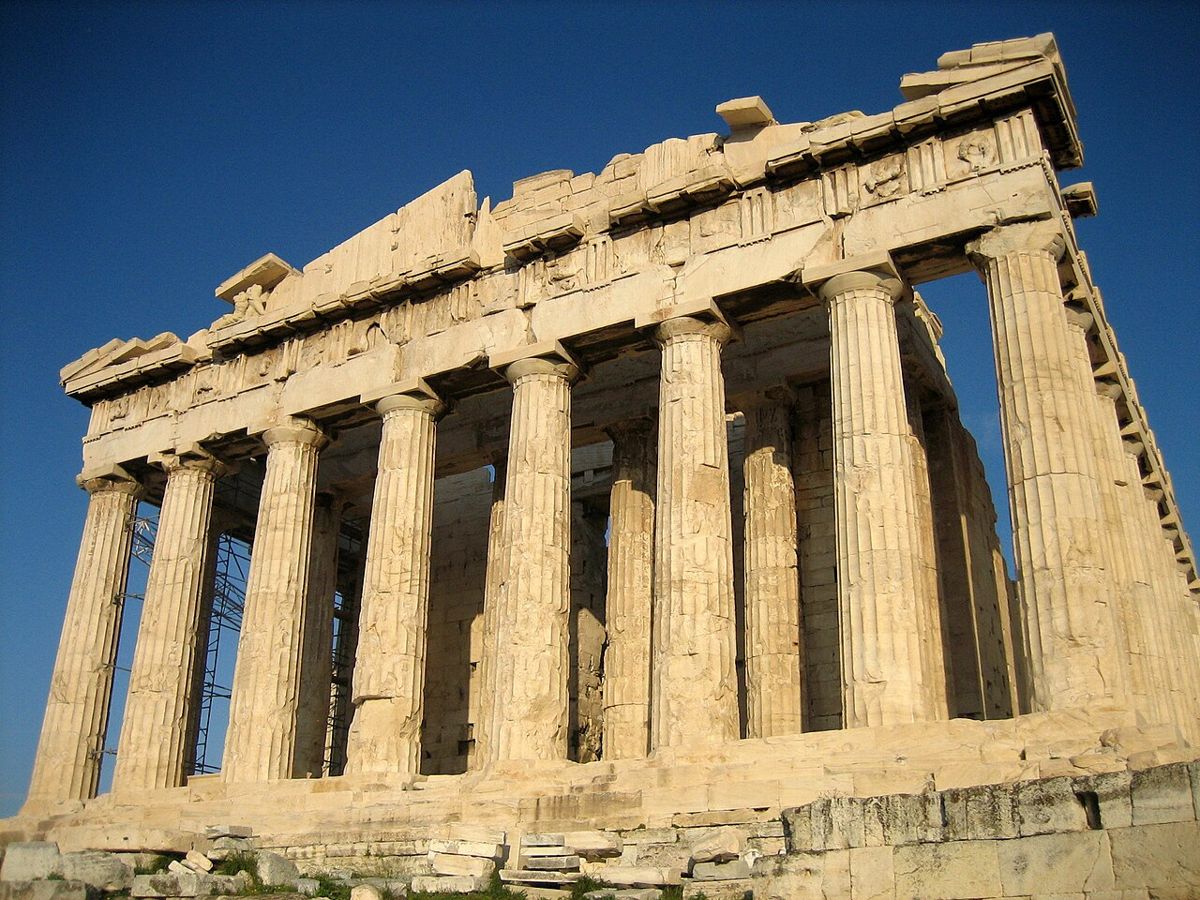
Timeline
- c. 1800–1450 BCELinear A on Minoan Crete.
- c. 1450–1375 BCELinear B tablets from Knossos.
- 13th c. BCEThe Mycenaean palaces; the Pylos archive.
- c. 1200 BCEThe palaces and Linear B disappear.
- 8th c. BCEThe Greek alphabet; the inscriptions on the Dipylon jug and Nestor's Cup.
- 5th c. BCEClassical Athens; the Gortyn law code.
- 403/402 BCEAthens adopts the Ionic alphabet.
- from the 330s BCEConquests of Alexander the Great; spread of the koine.
- 863Constantine and Methodius in Great Moravia; Glagolitic.
- 1900Arthur Evans begins excavating at Knossos.
- 1939Carl Blegen finds the Pylos archive.
- 1952Michael Ventris announces the decipherment of Linear B.
Greek on the globe
Tap to show a language on the globe:
Sources and further reading
- John Chadwick: The Decipherment of Linear B. Cambridge University Press 1958.
- Michael Ventris, John Chadwick: Documents in Mycenaean Greek. Cambridge University Press, 2nd ed. 1973.
- Andrew Robinson: The Man Who Deciphered Linear B. Thames & Hudson 2002.
- Geoffrey Horrocks: Greek. A History of the Language and its Speakers. Wiley-Blackwell, 2nd ed. 2010.
- Glottolog 5 (languages and their classification).