Languages of antiquity
Elam and Urartu
Southwestern Iran and the Armenian Highlands · from Proto-Elamite tablets to Persian officialdom
Elamite and Urartian are neither Semitic nor Indo-European, and they are not related to each other either. Southwestern Iran produced scripts of its own; the oldest of them has still not been read, and it is not certain that it wrote Elamite. Later the Elamites wrote in cuneiform borrowed from Mesopotamia, and the officials of the Persian kings still kept their records in Elamite. The Urartians around Lake Van borrowed cuneiform from Assyria and left inscriptions on rock faces, stelae and fortresses; one of them records the founding of the town from which Yerevan grew.
Outside the great families
Most languages of the ancient Near East that we know from written sources belong to two large families: Semitic (Akkadian, Aramaic, Hebrew) and Indo-European (Hittite, Old Persian). Alongside them, however, people spoke languages that belong to neither. The best known is Sumerian (see the page on Mesopotamia); two others are on this page: Elamite from southwestern Iran and Urartian from the Armenian Highlands. They are not related to each other, and we know both mainly because their speakers adopted Mesopotamian cuneiform.
Elam lay in what are now the Iranian provinces of Khuzestan and Fars, in the lowland around Susa and in the highlands around Anshan. Elamite texts run from the 3rd millennium BCE to the end of the Achaemenid Persian Empire in the 4th century BCE. Urartu was an Iron Age kingdom around Lake Van, in today’s eastern Turkey, Armenia and northwestern Iran; its inscriptions date from the 9th to the 7th century BCE.
Elam: lowland and highlands
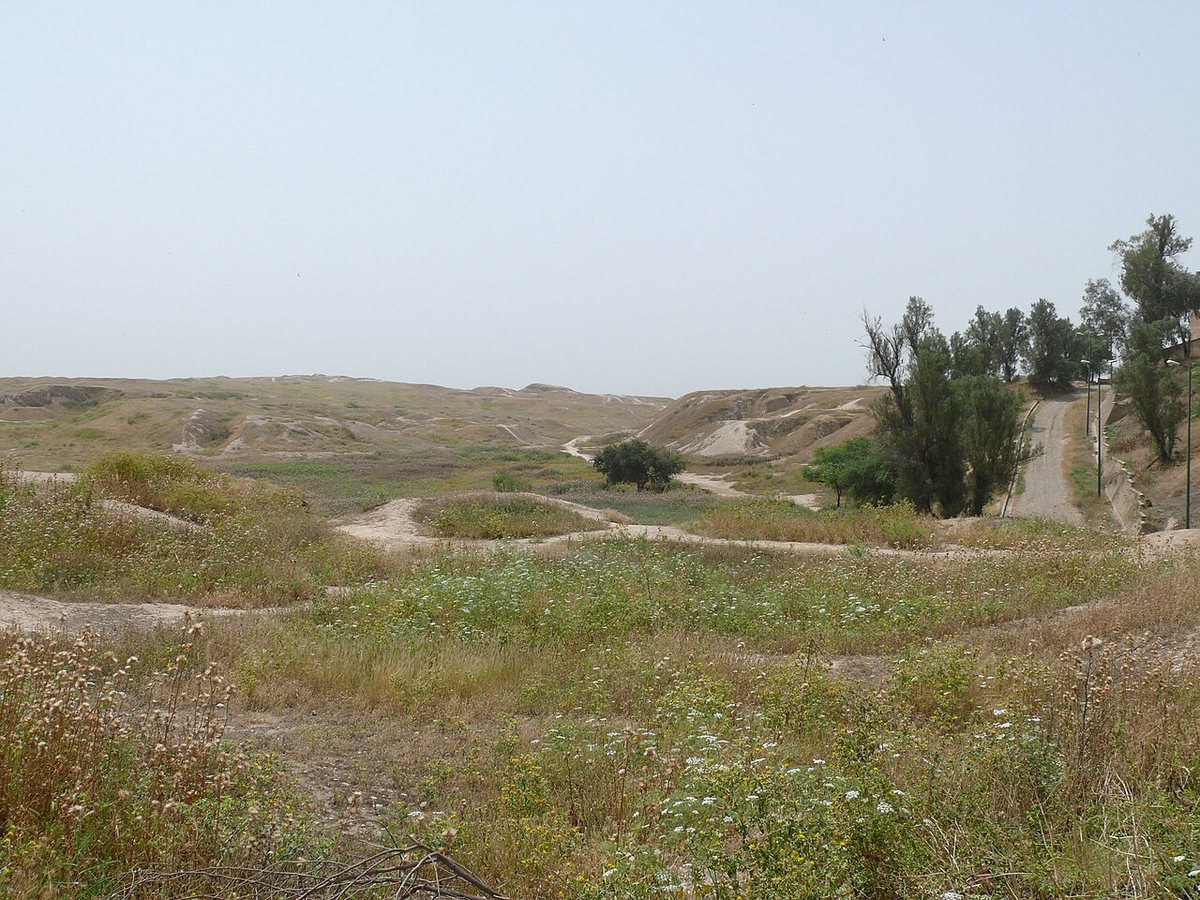
Susa is one of the oldest cities in the region; according to radiocarbon dates, settlement there began around 4200 BCE. The name Elam itself is Mesopotamian (Sumerian elam, Akkadian elamtu); the Elamites called their country Haltamti, or Hatamti in the linear script. Elamite history is known largely from Mesopotamian sources and is divided into Old, Middle and Neo-Elamite periods. Elam grew out of a union of smaller highland states (Awan, Shimashki, Anshan) with the lowland around Susa, which passed back and forth between Elam and the Mesopotamian empires.
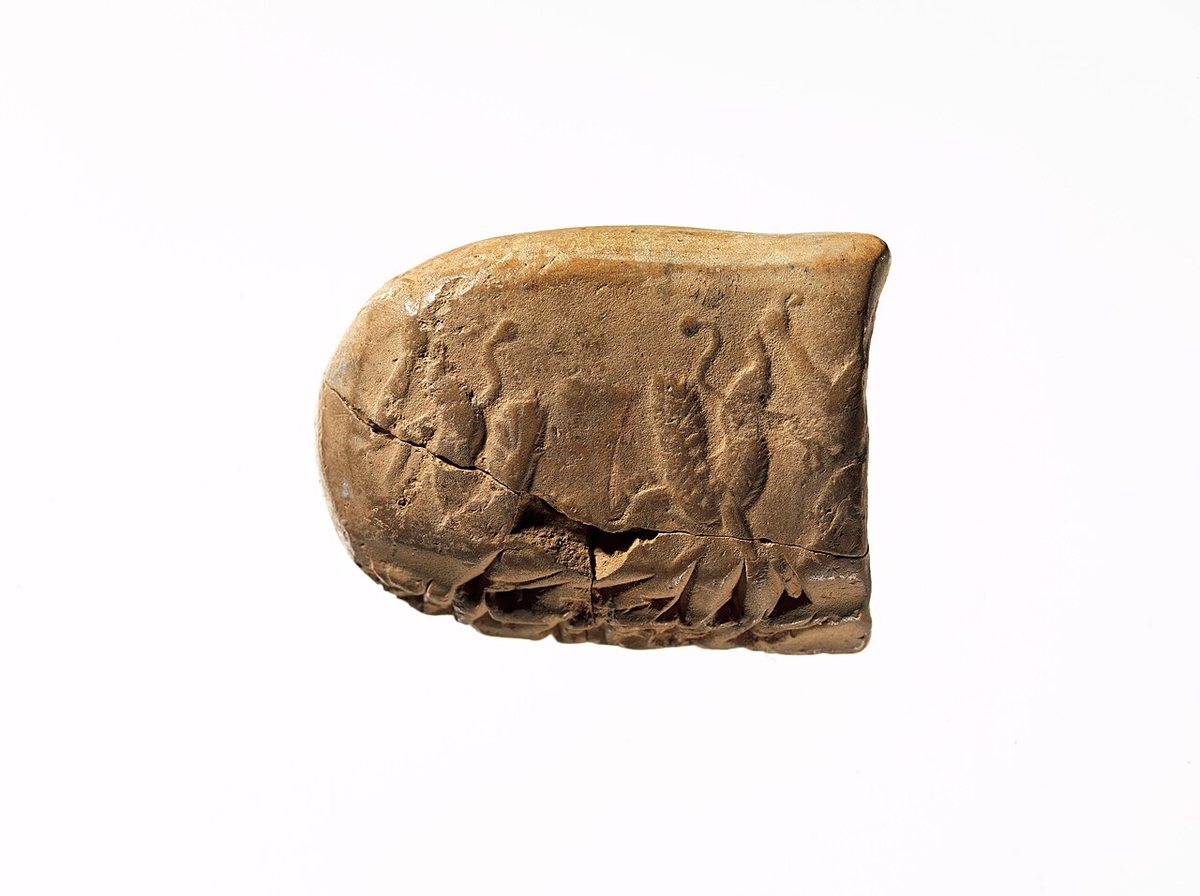
Elamite kings repeatedly intervened in Mesopotamian affairs. Around 2004 BCE they captured Ur and led its last king, Ibbi-Sin, into captivity. In the 12th century BCE Shutruk-Nahhunte I raided the cities of Babylonia and carried off to Susa, among other trophies, the stele bearing Hammurabi’s laws; French archaeologists found it there in 1901. The Assyrian king Ashurbanipal sacked Susa around 646 BCE and boasted in an inscription that he had sown the land of Elam with salt. Elamite principalities survived, but by the middle of the 6th century BCE Susa had become part of the Persian Empire.
Proto-Elamite writing
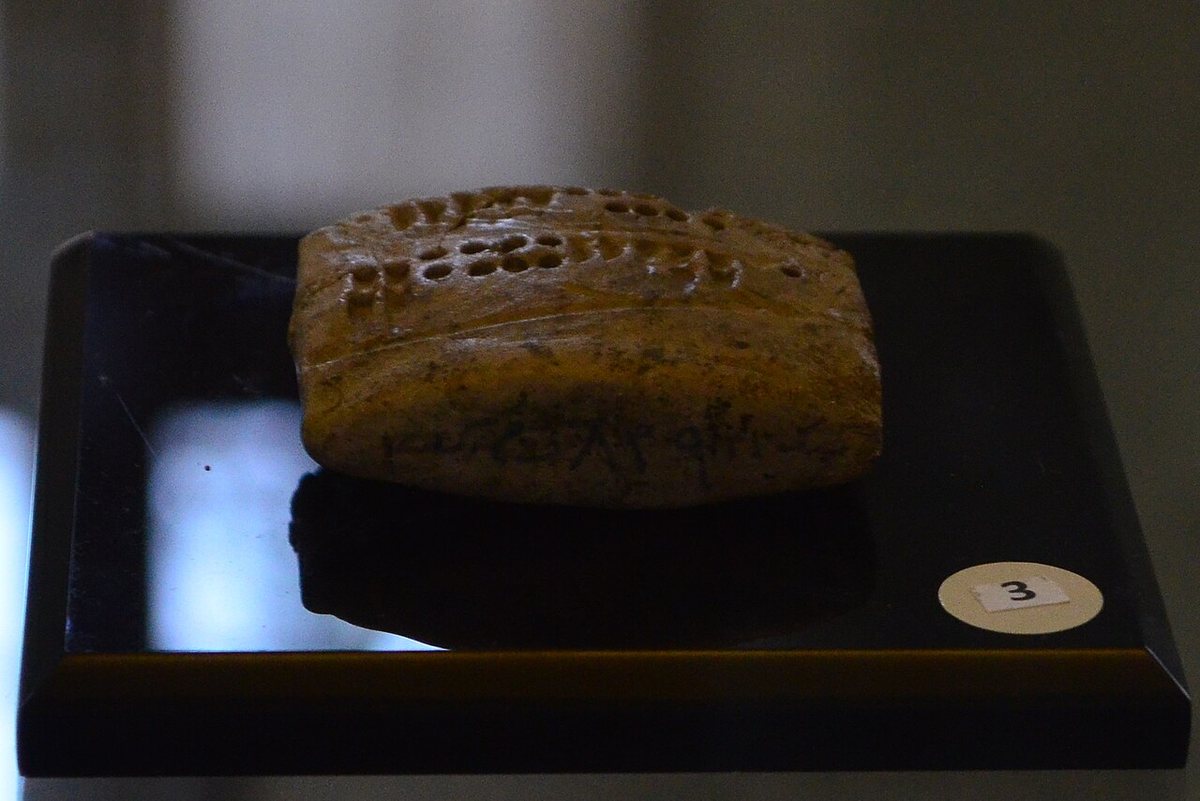
The oldest script of Iran is called Proto-Elamite. It was used only briefly, c. 3100–2900 BCE, roughly at the time of the earliest proto-cuneiform tablets from Uruk in Mesopotamia, with which it has much in common: clay tablets of the same shape, the same way of inscribing them and the same book-keeping purpose. The signs, however, are different. Some 1,600 tablets are known; the vast majority come from Susa, others from Anshan (Tall-e Malyan), Tepe Yahya, Tepe Sialk and a few other sites as far as eastern Iran.
The script remains undeciphered. The numbers can be read, because they resemble those on Mesopotamian tablets, so the content of many texts is known: they are accounts, for example tallies of goats and sheep. Besides a sexagesimal system the scribes also used a decimal one. The other signs number more than a thousand, and most of them probably stood for whole words. Whether the scribes spoke Elamite is unknown, since records of this kind reveal almost nothing about language. Since 2012 Jacob Dahl of the University of Oxford has been putting photographs of the tablets online so that other researchers can take part in the decipherment. In 2022 François Desset proposed reading some Proto-Elamite signs with the values he had assigned to Linear Elamite; most specialists, including Dahl’s team, have not accepted the proposal.
Linear Elamite
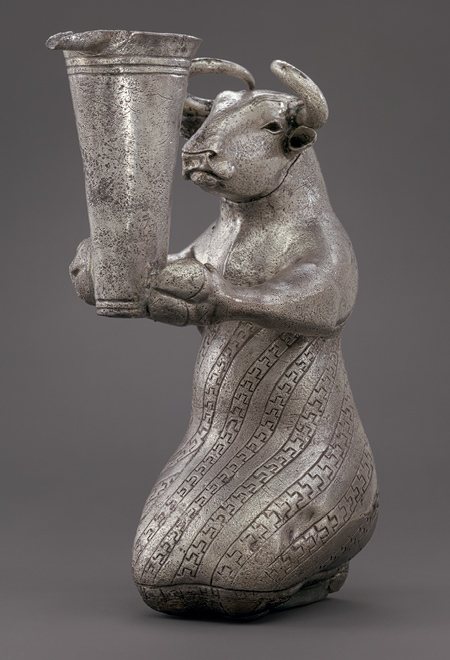
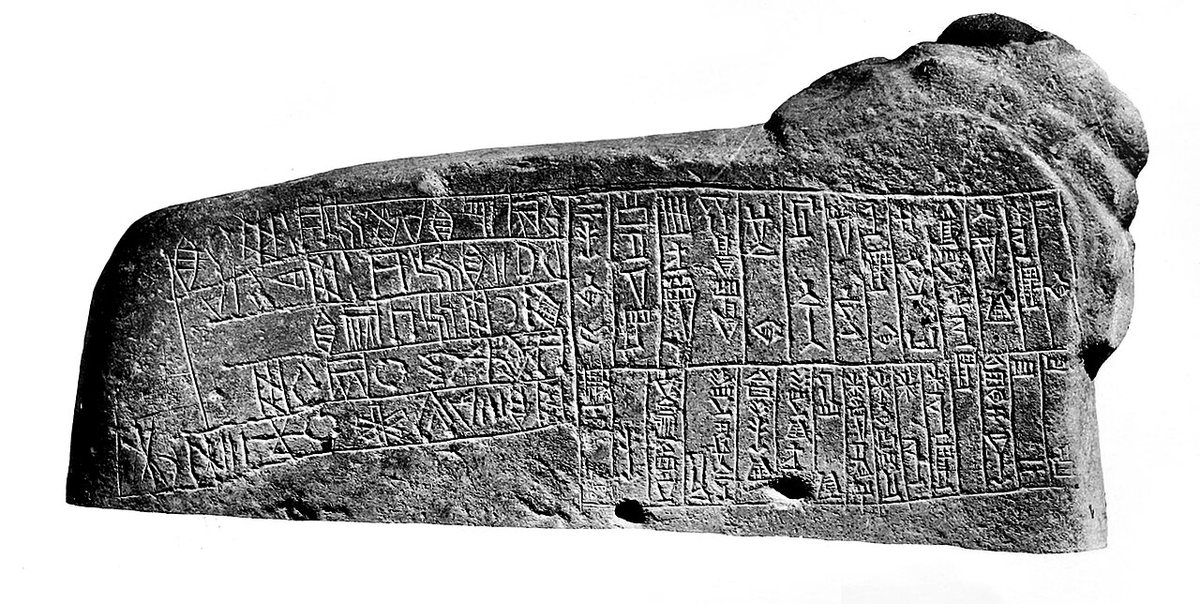
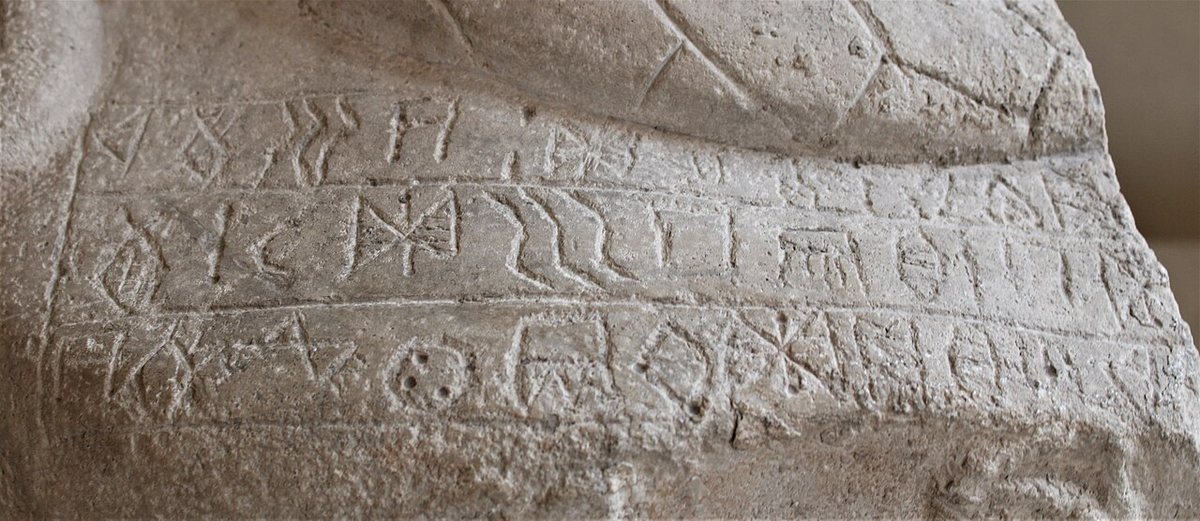
Several centuries younger is Linear Elamite, known from a small number of inscriptions on stone, clay and silver beakers; a 2021 inventory counts 51 texts and fragments. The best known date from the reign of King Puzur-Inshushinak (whose name used to be read Kutik-Inshushinak), who ruled at Susa in the late 22nd century BCE. The script was used alongside cuneiform and wrote Elamite. Whether it developed from Proto-Elamite is disputed.
The first steps towards decipherment came from the bilingual “Table au lion” in the Louvre, inscribed in Akkadian and in Linear Elamite. Using the Akkadian text, Ferdinand Bork (1905) and Carl Frank (1912) found in it the names of the god Inshushinak and of King Puzur-Inshushinak, which fixed nine signs with reasonable certainty. After that, progress stalled for a long time.
A breakthrough was announced by the French archaeologist François Desset. On silver beakers from a private collection that had only recently come to light, he recognised recurring groups of signs as the names of the kings Shilhaha and Ebarat and of the god Napirisha, much as Grotefend had once done with Old Persian. In 2020 he announced that he and an international team had read all the known inscriptions, and in 2022 the team published the decipherment. According to the authors the script is phonetic and used signs for whole words only occasionally, if at all. It was welcomed by Assyriologists such as Manfred Krebernik, Matthew Stolper and Piotr Steinkeller. Others, such as the linguist Michael Mäder, are more cautious: they take about a third of the signs to be word signs and are waiting for detailed translations of the texts. The decipherment is therefore only partly accepted.
Elamite cuneiform and the Elamite language
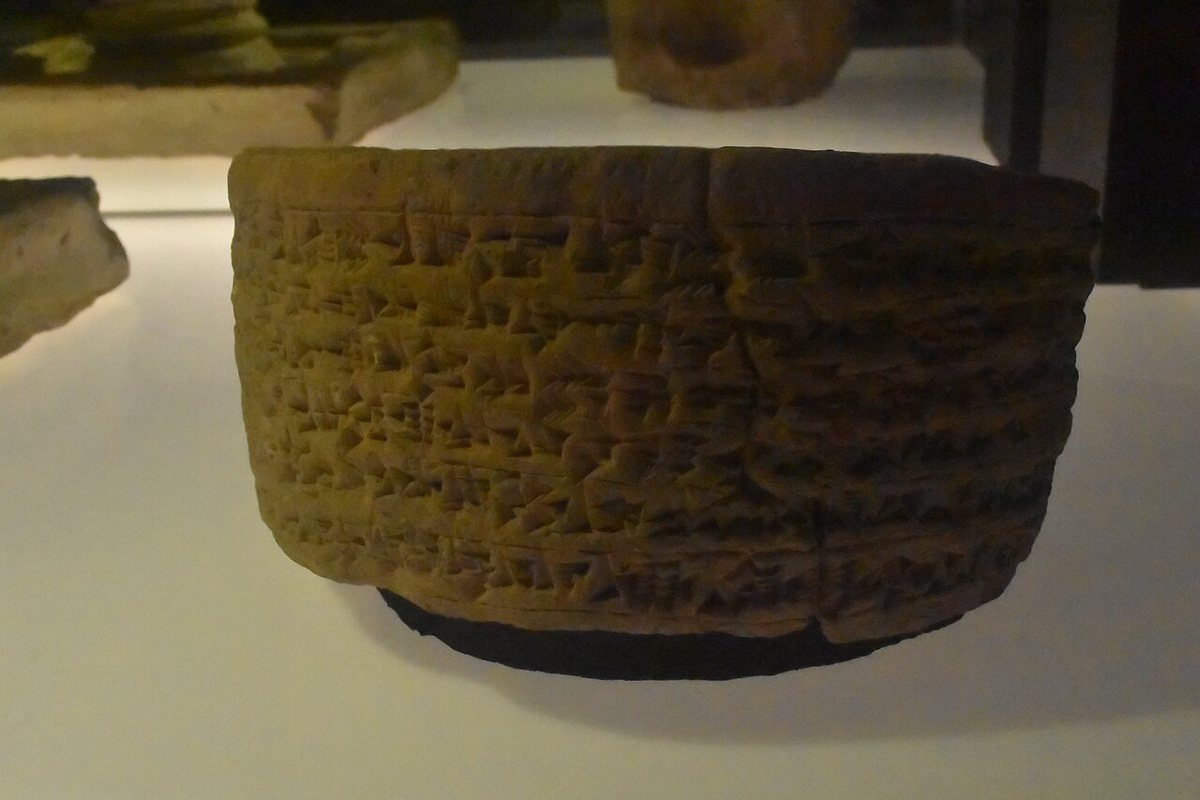
Alongside their own scripts, the Elamites adopted cuneiform from Mesopotamia. The earliest known Elamite text in cuneiform is a treaty between the Akkadian king Naram-Sin and an Elamite ruler from around 2250 BCE: “The enemy of Naram-Sin is my enemy, the friend of Naram-Sin is my friend.” Elamite scribes simplified the system considerably. In any one period they used only about 130 signs, and 206 are attested over the whole history of the script; most are syllable signs, while word signs gradually became more frequent. The script often failed to distinguish vowels, and signs such as tir or tar served mainly to write two consonants.
Elamite is an agglutinative language that builds words from a root and a chain of suffixes. A peculiarity is a set of suffixes that mark person on nouns: sunki-k means “I, the king”, sunki-r “(he,) the king”, sunki-p “kings”. The same suffixes are copied onto modifiers, so “I, the king of Elam” is u sunki-k Hatamti-k. The verb usually comes at the end of the sentence. The Middle Elamite period (c. 1500–1000 BCE) is regarded as the classical one, but the best-attested stage is Achaemenid Elamite from the time of the Persian kings.
In the prevailing view, Elamite is an isolate with no demonstrable relatives. The best-known attempt to connect it, the Elamo-Dravidian hypothesis linking Elamite with the Dravidian languages of India and with Brahui in Pakistan, was developed from the 1970s by the American linguist David McAlpin. Most linguists reject it; a detailed review in 2023 concluded that the proposed word matches are either uncertain in meaning or so short that they could be chance resemblances. Proposals of a link with the Semitic languages have not found acceptance either.
Sample signs
- DIŠdeterminative before a personal name
- ansyllable; as a determinative it precedes a god’s name
- KURdeterminative before the name of a land
- susyllable
- unsyllable
- kisyllable, in Elamite also ke
- iksyllable (the sign IG)
- bisyllable
- avowel
- ivowel
- nisyllable
- lisyllable
su-un-ki-iksunki-k “I, the king” (Middle Elamite)
These values hold in both Elamite and Urartian cuneiform. The signs are rendered in a standard Unicode font with Mesopotamian shapes; on Elamite and Urartian monuments they looked somewhat different. The Urartian name of the country, Biainili, was written 𒆳𒁉𒀀𒄿𒉌𒇷 (KUR bi-a-i-ni-li; KUR is the determinative for a land). Elamite cuneiform made do with a much smaller set of signs than Akkadian, whose scribes knew several hundred. Neither Proto-Elamite nor Linear Elamite is yet in Unicode (a proposal to encode Proto-Elamite was submitted in 2023), so only the photographs show them.
Chogha Zanbil
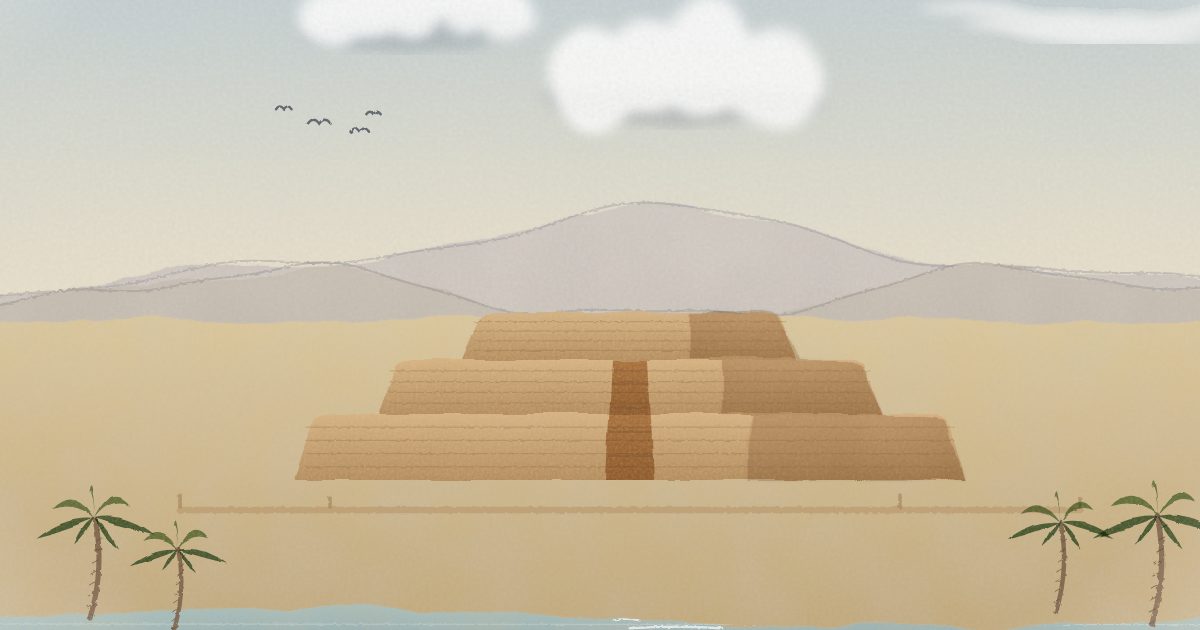
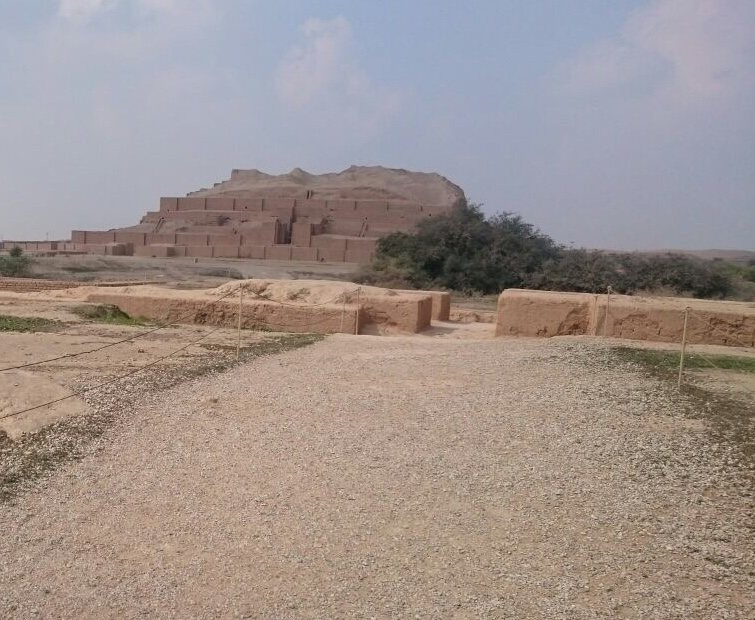
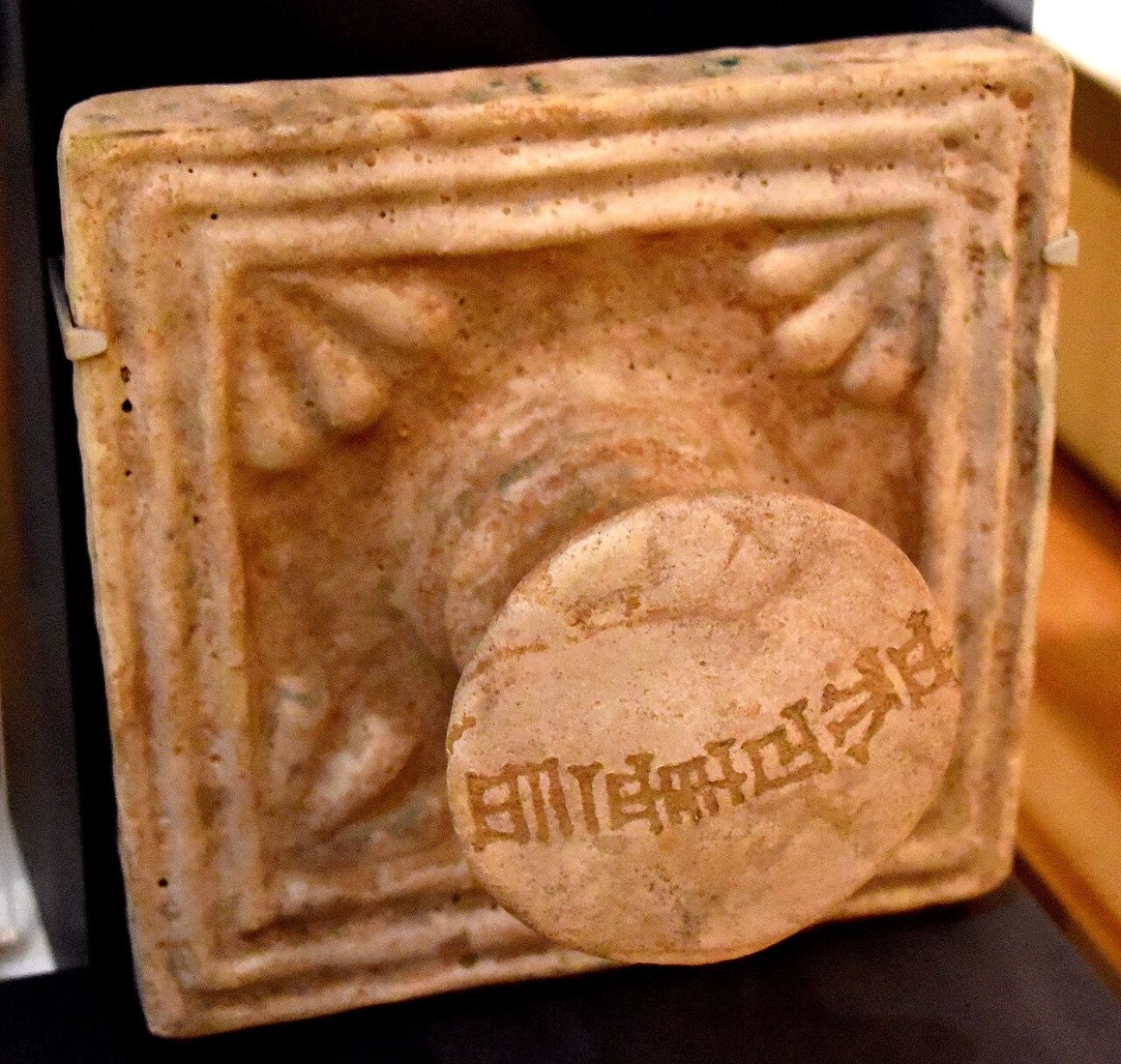
About 30 km southeast of Susa, King Untash-Napirisha had a new sacred city built. In Elamite it was called Al Untash-Napirisha, later, in Assyrian sources, Dur Untash, “town of Untash”; its modern Persian name, Chogha Zanbil, is usually translated as “basket mound”. The dates of his reign are uncertain and the construction falls in the 14th or 13th century BCE; 1250 BCE is the conventional date. At the centre of three concentric walls stands a ziggurat dedicated chiefly to the god Inshushinak, one of the few ziggurats outside Mesopotamia and, according to UNESCO, the best-preserved monument of its kind. Its base measured about 105 × 105 m and its original height was about 53 m; today it stands just under 25 m tall.
The ziggurat is built of mud brick faced with baked brick, and every eleventh course of bricks bears an inscription. Archaeologists found 5,257 inscribed bricks, most in Elamite and 67 in Akkadian. One reads: “I, Untash-Napirisha, son of Humbanumena, king of Anshan and Susa, … a temple of baked bricks and a sanctuary of glazed bricks I built; I gave it to Inshushinak … and I erected a temple tower.” In the prevailing view the city was destroyed by Ashurbanipal around 645 BCE, though some scholars think it was abandoned as early as the late 12th century. In 1979 Chogha Zanbil became the first Iranian site on the UNESCO World Heritage List.
Inscriptions of Elamite kings
The language of Persian officials
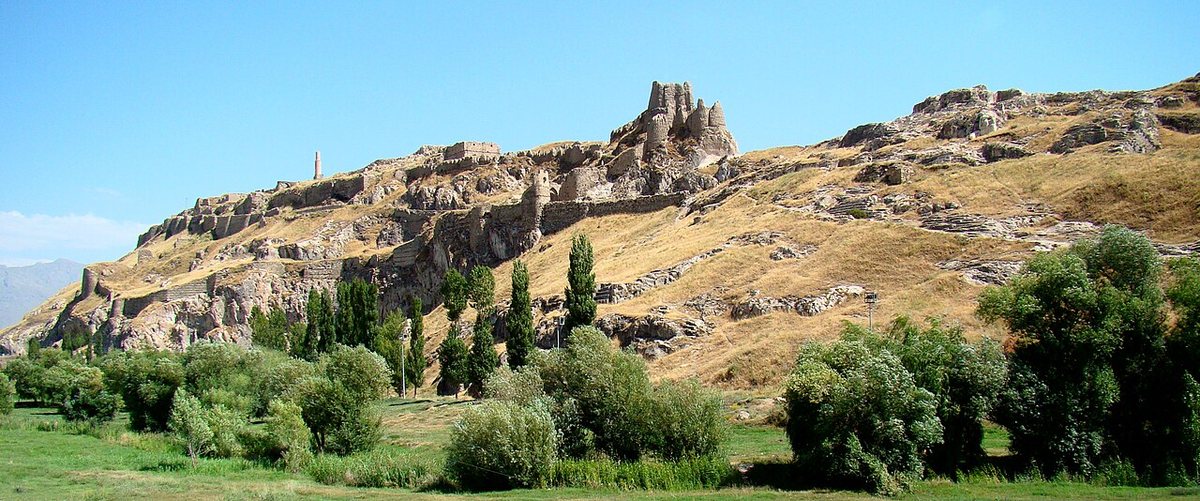
When Susa and Anshan passed to the Persians, Elamite did not disappear. The Achaemenid kings made it one of the three languages of their inscriptions, alongside Old Persian and Babylonian; on the Behistun rock the Elamite version of Darius’s inscription runs to 260 lines in eight columns. Xerxes also had a trilingual inscription carved on the citadel rock at Van, in the very heart of former Urartu. In the Persian heartland officials wrote in Elamite: the Fortification Archive at Persepolis, from 509–493 BCE, contains more than 15,000 Elamite records of deliveries and rations (more on the page on Persia).
The Elamite version of Behistun proved hard to crack. The Old Persian text provided the key, but Elamite resembled no known language, and real progress came only in the 1840s and 1850s. Henry Rawlinson entrusted the Elamite version to Edwin Norris, who published it in 1855; at the time the language was thought to be Scythian or Median. The name Elamite is usually credited to Archibald Henry Sayce in 1874, and Julius Oppert published the first grammar in 1879. Older Elamite inscriptions from Susa were published in the first decades of the 20th century by the Dominican Vincent Scheil.
Urartu: the kingdom by Lake Van
The name Urartu is Assyrian. In the Bible the same country is called Ararat, hence the “mountains of Ararat” on which, according to Genesis, Noah’s ark came to rest. The Urartians themselves, from the time of King Ishpuini, called their country Biainili. Assyrian inscriptions mention Uruatri as early as the 13th century BCE which according to more recent scholarship was one of the lands of Nairi; a unified kingdom emerged in the mid-9th century BCE. Sarduri I (c. 832–820 BCE) moved the seat of power to Tushpa on the shore of Lake Van, where a rock citadel stands near the modern town of Van.
In the 8th century BCE Urartu was one of the most powerful states of the Near East and a rival of Assyria. It reached the height of its power under Argishti I and his son Sarduri II; Argishti extended the kingdom as far as the Araxes river and Lake Sevan. In 714 BCE the Assyrian king Sargon II plundered the holy city of Musasir with the main temple of the god Haldi. Weakened by Cimmerian and Scythian raids, the kingdom declined and came to an end in the early 6th century BCE, most often dated to a Median conquest around 590 BCE; other scholars think it survived until the middle of the century.
Urartian and its script
Together with Hurrian, the language of the Mitanni kingdom and of many texts from Hittite Hattusa, Urartian forms the small Hurro-Urartian family. The two languages separated around the beginning of the 2nd millennium BCE; Urartian is closest to Old Hurrian, known from Hurrian–Hittite bilingual texts. Links with other families, such as Northeast Caucasian, have been proposed but are not generally accepted. Urartian is an ergative language: the subject of a transitive verb takes a special case. An example from an inscription: Ḫaldi-ə ewri-ə inə É Argište-šə Menuaḫini-šə šidišt-u-nə, “For Haldi the lord, Argishti son of Menua built this temple.” The suffix -šə marks the ergative, and the modifier “son of Menua” copies it from the name it belongs to.
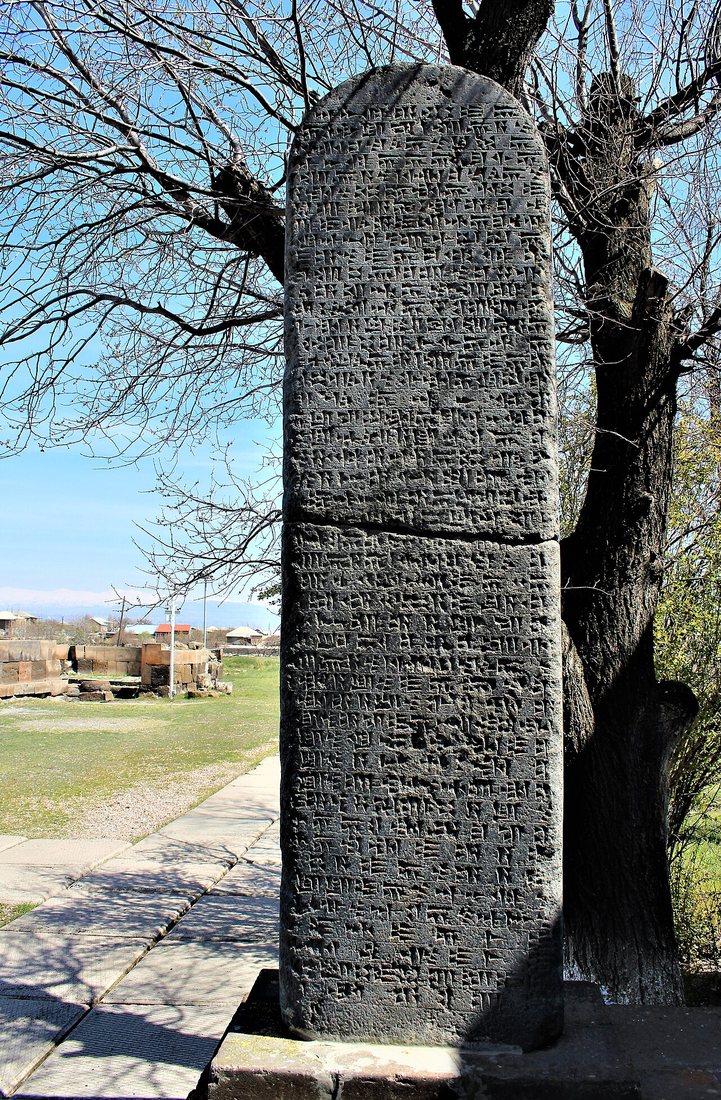
The oldest inscriptions from Tushpa, from the reign of Sarduri I, are still in Assyrian; his son Ishpuini was the first to write in Urartian. The scribes adopted Neo-Assyrian cuneiform and simplified it: apart from a few exceptions each sign had only one syllabic value, and a vowel was often reinforced with an extra sign (ba-a). They also took over a number of word signs and determinatives from Assyrian. What survives is mostly royal inscriptions on rock faces, stelae and buildings, recording campaigns and the building of fortresses and irrigation canals, together with inscriptions on bronze objects and a few clay tablets. Urartian was occasionally written in Anatolian hieroglyphs as well; whether Urartu had a pictorial script of its own is uncertain.
The Urartian inscriptions at Van were copied in the late 1820s by the German scholar Friedrich Eduard Schulz, who was murdered in the region in 1829; his notes were published in 1840. The script could be read once Assyrian cuneiform had been deciphered, but the language resembled no known one. Archibald Henry Sayce deciphered it in 1882, though more substantial progress came only with Urartian–Assyrian bilingual inscriptions, above all the stele from the Kelishin pass on today’s Iraq–Iran border. The Georgian historian Giorgi Melikishvili published a grammar of Urartian in 1963, and in the 1970s Igor Diakonoff systematically demonstrated its relationship with Hurrian.
Erebuni and Yerevan
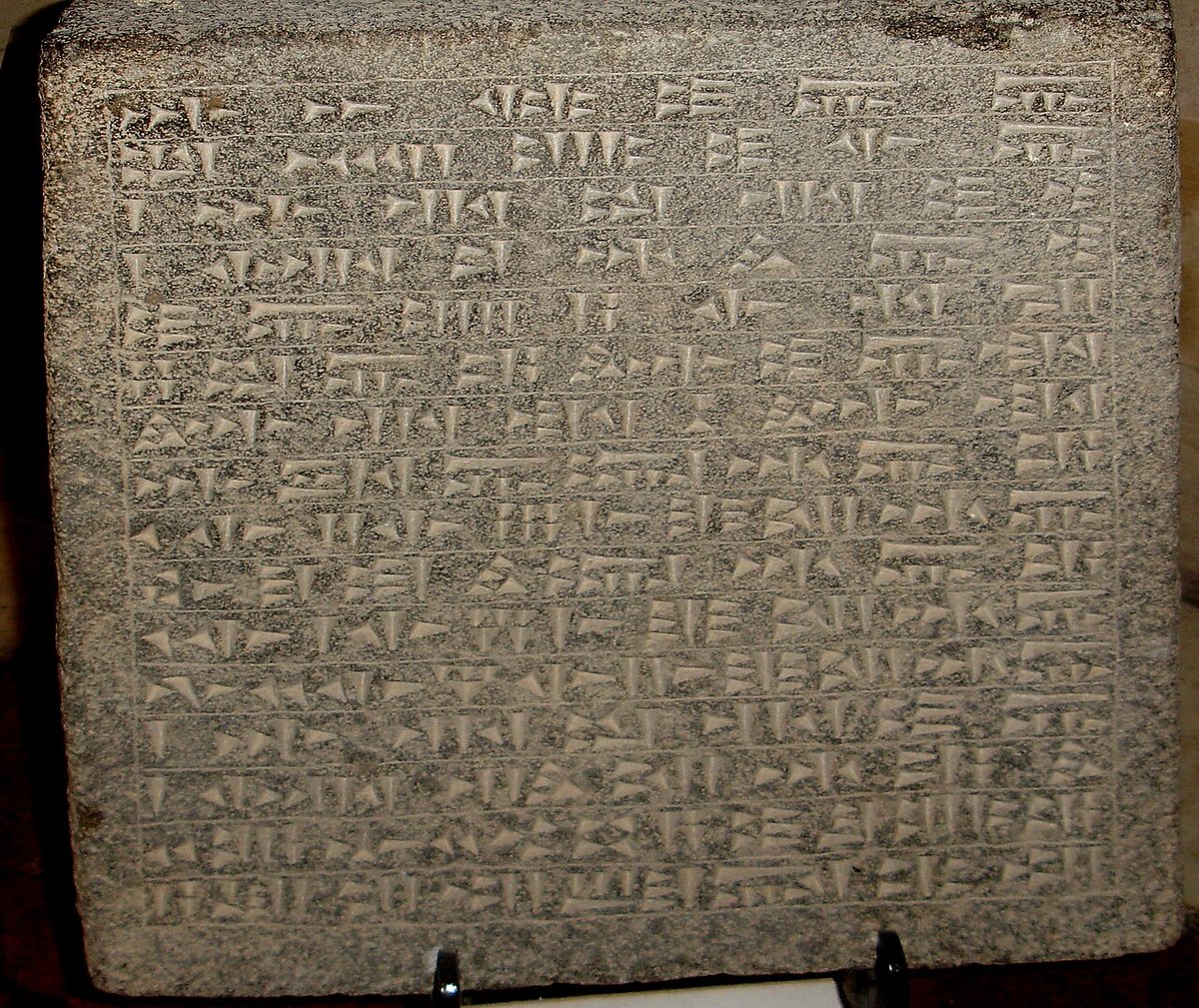
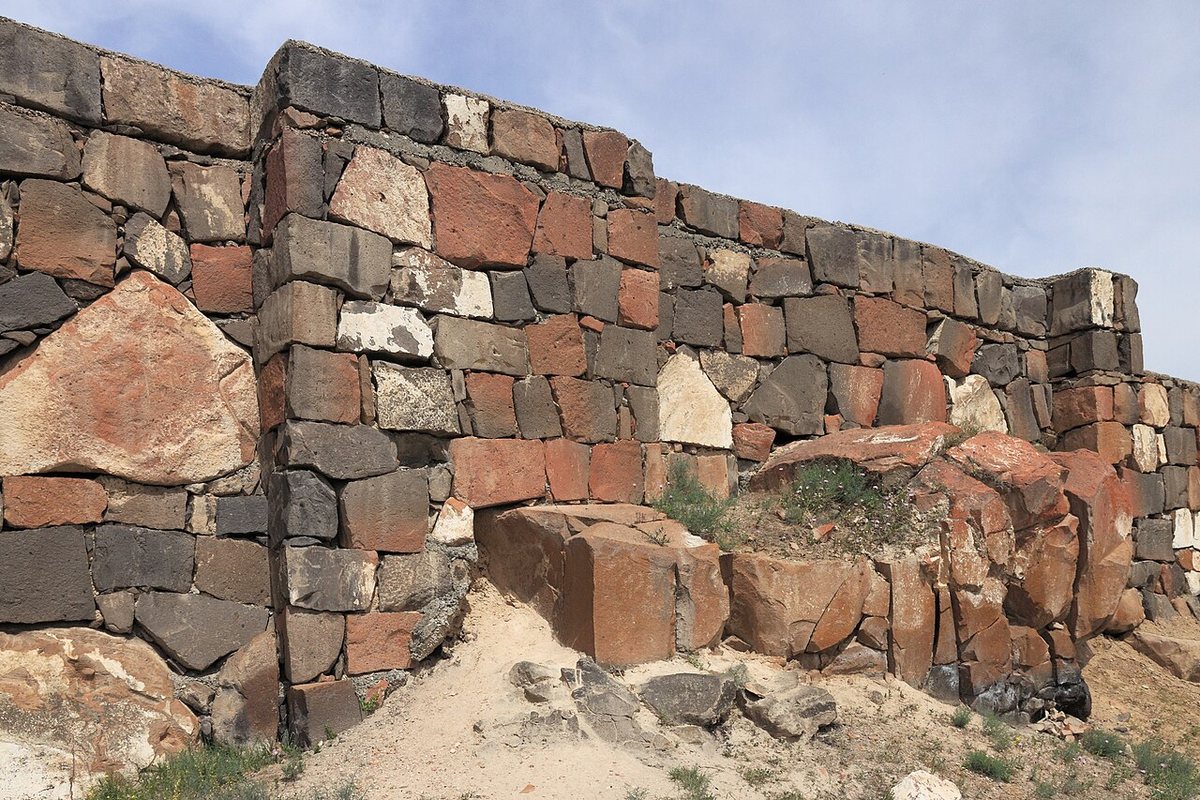
In 782 BCE Argishti I founded the fortress of Erebuni on the Arin Berd hill above the Ararat plain. In the autumn of 1950 archaeologists led by Konstantine Hovhannisyan found there the inscription recording its foundation: “By the greatness of the god Haldi, Argishti, son of Menua, built this mighty stronghold and proclaimed it Erebuni for the glory of Biainili and to instil fear among the king’s enemies.” A similar inscription at Tushpa states that he settled 6,600 prisoners of war from the lands of Khate and Tsupani in the new town.
Erebuni grew into Yerevan, whose name derives from it. In 1968 the city therefore celebrated its 2,750th anniversary, and the Erebuni museum opened beside the fortress that year. The meaning of the name itself is uncertain: one interpretation links it to a Urartian verb meaning “to seize, capture”, so that it might mean “conquest” or “victory”. Storerooms for grain, wine and oil with huge storage jars were also found in the fortress; an inscription of Sarduri II at the entrance to a storeroom states that two granaries held 24,100 measures of grain between them.
Some Elamite and Urartian words
Words whose meaning is securely established from the inscriptions. Elamite and Urartian are unrelated, but Urartian shares many words with Hurrian:
| word | meaning | language and notes |
|---|---|---|
| sunki | king | Elamite; sunki-me “kingdom” |
| nap, napir | god | Elamite; nap-ip “gods” |
| hal | town, land | Elamite |
| siyan | temple | Elamite |
| šak | son | Elamite; in titles “X, son of Y” |
| Haltamti, Hatamti | Elam | the Elamite name of their own country |
| ewri, euri | lord | Urartian; Hurrian also ewri |
| ebani | land | Urartian; ebani-uka-nə “from my land” |
| ar- | to give | Urartian and Hurrian |
| Biainili | Urartu | the Urartian name of their own country |
| ulṭu | camel | Urartian; widely held to be the source of Armenian ułt |
Bronze and the legacy of Urartu
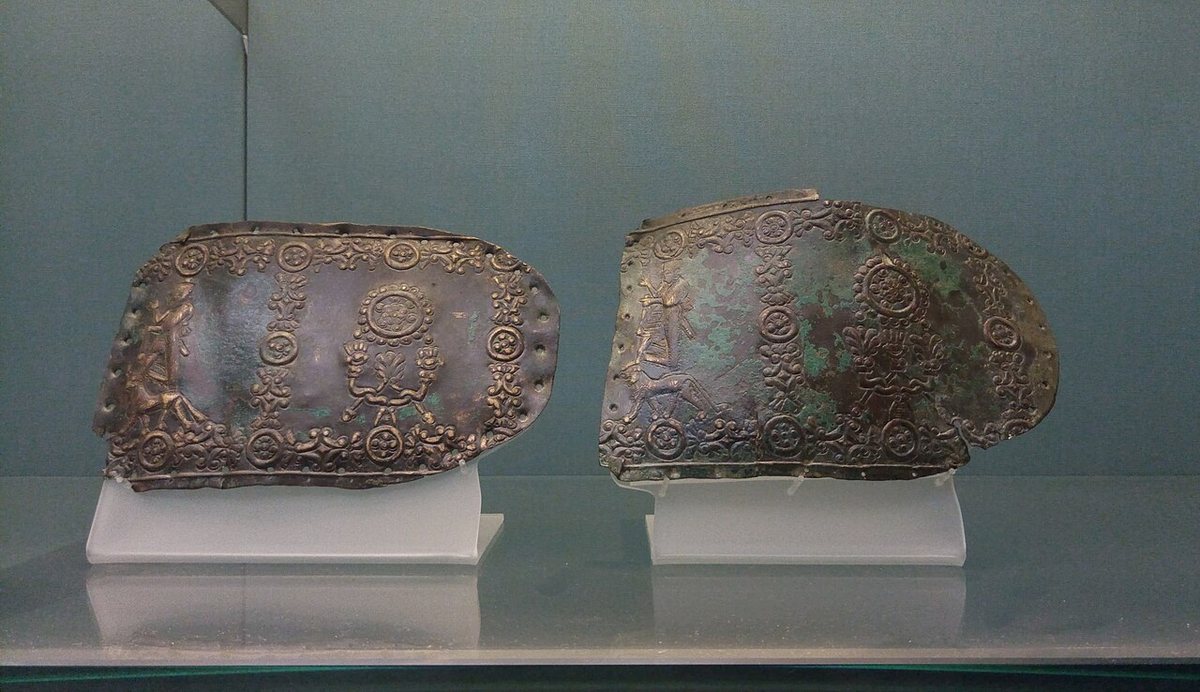
The Urartians were skilled metalworkers. Using the lost-wax method they cast figurines, furniture fittings and cauldron attachments; from sheet bronze they hammered and decorated helmets, belts, shields and vessels. Little has been found, however, of the jewellery in precious metals that the Assyrians boasted of carrying off from Musasir. Urartian kings had irrigation canals built, and some from the reigns of Menua and Argishti I are still in use.
After the fall of Urartu, Urartian ceased to be written and probably died out; in the Armenian Highlands it was gradually replaced by Armenian. Already the Babylonian version of Darius’s Behistun inscription calls Urashtu the country that the Old Persian version names Armina, Armenia. According to a widely held view, some Urartian words and place names passed into Armenian, such as ulṭu “camel” (Armenian ułt) or Tushpa (Armenian Tosp). The name Van is also often derived from Urartian Biainili, but this remains a hypothesis.
Timeline
- c. 3100–2900 BCEProto-Elamite accounting tablets.
- c. 2250 BCETreaty of Naram-Sin with Elam, the oldest Elamite text in cuneiform.
- c. 2100 BCEPuzur-Inshushinak at Susa; inscriptions in Linear Elamite.
- c. 1250 BCEUntash-Napirisha builds Chogha Zanbil (date uncertain).
- 12th c. BCEShutruk-Nahhunte I carries Hammurabi’s stele off to Susa.
- c. 832–820 BCESarduri I moves the seat of Urartu to Tushpa.
- 782 BCEArgishti I founds Erebuni.
- 714 BCESargon II plunders Urartian Musasir.
- c. 646 BCEAshurbanipal sacks Susa.
- c. 590 BCEEnd of Urartu (date disputed).
- 509–493 BCEElamite tablets of the Persepolis Fortification Archive.
- 1855Edwin Norris publishes the Elamite version of Behistun.
- 1882Archibald Henry Sayce deciphers Urartian.
- 1950The foundation inscription of Erebuni is found.
- 1979Chogha Zanbil becomes Iran’s first UNESCO World Heritage Site.
- 2022Desset and colleagues publish their decipherment of Linear Elamite.
Elamite and Urartian on the globe
Both languages are extinct. Tap a language to show it on the globe:
Sources and further reading
- Daniel T. Potts: The Archaeology of Elam: Formation and Transformation of an Ancient Iranian State. Cambridge University Press 1999.
- Matthew W. Stolper: Elamite. In: Roger D. Woodard (ed.), The Cambridge Encyclopedia of the World’s Ancient Languages. Cambridge University Press 2004, pp. 60–95.
- Gernot Wilhelm: Urartian. In: Roger D. Woodard (ed.), The Cambridge Encyclopedia of the World’s Ancient Languages. Cambridge University Press 2004.
- François Desset, Kambiz Tabibzadeh, Matthieu Kervran, Gian Pietro Basello, Gianni Marchesi: The Decipherment of Linear Elamite Writing. Zeitschrift für Assyriologie 112, 2022, pp. 11–60.
- Paul E. Zimansky: Ancient Ararat: A Handbook of Urartian Studies. Caravan Books 1998.
- Mirjo Salvini: Geschichte und Kultur der Urartäer. Wissenschaftliche Buchgesellschaft, Darmstadt 1995.
- Glottolog 5 (languages and their classification).