
Languages of antiquity
Ancient Egypt
The kingdom on the Nile · c. 3100–30 BCE
Egyptian is one of the languages with the longest recorded history: the first inscriptions date from around 3200 BCE, and its last stage, Coptic, is still heard in the liturgy of Egypt's Christians. The hieroglyphs were deciphered in 1822 by Jean-François Champollion; Czech Egyptologists have been excavating the pyramid field of Abusir for more than sixty years.
The gift of the Nile
Egypt grew up on a narrow strip of fertile land along the Nile, which flooded its banks every summer and left black silt behind. Around 3100 BCE Upper and Lower Egypt were united into one state; its rulers, later called pharaohs, reigned for almost three millennia.
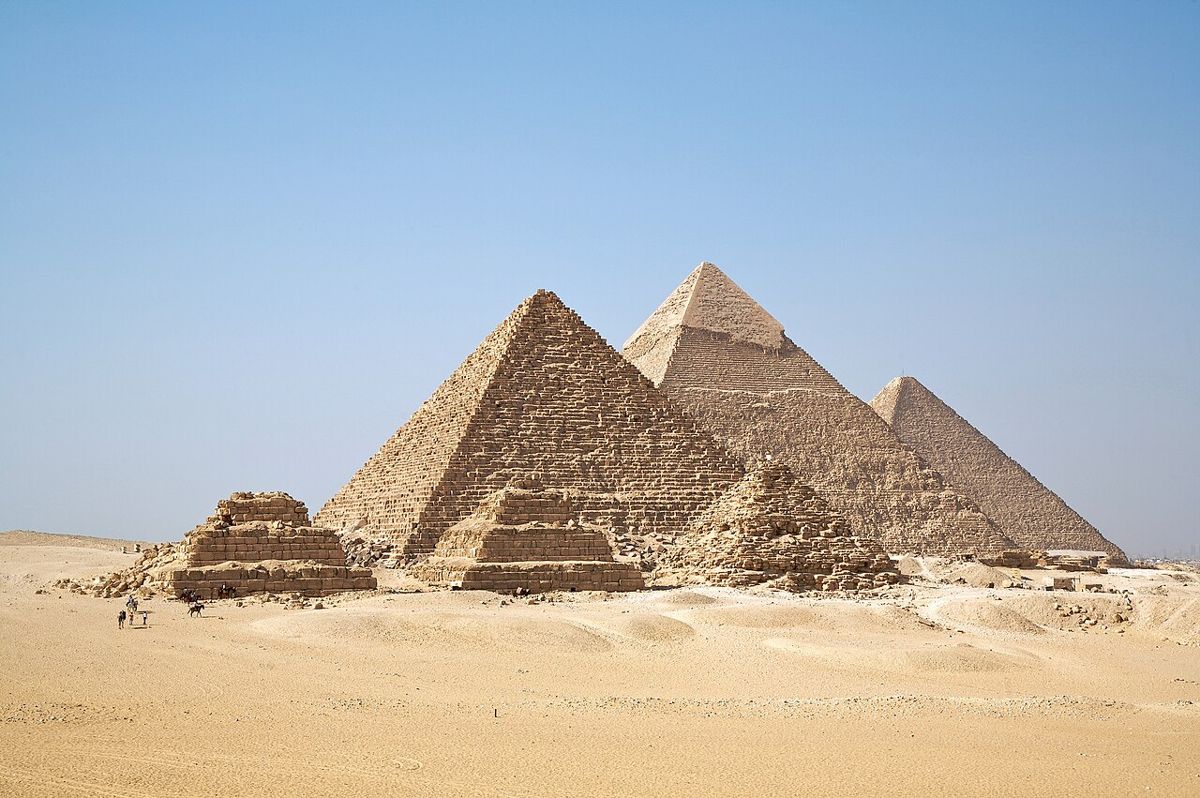
The Old Kingdom built the pyramids of Giza, the Middle Kingdom produced the classical literature, and in the New Kingdom Egyptian power reached from Nubia to Syria. After the conquest by Alexander the Great (332 BCE) Egypt was ruled by the Greek Ptolemaic dynasty; with the death of Cleopatra VII in 30 BCE it became a Roman province.
One language, five stages
Egyptian forms a branch of its own within the Afroasiatic family; its distant relatives are the Semitic languages (Arabic, Hebrew) and the Berber, Cushitic and Chadic languages. Over more than four millennia it developed through what Egyptologists divide into five stages: Old Egyptian, Middle Egyptian (the classical literary language, written long after it ceased to be spoken), Late Egyptian, Demotic and Coptic.
As a spoken language Coptic gradually gave way to Arabic after the Arab conquest of Egypt (639–642 CE) and died out around the 17th century. It is still used as the liturgical language of the Coptic Church.
r n km.t
- r
- mouth, speech
- n
- of
- km.t
- the Black (Land) = Egypt
the speech of EgyptThis is what the Story of Sinuhe calls the Egyptian language; elsewhere the term is attested only exceptionally. Km.t, “the Black”, is the fertile soil of the Nile, as opposed to the “Red Land” of the desert. The stroke after the mouth sign shows that the sign is read as a whole word; the final sign is a determinative for a land or town and is not pronounced. In Coptic the language is called (in Sahidic) ⲧⲙⲛ̄ⲧⲣⲙ̄ⲛ̄ⲕⲏⲙⲉ – the old km.t (Coptic kēme) lives on in this name too.
The earliest records
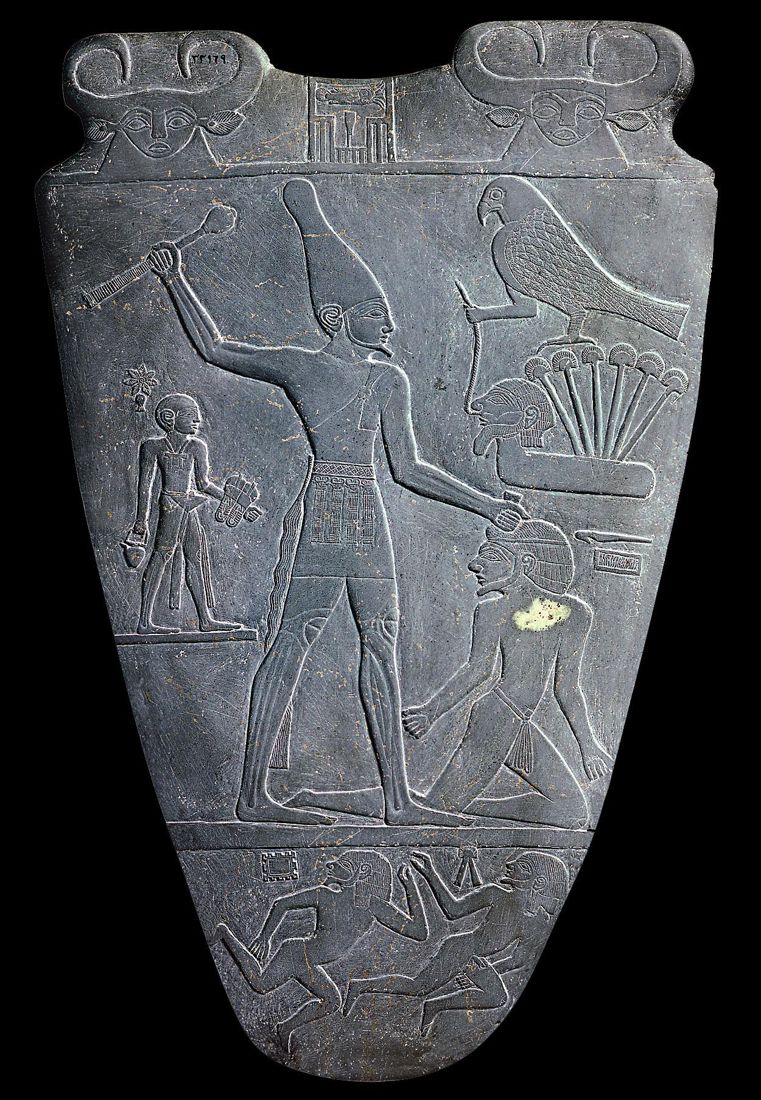
Egyptian writing appears at the end of the 4th millennium BCE, at about the same time as cuneiform in Mesopotamia. Among the earliest examples are the labels from tomb U-j at Abydos and the Narmer Palette, on which the king's name is written with two signs: a catfish (nꜥr) and a chisel (mr).
Whether the Egyptians borrowed the idea of writing from Mesopotamia or invented it themselves is undecided; the signs and the way of writing are in any case their own.
Hieroglyphs: pictures that are read
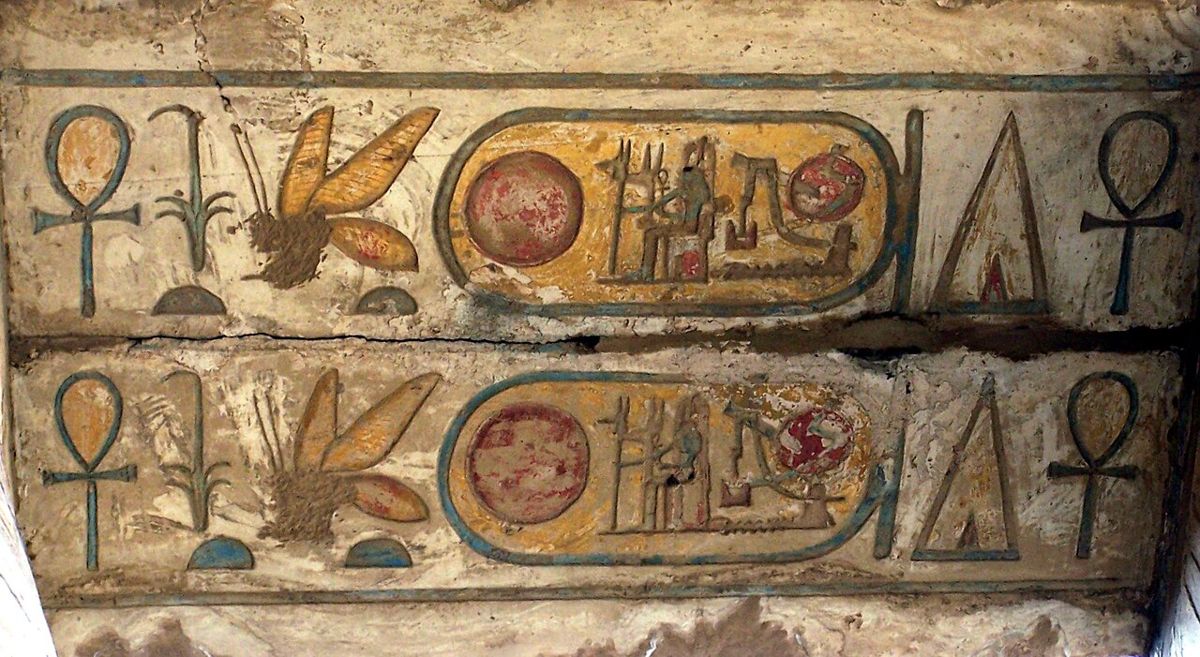
The word hieroglyph comes from Greek and means “sacred carving”; the Egyptians spoke of “the god's words”. Hieroglyphs are not picture writing in a simple sense: they combine signs for whole words, signs for one, two or three consonants, and determinatives, which are not read but only clarify the meaning – for example the figure of a man with words for people.
Classical Middle Egyptian used some 700–800 signs; in the Ptolemaic period the priests created several thousand. The script recorded only consonants; the vowels are unknown, so Egyptologists insert an e between consonants when pronouncing: nfr is read nefer. Writing ran most often from right to left, but also from left to right and in columns; people and animals always face the beginning of the line.
One-consonant signs and more
- ꜣvulture
- jreed
- ꜥarm
- wquail chick
- bleg
- pmat or stool
- fhorned viper
- mowl
- nripple of water
- rmouth
- sfolded cloth
- tloaf of bread
- kbasket
- ḏcobra
- ꜥnḫthree-consonant sign “life”
- A1determinative: person, man
nfr (+ f + r)“good, beautiful” – the three-consonant sign nfr followed by f and r as reading aids
About twenty-four one-consonant signs form a kind of “alphabet”, but the Egyptians never used them on their own as an alphabet. The signs are rendered with the Noto Sans Egyptian Hieroglyphs font.
Scribes
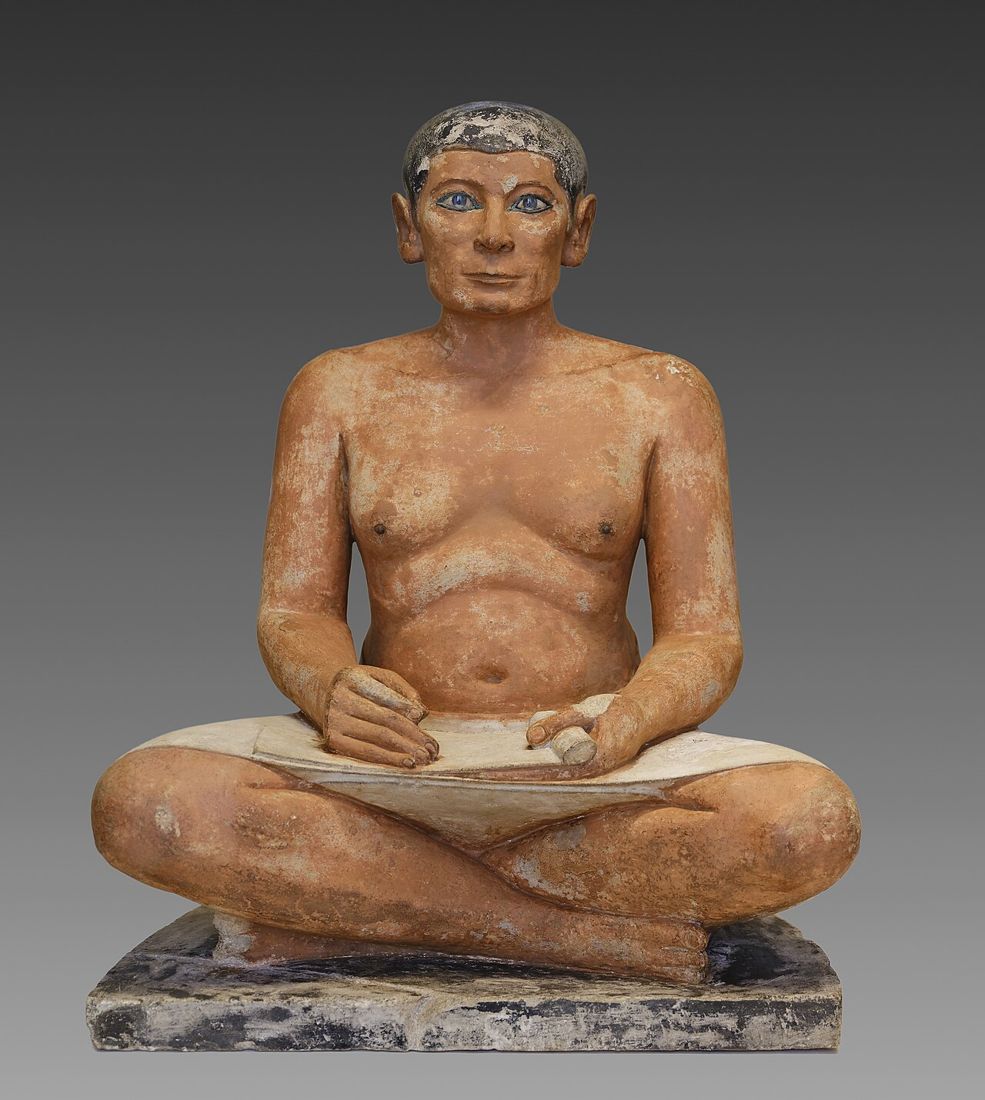
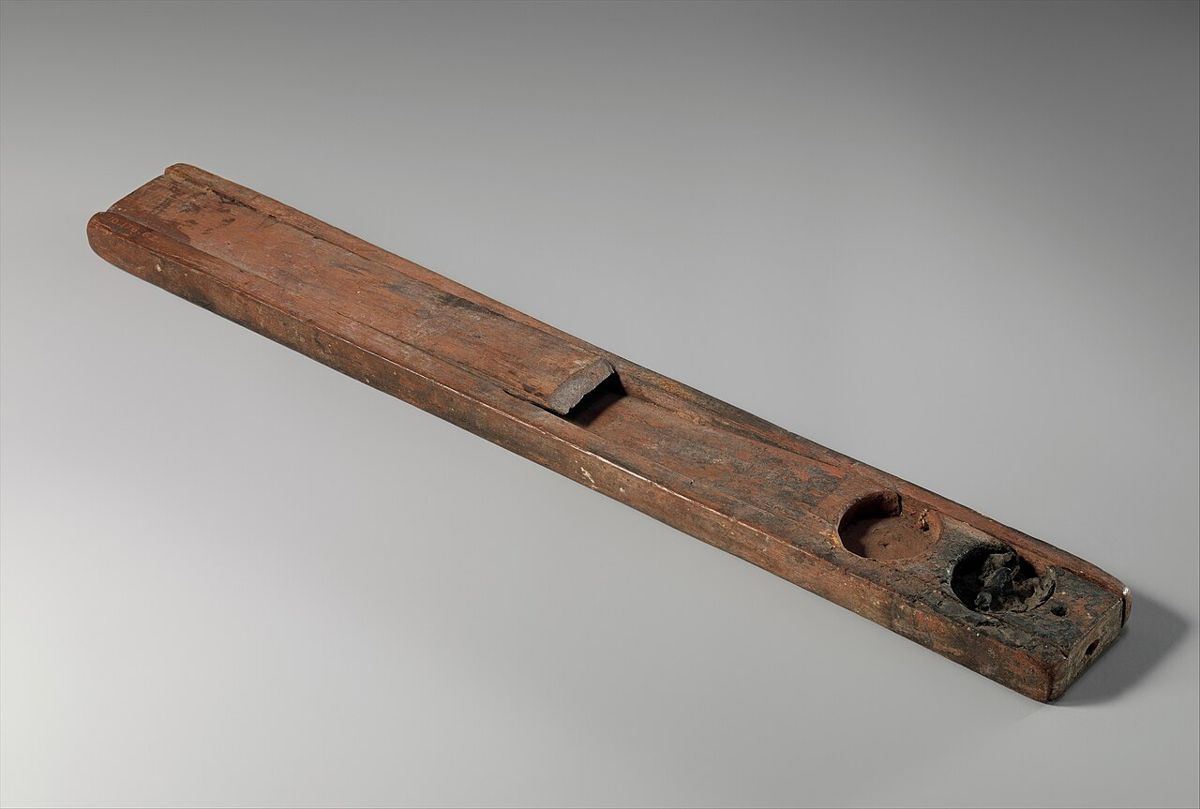
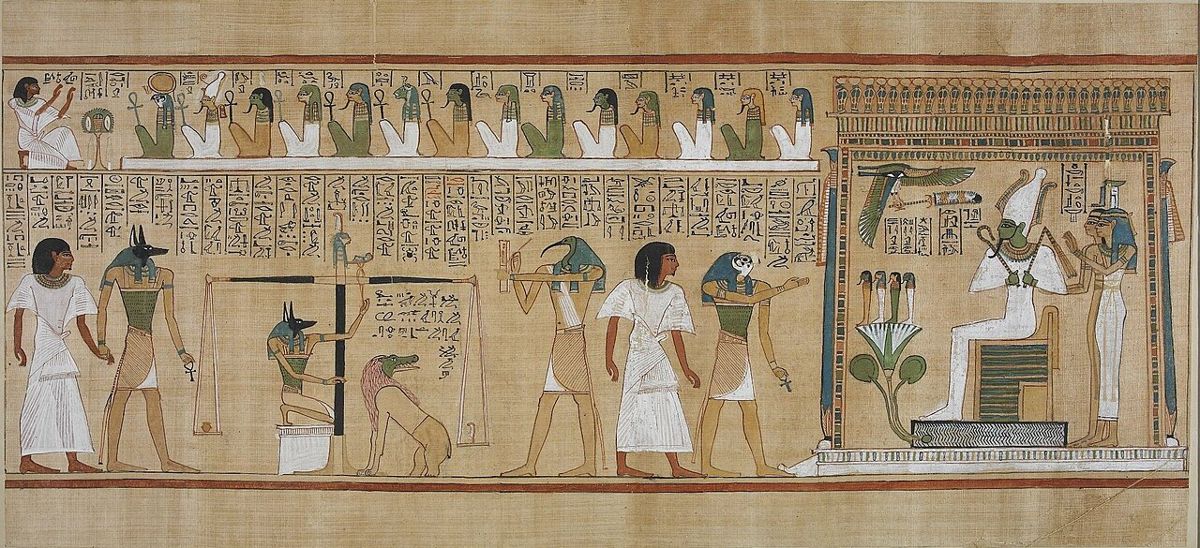
Only a small part of Egyptians could read and write. Scribes trained for years, first by copying model texts, and belonged to the educated elite of officials, priests and administrators. They wrote with reed pens on papyrus, wooden boards and potsherds (ostraca) in black soot ink, using red for headings, section beginnings and dates.
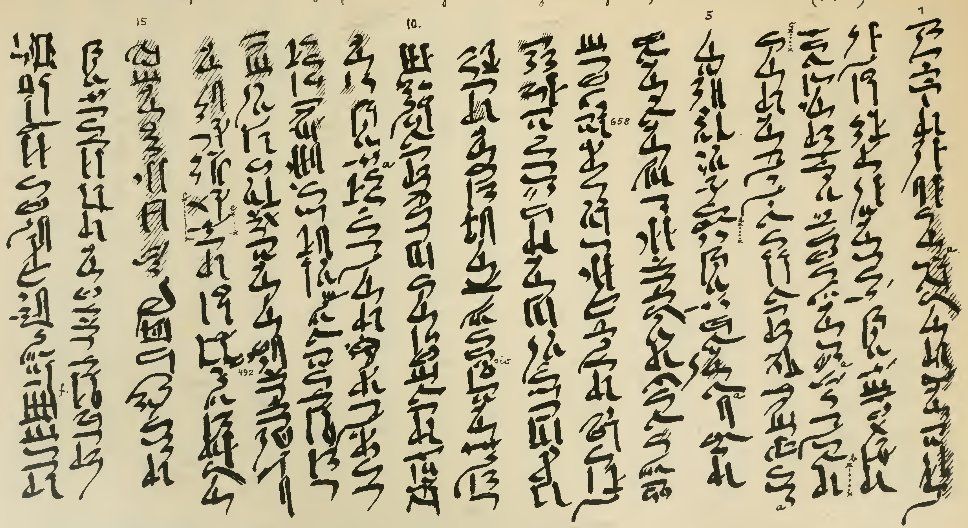
On papyrus and in everyday writing the hieroglyphs were simplified into a quick hand. Pictorial hieroglyphs remained mainly for inscriptions on temples, tombs and statues.
Hieratic and Demotic
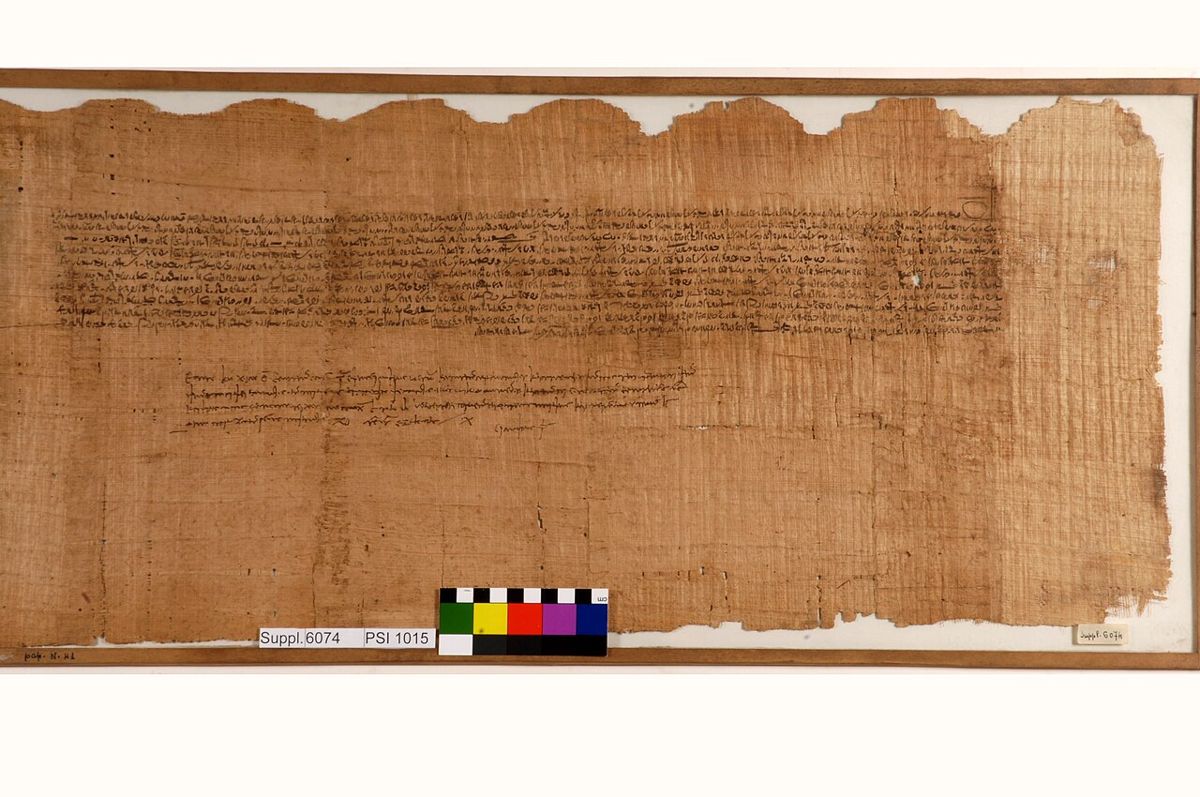
Hieratic is an abbreviated, cursive form of hieroglyphs, used from the earliest times for official records, letters and literature. From the 7th century BCE the even faster Demotic script took over everyday administration, and hieratic remained mainly for religious texts.
The last dated hieroglyphic inscription is from 394 CE and the last Demotic one from 452 CE; both are on the island of Philae. After that, knowledge of the Egyptian scripts was lost for fourteen centuries.
Writing on papyrus
Coptic: Egyptian in Greek letters
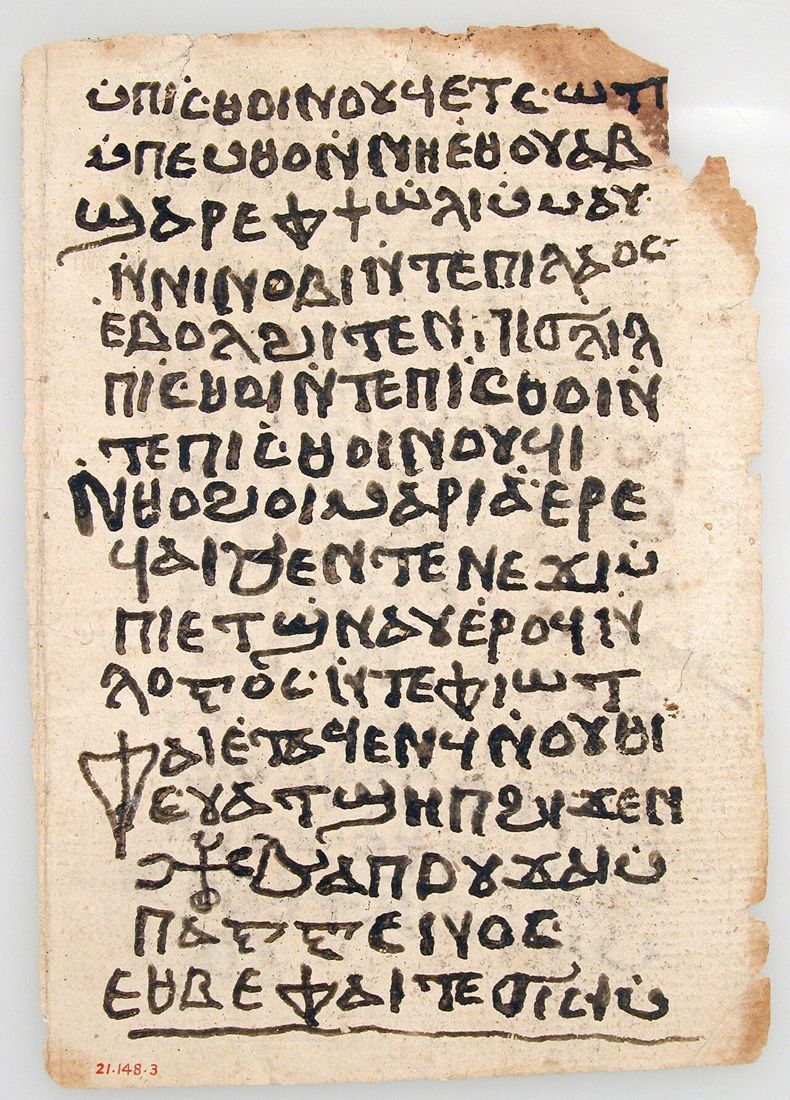
From the 3rd century CE Egyptian Christians wrote their language in the Greek alphabet, supplemented with six or seven letters taken from Demotic for sounds Greek lacked. For the first time, vowels were written in Egyptian texts.
That makes Coptic essential for Egyptology: it reveals how Egyptian words were pronounced, and Champollion, who knew Coptic, recognised in it the language hidden behind the hieroglyphs.
Coptic letters from Demotic
- šshai
- ffai
- khkhai (Bohairic dialect)
- hhori
- jjanja
- chchima
- titi
The other Coptic letters are Greek. Pronunciation varied by dialect.
Decipherment: the Rosetta Stone
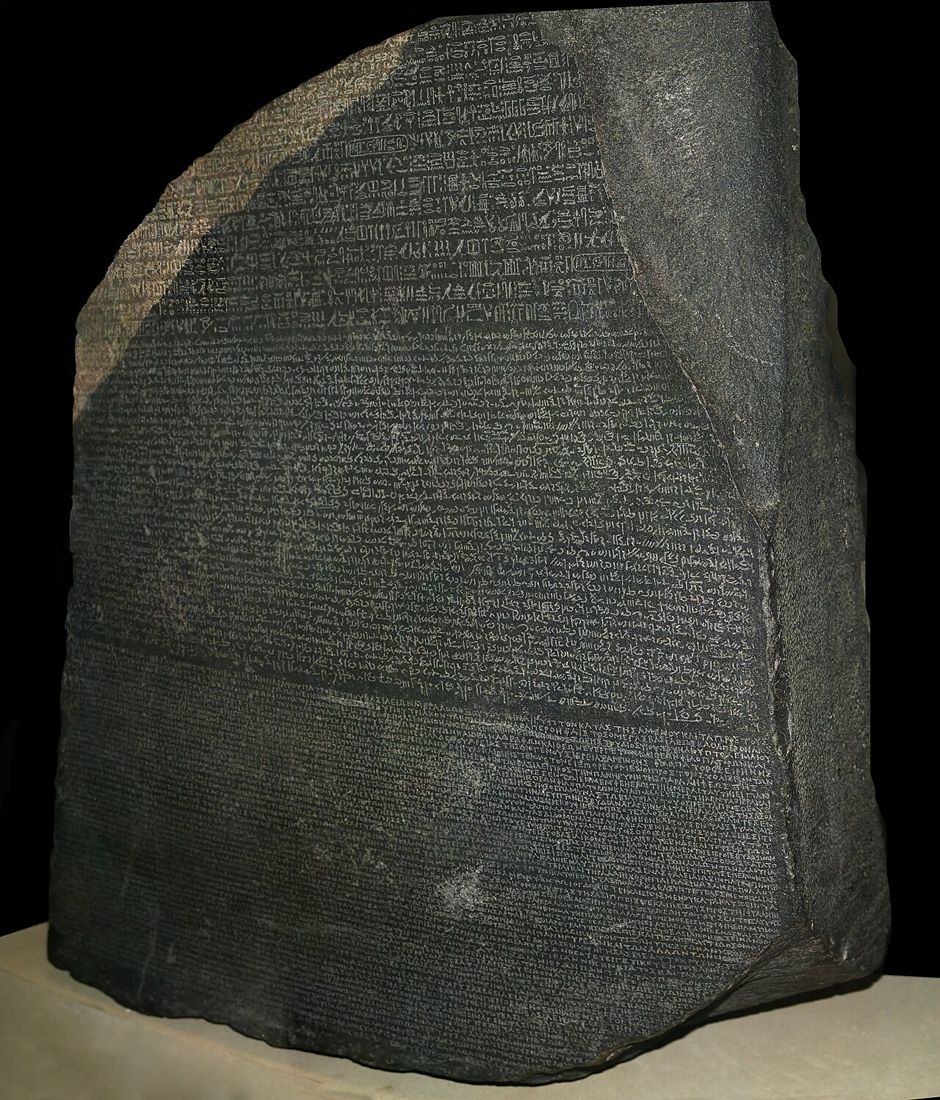
In July 1799 French soldiers of Napoleon's expedition found near the town of Rashid (Rosetta) in the Nile delta a stone inscribed in three scripts: hieroglyphs, Demotic and Greek. It is a decree issued by priests in 196 BCE in honour of King Ptolemy V. The Greek text could be read and so offered a key to the two Egyptian ones. After the French defeat the stone passed to the British, and since 1802 it has been in the British Museum.
Between 1814 and 1819 the British polymath Thomas Young showed that the cartouches contained the name of Ptolemy and identified the values of some signs. The decisive step, however, was taken by Jean-François Champollion.
Champollion: “I've got it!”
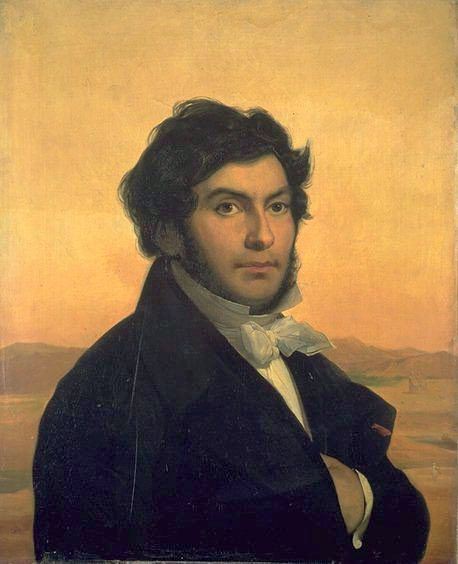
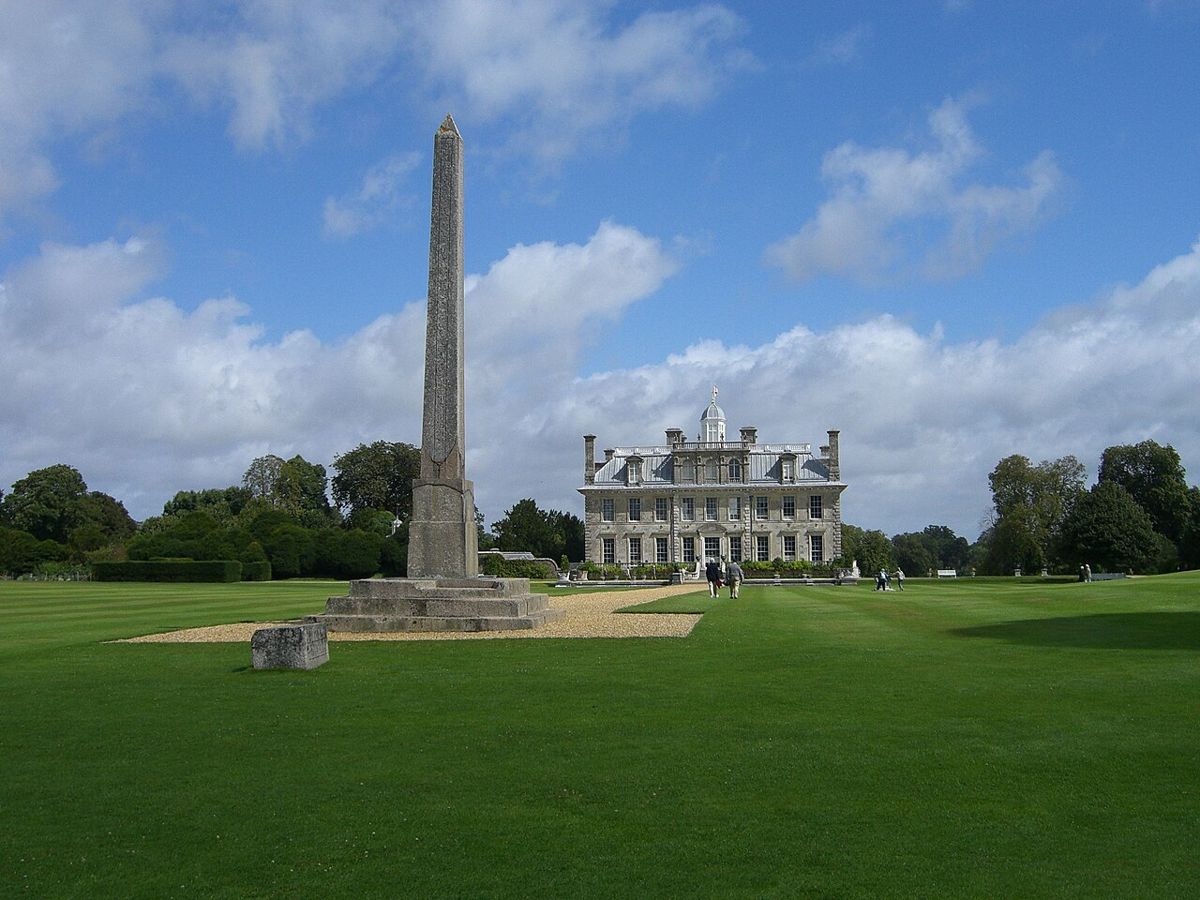
Champollion compared the name of Ptolemy on the Rosetta Stone with the names of Ptolemy and Cleopatra on the Philae obelisk and obtained the values of a number of signs. In September 1822 he read the Egyptian names Ramesses and Thutmose in copies of inscriptions from Abu Simbel – and understood that phonetic signs were not used only for foreign names. According to a well-known story he ran to his brother crying “Je tiens l'affaire!” (“I've got it!”) and fainted.
He announced his discovery on 27 September 1822 in the Letter to Monsieur Dacier, and in 1824 published a full description of the script: hieroglyphs combine phonetic signs with signs for words. His knowledge of Coptic helped him recognise what individual words meant.
Words that come from Egyptian
Some Egyptian words reached English by way of Greek, Hebrew, Coptic or Arabic:
| Egyptian | meaning | in English |
|---|---|---|
| pr-ꜥꜣ | great house (palace) | pharaoh |
| hbnj | ebony wood | ebony |
| wḥꜣt | oasis | oasis |
| qmj.t | resin | gum |
| hbj | ibis | ibis |
| ḏbt | brick | adobe |
From hieroglyphs to the alphabet
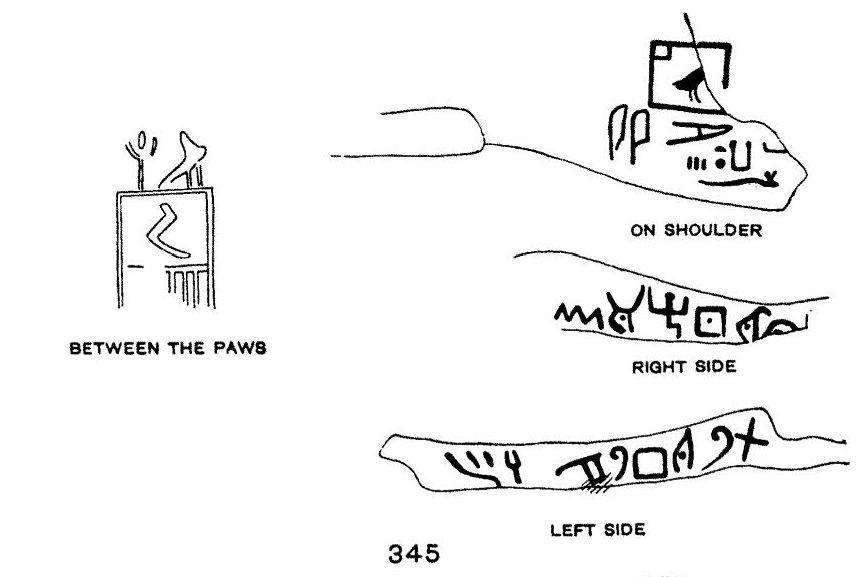
At Serabit el-Khadim in Sinai, where the Egyptians mined turquoise, Hilda and Flinders Petrie discovered short inscriptions in an unknown script in 1904–1905. In 1916 Alan Gardiner showed that they record a Semitic language in signs imitating hieroglyphs: each sign stood for the first sound of its name. The drawing of an ox head (ʾalp, “ox”) stood for ʾ, a house (bayt) for b, a ripple of water (mayim) for m.
From this Proto-Sinaitic script and its Canaanite counterparts developed the Phoenician alphabet, and from it the Greek and Latin alphabets and many others. The letter A is thus a distant descendant of an ox head, turned upside down.
Czech Egyptology
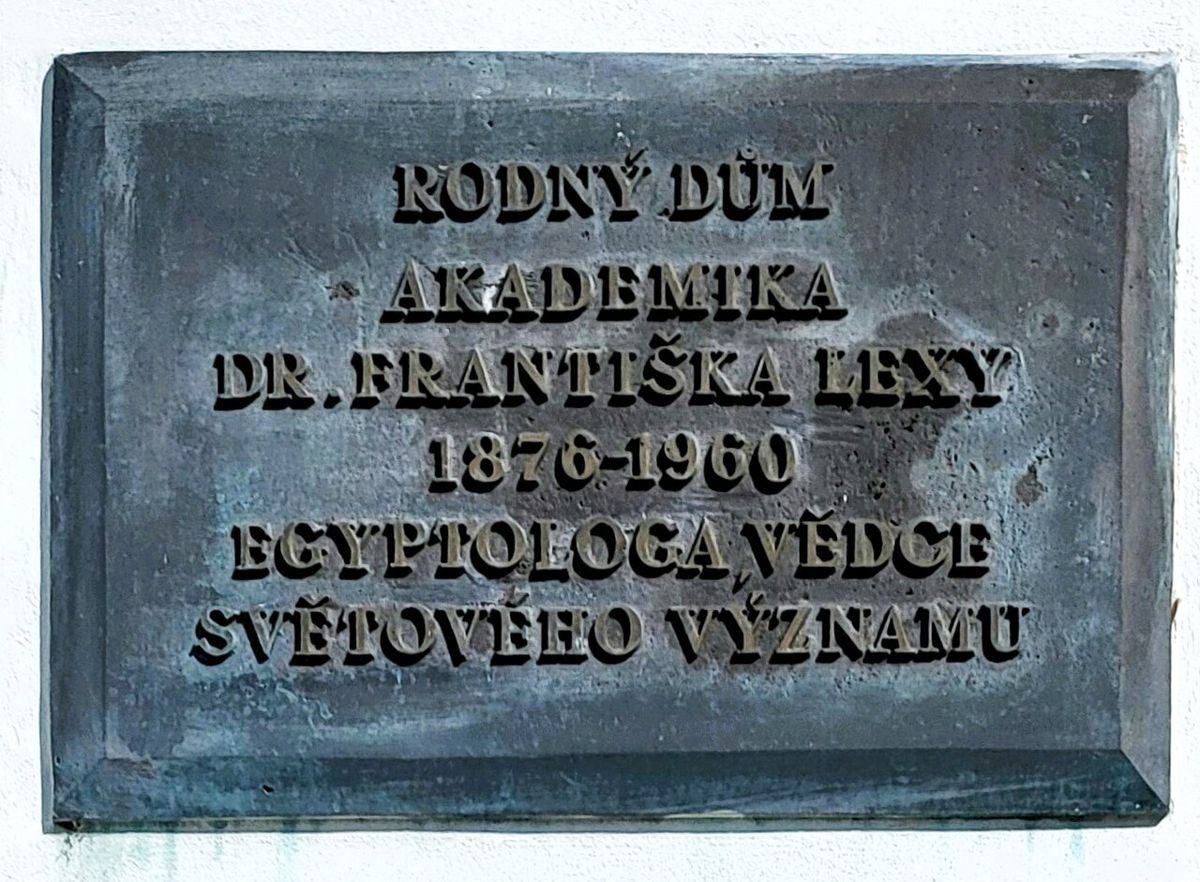
The founder of Czech Egyptology is František Lexa (1876–1960), born in Pardubice, professor at Charles University in Prague and author of a comprehensive grammar of Demotic. The Czechoslovak Institute of Egyptology was founded in 1958; after Lexa’s death it was headed from 1960 by his pupil Zbyněk Žába.
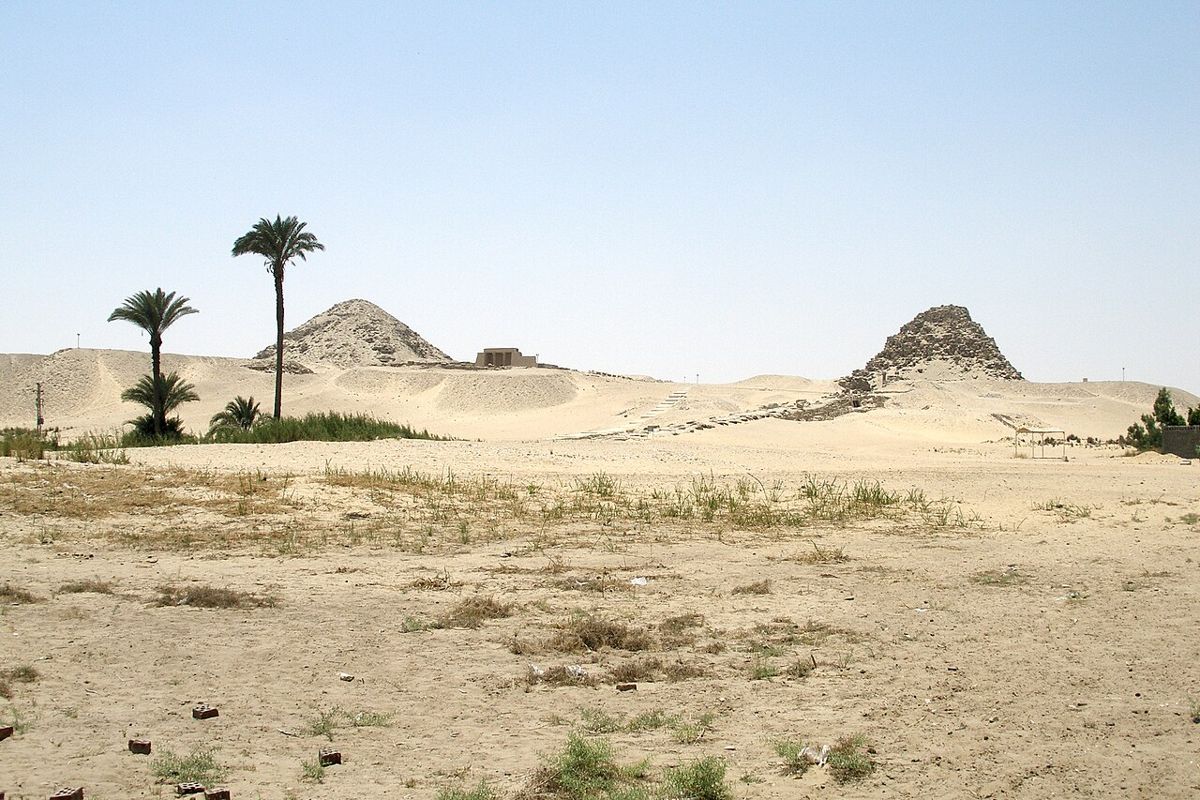
In the 1960s Czech and Slovak Egyptologists took part in the rescue of the monuments of Nubia before their flooding by the Aswan High Dam, and since 1960 they have been excavating the pyramid field of Abusir south of Cairo. Under Miroslav Verner and his successors they discovered, among other things, the intact tomb of the priest Iufaa and the pyramid of Queen Khentkaus II.
Czech Egyptologists and Abusir
Timeline
- c. 3300–3200 BCELabels from tomb U-j at Abydos – the earliest Egyptian writing.
- c. 3100 BCEUnification of Egypt; the Narmer Palette.
- 26th c. BCEThe pyramids of Giza (Old Kingdom).
- c. 2000–1700 BCEMiddle Kingdom; classical literature, the Story of Sinuhe.
- c. 1550–1070 BCENew Kingdom; Ramesses II reigns in the 13th century.
- 7th c. BCEDemotic script comes into use.
- 332 BCEAlexander the Great conquers Egypt; after his death the Ptolemies rule.
- 196 BCEThe priestly decree on the Rosetta Stone.
- 30 BCEDeath of Cleopatra VII; Egypt becomes a Roman province.
- 394 CELast dated hieroglyphic inscription (Philae).
- 452 CELast dated Demotic inscription (Philae).
- c. 17th c.Coptic dies out as a spoken language.
- 1799Discovery of the Rosetta Stone.
- 1822Champollion announces the decipherment of hieroglyphs.
- 1958The Czechoslovak Institute of Egyptology is founded.
- 1960Czech excavations at Abusir begin.
Egyptian on the globe
Tap to show the language on the globe:
Sources and further reading
- James P. Allen: Middle Egyptian. An Introduction to the Language and Culture of Hieroglyphs. Cambridge University Press, 3rd ed. 2014.
- Antonio Loprieno: Ancient Egyptian. A Linguistic Introduction. Cambridge University Press 1995.
- Alan Gardiner: Egyptian Grammar. Griffith Institute, 3rd ed. 1957.
- Richard Parkinson: Cracking Codes. The Rosetta Stone and Decipherment. British Museum Press 1999.
- Czech Institute of Egyptology, Faculty of Arts, Charles University.
- Glottolog 5 (languages and their classification).