Languages of antiquity
Armenians and Georgians
The Caucasus · from Mashtots's alphabet to the three Georgian scripts
At the start of the 5th century two Christian peoples of the South Caucasus acquired scripts of their own. The Armenian alphabet, devised by tradition around 405 by the monk Mesrop Mashtots, and the Georgian script, whose origin is still disputed, have been in continuous use for more than fifteen hundred years. The languages they write are unrelated: Armenian forms a branch of its own within the Indo-European family, while Georgian belongs to the small Kartvelian family, for which no relationship to any other language has been demonstrated.
Between Rome and Persia
Armenia lay on the Armenian Highlands between Asia Minor, Mesopotamia and the Caucasus, in lands once ruled by Urartu. From the early 2nd century BCE it was governed by a native dynasty, the Artaxiads, and later by a branch of the Parthian Arsacids. For centuries the country stood between two great powers, Rome and the Parthian, later the Sasanian, Empire. In 387 the two empires partitioned it; about four-fifths went to Persia, and the Armenian kingdom there was abolished in 428.
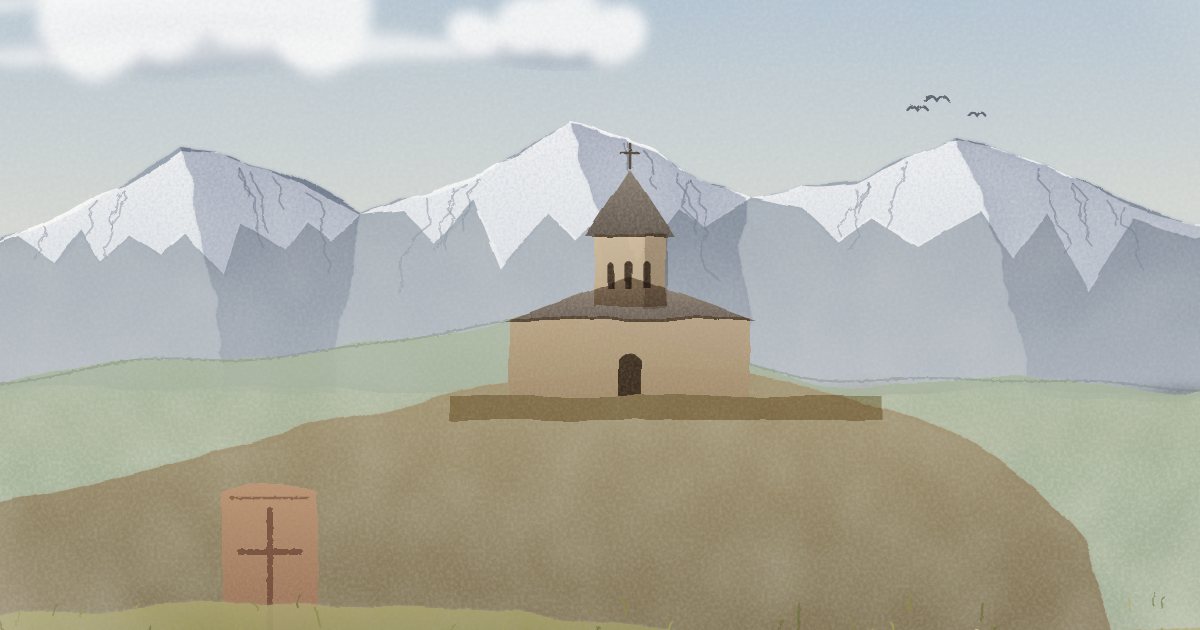
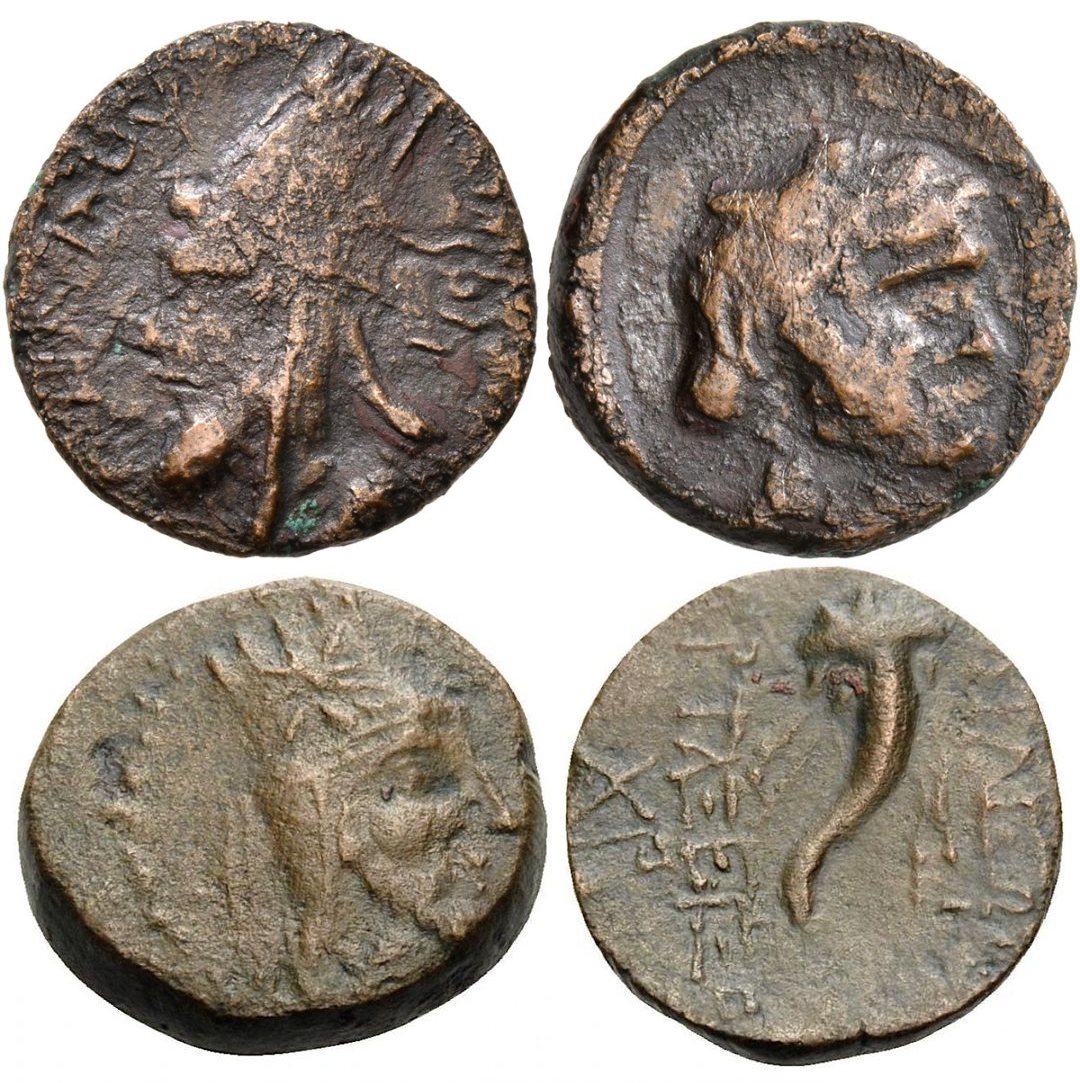
North of Armenia lay the Georgian kingdoms: in the east Kartli, which Greek and Roman writers called Iberia, with its capital at Mtskheta; in the west, on the Black Sea, Colchis. Both countries became Christian in the 4th century: Armenia by tradition in 301 under King Tiridates III (some scholars prefer a later date), Kartli under King Mirian III in 326 or 337. Before that, both wrote in foreign languages and scripts, mainly Aramaic and Greek: the bilingual Greek-Aramaic gravestone from Armazi near Mtskheta dates from the first centuries CE, and Armenian kings struck coins with Aramaic and Greek legends.
Two unrelated languages
Armenian forms a branch of its own within the Indo-European family, like Greek or Albanian. Its relationship to the other Indo-European languages is masked by sound changes: Armenian hayr “father” corresponds to Latin pater because initial p became h in Armenian. According to Gevorg Jahukyan, only about 1,500 words survive from Proto-Indo-European; many others were borrowed from Iranian languages, above all Parthian. For this reason Armenian was long taken for an Iranian language, until in 1875 Heinrich Hübschmann used the comparative method to separate the Iranian loans from the inherited vocabulary. A widely held hypothesis (Holger Pedersen, Antoine Meillet) sees Greek as its closest relative; the question remains open.
Georgian belongs to the Kartvelian family together with Mingrelian, Laz and Svan. No relationship to any other family, including the other Caucasian families, has been demonstrated. Georgian is agglutinative: a verb can mark both subject and object and may contain up to eight morphemes; the subject of a transitive verb in the past tense stands in the ergative case; there is no grammatical gender and no article; and numbers from 20 to 99 are counted in twenties. In Georgian mama means “father” and deda “mother”; the resemblance to nursery words elsewhere is coincidental.
Relatives and strangers
Armenian words have counterparts in other Indo-European languages, though sound changes often disguise them. Georgian words of the same meaning are unrelated:
| Armenian | Indo-European counterparts | Georgian |
|---|---|---|
| մայր mayr “mother” | Latin māter, Greek mḗtēr, English mother | დედა deda |
| հայր hayr “father” | Latin pater, Greek patḗr, English father | მამა mama |
| եղբայր ełbayr “brother” | Latin frāter, English brother | ძმა ʒma |
| դուստր dustr “daughter” | Greek thygátēr, English daughter | ქალიშვილი kališvili |
| կին kin “woman” | Greek gynḗ, English queen | ქალი kali |
| անուն anun “name” | Latin nōmen, English name | სახელი saxeli |
| նոր nor “new” | Latin novus, English new | ახალი axali |
| տուն tun “house” | Latin domus, Greek dómos | სახლი saxli |
| դուռ duṙ “door” | Greek thýra, English door | კარი ḳari |
| սիրտ sirt “heart” | Latin cor, English heart | გული guli |
| մուկ muk “mouse” | Latin mūs, English mouse | თაგვი tagvi |
| ութ utʻ “eight” | Latin octō, English eight | რვა rva |
Mashtots and the Armenian alphabet
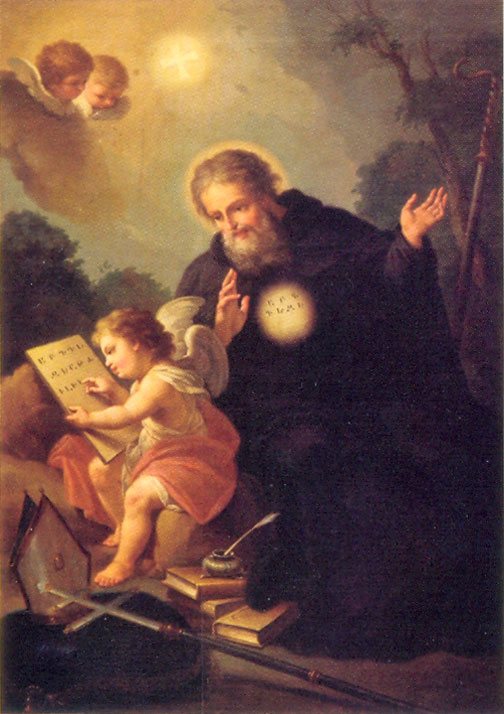
Armenian sources agree that the Armenian alphabet was created by Mesrop Mashtots (c. 361–440). The main source is his biography, written in the 440s by his pupil Koryun. Mashtots knew Greek, Persian and Syriac and served at the royal court in Vagharshapat before becoming a monk and preacher. At the time, Armenian churches read from Greek and Syriac books, and the text had to be interpreted.
With the support of Catholicos Sahak Part'ev and King Vramshapuh he set out to find a script for Armenian. According to Koryun he first tried letters kept by a Syrian bishop named Daniel (the so-called Danielian letters), but they proved inadequate. He then travelled to Edessa and Samosata in northern Mesopotamia; there he completed an alphabet of 36 letters, and a Greek scribe named Rufinus gave the letters their final form. By tradition it dates to 405; the Armenian linguist Hrachia Acharian arrived at 404.
Mashtots went on to found schools in which the young learned the new script, and sent pupils to Edessa, Constantinople, Alexandria and other centres of learning to obtain Greek manuscripts. The Bible was first translated from Syriac and then again from the Greek Septuagint; this version, completed around 434, is still used by the Armenian Church. Mashtots died in 440 and is buried at Oshakan. The Armenian Church venerates him as a saint and, together with others, celebrates the Feast of the Holy Translators.
Čanačʻel zimastutʻiwn ew zxrat, imanal zbans hančaroy.
- čanačʻel
- to know (infinitive)
- z-imastutʻiwn
- wisdom; the preposition z- marks the object
- ew
- and
- z-xrat
- instruction, discipline
- imanal
- to understand
- z-bans
- words (ban “word”, -s accusative plural)
- hančaroy
- of understanding (hančar, -oy genitive)
To know wisdom and instruction, to perceive the words of understanding.Proverbs 1:2 in Classical Armenian, by tradition the first sentence written in Mashtots's script. The translation follows the Greek Septuagint almost word for word: γνῶναι σοφίαν καὶ παιδείαν, νοῆσαί τε λόγους φρονήσεως. The sound u is written with the pair ու (o + w), just as Greek writes ου. Etymologists relate the verb čanačʻel to English know, Latin (g)nōscere and Greek gignṓskō.
Letters on a Greek model
The Armenian script is a true alphabet: unlike the Syriac or Pahlavi scripts, it has separate letters for all vowels, as Greek does. On the prevailing view Greek was also its model. The order of the letters broadly follows the Greek alphabet, with letters for sounds that Greek lacks (such as ž, x, c or č) inserted among them, and the shapes of some letters, such as թ, փ and բ, recall Greek θ, φ and β. Other scholars have also looked for models in the Pahlavi or Syriac scripts; exactly how Mashtots designed the letter shapes is unknown.
The letters also served as numerals, as in Greek: the first nine stand for units, the next nine for tens, then hundreds and thousands up to Ք = 9000. In the Middle Ages two letters were added, Օ for o and Ֆ for f, bringing the alphabet to 38 letters. The oldest hand is the erkatagir majuscule (“iron letters”); from the 10th century it gave rise to the rounder bolorgir, the basis of printed type from the 16th century, and to other cursive hands. Soviet Armenia reformed the spelling in the 1920s. Armenians abroad, most of whom speak Western Armenian, and Armenians in Iran continue to use the traditional orthography.
The Armenian alphabet
- aayb · 1
- bben · 2
- ggim · 3
- dda · 4
- eečʻ · 5
- zza · 6
- ēē · 7
- əətʻ · 8; reduced vowel (schwa)
- tʻtʻo · 9; aspirated t
- žžē · 10
- iini · 20
- lliwn · 30
- xxē · 40; as in Scottish loch
- łłat · 90; dark l, today ɣ
- mmen · 200
- nnu · 400
- kʻkʻē · 9000; last of the original 36
- ōō; added in the Middle Ages
- ffē; added in the Middle Ages
HayastanArmenia: hay “Armenian” with the suffix -astan “land”, of Iranian origin
A selection of letters; capital letter on the left, lower case on the right; after the dot, the traditional letter name and its numerical value. Transliteration after Hübschmann and Meillet, with ʻ marking an aspirated consonant. In Unicode (block U+0530–U+058F) the letters have English names such as ARMENIAN CAPITAL LETTER AYB; ղ is called GHAD there, and ն NOW. The characters are rendered in Noto Serif Armenian.
Grabar: the language of translators and scholars
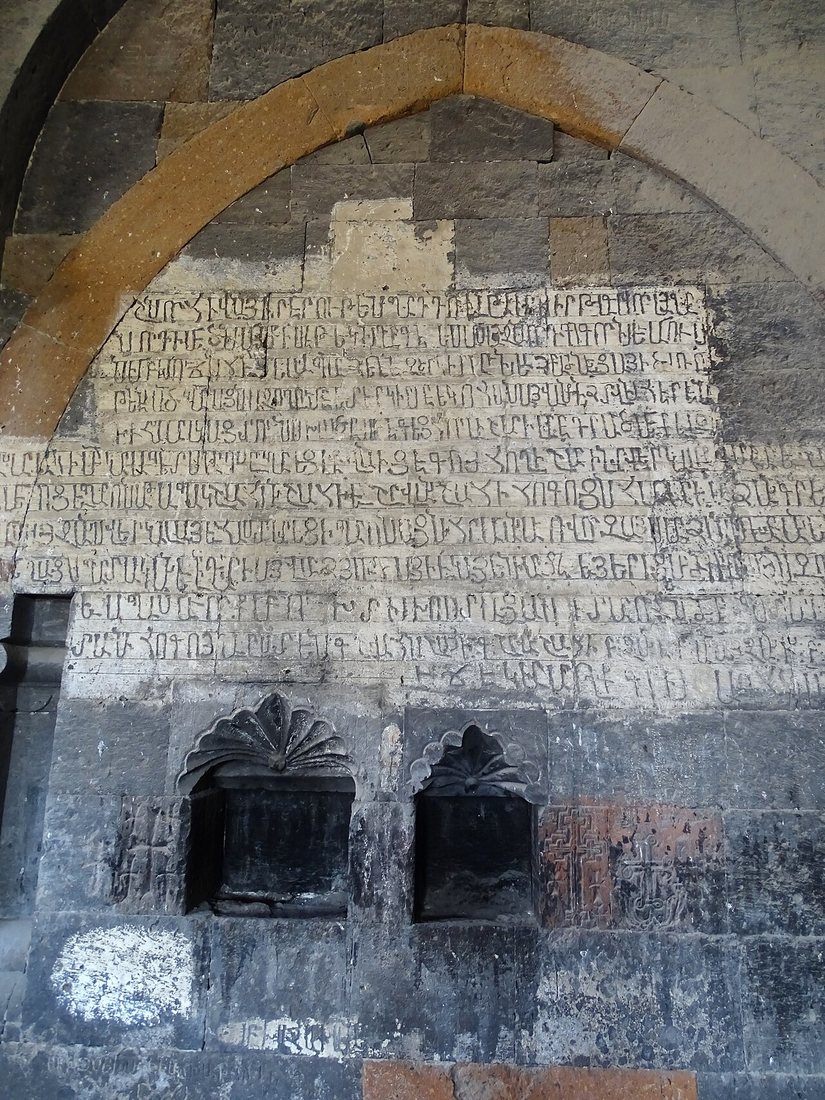
The Armenian of the 5th century is called Grabar, “the literary language”; it is the earliest attested form of Armenian. Mashtots's pupils translated not only the Bible but also the liturgy, the decrees of the church councils and works of the Greek and Syriac Church Fathers. Some works survive only in Armenian: the first part of Eusebius's Chronicle (the Chronography), for instance, of which only fragments remain in Greek, is known complete only from the Armenian translation. An original literature, historiography and philosophy arose as well, and Armenian tradition regards the 5th century as a golden age.
Grabar remained the literary language until the 19th century; even the first Armenian periodical, Azdarar, published from 1794 in Madras in India, appeared in Grabar. Meanwhile spoken Armenian had changed, and in the 19th century two new literary standards emerged: Eastern Armenian, centred on Tbilisi and later Yerevan, and Western Armenian in Istanbul. Grabar remains the liturgical language of the Armenian Church, and for comparative linguistics it is an important witness in reconstructing Proto-Indo-European.
The Matenadaran
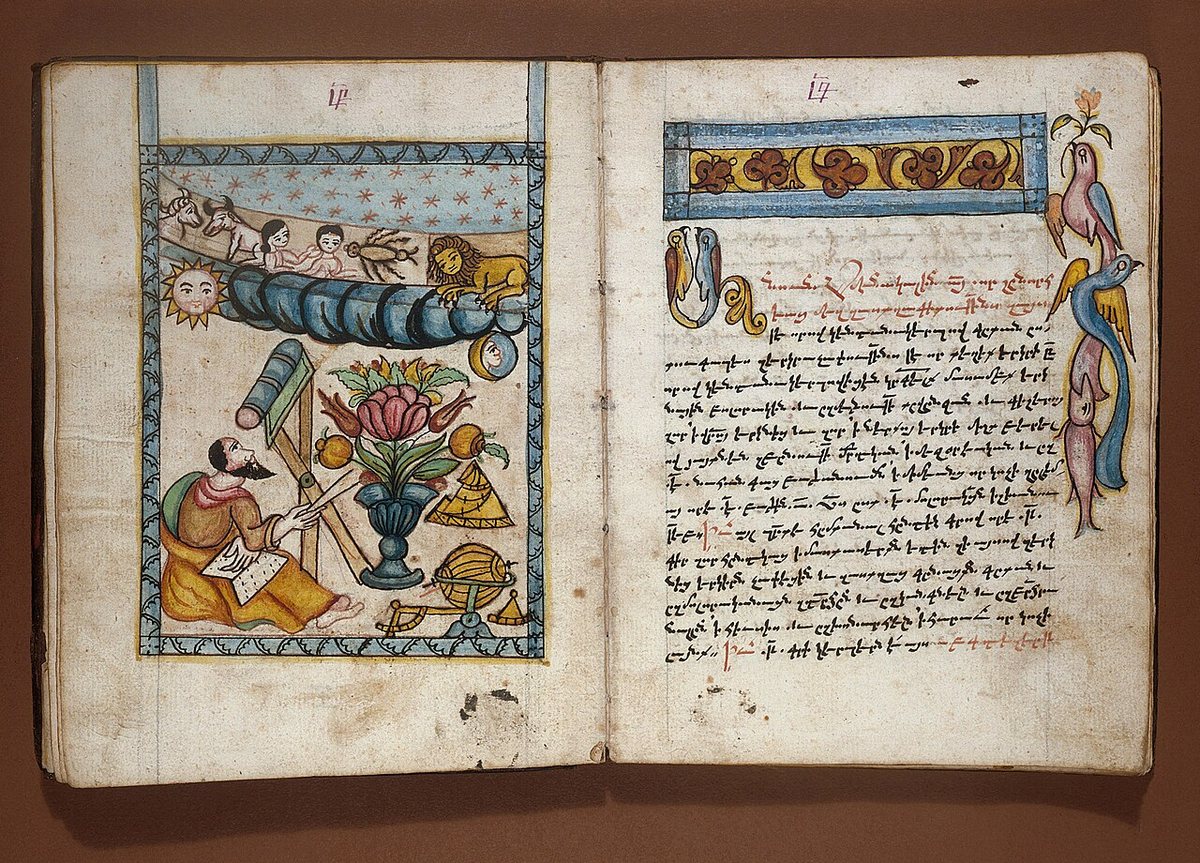
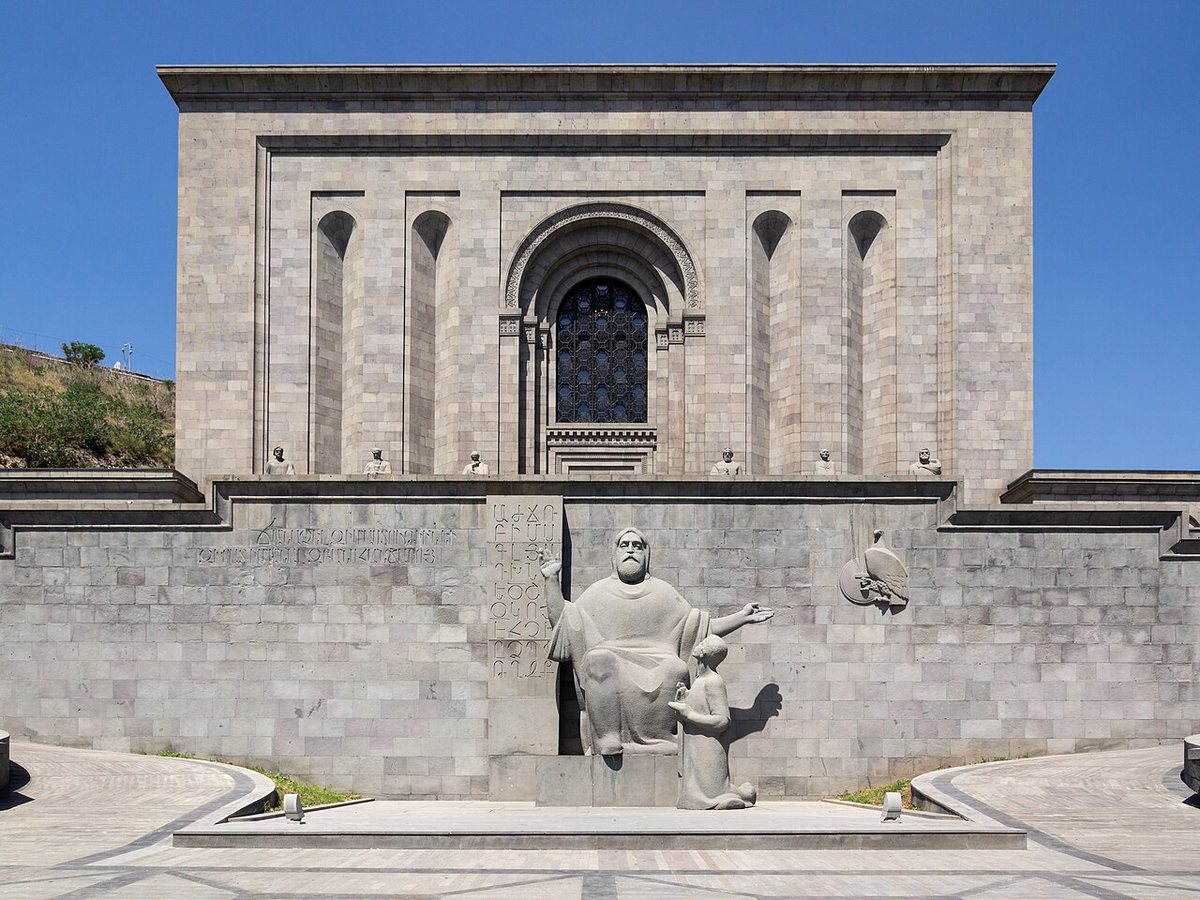
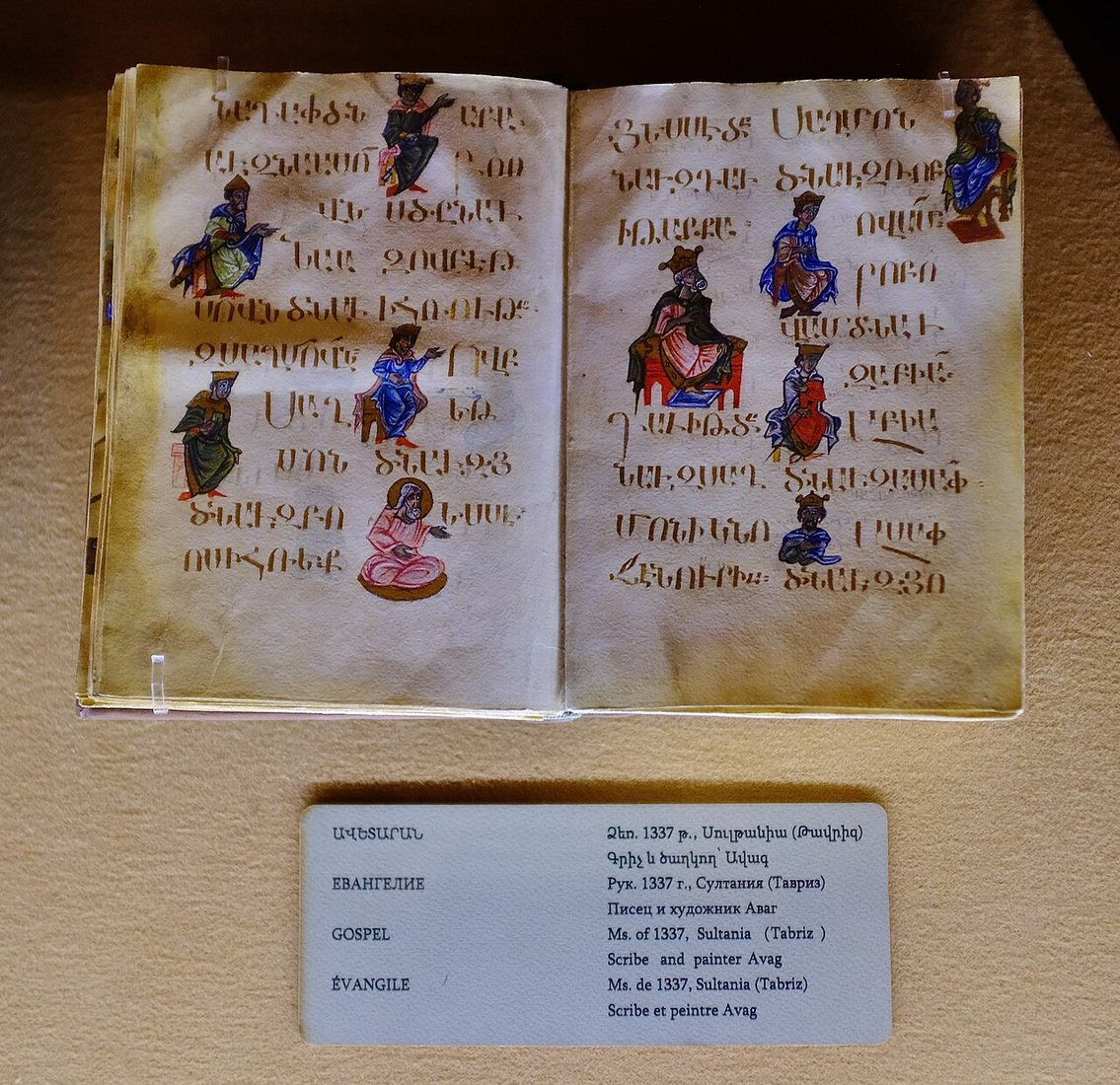
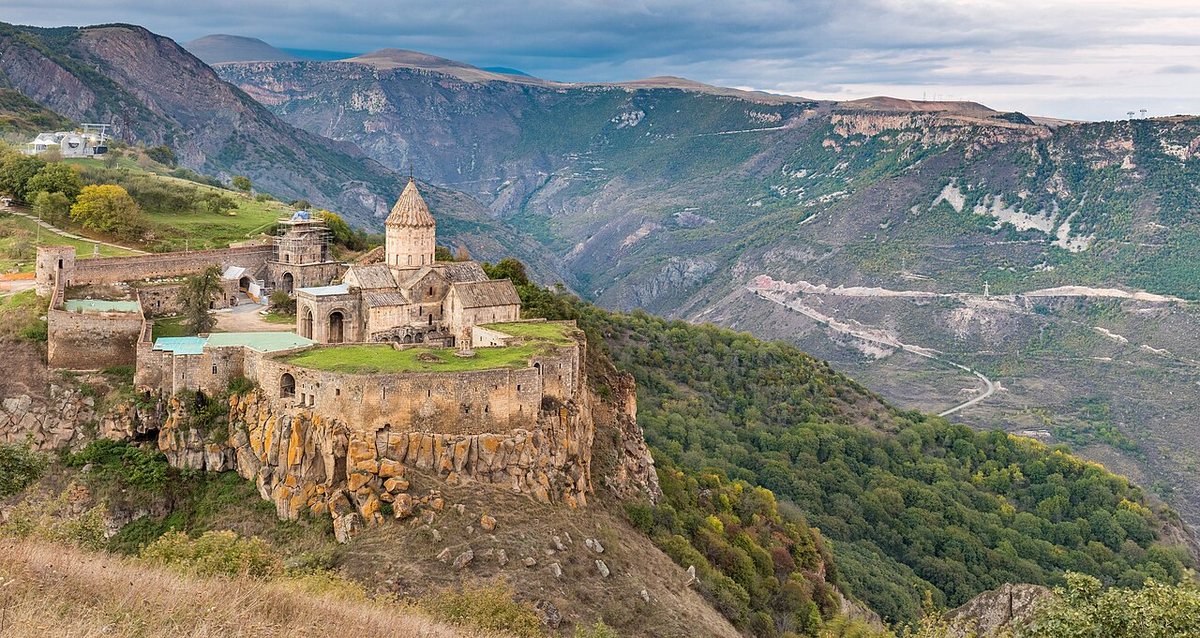
An exceptionally large number of Armenian manuscripts survive, although many were lost in wars: according to the medieval historian Stepanos Orbelian, the Seljuks burned more than 10,000 manuscripts at the fortress of Baghaberd in 1170. They were kept in the libraries of the great monasteries, such as Haghpat, Sanahin or Tatev. In Armenian such a library is called a matenadaran, “repository of books”; both parts of the word are of Middle Persian origin.
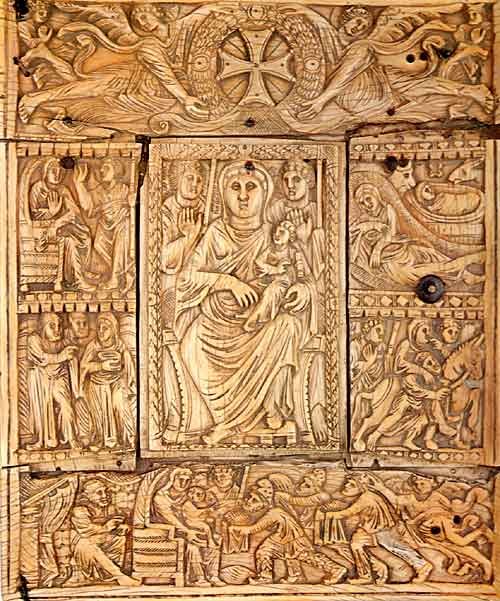
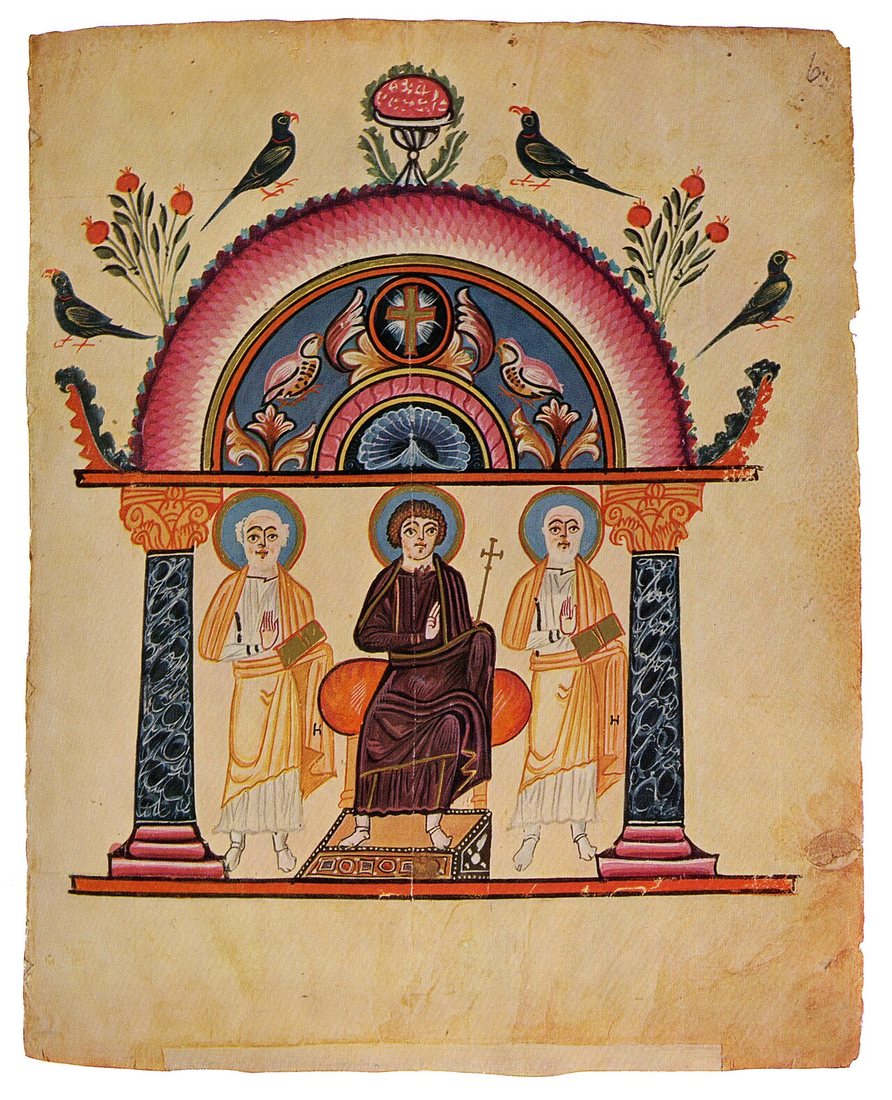
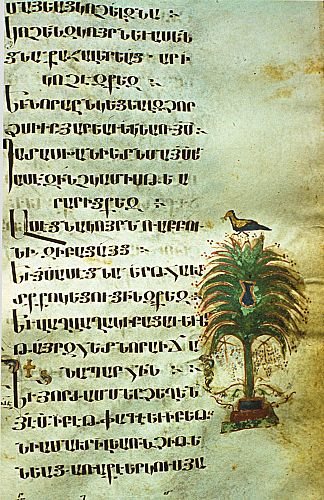
The largest collection today is held by the Matenadaran in Yerevan, the Mesrop Mashtots Institute of Ancient Manuscripts. Its core is the library of the Catholicosate at Etchmiadzin, nationalised in 1920; the institute was founded as such in 1959 and has borne Mashtots's name since 1962. It holds some 23,000 manuscripts and fragments, in Armenian and other languages, and since 1997 its collection has been on UNESCO's Memory of the World Register. The Vehamor Gospel, probably of the 7th century, is regarded as the oldest complete Armenian book; the Lazarian Gospel of 887 (named after the Lazarev Institute in Moscow) is also among the oldest volumes in the collection. The Etchmiadzin Gospels of 989 are bound in ivory covers of the 6th century.
The Etchmiadzin Gospels
The beginnings of Georgian writing
Georgian writing is attested from the 5th century. Most scholars link its creation to the Christianisation of Kartli, so it most likely arose between the conversion of King Mirian III and the earliest surviving inscriptions. From the outset it served for translating the Bible and church texts, made by monks both in Georgia and in Palestine. Fragmentary inscriptions from Nekresi in Kakheti, which Levan Chilashvili dated in the 1980s to the 2nd or 1st century BCE, have not been accepted as that old by other scholars.
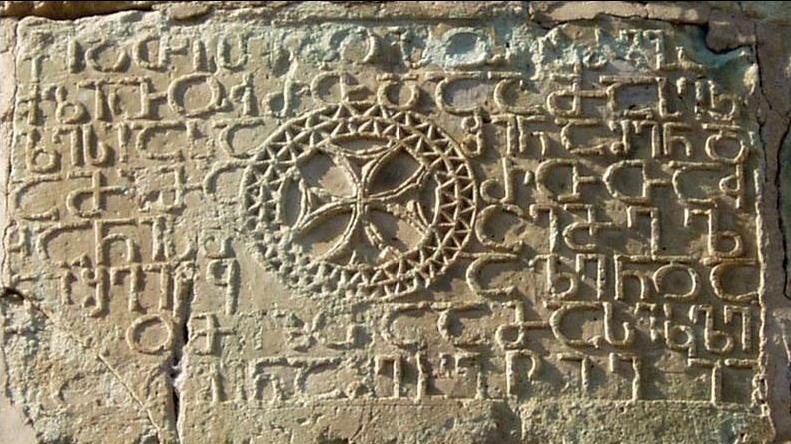
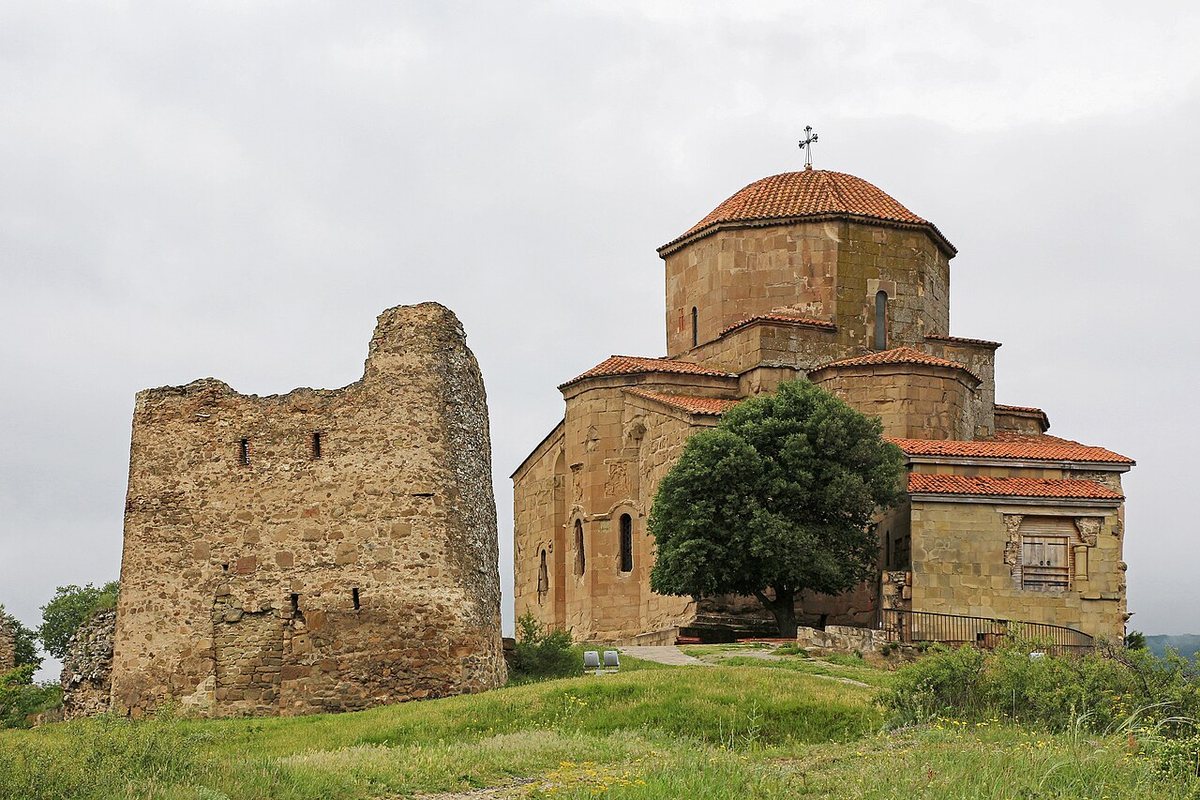
The oldest surviving Georgian inscriptions come not from Georgia but from the Holy Land. In 1952 the Italian archaeologist Virgilio Canio Corbo excavated a Georgian monastery at Bir el Qutt, about 2 km north of Bethlehem, with a mosaic floor bearing four inscriptions in Asomtavruli. Two of them are conventionally dated to around 430; one, on the usual reading, names Peter the Iberian, a Georgian prince and later monk, still by his secular name Maruan. The dating rests on the people named in the inscriptions and is not entirely certain. The surviving inscriptions are kept at the Terra Sancta Museum (Studium Biblicum Franciscanum) in Jerusalem; the one bearing Maruan's name has been lost. In Georgia itself the oldest inscriptions are in Bolnisi Sioni Cathedral south-west of Tbilisi: according to one of them, building began in the 20th year of the Persian king Peroz and was completed 15 years later, that is, in 493/494.
Three scripts, one alphabet
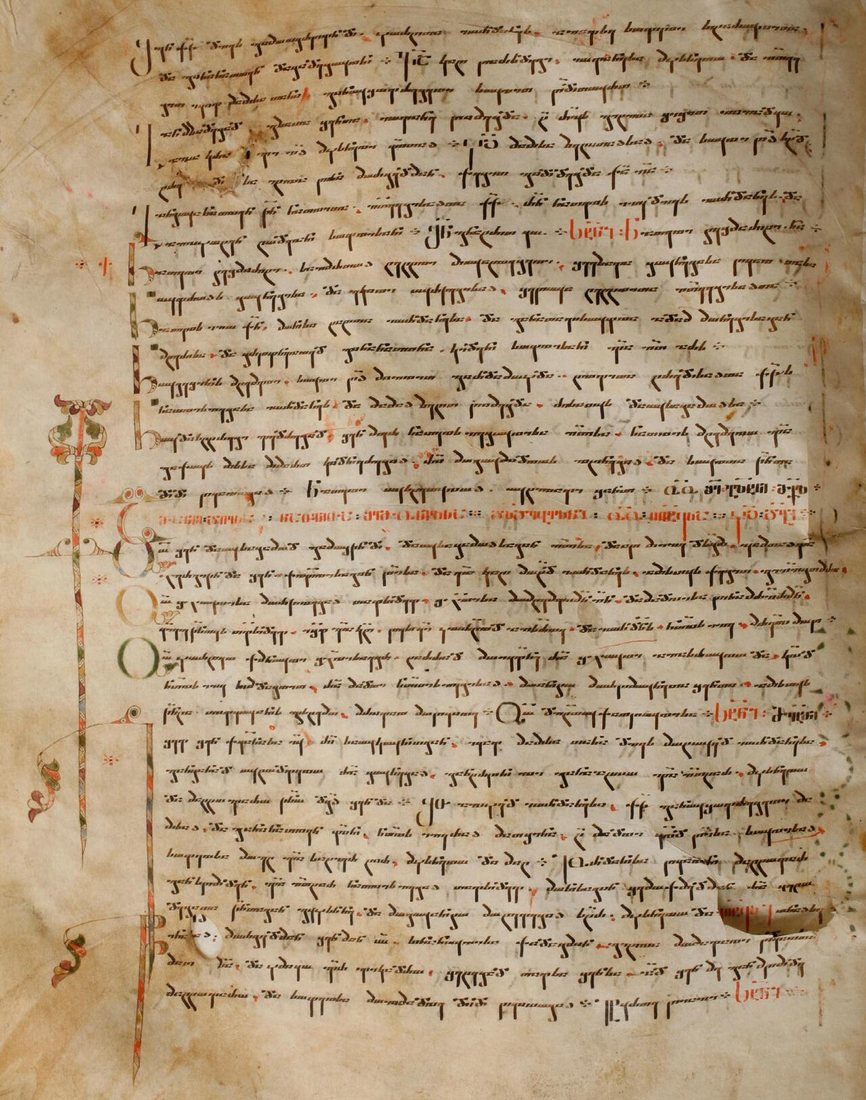
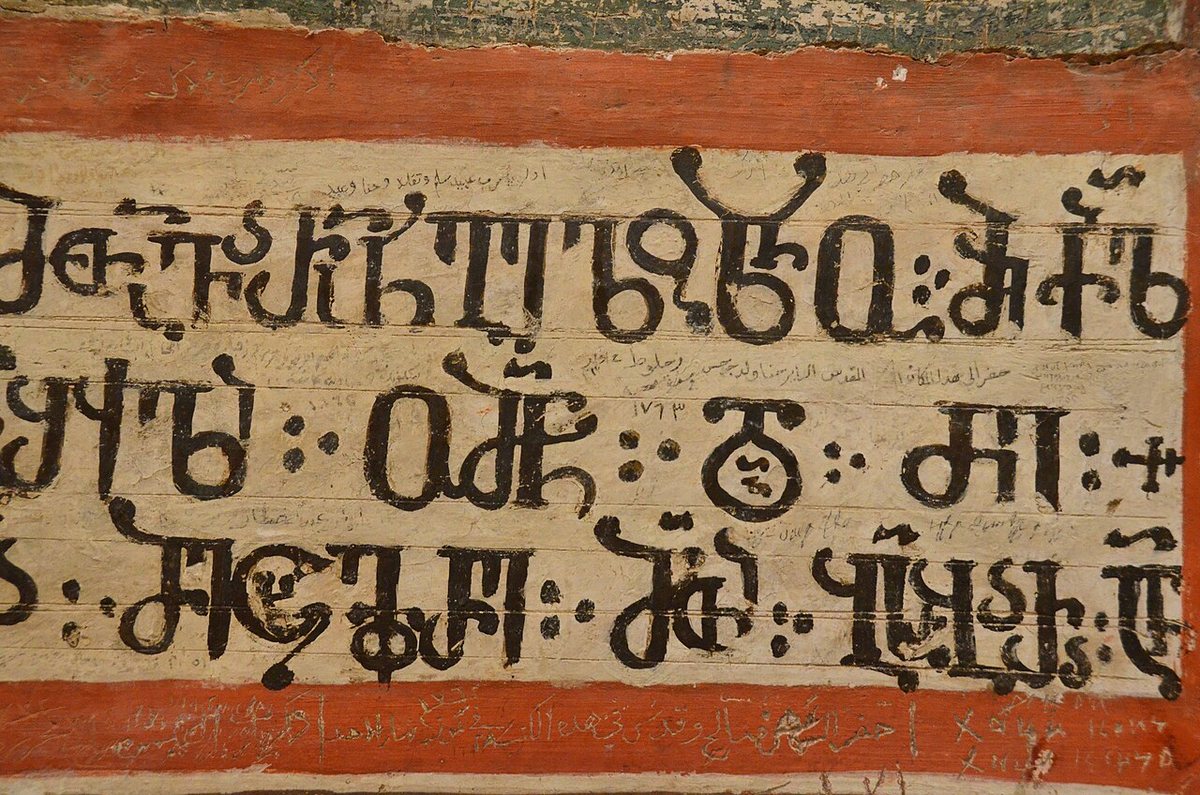
Over its history Georgian has been written in three scripts, which share the same letter names and the same order and are written from left to right. The oldest is Asomtavruli (“capital letters”, also Mrgvlovani, “rounded”), from the 5th century: letters of equal height made of curves and right angles. In the 9th century it developed into the slanted, more angular Nuskhuri; the oldest inscription in this script, from 835, is in the church of Ateni Sioni, and the oldest manuscripts date from 864. Church manuscripts written in Nuskhuri with Asomtavruli capitals in titles and at the start of paragraphs are called Khutsuri, “clerical script”.
The third script, Mkhedruli (“of horsemen, military”), appears in the 10th century; its oldest inscription, from 982, is also at Ateni Sioni. At first it served secular purposes, for example in the royal charters of Bagrat IV in the 11th century, and in the 19th century, with printing, it became the only script in everyday use for Georgian. The alphabet originally had 38 letters; the Society for the Spreading of Literacy among Georgians, founded in 1879 by Ilia Chavchavadze, dropped five redundant ones, leaving the 33 in use today. Mkhedruli has no distinction of upper and lower case; the capital forms called Mtavruli are used only in all-capitals text and were added to Unicode in 2018. In 2016 UNESCO inscribed the living culture of the three Georgian scripts on its list of Intangible Cultural Heritage.
The order and numerical values of the letters match the Greek alphabet: vin, in sixth place, has the value 6, like Greek digamma; he, in eighth place, corresponds to Greek eta; and hie, with the value 60, to Greek xi. Letters for sounds that Greek lacks, such as š, č, c, x or ǯ, stand mostly at the end. Asomtavruli wrote the sound u with the pair ႭჃ (o + w), like Greek ου; in Nuskhuri the pair became a single letter.
The Georgian alphabet in three scripts
- aan · 1
- bban · 2
- ggan · 3
- ddon · 4
- een · 5
- vvin · 6; in the place of Greek digamma
- zzen · 7
- ēhe · 8; in the place of Greek eta, now obsolete
- ttan · 9; aspirated t, like Greek θ
- iin · 10
- ḳḳan · 20; ejective k
- llas · 30
- mman · 40
- nnar · 50
- ṭṭar · 300; ejective t
- q̇q̇ar · 800; ejective q
- ššin · 900
- ǯǯan · 8000; the only Asomtavruli letter with acute angles
- hhae · 9000
kartuli“Georgian” in Asomtavruli (with u written as the pair ႭჃ) and in Mkhedruli; compare საქართველო Sakartvelo “Georgia”, literally “land of the Kartvelians”
A selection of letters; each row shows Asomtavruli, Nuskhuri and Mkhedruli; after the dot, the letter name and its numerical value. Scholarly transliteration: ḳ, ṭ and q̇ are ejective consonants pronounced with a glottal catch, ʒ is dz and ǯ is j. Unicode distinguishes Asomtavruli (GEORGIAN CAPITAL LETTER AN, U+10A0), Nuskhuri (GEORGIAN SMALL LETTER AN, U+2D00) and Mkhedruli (GEORGIAN LETTER AN, U+10D0); some names differ from the Georgian ones, e.g. ჯ is JHAN. The characters are rendered in Noto Serif Georgian.
Old Georgian
The language of the earliest texts is called Old Georgian (5th–11th centuries). In its earliest layer (5th–8th centuries) two varieties are distinguished, Khanmeti and Haemeti, named after a verbal prefix kh- or h- where later Classical Old Georgian has h-, s- or nothing. From this period only about a dozen inscriptions and eight manuscripts with religious texts survive, often palimpsests, that is, parchments whose original text was scraped off and written over. The oldest literary work is the Martyrdom of the Holy Queen Shushanik, attributed to Iakob Tsurtaveli in the 5th century.
From the start, Georgian monks were active abroad as well: in Palestine, in St Catherine's Monastery on Mount Sinai and, from the 10th century, on Mount Athos, where the Georgian monastery of Iviron was founded. Old Georgian remained the language of the Georgian Orthodox Church, and modern Georgians can largely understand it. In the 11th–12th centuries it gave way to Middle Georgian, whose most famous work is Shota Rustaveli's epic The Knight in the Panther's Skin, of the 12th century. The first books printed (partly) in Georgian appeared in 1629.
The third script of the Caucasus
Koryun also credits Mashtots with a script for the Caucasian Albanians, a people living in what is now Azerbaijan and southern Dagestan, who spoke a Northeast Caucasian language. The script was in use from the 5th to the 12th century and was then forgotten. Only in 1937 did the Georgian scholar Ilia Abuladze find its alphabet in a 15th-century Armenian manuscript in the Matenadaran (No. 7117) that compares several alphabets. Short inscriptions from excavations at Mingachevir followed in 1947–1952.
Connected texts were found only in St Catherine's Monastery on Mount Sinai: in 1996 the Georgian scholar Zaza Aleksidze recognised, beneath the Georgian text of some palimpsests, a lower layer written in the Albanian script (announced in 1997). It contains fragments of a lectionary and of the Gospel of John, published in 2008 by Aleksidze, Jost Gippert and others; only thanks to them can the language now largely be read. The alphabet has 52 letters, and according to Gippert its structure depends on the Armenian alphabet much as the Armenian depends on the Greek. Udi, spoken by some 8,000 people, is considered the last descendant of Caucasian Albanian.
Timeline
- c. 189 BCEArtaxias I founds the Artaxiad dynasty in Armenia.
- 301 (by tradition)Armenia adopts Christianity.
- 326 or 337Kartli (Iberia) adopts Christianity under King Mirian III.
- 387Armenia is partitioned between Rome and Persia.
- c. 405Mesrop Mashtots creates the Armenian alphabet.
- c. 430Georgian inscriptions at Bir el Qutt near Bethlehem (dating uncertain).
- c. 434The Armenian translation of the Bible from Greek is completed.
- 440Death of Mesrop Mashtots.
- 493/494Inscriptions at Bolnisi Sioni Cathedral.
- 835 and 982Earliest inscriptions in Nuskhuri and Mkhedruli (Ateni Sioni).
- 989The Etchmiadzin Gospels.
- 1512The first printed Armenian book appears in Venice.
- 1879The Society for the Spreading of Literacy among Georgians is founded; it will drop five redundant letters from the alphabet.
- 1937Ilia Abuladze finds the Caucasian Albanian alphabet in the Matenadaran.
- 1959The Matenadaran is founded in Yerevan.
- 1996Zaza Aleksidze identifies the Caucasian Albanian palimpsests on Sinai (announced 1997, published 2008).
Armenian and Georgian on the globe
Tap a language to show it on the globe:
Sources and further reading
- Robert W. Thomson: An Introduction to Classical Armenian. Caravan Books, 1975.
- Peter T. Daniels, William Bright (eds.): The World's Writing Systems. Oxford University Press, 1996.
- Donald Rayfield: The Literature of Georgia: A History. RoutledgeCurzon, 2nd ed. 2000.
- Jost Gippert, Wolfgang Schulze, Zaza Aleksidze, Jean-Pierre Mahé: The Caucasian Albanian Palimpsests of Mount Sinai. Brepols, 2008.
- Koriwn: The Life of Mashtots. Transl. Bedros Norehad, 1964.
- B. George Hewitt: Georgian: A Structural Reference Grammar. John Benjamins, 1995.
- Glottolog 5 (languages and their classification).