Languages of antiquity
Pages on ancient civilizations focused on language and script: history, sample signs, decipherment, photographs. Two overviews come first: the family tree of scripts and a glossary of terms.
 The family tree of scriptsFrom Egyptian hieroglyphs to the Latin alphabet, Arabic script and DevanagariWriting was invented independently only a few times: in Mesopotamia, in Egypt (perhaps prompted by Mesopotamia), in China and in Mesoamerica. Yet most of the world's alphabets – Latin and Cyrillic, the Hebrew and Arabic scripts and, on the prevailing view, the scripts of India – share a single ancestor: signs that Semitic-speaking people borrowed from Egyptian hieroglyphs in the 2nd millennium BCE.
 Glossary of writingTypes of script, signs, direction of writing and the disciplines that study themAbjad, abugida, determinative, boustrophedon, palimpsest: the pages on ancient scripts cannot do without technical terms. This glossary explains them with examples, mostly taken from the inscriptions and manuscripts described on the pages about individual civilizations.
 Sumer and AkkadMesopotamia · c. 3300–539 BCEIn Mesopotamia, the land between the Euphrates and the Tigris, one of the world's earliest scripts arose around 3300 BCE. For three millennia cuneiform recorded Sumerian, a language with no known relatives, and Semitic Akkadian, the speech of the Babylonians and Assyrians – and it preserved the earliest great epic poem, the Epic of Gilgamesh.
 Ancient EgyptThe kingdom on the Nile · c. 3100–30 BCEEgyptian is one of the languages with the longest recorded history: the first inscriptions date from around 3200 BCE, and its last stage, Coptic, is still heard in the liturgy of Egypt's Christians. The hieroglyphs were deciphered in 1822 by Jean-François Champollion; Czech Egyptologists have been excavating the pyramid field of Abusir for more than sixty years.
 Ancient IndiaThe Indian subcontinent · from the Indus seals to Indian numeralsThe Indian subcontinent produced a system of signs that no one has yet been able to read, and one of the most exact oral traditions in the world: the hymns of the Rigveda were handed down by memory for centuries. Sanskrit, the language of the Vedas and of Pāṇini’s grammar, led European scholars to the discovery of the Indo-European language family. The Brahmi script, in which King Ashoka had his inscriptions carved in the 3rd century BCE, is the ancestor of most scripts of South and South-East Asia, and Brahmi numerals are the ancestors of the digits we write today.
 The HittitesThe Kingdom of Hatti in Anatolia · c. 1650–1180 BCEIn the Bronze Age the Hittites built an empire on the Anatolian plateau that rivalled Egypt, Mitanni and Assyria. Their language, Hittite, is the earliest attested Indo-European language – and it was deciphered by the Czech orientalist Bedřich Hrozný.
 Ancient ChinaThe Yellow River basin · from oracle bones to clerical scriptOf the four writing systems most scholars regard as independent inventions (cuneiform, Egyptian hieroglyphs, Chinese characters and Maya script; for Egyptian hieroglyphs, stimulus from Mesopotamia has also been proposed), only Chinese characters have remained in continuous use, for more than three thousand years. Their oldest substantial records are the questions Shang kings put to cracking bones around 1200 BCE. From them an unbroken path leads through bronze inscriptions, bamboo books and the seal script of the unified empire to the clerical script of the Han dynasty, whose forms already come close to today's characters.
 The PhoeniciansThe Levantine coast and the Mediterranean · c. 1200–146 BCEThe Phoenicians, merchants and seafarers from Tyre, Sidon and Byblos, spread a script of only twenty-two signs across the Mediterranean. From the Phoenician alphabet came the Greek alphabet, and from it the Latin and Cyrillic scripts – and via Aramaic also the Hebrew and Arabic scripts. The letters of this very text have Phoenician ancestors.
 The Hebrews and the ArameansThe Levant · from the Gezer calendar to revived HebrewHebrew and Aramaic are two related Semitic languages in which the Hebrew Bible is written. Hebrew was spoken in the Iron Age kingdoms of Israel and Judah; Aramaic first in the Aramean states of Syria and later in the chanceries of great empires from Egypt to Central Asia. The Aramaic script gave rise to the Hebrew square script as well as to the Syriac and Arabic scripts. Hebrew ceased to be a mother tongue in late antiquity, yet it went on being written, and at the end of the 19th century it became an everyday spoken language once again.
 Ancient GreeceThe Aegean world · from the Mycenaean palaces to the Hellenistic ageOf all living Indo-European languages, Greek has the longest written history: from the Mycenaean tablets of the 15th–14th centuries BCE to the Greek of today. It was first written in the syllabic Linear B script, deciphered in 1952 by the architect Michael Ventris, and from the 8th century BCE in an alphabet taken over from the Phoenicians – the first alphabet to write vowels systematically.
 The CeltsEurope · from the Lepontic inscriptions to oghamIn antiquity Celtic languages were spoken from the Iberian Peninsula to Asia Minor, yet their speakers on the Continent never created a script of their own. They wrote with their neighbours' scripts: Etruscan in the Alps, Iberian in Spain, Greek and Latin in Gaul. What survives is mostly short inscriptions, names on coins, a calendar and a few lead curse tablets; in Ireland a script of strokes, ogham, was devised. The Latin name of Bohemia goes back to the Celtic Boii. Continental Celtic died out, but Irish, Welsh and Breton are still spoken today.
 The EtruscansEtruria · from the first inscriptions around 700 BCE to the language's extinction around the turn of the eraBefore the rise of Rome the Etruscan cities were among the most powerful in Italy, and on the prevailing view it was from them that the Romans took the alphabet that became the Latin script. Etruscan is not an Indo-European language; its only attested relatives are now held to be Raetic in the Alps and Lemnian on the island of Lemnos. Its roughly 13,000 inscriptions can be read aloud, because the script comes from the Greek alphabet, but they are understood only in part. The longest surviving text outlasted the Etruscans as the wrappings of an Egyptian mummy.
 Ancient PersiaIran · from Cyrus the Great to FerdowsiPersian can be followed in writing for two and a half thousand years: from the cuneiform inscriptions of the Persian kings, through the Middle Persian of Sasanian rock reliefs, to the Persian of today. Yet the Achaemenid empire spoke many languages. Its officials wrote in Elamite and Aramaic, and its kings had their inscriptions carved three times over, in Old Persian, Elamite and Babylonian. These trilingual inscriptions became the key to the decipherment of cuneiform.
 Ancient RomeLatium and the Roman Empire · from the first inscriptions to the Romance languagesLatin began as the speech of a small district around Rome. With Roman power it spread across Italy and the western half of the empire, became the language of law, the army and later of the Church and of scholars, and its spoken form gave rise to French, Spanish, Italian, Portuguese, Romanian and the other Romance languages. The alphabet the Romans took over from the Etruscans is now used for more than three thousand languages.
 Armenians and GeorgiansThe Caucasus · from Mashtots's alphabet to the three Georgian scriptsAt the start of the 5th century two Christian peoples of the South Caucasus acquired scripts of their own. The Armenian alphabet, devised by tradition around 405 by the monk Mesrop Mashtots, and the Georgian script, whose origin is still disputed, have been in continuous use for more than fifteen hundred years. The languages they write are unrelated: Armenian forms a branch of its own within the Indo-European family, while Georgian belongs to the small Kartvelian family, for which no relationship to any other language has been demonstrated.
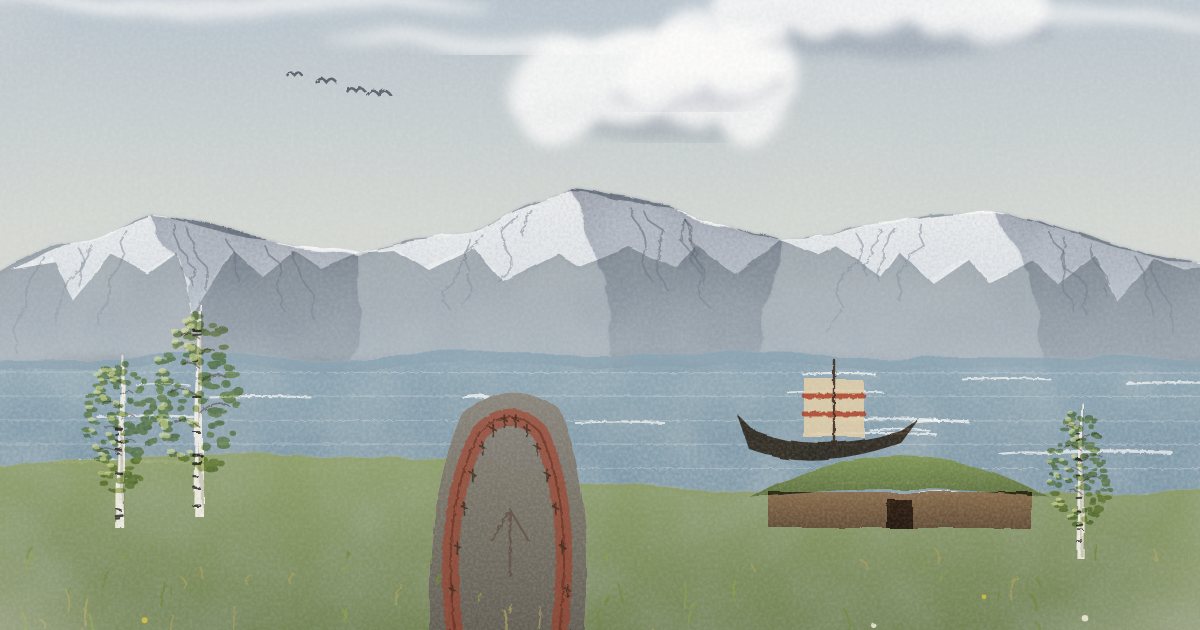 The Germanic peoples and runesNorthern and central Europe · runes from the 2nd century, a Gothic Bible from the 4thThe Germanic peoples first wrote in runes, a script of 24 letters that most likely took shape in the first two centuries CE on the model of one of the Mediterranean alphabets. They cut runes into weapons, jewellery and, later, stones; the oldest securely dated inscriptions come from Danish bogs of the 2nd century. In the 4th century the Gothic bishop Wulfila devised an alphabet of his own, based on the Greek one, to translate the Bible, and Gothic thus became the first Germanic language with substantial texts. English, German, Dutch and the Nordic languages all descend from the speech of the early Germanic peoples.
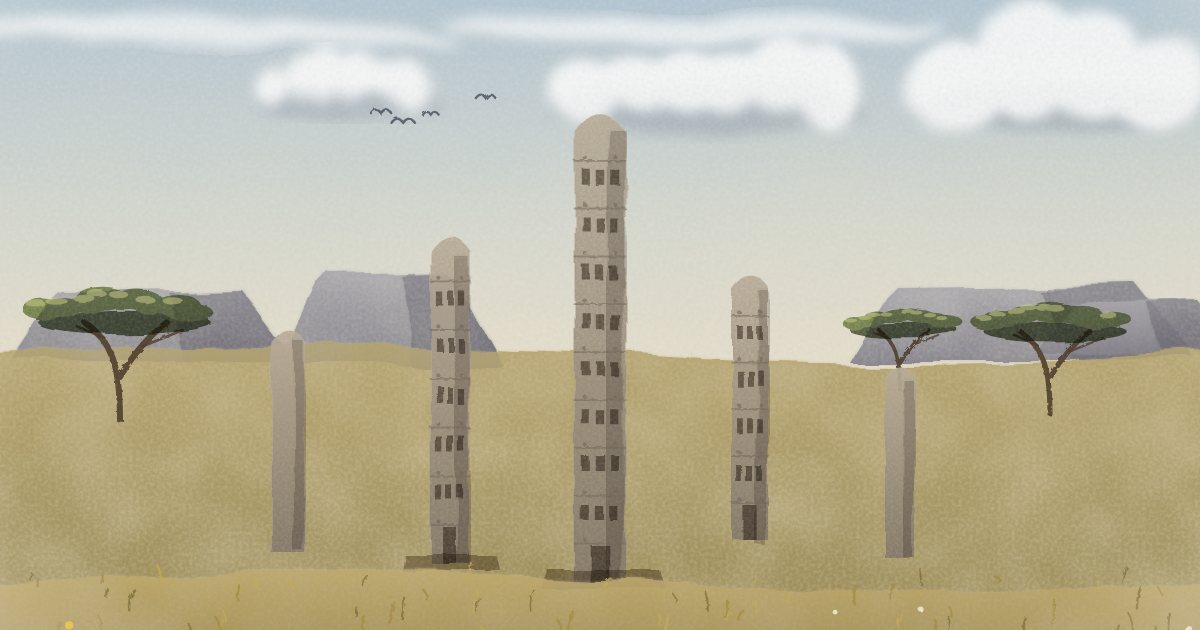 AksumEthiopia and Eritrea · from South Arabian inscriptions to a living liturgyThe Kingdom of Aksum, in what is now northern Ethiopia and Eritrea, controlled trade on the Red Sea in the first centuries CE, struck gold coins and raised stone stelae more than twenty metres high. Its language, Geʽez, was written in a script derived from South Arabian, and in the 4th century, under King Ezana, that script acquired vowel marks. The result was the syllabic Ethiopic script, still used today for Amharic and Tigrinya, while Geʽez itself survives as the sacred language of the Ethiopian and Eritrean churches.
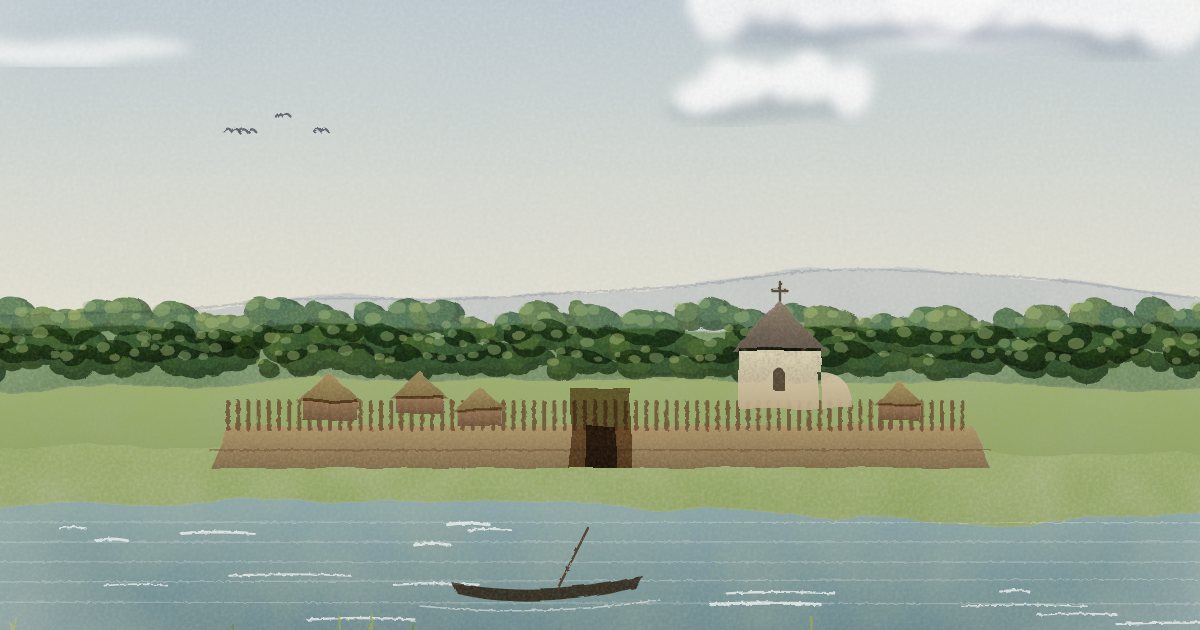 The Slavs and Great MoraviaCentral Europe and the Balkans · from Proto-Slavic to the first Slavic booksIn 863 the brothers Constantine and Methodius came from Byzantium to Great Moravia. Constantine created a new script for the Slavic tongue, Glagolitic, and the two translated liturgical books into the language now called Old Church Slavonic, the first literary language of the Slavs. After Methodius’ disciples were driven out of Moravia, Bulgaria took up their writing and developed Cyrillic, and from there it spread to Rus’ and across the Balkans; in Croatia, Glagolitic lasted into the modern era. Czech, in the end, came to be written in the Latin alphabet.
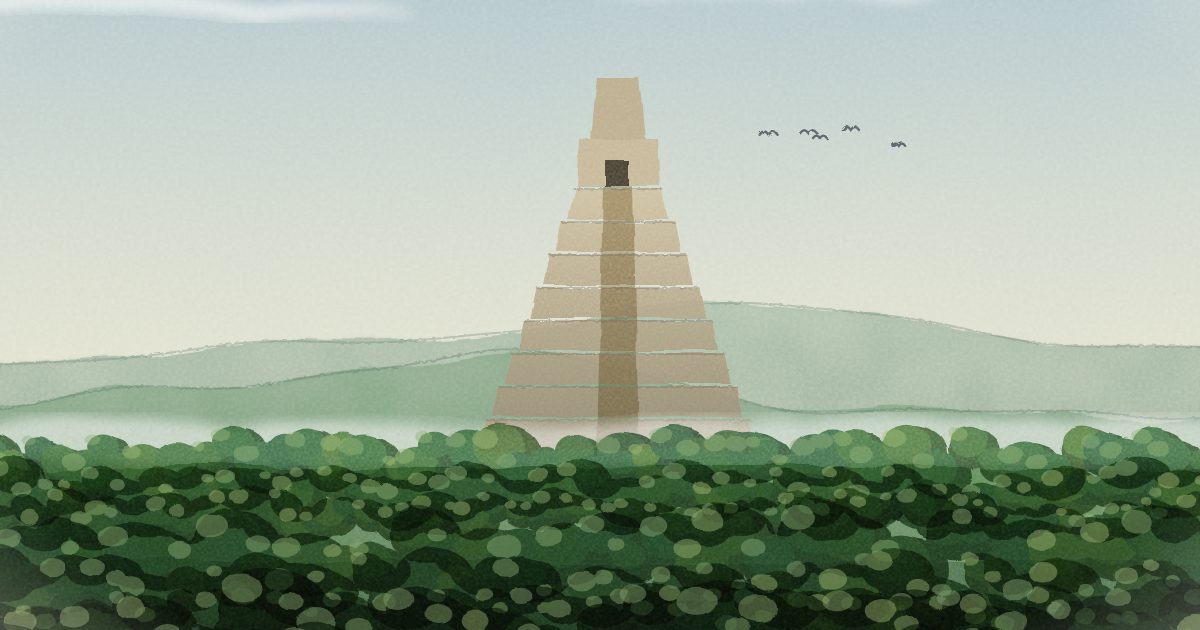 The MayaMesoamerica · from the first inscriptions to the fall of NojpeténThe Maya left the only pre-Columbian script of the Americas known to have been able to record anything that could be said, and the only one largely deciphered. Thousands of inscriptions on stelae, temples and pottery tell of kings, wars and gods, and the four surviving books hold astronomical tables. They were deciphered only in the second half of the 20th century, and more than six million people speak Mayan languages today.