
Language stories
Tea and other travelling words
Chinese 茶 by land and by sea · words that travel
In most languages for which we have data, the word for tea comes from Chinese 茶. It spread, however, in two forms: as cha, the pronunciation of most Chinese varieties, and as te, the pronunciation of the southern Chinese port of Xiamen. Which form a language has reveals where tea reached its speakers from, and by which route. Czech belongs to the cha languages: it borrowed čaj from Russian.
One character, many pronunciations
The Chinese word for tea is written 茶. The character developed from an older one, 荼 (tu), which denoted various bitter plants and, by the Han dynasty (202 BCE – 220 CE), tea as well; the form 茶, one horizontal stroke shorter, became standard under the Tang (618–907). There is one character but many pronunciations across the Chinese languages: chá in Mandarin, caa in Cantonese, zo in Shanghainese and tê in the Southern Min varieties of the Fujian coast.
Historical phonologists believe that all of these go back to a single Middle Chinese form, reconstructed roughly as dra (where dr- stands for a single retroflex consonant), and diverged through regular sound change. The Chinese word itself may, according to one hypothesis, have been borrowed from Austroasiatic languages in the tea plant's homeland in south-western China and northern Burma, where a root meaning 'leaf' is reconstructed. This remains unproven.
Languages that learned of tea from China adopted whichever pronunciation they encountered, so words for tea fall into two main types, cha and te. Besides these there are words of other origin, mainly in regions where the tea plant has been used since time immemorial; in Burmese, for example, pickled tea leaves are called lahpet.
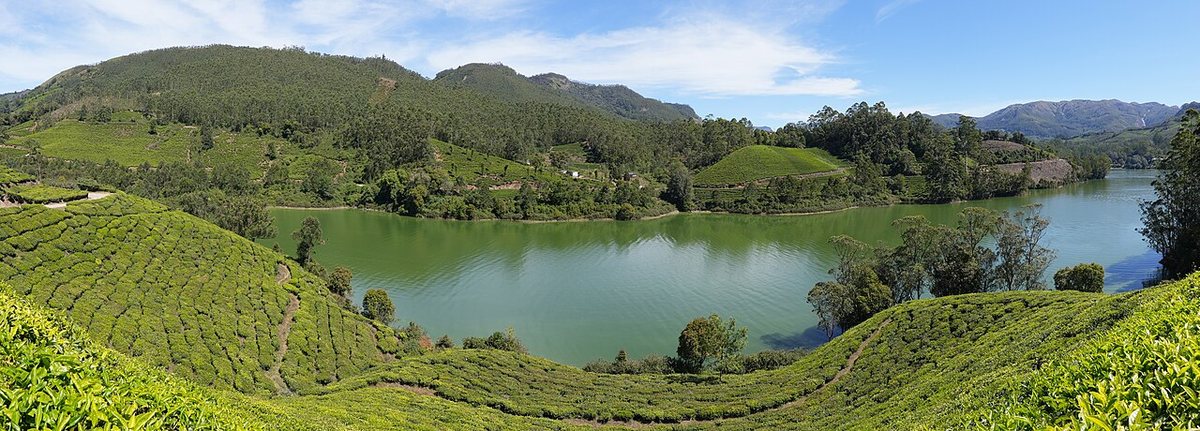
Cha: the overland routes
The cha form travelled mainly overland, from inland China to Central Asia and Persia. On the way it acquired a final -y: Persian has chāy, Turkish çay, Arabic shāy, Hindi and Urdu chāy. According to Victor Mair and Erling Hoh this is a Persian ending, with which the word moved on westwards and southwards; it reached Hindi and Urdu under the influence of the Mughal court.
Tea also reached Russia overland. In 1638 Tsar Michael received four poods (about 65 kg) of tea as a gift from a Mongol khan, and tea was later brought to Russia by caravan. Russian чай (chay) has the same final -y as the Persian word; exactly how it reached Russian – through Persian, Turkic languages or Mongolian – is explained in different ways.
Japanese, Korean and Vietnamese borrowed the word much earlier, from older stages of Chinese and independently of the sixteenth-century trade. Japanese says cha (politely ocha) and also has the reading sa, as in sadō, 'the tea ceremony'. Korean has cha, and Vietnamese two forms, trà and chè.
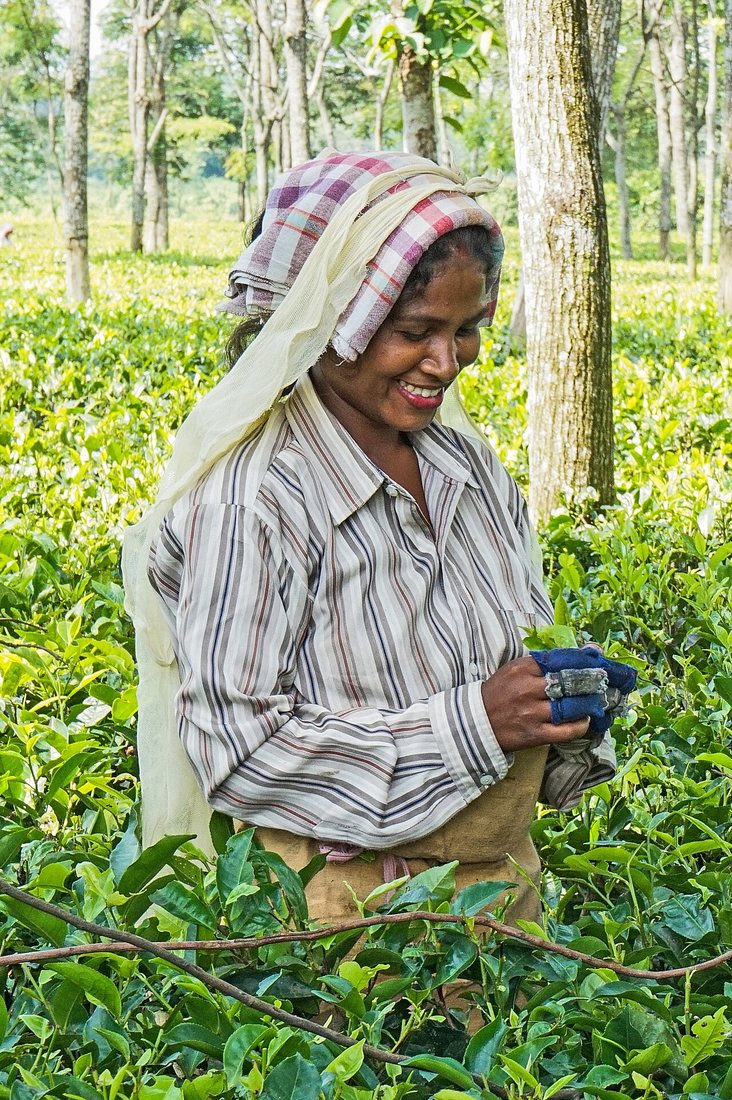
Te: the sea routes
The te form comes from the Amoy dialect of Southern Min, spoken in the port of Xiamen (formerly Amoy) in Fujian province. Xiamen and nearby Quanzhou were among the main points of contact with foreign merchants. Malay, the trade language of South-East Asia, also took tê from Southern Min traders, as teh.
It was the Dutch who brought it to Europe. The Dutch East India Company shipped its first cargo of tea from Macao to Java in 1607 and soon became Europe's main tea importer. Its merchants took the word thee either directly from Southern Min traders in Fujian and Taiwan, or through Malay at the Javanese port of Bantam; both routes are proposed.
From Dutch the word spread to other Western European languages: English tea, French thé, German Tee, Spanish té. In 1660 Samuel Pepys noted in his diary that he had drunk 'a cup of tee (a China drink)' for the first time. Because tea reached Western Europe by ship, the te form is associated with sea trade and cha with overland routes. It is a useful rule of thumb, but a simplification.
Czech: from thé to čaj
Czech belongs to the cha type. According to Czech etymological dictionaries it borrowed čaj from Russian; the final -j points to the branch that passed through Central Asia. Slovak and the South Slavic languages have the same word (Serbian and Croatian čaj, Bulgarian чай).
Czech's neighbours differ. German (Tee) and Hungarian (tea) belong to the te type. Polish has herbata, from New Latin herba thea (thee), 'tea herb', and Lithuanian arbata was borrowed from Polish; so te is there too, hidden in a phrase with the word for 'herb'. WALS therefore classes Polish among the languages with another word. A kettle, however, is czajnik in Polish, from Russian чай.
Czech did not always have only čaj either. The older word was thé (té), probably borrowed from German but spelled after French. Čaj entered the standard language in the nineteenth century as a Russianism and had displaced thé by about the beginning of the twentieth; thé is now obsolete. Today čaj also covers infusions of plants other than the tea plant, such as fruit or herbal tea.
Tea in different languages
A selection of languages by type. Transliterations of non-Latin scripts are simplified.
| word | language | type | source and route |
|---|---|---|---|
| 茶 chá | Mandarin Chinese | cha | the pronunciation of most Chinese varieties |
| 茶 tê | Southern Min Chinese (Amoy) | te | the port of Xiamen, starting point of the sea trade |
| 茶 caa4 | Cantonese | cha | Canton and Macao; hence Portuguese chá |
| 茶 cha, ocha | Japanese | cha | an earlier borrowing from Chinese |
| trà, chè | Vietnamese | cha | two forms borrowed from Chinese |
| chá | Portuguese | cha | by sea, from Cantonese at Macao, 16th century |
| چای chāy | Persian | cha | overland through Central Asia; final -y |
| çay | Turkish | cha | from the Persian form |
| شاي shāy | Arabic | cha | from the Persian form |
| चाय chāy | Hindi | cha | from Persian, under Mughal influence |
| чай chay | Russian | cha | overland; tea in Russia from the 17th century |
| čaj | Czech | cha | from Russian, 19th century; earlier thé |
| herbata | Polish | other (WALS); te hidden in a phrase | from New Latin herba thea (thee) |
| thee | Dutch | te | from Southern Min or Malay traders, 17th century |
| tea | English | te | from Dutch, 17th century; also cha and chai |
| Tee | German | te | from Dutch |
| thé | French | te | from Dutch |
| tea | Hungarian | te | from Western European languages |
| teh | Malay | te | directly from Southern Min traders |
Tea on the world map
The World Atlas of Language Structures (WALS) devotes a whole chapter to the word for tea, written by the Swedish linguist Östen Dahl. For 230 languages it distinguishes three values: words derived from Chinese cha, words derived from Southern Min te, and words of other origin. Just under half of the languages in the sample have the cha type, a little over a third the te type, and the rest another word. The globe shows 222 of them; the remaining WALS languages have no location in Glottolog.
The map colours the languages on the globe by these three values. The te type prevails in Western Europe and in languages that learned of tea from seafaring traders, the cha type in a belt from Eastern Europe through the Middle East and Central Asia to India and East Asia. The map shows only the languages in the WALS sample, not all the languages of the world.
Show on the globeBorrowed or inherited?
Words in different languages can resemble each other for two reasons. Cognates are inherited by related languages from a common ancestor: Czech tři, Latin trēs and English three are alike because they all go back to the same Indo-European numeral, and the sound changes that pulled them apart are regular. Loanwords, on the other hand, are taken over from another language, which need not be related at all. English and Hungarian tea are spelled the same although English is Indo-European and Hungarian Uralic; all they share is that both borrowed the word.
A loanword that has spread to many languages, often distant and unrelated ones, is called a travelling or migrant word; linguists also use the German term Wanderwort (plural Wanderwörter). Such words usually travel with goods, crops, animals or new techniques. For old Wanderwörter, such as the words for copper, silver, wine or hemp, it is often hard to tell which language they started from. Tea is unusual in that it spread relatively late and its routes are well documented.
Key terms
Terms used in tracing the origin of words:
- loanword
- A word taken over from another language, usually adapted to the sounds and grammar of the borrowing language.Czech čaj from Russian, cukr 'sugar' from German
- intermediary language
- A language through which a word passed on its way from the source language to the borrowing one.Russian for Czech čaj, Dutch for English tea
- calque (loan translation)
- A borrowing in which the foreign word itself is not taken over; its structure or meaning is imitated with native material.Czech rajské jablko 'paradise apple' after German Paradiesapfel
- cognate
- A word inherited from a common ancestral language; the resemblance comes from descent, not borrowing.tři – trēs – three
- Wanderwort (travelling word)
- A loanword spread across many, often unrelated languages, usually together with the thing it names.tea, sugar, coffee
Coffee, sugar, orange and others
Tea is not the only word that travelled with trade goods. Names of crops and foodstuffs that Europe came to know from Asia, Africa and the Americas spread in a similar way. For most of them the route is well documented; for some, the starting point remains uncertain.
Coffee: Arabic qahwa reached European languages through Ottoman Turkish (kahve), and English in 1582 through Dutch koffie. It is an Arabic word that once also meant wine; it is derived either from a verb meaning 'to have no appetite' or from a root denoting dark colour. The frequently cited link with the Kaffa region of Ethiopia is less certain.
Chocolate: Spanish chocolate is attested from 1579, but its earlier origin is disputed. The popular claim that it comes from Nahuatl chocolatl has no basis in the sources: early Nahuatl texts call the chocolate drink cacahuatl, 'cacao water'. A derivation from a hypothetical xocoatl, 'bitter drink', runs into phonological problems; some scholars link the word to Nawat chikola:tl, but that too is not certain.
Routes of other words
Simplified, from the earliest attested form to Czech:
| Czech | source word | route |
|---|---|---|
| káva 'coffee' | Arabic قهوة qahwa | Ottoman Turkish kahve → European languages (Italian caffè, Dutch koffie, German Kaffee) |
| cukr 'sugar' | Sanskrit शर्करा śarkarā, 'ground or candied sugar' | Persian shakar → Arabic sukkar → Medieval Latin succarum, Italian zucchero → German Zucker → Czech |
| pomeranč 'orange (fruit)', oranžový 'orange (colour)' | a Dravidian language (perhaps Tamil or Telugu) → Sanskrit nāraṅga | Persian nārang → Arabic nāranj → Italian arancia, French orange (the initial n- was lost; Spanish naranja keeps it); pomeranč via German Pomeranze from Italian pomo 'apple' + arancia, oranžový from French |
| rajče 'tomato', tomatový | Nahuatl tomatl (mainly the tomatillo; the red tomato is xitomatl) | Spanish tomate → European languages (English tomato, German Tomate); Czech rajče is a native word derived from rajské jablko 'paradise apple', a calque of German Paradiesapfel; the loan survives in the adjective tomatový |
| čokoláda 'chocolate' | Spanish chocolate (1579) | on into European languages; how the word entered Spanish is disputed |
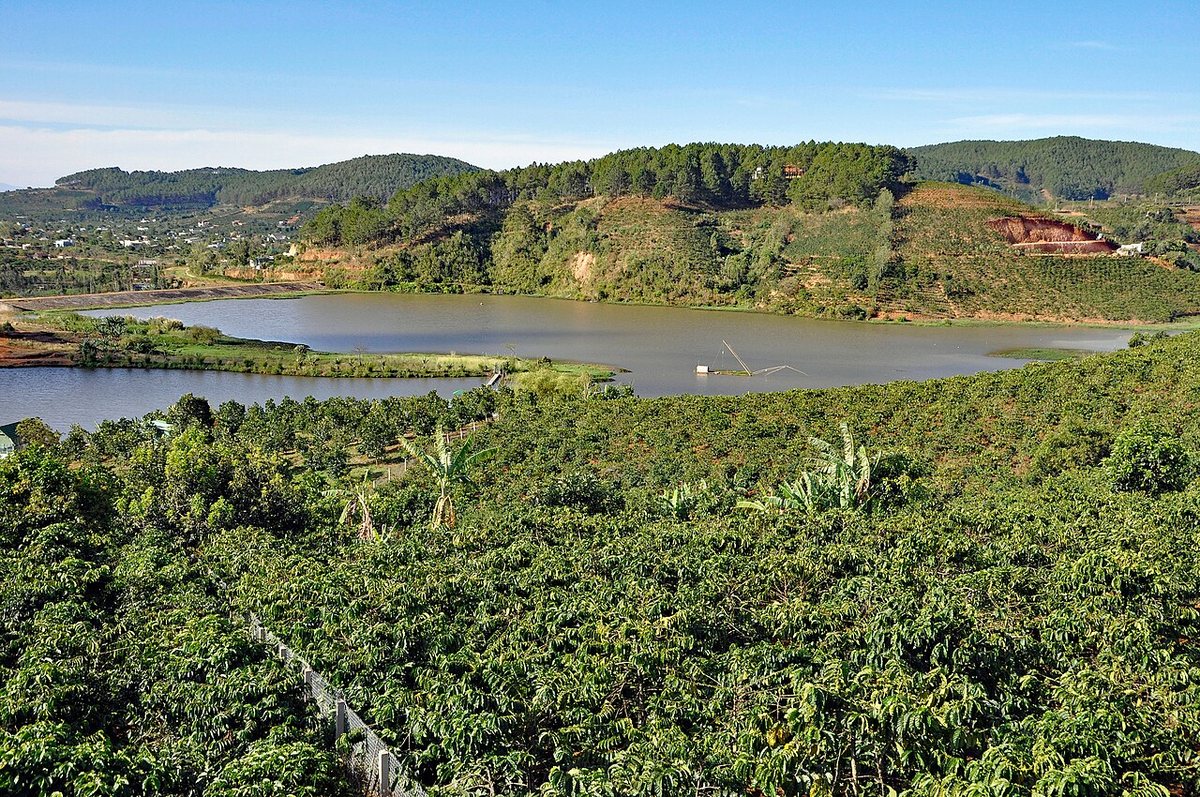
Crops behind travelling words
Timeline
- 202 BCE – 220 CEHan dynasty: the character 荼 (tu, 'bitter plant') also denotes tea.
- 618–907Tang dynasty: the character 茶 becomes standard; in the 8th century Lu Yu writes The Classic of Tea.
- 1550sThe Portuguese trade at Macao and adopt Cantonese cha.
- 1559The second volume of Ramusio's Navigationi et viaggi, published posthumously, mentions 'Chiai Catai' – usually regarded as the earliest reference to tea in European literature.
- 1598The English translation of Linschoten's travels has chaa.
- 1607The Dutch East India Company ships its first cargo of tea from Macao to Java.
- 1615Richard Wickham writes of 'chaw' – one of the earliest English records.
- 1638Tsar Michael receives tea as a gift from a Mongol khan.
- 1660Samuel Pepys notes 'a cup of tee' in his diary.
- 1662Catherine of Braganza brings tea drinking to the English court.
- 1836The British begin growing the Chinese tea plant in India.
- 20th centuryChai (spiced tea), from Hindi and Urdu, enters English.
- 2005The World Atlas of Language Structures (WALS), with Östen Dahl's chapter on the word for tea.
Languages on the globe
Click to show a language on the globe:
Sources and further reading
- Victor H. Mair, Erling Hoh: The True History of Tea. Thames & Hudson 2009.
- Östen Dahl: Tea. In: Matthew S. Dryer, Martin Haspelmath (eds.): The World Atlas of Language Structures Online, ch. 138. Max Planck Institute for Evolutionary Anthropology, Leipzig 2013.
- Martin Haspelmath, Uri Tadmor (eds.): Loanwords in the World's Languages. A Comparative Handbook. De Gruyter Mouton 2009.
- Jiří Rejzek: Český etymologický slovník. Leda 2001.
- Václav Machek: Etymologický slovník jazyka českého. Academia, 2nd ed. 1968.
- Sophie D. Coe, Michael D. Coe: The True History of Chocolate. Thames & Hudson 1996.