
Language stories
Linguistic mysteries
Undeciphered scripts · languages without relatives · disputed families
Linguists can read cuneiform and hieroglyphs and reconstruct words spoken five or six thousand years ago. Yet some questions remain open: scripts nobody has read, languages whose relatives are unknown, and large families that specialists still argue about. This page keeps apart what is documented, what is hypothesis, and what keeps being repeated although it has not survived scholarly scrutiny.
Three kinds of not knowing
“Mystery” here means nothing occult or supernatural. These are open questions for which the evidence so far is not enough. They come in three kinds: scripts whose inscriptions we cannot read or cannot understand; languages that have not been shown to be related to any other; and proposed large families that specialists dispute because the evidence for them is weak.
For each of these questions three things need to be kept apart. A fact is what is documented by finds and independently verified, such as the age of the Voynich manuscript's parchment. A hypothesis is an interpretation the evidence allows but does not prove, such as a relationship between the Yeniseian languages of Siberia and the Na-Dene languages of North America. A myth is a claim that spreads although it has not survived scholarly scrutiny, such as the recurring announcements that the Voynich manuscript has finally been read.
Reading is not understanding
Decipherment has two sides: working out how the signs are read, and understanding the language they record. The two need not come together. Etruscan inscriptions can be read because the Etruscan alphabet derives from the Greek, but the language is only partly understood. In Linear A the values of many signs can be estimated from the later Linear B, but the language is unknown. In the Indus script neither the sign values nor the language are known.
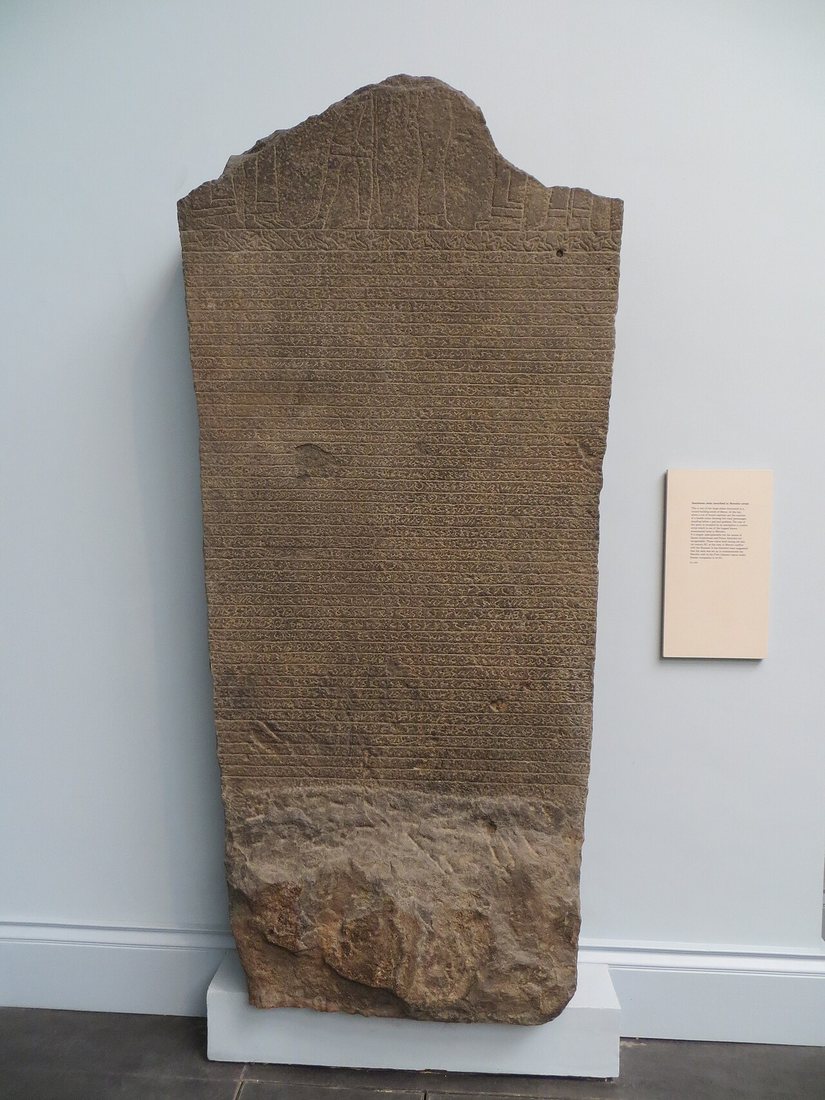
The clearest case of a script that can be read but not understood is Meroitic, from the kingdom of Kush on the middle Nile (today's Sudan). It was used from the 3rd century BCE; the last known inscription dates from the 5th century CE. It had two forms: a cursive derived from Egyptian Demotic and monumental signs modelled on Egyptian hieroglyphs. In 1909–1911 the British Egyptologist Francis Llewellyn Griffith worked out the values of its 23 signs from Egyptian names written in Meroitic. Since then the inscriptions can be pronounced, but what we understand is mainly names, titles, the set phrases of funerary texts and only part of the vocabulary.
For a long time Meroitic had no known relatives. According to the French linguist Claude Rilly it belongs to the Northern East Sudanic languages, the group that also includes the Nubian languages; Glottolog still lists it as an isolate. Without longer bilingual texts, understanding advances only slowly.
Undeciphered scripts
Scripts whose inscriptions nobody has yet read reliably, or whose reading remains disputed. The numbers of texts are approximate and change with new finds:
| script | where and when | surviving | why it cannot be read |
|---|---|---|---|
| Cretan hieroglyphs | Crete, c. 2100–1700 BCE | over 300 items (corpus of 1996): seals, seal impressions and clay objects | short inscriptions, unknown language, no bilingual |
| Linear A | Crete and the Aegean islands, c. 1800–1450 BCE | about 1,400 inscriptions, some 7,400 signs in all | sign values are estimated from Linear B; the language is unknown |
| Indus script | Indus basin, c. 2600–1900 BCE | some 4,000–5,000 inscribed objects, about five signs on average | very short texts, unknown language, no bilingual; even whether it records language is disputed |
| Proto-Elamite | Iran, mainly Susa, c. 3100–2900 BCE | about 1,600 tablets and fragments | numerical signs and some others are understood; the language is unknown |
| Linear Elamite | Elam and its eastern neighbours (Iran), c. 2300–1850 BCE | about 50 inscriptions, mostly short | the language (Elamite) is known from cuneiform; a proposed reading of 2022 is only partly accepted |
| Byblos script | Byblos (Lebanon), probably 18th–15th c. BCE | 14 inscriptions on bronze and stone, over 1,000 signs | few texts, unknown language, no bilingual |
| Isthmian (Epi-Olmec) script | Isthmus of Tehuantepec (Mexico), c. 500 BCE – 500 CE | about a dozen objects, longer texts on only two or three; the longest on the La Mojarra stela | few texts; the proposed reading of 1993 is disputed |
| rongorongo | Easter Island, attested in the 19th c. | about two dozen wooden objects | few texts, Old Rapa Nui known only indirectly; whether it is writing is disputed |
| Voynich manuscript | origin unknown; parchment of 1404–1438 | one codex, about 240 pages | unknown whether it records a language, a cipher, or nothing |
| Vinča symbols | south-eastern Europe, c. 4500–4000 BCE | about a thousand objects, mostly with a single sign | most scholars do not regard them as writing |
Scripts of the Bronze Age
In the 2nd millennium BCE two scripts that nobody has read were in use on Crete. Cretan hieroglyphs, attested mainly on sealstones, appear somewhat earlier than Linear A, but the two were long used side by side. Linear A is the model for Linear B, so its syllabic signs can be roughly pronounced; the language of the Minoan scribes, however, is unknown, and what can be gleaned of its grammar suggests that it was not closely related to any known language. Linear A and the Phaistos Disc are covered in more detail on the Ancient Greece page.
The script of the Harappan civilization in the Indus basin is attested on some four to five thousand objects, mostly small seals. The inscriptions average about five signs, the language is unknown and there is no bilingual. An early Dravidian language is most often proposed, but this has not been demonstrated, and a minority view holds that the signs do not record language at all (see the Ancient India page).
Proto-Elamite was used around 3100–2900 BCE in Iran, from Susa in Khuzestan to the plateau, roughly at the same time as the earliest cuneiform in Mesopotamia. About 1,600 tablets and fragments are known. We know that they are administrative records, and the numerical signs are understood because they resemble the Mesopotamian ones, so we know the quantities recorded; what was being counted can be identified only for some of the signs. Most of the other signs are abstract, and the scribes' language is unknown; that it was Elamite is only a guess.
The later Linear Elamite script (c. 2300–1850 BCE) is attested in only about fifty inscriptions, most of them short. Its language is Elamite, known from cuneiform texts, and several inscriptions have an Akkadian counterpart; with their help the names of King Puzur-Inshushinak and the god Inshushinak were read as early as 1905–1912. In 2022 the French archaeologist François Desset and colleagues published a proposed reading of almost all the signs. Some specialists have accepted it, others are waiting for detailed translations of the texts, and it is also disputed whether the script is purely phonetic. For now it cannot be regarded as fully deciphered.
From the port of Byblos in present-day Lebanon come fourteen inscriptions on bronze plaques, bronze “spatulas” and stone slabs. Maurice Dunand excavated them in 1928–1932; he published ten in 1945 and four more in 1978. They probably date from the 18th–15th centuries BCE. Depending on the count, some 90 to 114 distinct signs point to a syllabary, and some resemble Egyptian signs; but neither the language nor the sign values are established.
An isthmus and an island: Isthmian and rongorongo
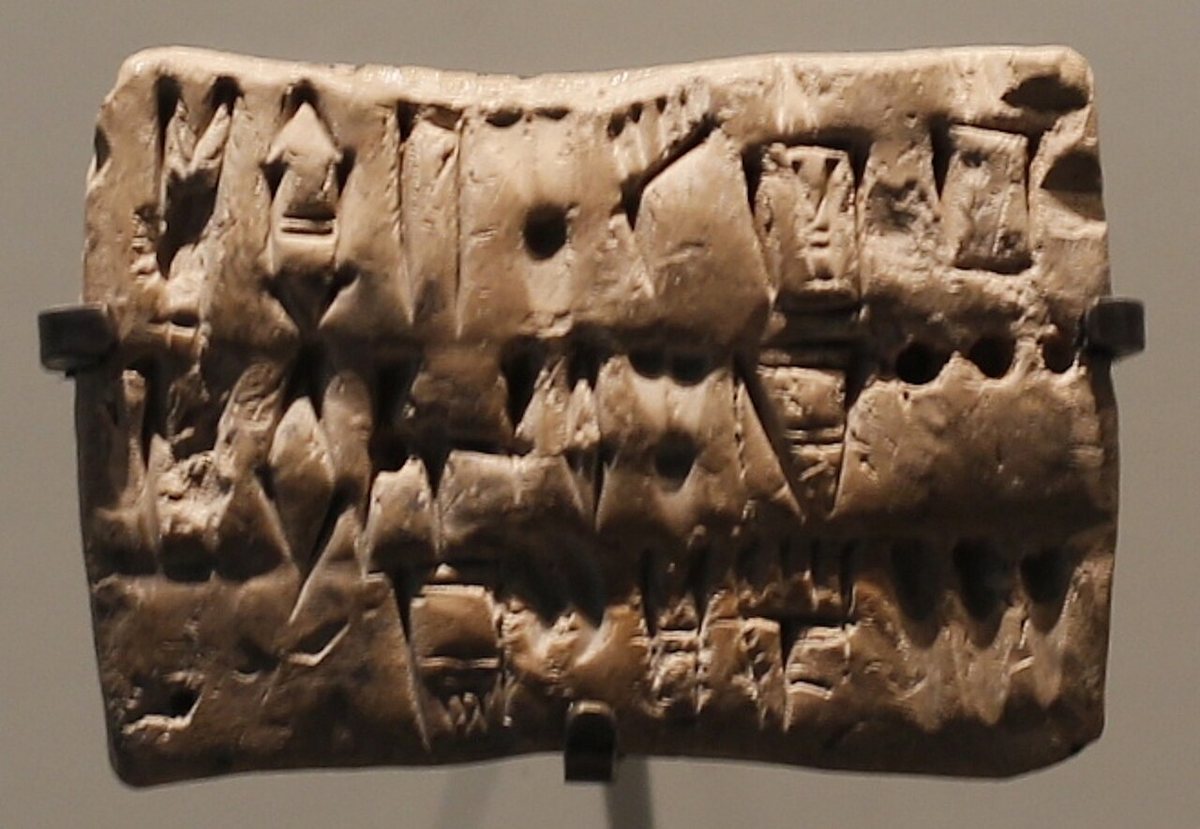
On the Isthmus of Tehuantepec in southern Mexico, between about 500 BCE and 500 CE, people wrote in the Isthmian script, also called Epi-Olmec after the culture. The longest text is on a stone stela found in 1986 at La Mojarra in Veracruz; beside the inscription it carries dates in the Mesoamerican Long Count from the mid-2nd century CE (on the Long Count, see the Maya page). In 1993 John Justeson and Terrence Kaufman announced a partial decipherment, identifying the language as an early form of Zoquean (a branch of the Mixe–Zoque family). Stephen Houston and Michael Coe (2004), however, could not apply their system to another inscription and consider the decipherment unproven. The dispute will probably be settled only by a new long text.
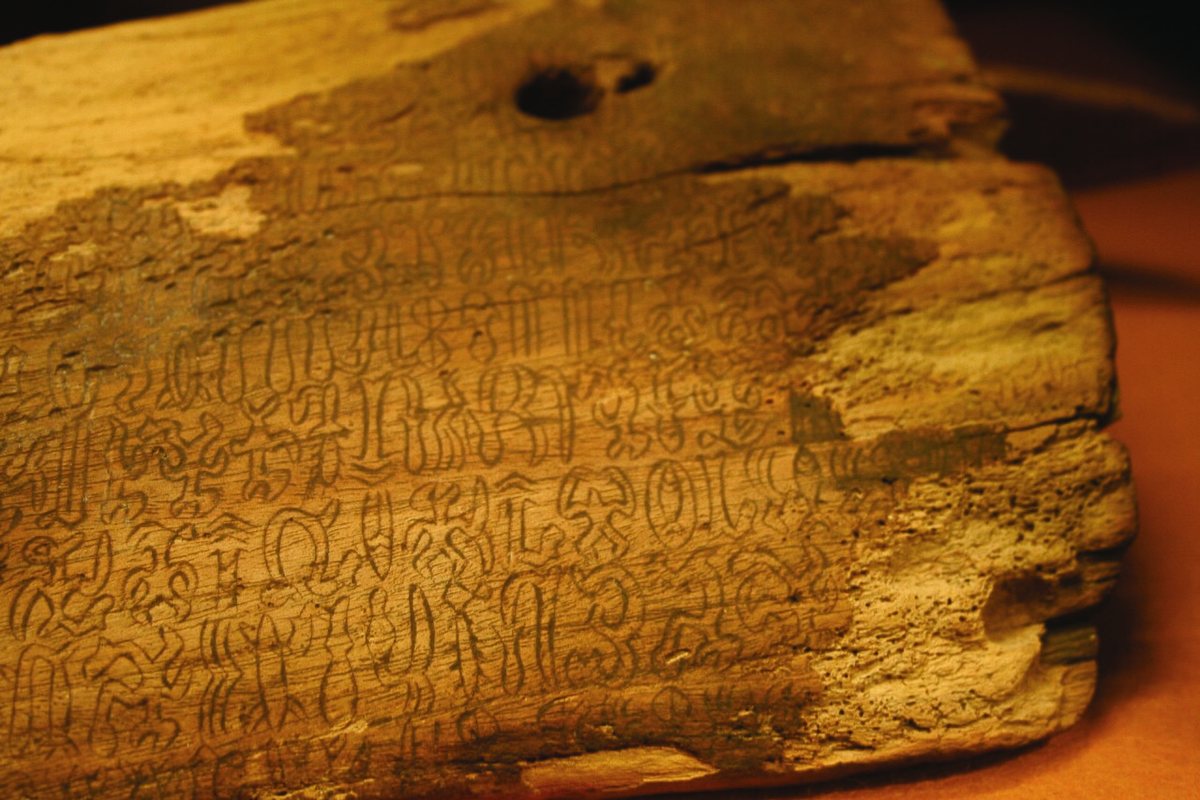
On Easter Island (Rapa Nui) wooden tablets with lines of small signs were first recorded in 1864 by the missionary Eugène Eyraud, who wrote that he had seen them in every hut. The island was then going through a catastrophe: Peruvian slave raids in 1862 and the epidemics that followed reduced the population to under two hundred by the 1870s, and knowledge of the signs was probably lost. About two dozen wooden objects survive, scattered among the world's museums; none remains on the island.
The signs – outlines of people, animals, plants and geometric shapes – are written in reverse boustrophedon: after each line the tablet is turned upside down. On one tablet a passage with a lunar calendar has been recognized; otherwise no text is understood. The obstacles are the small number of texts, the lack of context, and the fact that modern Rapa Nui has been heavily influenced by Tahitian. Whether it is full writing, or proto-writing or a memory aid, is disputed; none of these interpretations has been proven. It is also disputed whether it arose independently or only after contact with Europeans. Radiocarbon dating of the wood of the tablets kept in Rome, published in 2024, placed one of them long before the first European contact (1722); the wood, however, may have been inscribed later.
Is it writing at all? Vinča and Tărtăria
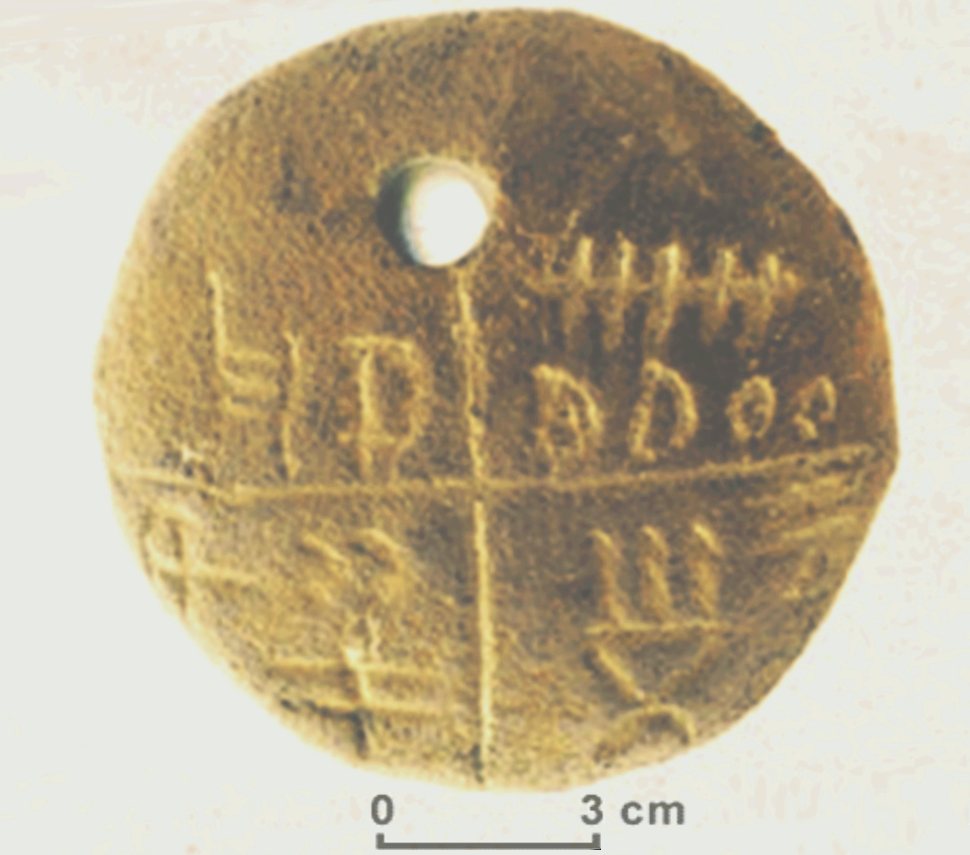
Incised marks appear on the pottery, spindle whorls and figurines of the Neolithic Vinča culture of south-eastern Europe, mostly from about 4500–4000 BCE. They were first found in 1875 by the Hungarian archaeologist Zsófia Torma at Tordos (today Turdaș in Romania), and in 1908 Miloje Vasić uncovered them at Vinča near Belgrade, after which the culture is named. Over 85 per cent of the inscriptions consist of a single sign, and in groups of signs neither the order nor the direction of reading can be determined.
In 1961 Nicolae Vlassa found three clay tablets with signs near the village of Tărtăria in Romania. Their age is inferred only from other objects at the site, radiocarbon-dated to before 4000 BCE; the tablets themselves cannot be dated because they were heat-treated after discovery, and the circumstances of the find are disputed. The archaeologist Marija Gimbutas saw in the Vinča signs an “Old European script”; this interpretation has not been accepted.
Most scholars do not regard the marks as writing. They may have indicated ownership or a maker, numbers or ritual meanings. Another argument against reading them as writing is that writing arose in Mesopotamia to serve state administration and accounting, institutions the Vinča culture apparently did not have. Vinča therefore belongs in the history of writing as an example of how hard it is to tell where a symbol ends and the recording of language begins.
The Voynich manuscript
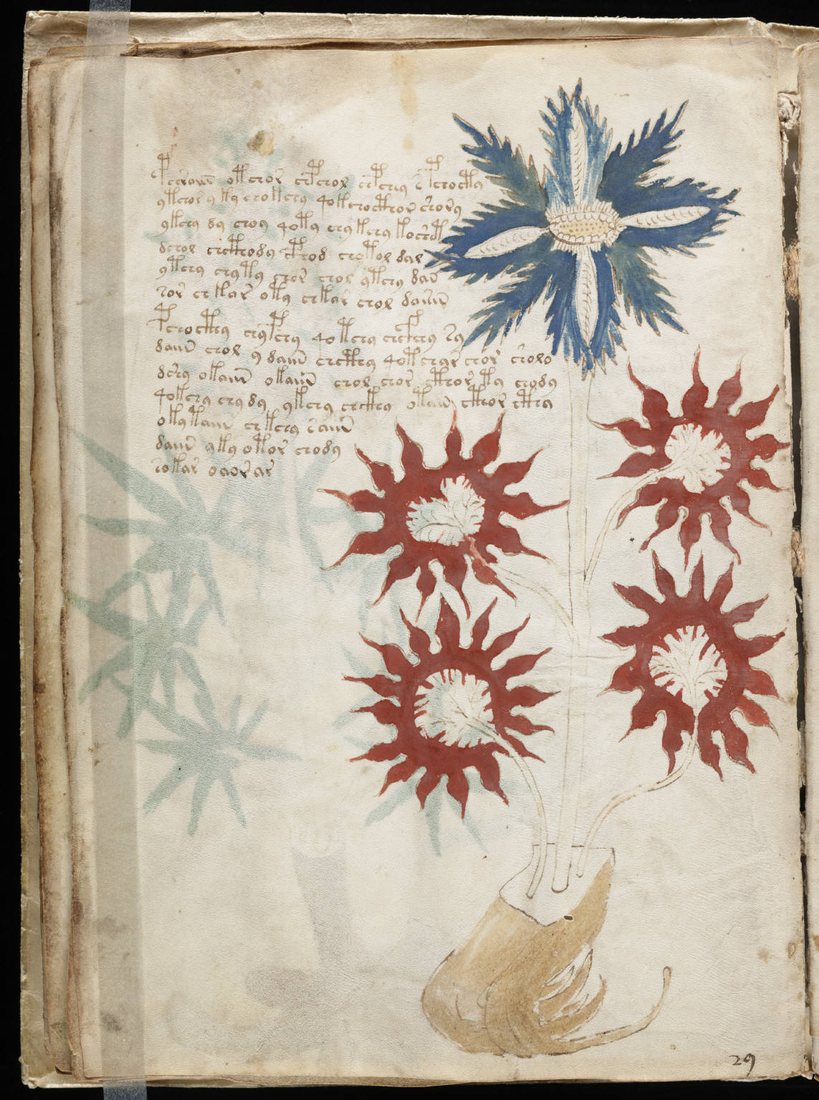
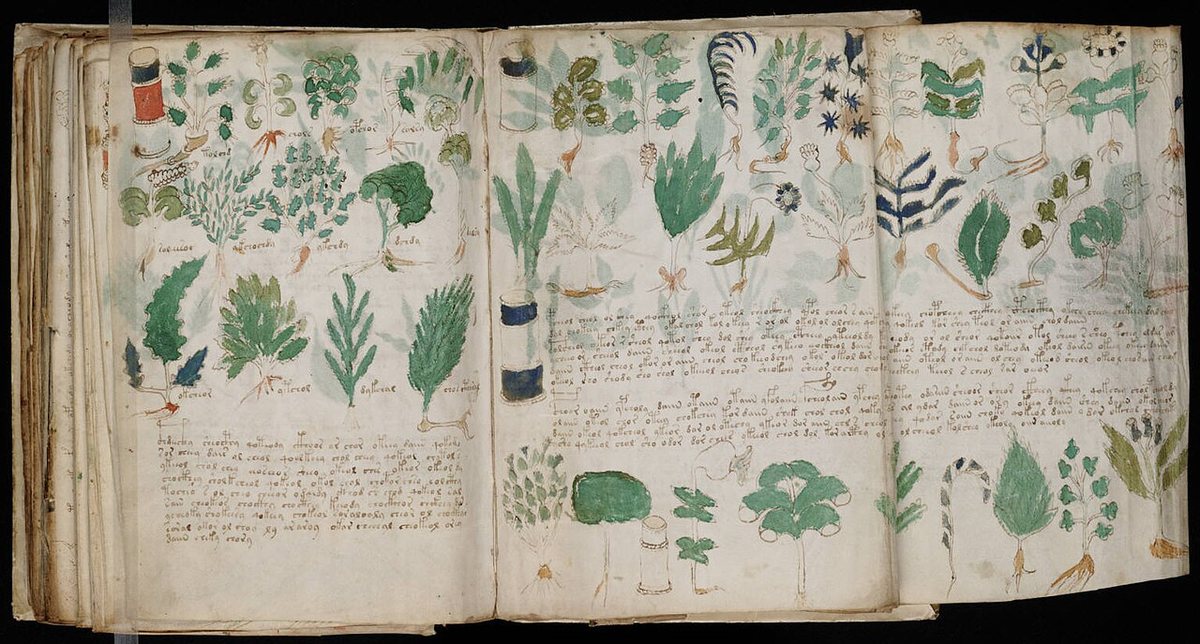
The Voynich manuscript is a codex of about 240 parchment pages, written in a script found nowhere else and illustrated with drawings of plants, astronomical and astrological diagrams, bathing women and jars. Radiocarbon dating of the parchment at the University of Arizona in 2009 gave the years 1404–1438; this does not fix exactly when the text was written. The plants cannot be identified with certainty. Since 1969 the manuscript has been in Yale University's Beinecke Library as MS 408.
Its documented history begins in Prague. In 1639 the Prague alchemist Georg Baresch sent samples of the script to the Jesuit Athanasius Kircher in Rome. After Baresch's death the manuscript passed to Jan Marek Marci, rector of the university of Prague, who sent it to Kircher in 1665 or 1666. In his covering letter Marci reports what he had heard from a friend: the Emperor Rudolf II was said to have bought the manuscript for 600 ducats. This is second-hand testimony. On the first page is the now barely visible signature of Jakub Hořčický of Tepenec, keeper of Rudolf's gardens; its authenticity, however, is disputed. In 1912 the book dealer Wilfrid Voynich bought the manuscript from Jesuit holdings, and it bears his name.
The text has statistical properties similar to those of natural languages – word frequencies, for example, follow Zipf's law – but also unusual features: almost no word has fewer than two or more than ten characters. The possibilities considered include a natural language in an unknown script, a cipher, an invented language and an elaborate meaningless hoax; none has been proven. A modern forgery is unlikely, however, since it would have required a stock of at least fourteen blank calfskins from the early 15th century.
Pages of the Voynich manuscript
Languages without relatives
A language isolate is a language that has not been shown to be related to any other; it forms a family of one. This does not mean it never had relatives. Either they died out without leaving records, or the relationship is so distant that the comparative method can no longer detect it: after many millennia of change, regular sound correspondences are lost. An isolate is therefore not a mystery in the sensational sense but an ordinary outcome of linguistic history. Depending on how strict the criteria are, there are over a hundred of them (Glottolog lists about 180, including extinct ones), most of them in the Americas.
The line between an isolate and a family can shift. Japanese used to be listed as an isolate; today it is grouped with the Ryukyuan languages in the Japonic family. Ket in Siberia is the last living Yeniseian language, yet it is not an isolate, because its extinct relatives, such as Arin, were recorded. Isolates should also be distinguished from unclassified languages, about which too little is known to classify them at all.
The best-known isolate is Basque, the only isolate in Europe and, in the prevailing view, the only surviving language of western Europe from before the arrival of the Indo-European languages. Aquitanian, known only from names in Latin inscriptions of the 1st–3rd centuries CE, is regarded as its ancestor or close relative (the name Cison corresponds to Basque gizon ‘man’). Aquitanian is mostly regarded as the direct ancestor of Basque, which is why Basque remains an isolate; if it were a sister language, the two would form a small Vasconic family. Attempts to link Basque with Georgian are now rejected, and a connection with Iberian has not been demonstrated. From antiquity, Sumerian and Elamite are well-documented isolates: there are so many texts that any living relatives would be recognizable.
Examples of language isolates
Speaker numbers are approximate, from the latest available estimates:
| language | where | speakers | note |
|---|---|---|---|
| Basque | northern Spain and south-western France | about 806,000 (2021) | the only isolate in Europe; Aquitanian is probably its ancestor |
| Burushaski | Hunza, Nagar and Yasin in northern Pakistan | about 130,000 (estimate 2018–2020) | proposed links with Caucasian, Yeniseian and Indo-European languages are unproven |
| Ainu | Hokkaido, Japan | only a few semi-speakers; a growing number of new speakers (2022) | with extinct Sakhalin and Kuril Ainu forms a small family with no proven relatives |
| Kusunda | western and central Nepal | 23 in the 2021 census | long misclassified as Tibeto-Burman |
| Nihali | Buldhana district, Maharashtra (India) | about 2,500 (2016) | has borrowed much of its vocabulary from neighbouring languages, above all Munda Korku; its core vocabulary has no counterparts |
| Hadza | near Lake Eyasi, Tanzania | over 1,000 (2012) | has click consonants, which is why it was once grouped with the “Khoisan” languages |
| Sumerian | southern Mesopotamia | extinct | gave way to Akkadian as a spoken language around the turn of the 3rd and 2nd millennia BCE |
Disputed families
Relationship between languages is demonstrated by the comparative method: regular sound correspondences are sought in basic vocabulary and grammatical endings, and from them a common proto-language is reconstructed. Latin p corresponds regularly to f in the Germanic languages (pater – English father, piscis – fish, pes, pedis – foot); such a system of correspondences cannot be explained by chance or borrowing. The further back one goes, the more correspondences are lost, which is why proposals of large macrofamilies are disputed.
The Altaic hypothesis linked the Turkic, Mongolic and Tungusic languages, and in a wider form Korean and Japanese as well. It had many supporters in the 20th century, but today most comparative linguists reject it: they explain the shared features (strings of suffixes, verb-final order, part of the vocabulary) by long coexistence and borrowing, that is, as a linguistic area; a minority of specialists still defends it. The Nostratic hypothesis was proposed in 1903 by the Danish linguist Holger Pedersen and elaborated in the 1960s by Vladislav Illich-Svitych and Aharon Dolgopolsky; it groups Indo-European, Uralic, Altaic, Kartvelian and, depending on the author, further families, and today has little support. The Indo-Uralic hypothesis posits a common ancestor of Indo-European and Uralic; the shared vocabulary, however, is mostly interpreted as loans from a time when the two groups were neighbours.
Many specialists regard the Dene–Yeniseian hypothesis as the best supported of the long-range proposals; it was put forward in 2008 (in print in 2010) by the American linguist Edward Vajda. It links Ket and the extinct Yeniseian languages of Siberia with the Na-Dene languages of North America, such as Navajo. Others, such as Lyle Campbell, find the evidence insufficient. By contrast, the Vasconic substrate hypothesis of the German linguist Theo Vennemann, according to which a forerunner of Basque spread across much of Europe after the last Ice Age and left traces in place names, is largely rejected by historical linguists. The Vasconic family in the narrow sense – Basque together with Aquitanian – is a different matter; specialists accept that relationship.
A chapter of its own is the mass comparison, later called multilateral comparison, of the American linguist Joseph Greenberg. Instead of regular correspondences, it compares many languages at once by the overall similarity of basic words and grammatical elements. In this way Greenberg in 1987 united most of the indigenous languages of the Americas, apart from the Na-Dene and Eskimo–Aleut languages, into a single “Amerind” family. Most linguists reject the method: without regular correspondences, inheritance cannot be told apart from chance and borrowing, and the more languages are compared, the more chance resemblances turn up. Some of Greenberg's groupings, such as Afroasiatic and Niger–Congo, are accepted because other methods have supported them (and earlier scholars had proposed them); “Amerind” and “Eurasiatic” are rejected.
Where did the Indo-Europeans come from?
That the Indo-European languages from India to Iceland share a common ancestor is an established result of comparative linguistics. Where and when their proto-language was spoken, however, cannot be documented directly, because it predates writing. The evidence is indirect: reconstructed vocabulary, archaeology and, in recent years, the genetics of ancient populations.
The prevailing view today is the steppe (Kurgan) hypothesis, associated with the archaeologists Marija Gimbutas and David Anthony. It places the homeland on the Pontic–Caspian steppe north of the Black and Caspian Seas in the 5th–4th millennium BCE. One of its arguments is that the proto-language had words for the wheel and the wagon and for keeping horses and cattle, so it cannot be much older than the invention of the wheel. It is also supported by genetic studies of 2015, which found a large-scale movement of people from the steppe into central Europe about 4,500 years ago.
The main alternative was the Anatolian hypothesis of the British archaeologist Colin Renfrew (1987), according to which the Indo-European languages spread from Anatolia together with farming from about the 7th millennium BCE. Some statistical phylogenetic studies (2003, 2012) supported it, but it fits the linguistic and genetic evidence less well and today has minority support; in 2017 Renfrew himself accepted large migrations from the steppe into Europe, while still placing the earlier stage of the proto-language in Anatolia. Details remain open, for example where the ancestors of the Anatolian languages, including Hittite, came from, and whether the earliest stage of the proto-language arose further south, near the Caucasus. Claims that the Indo-European languages originated in India, or have been spoken in Europe continuously since the Palaeolithic, are regarded in the scholarly literature as fringe and have not held up.
Timeline
- 1639Earliest documented mention of the Voynich manuscript: a letter from the Prague alchemist Georg Baresch to Athanasius Kircher.
- 1864Eugène Eyraud describes wooden rongorongo tablets on Easter Island.
- 1875Zsófia Torma finds the first objects with Vinča signs at Tordos.
- 1903Holger Pedersen proposes the Nostratic macrofamily.
- 1909–1911Francis Llewellyn Griffith works out the sign values of the Meroitic script.
- 1912Wilfrid Voynich buys the manuscript that now bears his name.
- 1961The Tărtăria tablets are found in Romania.
- 1986Discovery of the La Mojarra stela with the longest Isthmian inscription.
- 1987Colin Renfrew sets out the Anatolian hypothesis; Joseph Greenberg proposes the “Amerind” family.
- 1993John Justeson and Terrence Kaufman announce a partial decipherment of the Isthmian script.
- 2008Edward Vajda puts forward the Dene–Yeniseian hypothesis.
- 2009Radiocarbon dating of the Voynich manuscript's parchment: 1404–1438.
- 2015Ancient DNA studies support a steppe origin of the Indo-European languages.
- 2022François Desset and colleagues publish a proposed reading of Linear Elamite.
Key terms
Technical terms that recur in debates about undeciphered scripts and distant relationships:
- Language isolate
- A language with no demonstrated relationship to any other; it forms a family of one. This does not mean it never had relatives, only that none have been shown.Basque, Burushaski, Hadza; among extinct languages Sumerian and Elamite.
- Unclassified language
- A language so poorly documented that it can be neither assigned to a family nor reliably called an isolate.Many ancient languages known only from a few short inscriptions or names.
- Macrofamily
- A proposed grouping of several established language families under a common ancestor. None of the large macrofamilies is generally accepted.Nostratic, Altaic in the wider sense, Dene–Caucasian.
- Comparative method
- The procedure that demonstrates relationship through regular sound correspondences in basic vocabulary and grammar, and by reconstructing the proto-language.Latin p corresponds to Germanic f: pater – father, piscis – fish.
- Mass (multilateral) comparison
- Joseph Greenberg's method: it compares many languages at once by overall similarity of words, without requiring regular correspondences. Most linguists reject it.Greenberg's “Amerind” family (1987).
- Decipherment
- Working out how the signs of an unknown script are read, and understanding the language they record. The two need not come at the same time.Meroitic has been readable since 1909–1911, but the language is only partly understood.
- Bilingual
- An inscription with the same text in two languages or scripts. Most valuable to a decipherer when one version is readable.The Akkadian–Elamite Table au Lion in the Louvre, from which the first names in Linear Elamite were read.
- Proto-writing
- A system of marks that records numbers, ownership or concepts but does not systematically record spoken language.The Vinča signs are regarded as proto-writing or as mere symbols; for rongorongo this is one interpretation.
- Linguistic area (Sprachbund)
- A group of languages of different origin that have grown alike in sounds, grammar or vocabulary through long coexistence.The Turkic, Mongolic and Tungusic languages, in the majority view of the Altaic question.
- Substrate
- Traces of a language that died out in an area, left in the language that replaced it – usually in place names and in words for local plants, animals and things.Pre-Greek words in -nthos in Greek, such as labyrinthos.
Language isolates on the globe
Tap a language to show it on the globe:
Sources and further reading
- Andrew Robinson: Lost Languages. The Enigma of the World's Undeciphered Scripts. McGraw-Hill 2002.
- Peter T. Daniels, William Bright (eds.): The World's Writing Systems. Oxford University Press 1996.
- Lyle Campbell, William J. Poser: Language Classification. History and Method. Cambridge University Press 2008.
- David W. Anthony: The Horse, the Wheel, and Language. Princeton University Press 2007.
- R. L. Trask: The History of Basque. Routledge 1997.
- Glottolog 5 (languages and their classification).