
Language stories
Czech words in other languages
Robot, dollar, howitzer, pistol, polka · what is documented and what is disputed
Czech has given the world’s languages only a few words, but some of them have spread very widely. Howitzer goes back to the weapons of the Hussite Wars and, on the prevailing view, so does pistol; dollar to a coin struck in Jáchymov, polka to a dance that arose in Bohemia in the 1830s, and robot to Karel Čapek’s play R.U.R. Not everything told about these words is documented, however – and dollar is in fact not a Czech word at all, but a German one.
How words left Bohemia
Czech has taken in far more words than it has given away: its vocabulary holds hundreds of loans from German, Latin and French. Only a handful reached the major western languages (more were taken over by neighbouring languages – Polish, Slovak, Sorbian and Austrian German). The older ones passed through German first – the neighbouring language with which Czech shared a state, towns and armies – and only then reached Dutch, French and English.
The words usually listed as “Czech words abroad” are not all of one kind. Houfnice, polka and robot are Czech words borrowed by other languages. Dollar comes from the Czech lands but not from the Czech language: it is a shortened German name for a coin struck in Jáchymov. Semtex is a trade name. And for several words said to be Czech, a Czech origin has not been confirmed.
For each word one has to separate what period sources document, what is the prevailing view of etymologists, and what is only one possibility or a later anecdote. The overview below keeps these distinctions.
Words from Czech and from the Czech lands
Each route is simplified to its main stages. The last column says how secure the explanation is.
| Czech word | route | forms in other languages | certainty |
|---|---|---|---|
| houfnice (a short cannon) | Hussite Wars (15th c.) → German aufeniz (attested 1440), Haubitze → Dutch houwitser → English | English howitzer, German Haubitze, French obusier, Russian гаубица (gaubitsa) | documented |
| píšťala (pipe; a hand gun) | Hussite hand firearm → German pitschale, Pistole → French pistolet → English | English pistol, German Pistole, French pistolet | prevailing view; another links the word to Pistoia in Italy |
| Joachimsthaler (Czech tolar) | coin from Jáchymov (from 1519–1520) → German Taler → Low German daler, Dutch daalder → English | English dollar, German Taler, Slovene tolar, Russian ефимок (yefimok) | documented; the word is German, not Czech |
| polka | dance from Bohemia, 1830s → Prague, Paris (c. 1840), London (1844) | English, German, French polka, Finnish polkka | the dance is documented; the origin of the name is disputed |
| robot | Karel Čapek, R.U.R. (1920), word suggested by Josef Čapek; from robota ‘forced labour’ | English, French robot, German Roboter, Russian робот (robot) | documented (Karel Čapek’s own account, 1933) |
| semtex | trade name of an explosive from Semtín near Pardubice (from 1964 or 1966) | English, German, French Semtex | documented as a product name |
| koláč (a filled pastry) | Czech immigrants in the United States (19th c.) | American English kolache | listed in American dictionaries |
| háček (little hook) | technical term in linguistics and typography | English háček (alongside caron) | documented |
Word journeys on the globe
The globe shows, step by step, how the words robot and dollar travelled from Bohemia into the world.
Howitzer and pistol: weapons of the Hussite Wars
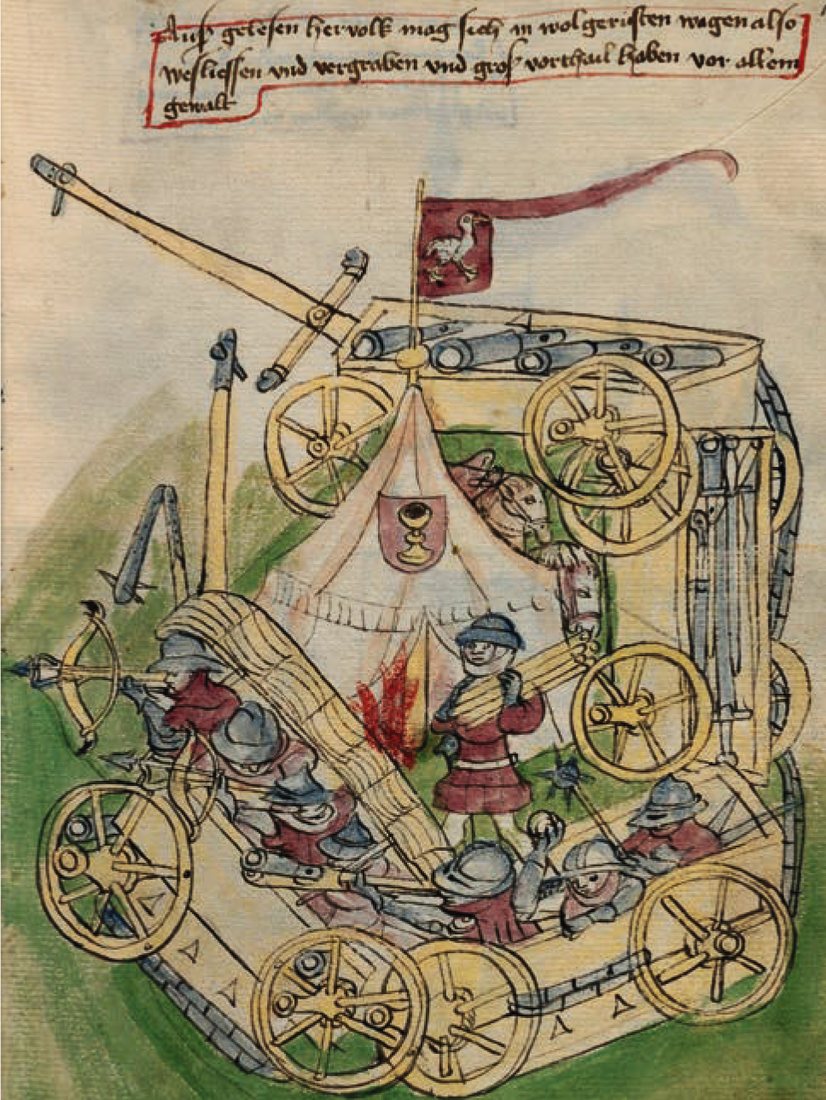
The oldest Czech words to spread into western European languages, English included, came with the Hussite Wars (1419–1434/36). Earlier loans stayed in neighbouring languages (for example German Petschaft ‘seal, signet’ from Czech pečeť, around 1300). The Hussites fought from wagon forts – mobile fortifications of wagons chained together – and used firearms on a larger scale than was usual in Europe at the time. Their neighbours adopted the names of these feared weapons along with the weapons themselves.
A houfnice was a short cannon of large calibre; according to the usual explanation it was named for firing into a houf, a crowd or cluster of enemies. The word houf is itself an old loan from Middle High German hūfe (modern Haufen, ‘heap, crowd’), so in a sense the word went back to German. The earliest German form, aufeniz, is recorded in a document of 1440; later the form Haubitze became established. From German the word spread to most European languages: Dutch houwitser gave English howitzer in the late 17th century, and French obusier, Italian obice and Russian гаубица also go back to German Haubitze.
In the Hussite period píšťala, literally ‘pipe, whistle’, also meant a light hand firearm, named after the shape of its barrel. According to the prevailing view, found in the German etymological dictionaries (Kluge), the word passed into German in forms such as pitschale or pitschole, which developed into Pistole; from there came French pistolet (attested around 1550) and English pistol (around 1570). Another explanation links the word to the Italian town of Pistoia, known for its gunsmiths. Supporters of the Czech origin point out that the German forms are attested earlier than Italian pistola in the sense of a weapon (by available accounts not until the early 17th century), but the question cannot be regarded as entirely settled.
Dollar: from Bohemia, but not from Czech
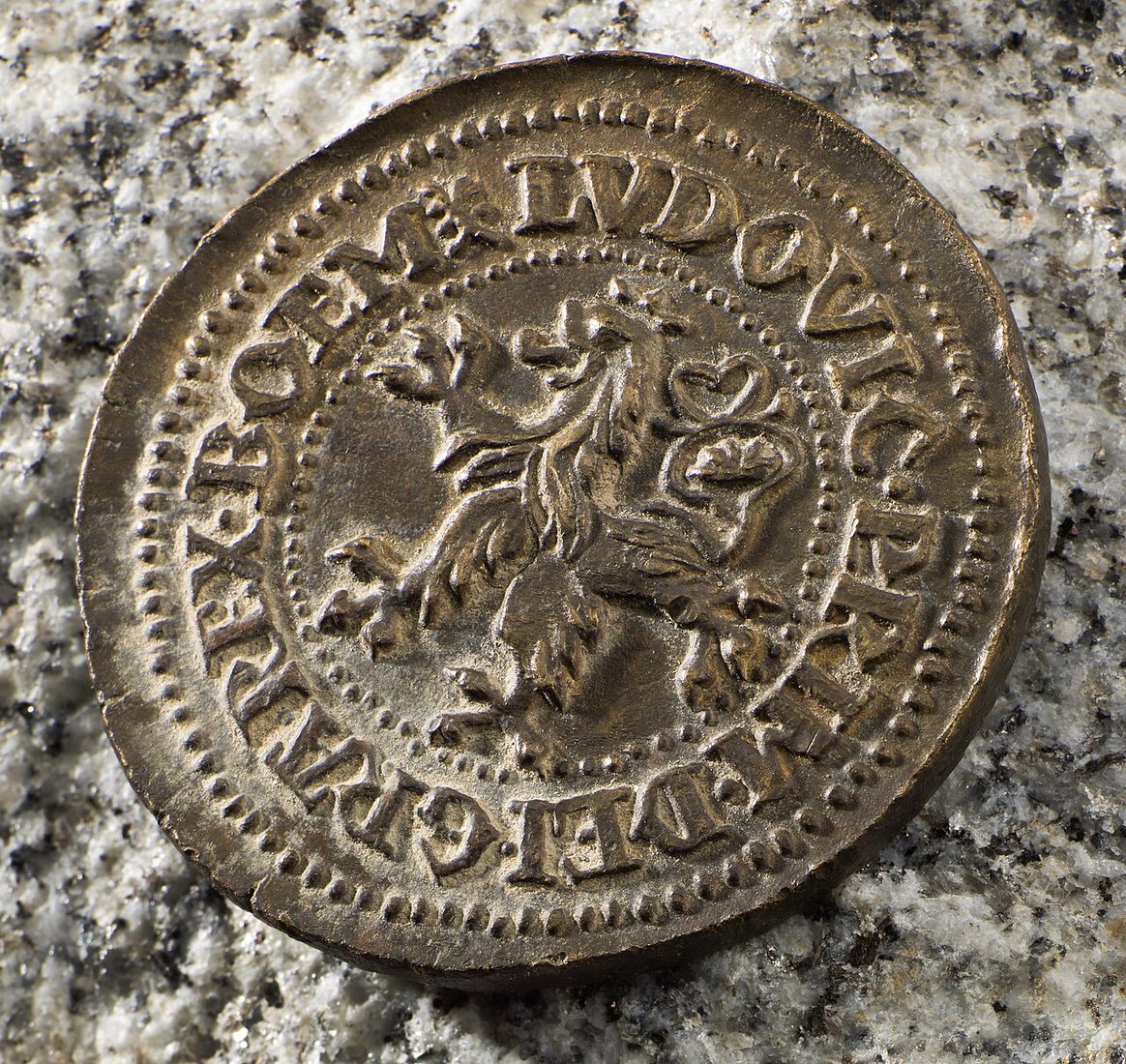
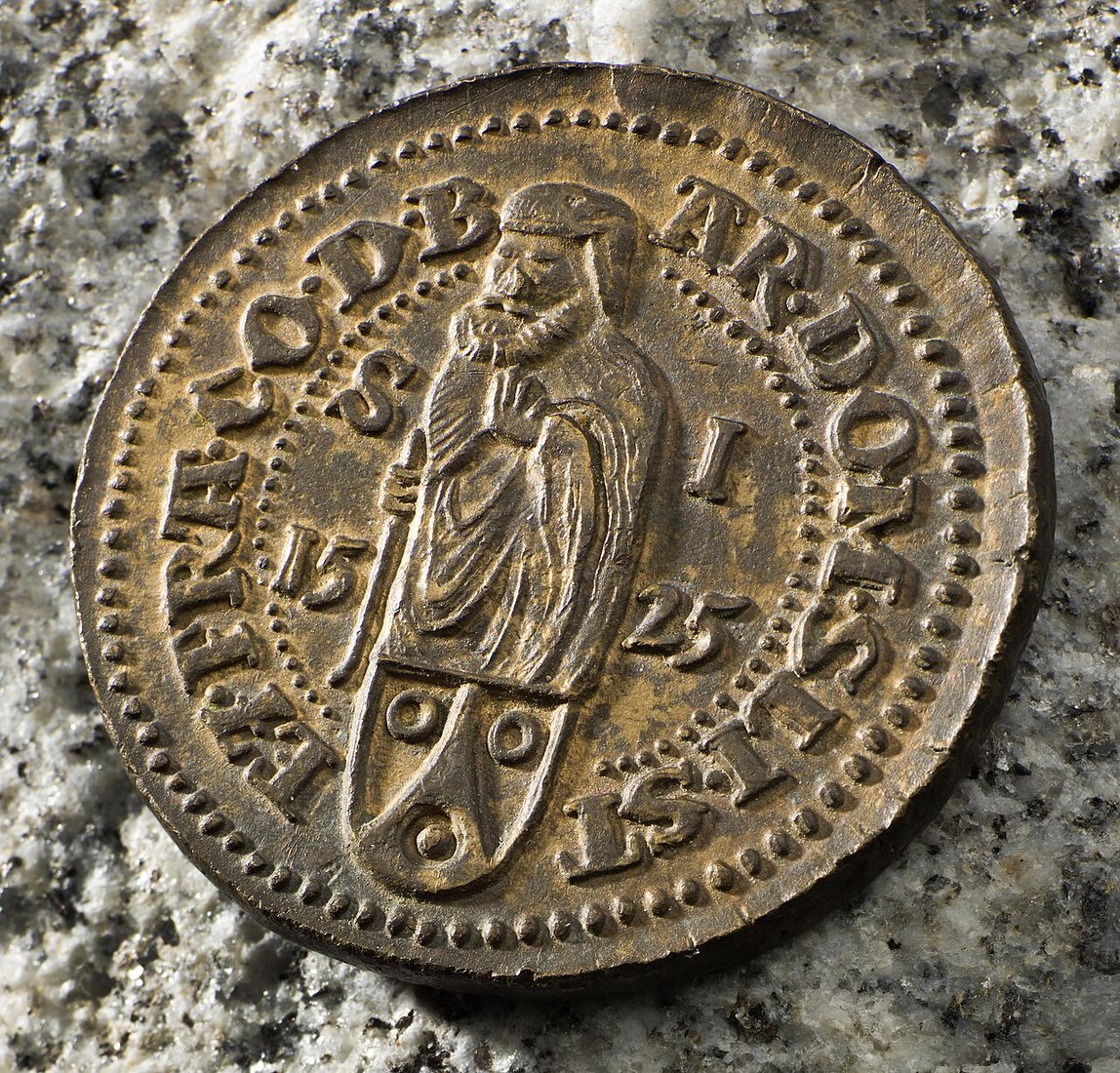
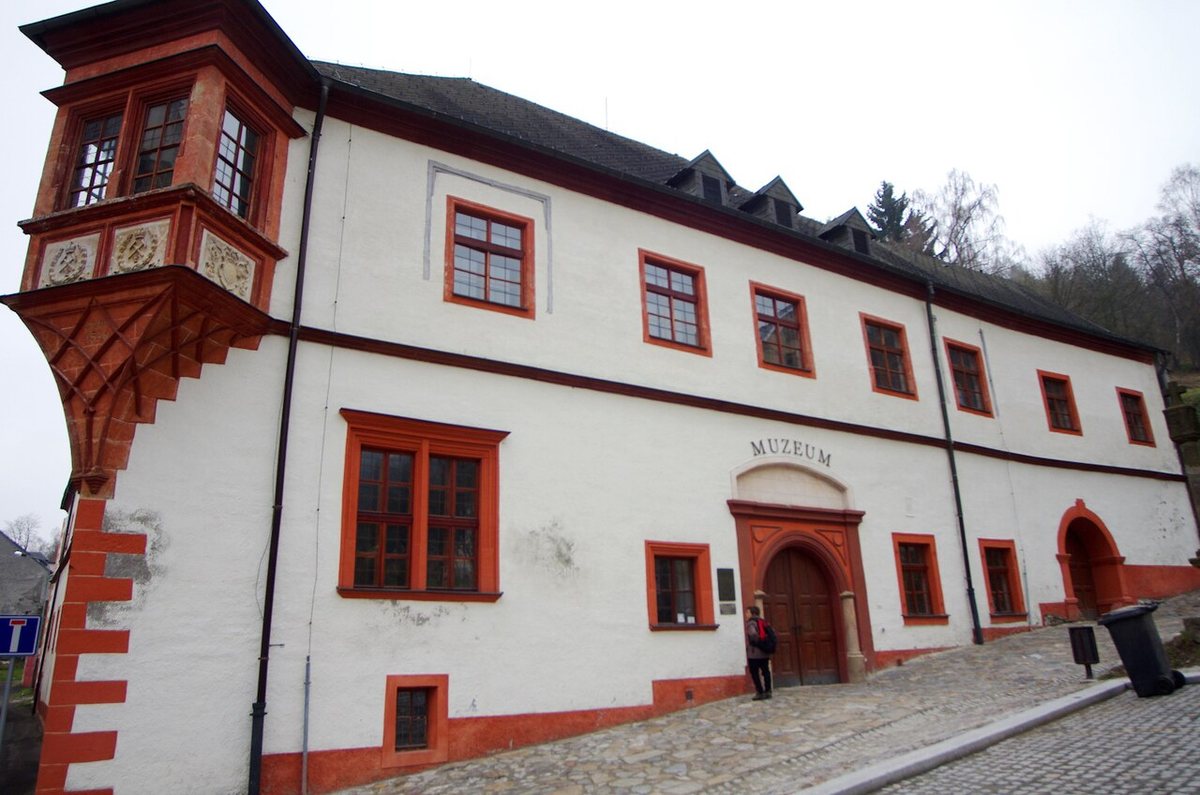
Around 1516 rich silver began to be mined in a valley of the Ore Mountains. The counts of Schlick founded a mining town there, which received the German name Joachimsthal, ‘Saint Joachim’s valley’ (Thal, now spelled Tal, means ‘valley’ and is related to English dale). In Czech the town is called Jáchymov. In 1519–1520 large silver coins began to be struck there, known in German as Joachimsthaler, ‘of Joachimsthal’. Large silver coins had been minted earlier in Tyrol (from 1486), but it was the Joachimsthaler that gave its name to the whole type.
The long name was soon shortened: the form Taler is recorded in German from the 1530s. Czech tolar also comes from German. In Low German dialects and in Dutch the coin was called daler, daalder; English daler is attested by the mid-16th century and became dollar around 1600. English settlers in America then used the word above all for the Spanish silver peso (the Spanish dollar), and in 1785 the United States adopted the dollar as its unit of currency; the Coinage Act of 1792 then defined it on the model of the Spanish coin.
While the western languages adopted the second half of the name, Russian took the first: ефимок (yefimok), after Joachim. The Slovenian tolar, Slovenia’s currency from 1991 to 2006, came from the same root. So the dollar was born in the Czech lands and its ancestor names a Czech town, but linguistically the word is German. In 2019 UNESCO inscribed the mining landscape of Jáchymov on the World Heritage List as part of the Erzgebirge/Krušnohoří Mining Region.
The Joachimsthaler
Polka: the dance is documented, the name is not
The polka, a lively couple dance in 2/4 time, arose in Bohemia in the 1830s. By around 1835 it was danced in the ballrooms of Prague, and around 1840, according to the usual account, the Prague dancing master Johann Raab brought it to Paris. In London in 1844 it became such a craze that a letter of the time speaks of “polkamania”. The name travelled with the dance into most European languages and later to the Americas.
The origin of the name is disputed. Major English dictionaries more often cite the derivation from Polka, ‘Polish woman’ – that is, ‘Polish dance’ – linked with sympathy for the Polish November Uprising of 1830–1831. The cultural historian Čeněk Zíbrt (1895) preferred a derivation from půlka, ‘half’, after the short half-step of the dance. Neither explanation is directly supported by sources from the time the dance appeared.
The story of how the dance was invented must also be treated as undocumented. It first appeared in the Prague periodical Bohemia in 1844 and was retold by Zíbrt: around 1830 a young country girl, Anna Slezáková (née Chadimová), was said to have made up the polka, and the teacher Josef Neruda wrote it down and spread it. It is a traditional tale, not an established fact.
Robot: a word from the theatre
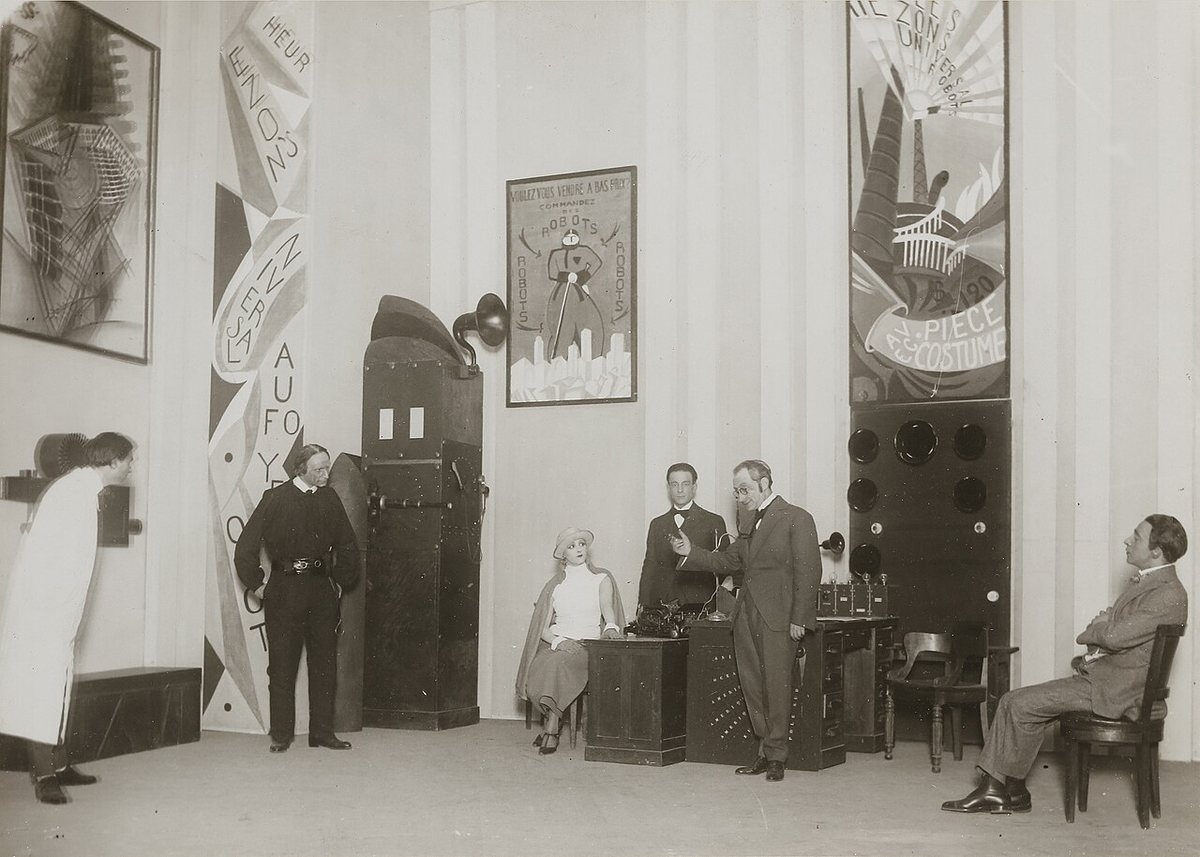
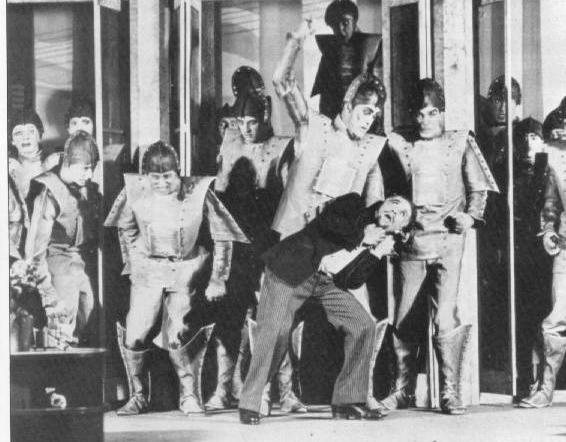
Karel Čapek’s play R.U.R. (Rossumovi univerzální roboti, ‘Rossum’s Universal Robots’) was published in 1920. It had its world premiere on 2 January 1921 in Hradec Králové, and the National Theatre in Prague staged it on 25 January 1921. Its robots are not metal machines but artificially made people – cheap, efficient workers without feelings who finally rise up against humanity.
The play spread quickly: the Theatre Guild staged it in New York in October 1922, London followed in April 1923, and by 1923 it had been translated into thirty languages. With it the word robot went round the world, displacing older terms such as automaton or android in many languages. English did not translate the word but took it over in its Czech form.
At its root is Czech robota, the forced labour that serfs owed their lords; in the Czech and other Austrian lands it was abolished by a law of 7 September 1848 (in Hungary already by the April Laws of the same year). The word is Common Slavic and, according to the etymological dictionaries, related both to Old Czech rob ‘slave’ (Church Slavonic rab) and to German Arbeit ‘work’. In the sense of forced labour, robota had long before passed from the Slavic languages into Hungarian (robot) and Austrian German. In Czech, robot is still declined in two ways: science-fiction robots as an animate noun (ti roboti), kitchen and industrial machines rather as an inanimate one (ty roboty). Čapek himself used the animate forms.
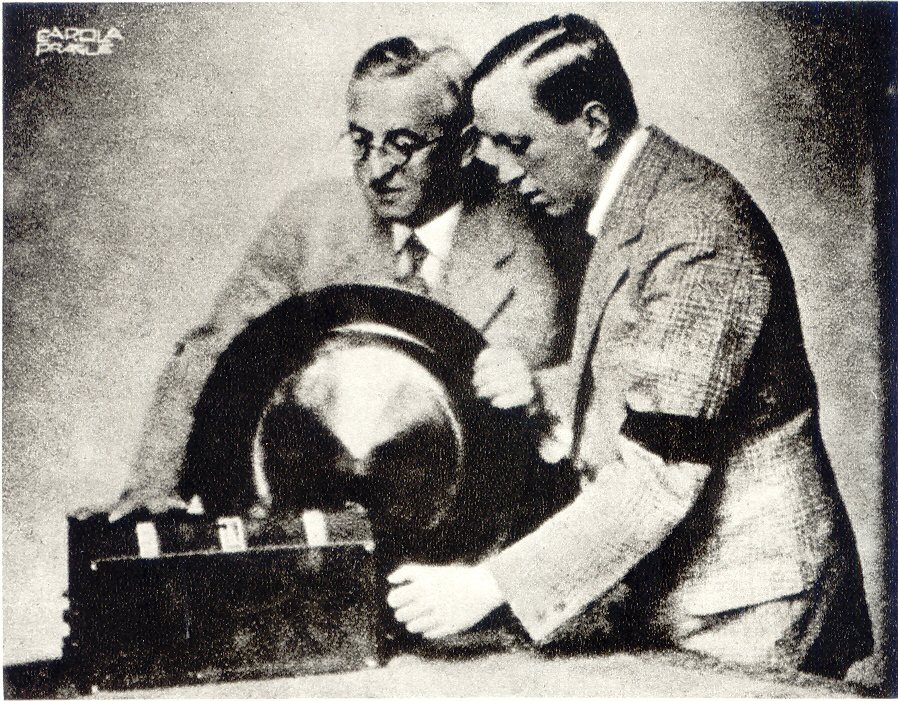
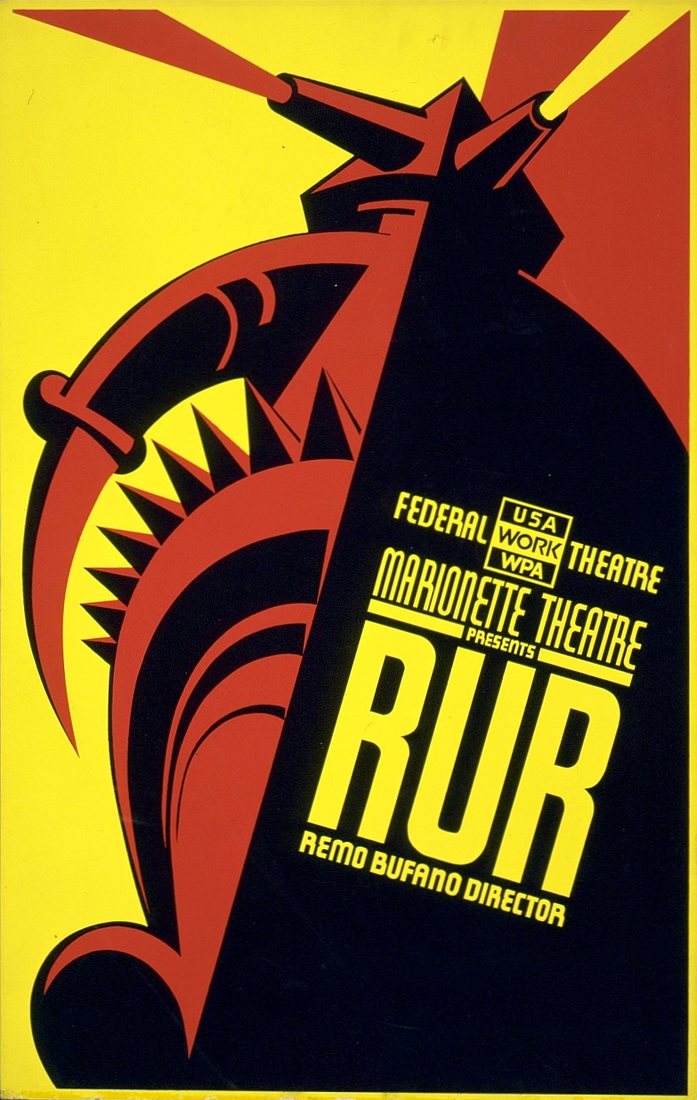
R.U.R. on the world’s stages
Semtex, kolache and háček
Semtex is a plastic explosive developed by the chemists Stanislav Brebera and Radim Fukátko at the chemical works in Semtín, now part of Pardubice. The name is usually explained as a combination of Semtín and the ending -ex (from explosive). Production began in 1964, or in 1966 according to other sources. The word entered the world’s languages mainly through news of terrorist attacks in the 1980s, among them the bombing of Pan Am Flight 103 over Lockerbie in December 1988.
Other words have survived only in narrower circles. In American English, especially in Texas and the Midwest, where Czech emigrants settled in the 19th century, kolache is used for a sweet yeast pastry with a filling; the form probably reflects the Czech plural koláče. Linguists and typographers use the word háček, Czech for ‘little hook’, for the diacritic over letters such as č, ř or š; the term caron is also used. Both words appear in American dictionaries.
What is not of Czech origin
Several claims about Czech words abroad do not hold. English hocus-pocus, a conjuror’s formula attested in English from the 17th century, is sometimes linked with Czech pokus, ‘attempt, experiment’; there is no evidence for such an origin. Slivovitz, plum brandy, also appears in English lists of “Czech words”, but English dictionaries usually derive it from Serbo-Croatian šljivovica.
Caution is also needed with words whose Czech origin is genuine. That the dollar comes from Jáchymov is documented, but the word itself is German. That pistol comes from píšťala is the prevailing view, not the only one. And that the polka is named after půlka, ‘half’, is only one of two hypotheses. Keeping these degrees of certainty apart matters as much in etymology as the result itself.
Timeline
- 1419–1434/36The Hussite Wars; howitzers and hand guns are used in wagon forts.
- 1440Earliest record of the German form aufeniz (houfnice).
- c. 1516Silver mining begins in the Joachimsthal valley; the Schlicks found the mining town.
- 1519–1520Minting of the Joachimsthaler begins.
- 1530sThe shortened form Taler is recorded in German.
- c. 1600English daler becomes dollar.
- 1785 / 1792The United States adopts the dollar as its unit of currency; the Coinage Act of 1792 defines it.
- 1830sThe polka arises in Bohemia; Paris around 1840, London 1844.
- 7 Sept 1848Robota (serf labour) is abolished in the Austrian lands.
- 1920Karel Čapek’s play R.U.R. is published.
- 2 Jan 1921World premiere of R.U.R. in Hradec Králové; the National Theatre follows on 25 January.
- 1922–1923R.U.R. in New York and London; the word robot enters English.
- 24 Dec 1933In Lidové noviny Karel Čapek names his brother Josef as the author of the word robot.
- 1964 / 1966Production of Semtex begins in Semtín near Pardubice (sources differ).
Czech on the globe
Tap to show the language on the globe:
Sources and further reading
- Václav Machek: Etymologický slovník jazyka českého. Academia, 2nd ed. 1968.
- Jiří Rejzek: Český etymologický slovník. Leda 2001.
- Friedrich Kluge: Etymologisches Wörterbuch der deutschen Sprache. De Gruyter, 25th ed. (rev. Elmar Seebold) 2011.
- Oxford English Dictionary. Oxford University Press (entries robot, dollar, howitzer, pistol, polka).
- Karel Čapek: O slově robot [On the word robot]. Lidové noviny, 24 December 1933.
- Čeněk Zíbrt: Jak se kdy v Čechách tancovalo [How people danced in Bohemia]. Prague 1895.